
Podcast: Download (Duration: 48:53 — 56.2MB)
Nobody sells a boring product, they just describe it badly. A company selling name tags is selling recognition, and the shift from describing what a thing is to naming what it means is what turned Michael Jamin’s wife’s dresses from expensive clothing into happy childhood memories.
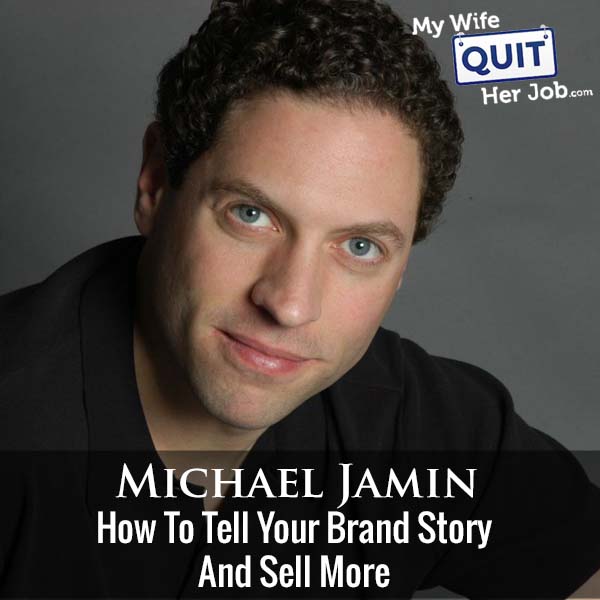
In this episode I spoke with Michael Jamin, a television writer since 1996 whose credits include Just Shoot Me, King of the Hill, and Beavis and Butt-Head. He applied storytelling to his wife’s girls’ clothing company and grew it into a multimillion dollar brand.
Below is the whole approach: how to find your story, why the origin story belongs in your email sequence, how constraints produce creativity, and why he repeats one message endlessly.
Get My Free Mini Course On How To Start A Successful Ecommerce Store
If you are interested in starting an ecommerce business, I put together a comprehensive package of resources that will help you launch your own online store from complete scratch. Be sure to grab it before you leave!
Table of Contents
Key takeaways
- No product is boring. Name tags sell recognition, and staplers sell productivity.
- Say your message seven times in different ways before anyone actually hears it.
- His customers wrote his story. Repeated comments about childhood memories became the whole positioning.
- Put the origin story in your email sequence, not just on your about page.
- Constraints produce creativity. Unlimited options make creative work harder rather than easier.
- Content that sells something other than the product has a far higher chance of being shared.
- Never use a cliché. It is someone else’s thought and reads as inauthentic.
- A brand voice can be borrowed without ever naming the source.
How a home sewing project became a clothing brand
Michael’s wife started making dresses for their two daughters in 2007.
The dresses got noticed at school. Other parents wanted them, and she explained upfront that the fabric quality and stitching made them considerably more expensive than a department store dress.
Parents wanted them anyway, because they could see the difference.
A boutique owner spotted the girls wearing them outside a mall and placed an order. Nordstrom followed shortly after.
At that point the dining room table stopped working, and they moved to contract sewers in Los Angeles.
Why they kept manufacturing in the US
Overseas production would force large quantities of few designs.
Michael’s wife runs small batches that change constantly, so the inventory stays fresh.
Large overseas runs would mean three versions instead of thirty, and end-of-season markdowns to clear space for the next batch.
The markdown logic does not apply to their products anyway, because the dresses do not go out of style.
Quality control is the other factor. A flaw in domestic production is a short fix, and the same flaw overseas is weeks of shipping.
The variety is also part of the appeal. Every piece is numbered like a work of art, so a customer receives dress 40 of 56.
How Michael Jamin found his brand story
The story came from customers rather than from a strategy session.
The same comment kept appearing in reviews and on Facebook. People remembered having a dress like this as a child, often sewn by their mother.
After hearing it repeatedly, Michael’s conclusion was that they were not selling dresses at all.
They were selling happy childhood memories, which is a different product with different pricing logic.
The personal connection made it credible. Neither he nor his wife wore dresses like that growing up, and she made them for their daughters specifically because it was something she had lacked.
The commercial effect was immediate. Once he told that story rather than describing the product, the price objection largely resolved itself.
Why you have to say your message seven times
A message does not register until someone has encountered it repeatedly in different forms.
Michael’s analogy is a film. Someone mentions the title, then you see a trailer, then a billboard, then the director on a talk show, and only then do you decide to see it.
Branding works identically. The same story has to appear across ads, emails, product pages, and customer features before it lands.
His execution is relentless. Ads say more than a dress, it is a happy childhood memory, or dresses girls remember forever.
Emails tell memory stories, and so do the customer features.
The evidence that it works is in the comments. Customers now use his own framing back at him unprompted.
Why no product is actually boring
A client told Michael his product was boring, and it turned out to be name tags.
Michael’s response was that name tags are among the best products imaginable, because a person’s own name is their favorite word in the language.
Hearing your name lights up your brain, which is why people pursue fame in the first place.
So the client is not selling name tags. He is selling recognition, in every sense of that word.
If you are important enough to warrant a name tag, that says something. A name tag also opens a conversation with a customer.
The general test applies to anything. A stapler company sells productivity and organization, and a stapler is among the first things you buy when setting up a business.
How to find the story when the product genuinely has none
When the product is generic, the story is why you got into the business.
Michael’s process is a sequence of questions. Why did you choose this, what were you doing before, and what was wrong with that?
He walked me through it using a hypothetical seller who found a product through research software and had previously worked in customer service.
The chain produces something usable quickly. Bored at work, underpaid, and tired of talking to angry customers complaining about products.
That becomes the story. You started a business specifically so you would not be the person selling something awful with poor service, because you did that job and know exactly how bad it is.
That story explains why you can be trusted, which is the first thing a stranger needs from you.
Where the origin story belongs
Michael’s ranking of the three most valuable things a visitor can do is a purchase, giving you their email, and reaching your about page.
The story can live on the about page as text or video.
His stronger recommendation is putting it in the email automation sequence.
His own sequence runs eight to ten story emails covering different angles. Why his wife started the business, why he joined it, and what he learned.
None of them are selling. The point is sharing, with a coupon occasionally appended as thanks for reading rather than as the purpose.
His reasoning is reciprocity. Giving someone a laugh, an emotion, or genuine vulnerability makes them more likely to give you something back.
The email that gets the highest engagement
His best performing story is about a day everyone else went to a trade show.
He was alone running the shop, and decided he would learn the business from the ground up and make it more efficient.
It was overwhelming. He did not know how to do any of it and had to learn.
What he discovered is the actual point. The inefficiencies existed for reasons, and they were what gave the product its character.
Subject lines matter here as much as the content. That one went out as CEO promoted to mailroom.
The response is what makes it worth doing. People write back with encouragement, which builds open rates and makes the brand feel like a person rather than a faceless company.
Why small brands should not pretend to be large ones
Michael’s early instinct was to hide the fact that they were sewing dresses on a dining room table.
They removed the personality to look like a big established brand, which he now considers a serious mistake.
The reason is that large brands spend enormous effort doing the opposite. They hire recognizable spokespeople specifically to make an enormous company feel personable.
People relate to people rather than to companies.
The side benefit is emotional. On a slow day, a customer comment about how much they love the brand is what tells you the business is fine and you are just having a slow day.
How to structure ads around the story
Michael describes his ad setup as an ecosystem rather than a funnel.
He currently leads with static images and retargets with video, and previously ran it the other way. The choice depends on which is saturating.
The videos take two forms. Short clips of a girl twirling to show the motion, and three-minute comedic pieces built around imagination.
The reason he needs both is his buyer. Little girls do not have credit cards, so he is selling to mothers and grandmothers who need to check a size or color before purchasing.
Repeated exposure is therefore structural rather than optional.
Why videos that are not about the product get shared
Michael’s most creative videos exist to reach the people who will never buy.
His arithmetic is direct. A 3% conversion rate is considered good, which leaves 97% of ad viewers doing nothing.
Some of them have no daughter, no need, and no intention of buying a dress.
The way to extract value from that group is content worth sharing, and those videos get shared heavily.
His view on virality is realistic. You cannot make something go viral, and content selling imagination rather than a dress has a genuinely higher chance of it.
How constraints produce creativity
Michael’s counterintuitive position is that unlimited freedom makes creative work harder.
His illustration comes from a fashion competition show. Contestants get an unconventional materials challenge, making garments from candy wrappers rather than fabric.
The constraint is what produces the surprising result, because it forces solutions nobody would reach with normal materials.
His own constraints on the video series were a $1,400 budget, which meant every prop was cardboard and spray paint.
The applied version for anyone is imposing an artificial rule. Write a thank you email without using the words thank you, and see what you find.
His professional reference point is writing comedy for King of the Hill in the days after September 11, when nobody was in the mood and the scripts still had to be funny. Training carried it.
How to build a brand voice
Michael writes everything for the clothing brand as if it were Willy Wonka.
The constraint is that he never references the source. No purple top hat, no borrowed lines, and no mention of the name.
What he takes is the register. Mischievous, slightly naughty, occasionally spooky, and genuinely magical.
The reason it fits is thematic consistency. Willy Wonka is itself a happy childhood memory, which reinforces what the brand is actually selling.
The alternative for someone unwilling to appear personally is inventing a persona. A recognizable, obviously exaggerated character can carry a brand voice, provided the audience understands the tone.
He would still push for something personal on the about page. A photo of the owner and why they started, which is a taste rather than an overshare.
Why never to use a cliché
Michael’s rule is absolute, and comedy writers call these clams.
The examples are recognizable once named. Said no one ever, the sarcastic period-after-every-word construction, and switching someone to decaf.
The problem is authenticity. The first person to write it was original, and everyone since is repeating a thought that is not theirs.
The alternative is specificity from your own life. Referencing actual instances from your childhood cannot be faked, and it is what people want from you rather than a version of someone else’s story.
Why he does not discount
The only discount the brand offers is 10% for an email signup.
His reasoning is that he sells something nobody else has, which removes the need to compete on price.
That same 10% appears in every monthly email, so it functions as a consistent offer rather than as a sale.
The one place discounting appears strategically is a birthday club. A girl with a March birthday means a February purchase, so he reminds those customers the following February.
Frequently asked questions
What do you do if your product is boring?
Reframe what it actually delivers. Michael Jamin told a name tag client he was selling recognition rather than name tags, because a person’s own name is their favorite word in the language.
How do you find your brand story?
Listen to your customers. Michael’s positioning came from repeated comments about remembering a similar dress from childhood, which told him he was selling happy childhood memories rather than clothing.
What if the product genuinely has no story?
Tell yours instead. Ask why you started, what you did before, and what was wrong with it. That chain produces the reason a stranger can trust you, which is what they need first.
How many times do you need to repeat your message?
Roughly seven, in different forms. Michael’s analogy is a film you hear about, see a trailer for, pass on a billboard, and finally decide to watch. Branding works identically.
Where should your origin story go?
In your email automation sequence rather than only on the about page. Michael runs eight to ten story emails that sell nothing, with a coupon occasionally appended as thanks for reading.
Should a small brand look bigger than it is?
No. Michael’s early mistake was hiding that they sewed on a dining room table. Large brands spend heavily doing the opposite, hiring spokespeople specifically to feel personable.
How do you become more creative?
Impose constraints. Unlimited options make creative work harder. Michael’s video budget of $1,400 forced cardboard props, and writing a thank you email without the words thank you produces better ideas than a blank page.
Should you discount your products?
Michael only offers 10% for an email signup and repeats that same offer monthly. His reasoning is that selling something nobody else has removes the need to compete on price.