
Podcast: Download (Duration: 53:12 — 61.2MB)
Getting customers to come back depends on being slightly better than average every single time rather than occasionally spectacular. Shep Hyken calls this customer amazement, and the test is whether customers describe you using the word “always” followed by something positive: they always get back to me quickly, they always know the answer.
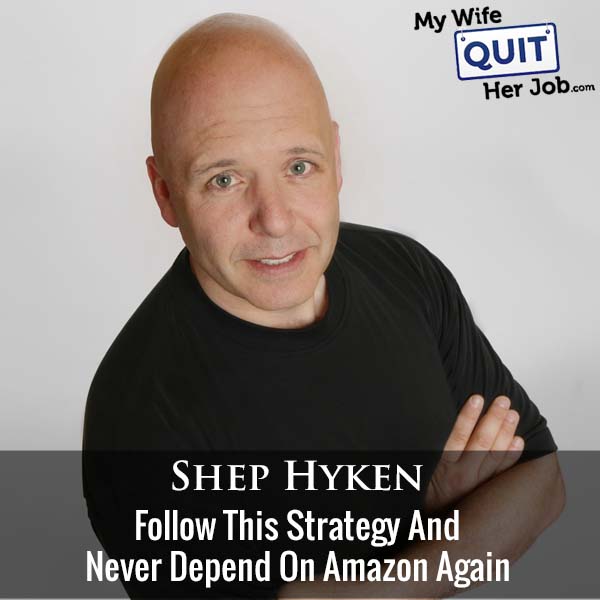
In this episode I sat down with Shep Hyken, founder of Shepard Presentations, a Hall of Fame speaker and New York Times bestselling author whose new book is called I’ll Be Back.
Below is his full framework: the six principles of convenience, why amazement is smaller than you think, the loyalty question, the difference between loyal and repeat customers, and how to measure behavior rather than sentiment.
Get My Free Mini Course On How To Start A Successful Ecommerce Store
If you are interested in starting an ecommerce business, I put together a comprehensive package of resources that will help you launch your own online store from complete scratch. Be sure to grab it before you leave!
Table of Contents
Key takeaways
- Amazement is being 10% better than average, consistently. On a one to five scale, deliver a reliable 3.3.
- The test is the word “always” followed by something positive in how customers describe you.
- Every added form field reduces completion. Collect the rest after the sale.
- Journey map every touchpoint and ask at each one whether it can be made easier.
- Ask the loyalty question: will what I am doing right now bring this customer back?
- Loyal customers pass the competition to reach you. Repeat customers come because you are convenient.
- Surveys measure history, behavior measures loyalty. Track whether they return and what they spend.
- A 5% retention increase can lift profit dramatically, per Fred Reichheld’s research.
Why Amazon is everyone’s competition
Every business is now measured against Amazon regardless of industry, because Amazon set the customer’s expectation of what service feels like.
Shep’s example came from a client who ordered a half-million-dollar piece of machinery that arrived unannounced. His complaint was that Amazon emails him when toilet paper is on the way, and a machinery supplier could not manage a heads-up.
The same applies to Disney. A great experience at a Disney park becomes your new baseline for what customer service should be everywhere else.
The consequence for laggards is that rock star businesses in unrelated industries keep raising the bar, and customers apply it to you anyway.
Can a small brand match the Amazon experience?
You cannot match Amazon’s scale and you can match its convenience, which is what customers are actually responding to.
What people like about Amazon is that it is intuitive, has few steps, and creates no hassle. Reordering can happen by voice without opening a computer.
Every step you add to a process makes it harder for your customer. The Wall Street Journal found that each additional field of information requested produced a diminishing return, making completion slightly less likely.
The discipline that follows: ask only what the sale requires. Demographic details are useful and can be collected after the purchase.
I experienced the failure mode of this recently. A podcast sent me a three-page guest form and I declined to go on the show, less intimidated than aggravated by the work involved.
The 6 principles of convenience
Shep’s six principles are reducing friction, adding technology, offering self-service, delivering to the customer, building a subscription model, and expanding access.
Reduce friction. Journey map your business from the moment a customer discovers you through every interaction point, both human and digital. Ask at each point whether it can be made easier, including the internal processes driving those touchpoints.
Add technology. Shep books dental appointments online by viewing the practice’s schedule against his own, with no phone call.
Offer self-service. Car dealerships during COVID let buyers configure a vehicle online before any contact. On the support side, that means an FAQ knowledge base and chat, which now costs under $100 a month with AI assistance where it was once prohibitive.
Deliver to the customer. Bring the product or service to them wherever that is possible.
Build a subscription model. Recurring revenue helps you and regular delivery helps the customer. Chewy started by delivering dog food so people did not have to carry heavy bags out of a pet store, and became one of the largest pet retailers.
Expand access. Banker’s hours effectively serve only the unemployed. If your support line closes at 5pm Eastern, consider when customers actually need you. Shep assembled a ping pong table at night and got a recorded message directing him to a YouTube video, which worked.
What customer amazement actually means
Amazement comes from predictable, consistent experiences that are slightly above average rather than from occasional spectacular gestures.
The verbal test is the word “always” followed by something positive: they always get back to me quickly, they always know the answer, they are always friendly.
The strongest version covers failure too. Even when something goes wrong, I know they will always take care of me.
Shep developed this studying the Ritz-Carlton after it won the Malcolm Baldrige Award in the 1980s. What the Ritz talked about was the small things done well rather than the dramatic ones.
Horst Schulze’s example: saying good morning is one thing, and saying good morning with the person’s name is the extra five or ten percent.
The scale version: if three out of five is average, deliver a consistent 3.3 and you will receive far more fives than anything else.
The reason this matters more than heroics is opportunity. A server who overhears that a couple is celebrating an anniversary can surprise them with a cake, and most customers never hand you that opening.
How responsiveness wins business
Speed of response frequently decides who gets the sale, and it costs nothing to improve.
Shep once asked a client why he was hired over a competitor he respects and admires. The answer was that he called back faster.
My own version is live chat. Amazon does not offer it, and for my store getting someone into a chat is close to an automatic conversion because they arrive with a specific question and a timely answer closes it.
How to add automated human touchpoints
Automated messages can create genuine warmth if the content is useful rather than promotional.
My own example: every first-time customer receives a separate email from my wife thanking them and inviting a reply. It generates real responses, and it is fully automated.
Shep’s suggestion for extending this: a short video sent a month after purchase showing how other customers use the product. No selling, just ideas the buyer can use.
The real estate version illustrates the principle. The average person moves every seven years, and most agents disappear in between. The best agents start the renewal a month after closing with holiday cards, household tips, and neighborhood news.
Two product examples he lives with: a music practice device whose maker occasionally emails tips for learning songs faster, and a golf rangefinder that asked his handicap so it could send appropriately targeted tips.
The framing that ties it together: Shep considers himself a media company. His job is producing a constant flow of information that makes clients want to keep working with him.
The loyalty question to ask on every interaction
Ask whether what you are doing right now will bring this customer back the next time they need what you sell.
The question applies to the interaction in front of you rather than to a program. If a customer calls upset, are you handling it so that they think of you next time?
Shep’s counterexample came from a car dealership he had just visited for the first time. They did not seem to recognize that their handling of a warranty visit was determining whether he would ever buy a car from them.
The compounding version: focus on the next time, every time. That accumulates into a lifetime of loyalty without needing a formal program.
Loyal customers versus repeat customers
A loyal customer will pass your competition to reach you, and a repeat customer comes back because you are convenient or because a punch card is nearly full.
Both are valuable and they are not the same thing. The diagnostic questions: if you removed the loyalty card, would they still come as often? If your competitor opened across the street, would they switch?
This is why loyalty programs are frequently misnamed. They are marketing programs, and they generate repeat business rather than loyalty.
Amazon Prime is the sophisticated version. Jeff Bezos added movies and shows to give subscribers more reasons to renew. Once you pay $129 a year, you want your money’s worth, so you use the free shipping and the Whole Foods discounts, which separates you from competitors because you paid for the privilege.
How to measure customer loyalty
Measure behavior rather than sentiment, because surveys only tell you about history.
A five-star rating describes yesterday. What matters is whether they came back, how often, and how much they spend compared to a one-time buyer.
The haircut example makes it concrete. You know roughly how often someone needs a cut, so you know what twelve visits a year looks like and can spot who is on pattern.
For apparel, the pattern is seasonal. Track whether customers refresh their wardrobe on the expected cadence, and with enough data across enough customers, patterns emerge that let you personalize.
Shep’s story about a friend who shopped one store twice a year, in July and January when everything went on sale, illustrates the value of knowing the pattern. The owner’s response was that he would be delighted to have every customer guaranteed to arrive twice a year.
Nike is his example of acting on it. Their free membership program segments customers by whether they buy running shoes or court shoes, then sends genuinely relevant information rather than asking for an order every time.
What to ask in a customer survey
Keep it to one or two quick questions plus one open-ended follow-up, since short surveys take seconds and get completed.
Net promoter score. On a zero to ten scale, how likely are you to recommend us? Nines and tens are promoters, sevens and eights are passives, six and below are detractors.
Customer satisfaction. A simple scale asking whether they were happy with the product, service, or experience.
The airline question. American and Delta ask whether you would want the same agent next time, answered one for yes and two for no. One question, enormously revealing.
The one thing question. Ask whether there is one thing that would make doing business with you better. Good survey software branches on the score, so a ten gets asked how to make it even better and a six gets asked what would have raised the number.
The value is in aggregation. When enough customers name the same one thing, that is an opportunity you cannot pass up.
The known noise in this data is price. My own automatic post-purchase survey collects price complaints constantly, and Shep’s read is that some people mean it and most are half joking.
Why retention beats acquisition financially
Fred Reichheld’s research in The Loyalty Effect found that a 5% increase in customer retention can produce a disproportionately large increase in profit.
Shep has a client losing millions annually to churn simply from doing things poorly. When he asked what a 3% reduction would be worth, she estimated a million dollars.
The reason the leverage is so high is that everything in the retention bucket costs nothing to acquire.
Frequently asked questions
How do you get customers to come back?
Deliver an experience slightly better than average every single time rather than occasionally spectacular. Shep Hyken’s test is whether customers describe you with the word “always” followed by something positive. On a one to five scale, a consistent 3.3 earns far more fives than heroic gestures do.
What is the difference between loyal and repeat customers?
A loyal customer will pass your competition to reach you. A repeat customer comes back because you are convenient or because a punch card is nearly full. Both are valuable, and removing the incentive reveals which kind you actually have.
Are loyalty programs actually building loyalty?
Usually not. Most are marketing programs generating repeat business. Amazon Prime is the exception because paying $129 annually makes subscribers want their money’s worth, which pulls them away from competitors on every purchase.
How do you compete with Amazon on customer service?
Match its convenience rather than its scale. Remove friction, add self-service options, offer live chat since Amazon does not, and respond fast. Shep won business over a respected competitor solely because he returned the call quicker.
Why do long forms reduce conversions?
Every additional field carries a diminishing return, making completion slightly less likely. The Wall Street Journal documented this in subscriber acquisition. Ask only what the sale requires and collect demographic details after the purchase.
What should you ask in a customer survey?
One or two quick questions plus an open-ended follow-up. Net promoter score on a zero to ten scale, or a simple satisfaction rating, then ask whether there is one thing that would make doing business with you better. When many customers name the same thing, act on it.
How much is customer retention worth?
Fred Reichheld’s research in The Loyalty Effect found a 5% increase in retention can produce a large disproportionate increase in profit. One of Shep’s clients estimated that reducing churn by just 3% would be worth roughly a million dollars.