
Podcast: Download (Duration: 50:46 — 58.4MB)
SMS marketing generates roughly 10 times more revenue per subscriber than email, which means a text list one-tenth the size of your email list can produce equal or greater revenue. Brands that committed to SMS two years ago have seen it surpass their email revenue entirely, and adoption still sits in the mid-to-high single digits, so the opportunity is largely untaken.
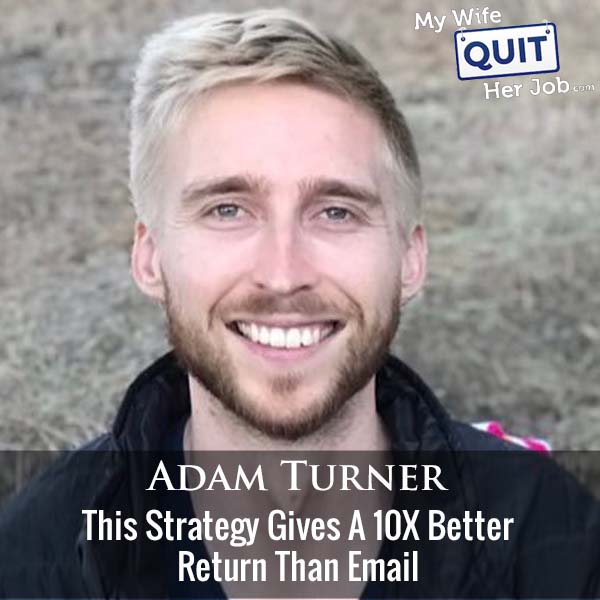
In this episode I sat down with Adam Turner, CEO of Postscript, the SMS platform I use for my own stores. Adam personally answered my technical support questions when I first installed it, before I knew he was the CEO, which tells you something about how the company operates.
Below is the full breakdown: why the “I don’t want to bother my customers” objection is wrong, how conversational SMS produced 4x more revenue in an A/B test, the welcome series structure that works, sending frequency and how to find your ceiling, and how to collect phone numbers alongside emails.
Get My Free Mini Course On How To Start A Successful Ecommerce Store
If you are interested in starting an ecommerce business, I put together a comprehensive package of resources that will help you launch your own online store from complete scratch. Be sure to grab it before you leave!
Table of Contents
Key takeaways
- SMS subscriber LTV is roughly 10x email. A list one-tenth the size can match your email revenue.
- Adoption is still in the mid-to-high single digits. Email adoption is above 90%, so the gap is enormous.
- Over 50% of shoppers give a phone number over email when offered the choice. They would rather be texted about their order.
- Conversational SMS produced 4x more revenue. An A/B test where one cohort got replies and one did not.
- Most brands send too infrequently. Doubling or tripling frequency usually does not spike unsubscribes.
- Send both email and SMS for abandoned cart. Net 15% revenue increase over sending either alone.
- Collect the phone number first. It is worth roughly 10x more than the email address.
- Images do not improve performance. MMS costs more and performs roughly the same as plain SMS.
Why SMS converts 10x better than email
SMS subscribers generate roughly ten times the revenue per person that email subscribers do. For my own store, my SMS list produces about the same total revenue as my email list, which is ten times larger.
The pattern holds at scale. Large brands doing millions in GMV who committed to SMS two years ago have seen it surpass email revenue entirely, typically with an SMS list around one-tenth the size (500,000 SMS subscribers against 5 million emails).
The timeline matters. It took roughly two years for SMS to overtake email at those brands, which means starting earlier compounds significantly.
Why “I don’t want to bother my customers” is the wrong objection
The most common objection to SMS marketing is not wanting to bother customers, and the data does not support the fear. Across roughly 8,000 Postscript merchants, unsubscribe rates do not spike when brands respect the relationship.
The structural protection is opt-in. People who do not want texts never opt in, and people who stop wanting them unsubscribe easily. What remains is a highly engaged audience that explicitly asked to hear from you.
The early insight that led to Postscript’s founding: when stores gave customers a choice between leaving an email address or a phone number, more than 50% chose the phone number for many stores. Customers were saying they would rather be texted than emailed about their orders.
Older demographics are not the exception people assume. Someone in the 40 to 60 range is constantly texting their kids and rarely emailing them, so texting may be their more active channel.
The conversational SMS test that produced 4x more revenue
A single brand ran an A/B test where they replied to inbound texts from one customer cohort and left another cohort’s replies unanswered. The cohort that had actual conversations generated four times more revenue over the following two months.
This is the core argument for treating SMS as a customer support and sales channel rather than a broadcast channel. When customers know a real person reads and responds, they stay subscribed and they buy.
In my own store, a customer who asks a question over text converts at close to 100%. It works better than phone support and is far easier to staff.
Postscript’s Flow Builder handles the scaling problem by orchestrating both outbound messages and inbound replies. A customer who says they are browsing shirts can be auto-tagged, so your next campaign targets people interested in shirts.
How to structure an SMS welcome series
An SMS welcome series should match the funnel stage where you captured the number, and it must establish a regular cadence so the subscriber knows what the relationship will be.
The worst pattern is passive collection followed by silence. Someone subscribes, receives “thanks for subscribing,” and hears nothing for a month until a discount campaign. By then they have no idea who is texting them.
Match the tone to the capture point:
- Site-entry pop-up: brand and product discovery. Tell your story.
- Checkout: they may have abandoned for a specific reason. Address it.
- Post-purchase or package QR code: support what they just bought. Ask for a review or a photo.
One tactical finding: place your contact card in the third or fourth message rather than the first. Subscribers who already know what they are getting are more likely to save it and stay subscribed.
Gunner Kennels is a strong example of top-of-funnel done well. Their welcome series sends YouTube links telling the founder’s story about protecting his dog during travel, because it is a high average-order-value product that nobody buys on first visit.
How often should you send marketing texts?
Most brands send too infrequently. The common default is once a week, which is easy to plan and usually well below the frequency that maximizes revenue. Doubling or tripling send frequency generally does not produce a significant unsubscribe increase.
The metric that governs everything is subscriber lifetime value, which is driven by four factors: acquisition rate, revenue per message, messages sent per subscriber, and unsubscribe rate.
Increasing frequency increases revenue, and only until the unsubscribe rate rises enough to offset it. The correct approach is A/B testing your way up until you find the level of unsubscribes you are comfortable with, then setting that as your strategy.
Some merchants send nearly every weekday because they have genuinely different deals daily and customers treat the thread as a newsfeed. That is not right for most brands, and it demonstrates the ceiling is higher than most assume.
Expect unsubscribe rates around 1-2%, with the best brands near 0.5%. That is substantially higher than email, and the remaining subscribers are far more valuable.
Should you send both email and SMS for abandoned carts?
Send both. Testing shows a net 15% revenue increase from sending an email and an SMS for abandoned cart, compared to sending only one, and the increase more than covers the additional SMS cost.
This is counterintuitive if you imagine a customer receiving the identical message twice. It works for the same reason two billboards work better than one, and because the channels are consumed differently: SMS is synchronous and gets checked immediately, email is asynchronous.
Email open rates are also unreliable now after Apple’s privacy changes, so “they opened the email” is no longer a trustworthy signal for suppressing the SMS.
If minimizing SMS cost matters more than maximizing revenue, you can suppress the text for people who opened the email. Most brands are better off sending both.
Should you collect phone numbers or emails first?
Collect the phone number first, because it is worth roughly ten times the email address. Then collect the email as a second step in the same flow.
The conversion tactic that matters most is making clear that both are required to receive the incentive. If your copy says “thanks, your coupon is in your inbox, now give us your phone number,” there is no remaining reason to hand over the number.
Stepped pop-ups work in either order, and testing which sequence converts better for your store is worthwhile. What is not worthwhile is choosing between them.
Collect at every funnel stage rather than optimizing a single pop-up: site entry, checkout, package QR codes, retail if you have it, and back-in-stock notifications (which give the customer real value in exchange for the number).
What SMS marketing actually costs
SMS costs more than email because carriers charge per message, and it sits much closer to email than to paid acquisition. Postscript merchants typically see over 30x ROI on the platform.
The comparison worth internalizing: acquiring a click from Facebook might cost $5 to $20. Once you have that visitor’s phone number, bringing them back to your site costs under a cent.
That is the real economic argument for prioritizing phone number capture at the top of the funnel. You are converting an expensive one-time acquisition into a nearly free repeatable one.
The SMS regulations you need to know
US SMS marketing is governed by the TCPA, which is stricter than GDPR for telecommunications. You cannot send a marketing message to anyone who has not opted in, and typically double opted in.
Uploading a purchased list and texting it is illegal, in a way that is more clearly prohibited than the email equivalent under CAN-SPAM.
States are now adding their own layers. Florida passed its own version governing permitted sending hours. Good platforms handle this automatically by filtering or delaying affected subscribers rather than requiring you to track state-level rules yourself.
How to handle replies without a full support team
The worst SMS mistake is having no reply handling at all, where customer messages disappear into nothing. The second worst is an auto-reply telling them to send an email instead.
If you do not have live support coverage, set expectations with an automated acknowledgment: thank them for replying, confirm someone is monitoring the channel, and state when they will hear back. Most customers do not need an instant reply, only confirmation that someone is paying attention.
Postscript now runs sentiment analysis and category classification on inbound replies, trained on millions of ecommerce responses across roughly twelve categories (shipping, payment issues, subscription problems, and so on). That lets you triage: answer the negative-sentiment shipping question before the positive-sentiment thank-you.
Connecting SMS to a helpdesk like Gorgias is the cleanest setup if you already run one.
Do images improve SMS performance?
Images do not meaningfully improve SMS performance. MMS costs more to send and performs roughly the same as plain SMS across Postscript’s data, including for visual brands that assume photos are essential.
Adam’s own framing on this is worth noting: recommending plain SMS reduces his company’s revenue per message, which is a reasonable signal that the data is real.
What SMS can do that email cannot
The genuine differentiator for SMS is two-way automated interaction. Customers can reply to complete actions, which email cannot support.
Postscript Pay lets a customer reply to purchase directly from a text, whether from an abandoned cart, browse abandonment, or a campaign with an attached dynamic cart.
The broader roadmap follows the same logic: reply “return” to start a return, reply “skip” to skip a subscription shipment, or reply to add an upsell to an existing subscription (shaving cream alongside the razors).
Chatbot-style flows are buildable in the Flow Builder today, including mystery-discount mechanics where a customer replies with a keyword to unlock an offer, plus attribute collection like birthdays or preferences for later segmentation.
Frequently asked questions
Is SMS marketing better than email for ecommerce?
SMS subscribers generate roughly ten times the revenue per person as email subscribers, so a list one-tenth the size can match your email revenue. Brands that committed to SMS two years ago have seen it surpass email revenue entirely. Both channels should run together rather than replacing one another.
How often should you send SMS marketing messages?
More often than most brands do. The common default of once weekly is usually well below the revenue-maximizing frequency, and doubling or tripling it rarely spikes unsubscribes. A/B test upward until you reach an unsubscribe rate you are comfortable with, typically 1-2%.
Do customers get annoyed by marketing texts?
Across roughly 8,000 merchants, unsubscribe rates do not spike when brands respect the relationship. Opt-in is the structural protection: people who do not want texts never subscribe. Notably, over 50% of shoppers choose to give a phone number over an email when offered the choice.
Should you send both an email and a text for abandoned carts?
Yes. Sending both produces a net 15% revenue increase over sending either alone, and the increase more than covers the extra SMS cost. The channels are consumed differently, and email open rates are unreliable after Apple’s privacy changes.
Should you collect a phone number or an email address first?
Phone number first, since it is worth roughly ten times the email address. Then collect the email in a second step. The critical detail is copy that makes clear both are required to receive the incentive, otherwise there is no reason to provide the second one.
Do picture messages perform better than plain text messages?
No. MMS costs more to send and performs roughly the same as plain SMS across the data, including for visually driven brands. Plain SMS is the better default.
What are the legal rules for SMS marketing in the US?
The TCPA governs US SMS marketing and is stricter than GDPR for telecommunications. Marketing messages require opt-in, typically double opt-in. Uploading and texting a purchased list is illegal. States including Florida now add their own rules governing permitted sending hours.