
Podcast: Download (Duration: 45:25 — 52.3MB)
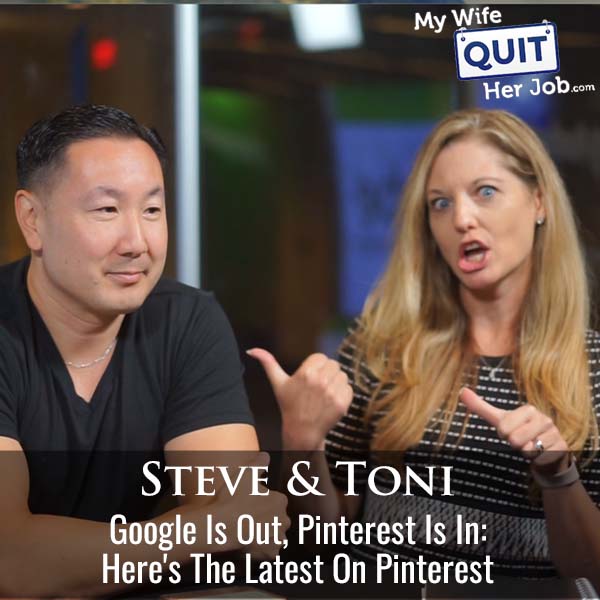
The 2024 Pinterest strategy that actually works comes down to four things: create multiple fresh pin images for the same URL, publish short-form video (with a real graphic cover, not a screen grab), schedule directly inside Pinterest, and stop looping the same image to five different boards. Pinterest has quietly rewritten its playbook over the last 12 months, and most publishers who “gave up on Pinterest” a while ago are running strategies Pinterest now punishes. This episode is a fresh audit of what is currently working, recorded with my co-host Toni Herrbach, who has been running Pinterest strategies for content sites for more than a decade.
Pinterest is having a moment right now precisely because Google is not. The latest Google core updates have pushed independent bloggers off page one, and traffic-starved creators are flooding back to Pinterest asking whether it can pick up the slack.
Toni’s answer is yes, if you actually update your workflow to how Pinterest works in 2024. We spend most of the episode on the specific changes.
Here is what has changed on Pinterest, what the new pinning strategy looks like, and how to use short-form video on Pinterest without wasting your first 10 posts (which is exactly what I did).
Get My Free Mini Course On How To Start A Successful Ecommerce Store
If you are interested in starting an ecommerce business, I put together a comprehensive package of resources that will help you launch your own online store from complete scratch. Be sure to grab it before you leave!
Table of Contents
Key takeaways
- The new fresh-pin rule: pin the same URL with a different image every time. Multiple images to one URL is now rewarded, not penalized.
- The old looping strategy (same image pinned to five boards, then re-pinned six months later) is now actively punished.
- Short-form video on Pinterest needs a real graphic cover, not a screen grab of your face. Toni’s test: same content, graphic cover got 115 views versus 23 for the screen grab.
- Schedule pins directly inside Pinterest (business accounts can schedule up to 100 pins), not through unofficial third-party tools.
- Faces do not perform on business-topic accounts. Use product shots, text overlays, or scene photography instead.
- Pinterest lead magnets are a huge and underused email-list channel. Toni’s Christmas printable pulled 4,000 email subscribers in a single holiday season.
- Pinterest is a search engine, not a social network. Optimize for keywords, not for engagement.
Is Pinterest still worth it in 2024?
Pinterest is worth it in 2024 for any content site or ecommerce brand whose visual content matches a Pinterest audience (home, food, DIY, apparel, decor, printables, business how-to). Traffic is up for creators who have adopted the new fresh-pin workflow, and Pinterest is one of the very few platforms where a single well-optimized pin can drive traffic for years.
The reason Pinterest is suddenly on everyone’s radar again is that Google’s 2024 updates flattened a lot of small blogs, and Pinterest is the closest thing to a “second search engine” a content site can lean on. Pinterest itself has publicly positioned as a visual search engine (not a social network), which lines up perfectly with how the audience uses it: to research something they plan to do, buy, or make.
The catch is that Pinterest today looks very different from Pinterest three years ago. If you last logged in a year ago, you will not recognize the app, and the strategies most tutorials still teach are actively hurting accounts.
What changed on Pinterest in the last 12 months?
Three concrete changes reshaped Pinterest between mid-2023 and mid-2024. Each one flips a rule that used to be gospel.
- Fresh pins replaced looping. The old strategy was to create one pin image, pin it to five relevant boards, and re-pin the same image every six months. Pinterest now wants a different image for the same URL, and it does not care how many images you use.
- Short-form video became a first-class format. Pinterest heavily favors idea pins and video pins in the feed, and creators who upload directly from Pinterest’s app (not through third-party schedulers) get better distribution.
- Business account scheduling replaced third-party tools. Pinterest business accounts can now schedule up to 100 pins natively, and Pinterest treats natively-scheduled pins better than pins pushed through unauthorized third-party tools like Repurpose.io.
Tailwind is still an authorized Pinterest partner, so scheduling through Tailwind is safe, though Toni’s view is that Tailwind’s advantages have eroded and native scheduling from your business account is usually the right call.
The interface changes are the reason most returning users feel lost. Boards are buried under three clicks, the home feed has been restructured, and the mobile app now looks and behaves very differently from the desktop site. If you last used Pinterest a year ago, plan to relearn the navigation.
The 2024 fresh-pin strategy explained
The 2024 Pinterest strategy is to publish the same URL multiple times with a different image every time, spread across your relevant boards, and rotate templates so no two pins look alike. The old spam rule (same image, five boards, six months apart) is what Pinterest was designed to reward, and it is now what Pinterest was rewritten to punish.
Practical execution:
- Design 5 to 10 unique pin images per blog post. Use Canva templates so this takes 60 seconds each, not 20 minutes each.
- Vary the visual pattern. One with a photo on top and text on bottom, one with text overlaid on the image, one with a plain-colored background and headline only, one with a quote pulled from the article.
- Rotate the copy on each image. Same URL, but pull a different headline, subheading, or angle each time. This is how Pinterest tests which framing resonates with which audience segment.
- Pin to all relevant boards over time. Same URL to a manufacturing board, a business-startup board, and an ecommerce board is fine, provided each pin has a different image.
- Stop looping. Do not re-pin the same image six months later. Publish new images instead.
Toni’s own workflow is to bump every blog post from 2 or 3 pin images up to 5, and she is aiming for 10 per post over time. Realistic time cost with pre-built Canva templates is about 5 minutes per fresh image.
How to do short-form video on Pinterest correctly
Short-form video on Pinterest works, and the single biggest lever is the pin cover. A designed graphic cover (title, thumbnail-quality image) outperforms a raw video screen grab by 3 to 5 times in Toni’s tests. My own first video pins failed for exactly this reason: I uploaded reels with my face as the still frame, and one of them got a single view.
The rules that separate a short that flops from a short that pulls traffic:
- Design a real cover image. Same approach as a YouTube thumbnail. Big text, high contrast, a compelling visual.
- No faces on business-topic accounts. Faces work on beauty, fashion, hair, and travel accounts. On business, finance, and how-to accounts, faces underperform product or scene shots.
- Upload directly through Pinterest’s mobile app. Native uploads (especially from mobile) get better distribution than pins pushed through unauthorized schedulers.
- Link the pin to your best long-form asset. A pin that clicks through to your YouTube video (which Pinterest is happy to link out to) is a way to build your subscriber base for free.
- Repurpose your existing shorts. Every TikTok, Reel, or YouTube Short you already made is a Pinterest video pin waiting to happen. The content is created. You just need the graphic cover and the upload.
Toni’s cover-image split test is the clearest data: identical short-form video, same URL, uploaded twice. Screen-grab cover got 23 views.
Designed graphic cover got 115 views. That is a 5x lift from a 60-second Canva design job.
Pinterest for lead generation: the underused email channel
Pinterest is one of the best (and cheapest) email-list channels a content site can use, and almost nobody talks about it. The mechanic is straightforward: create a lead magnet aligned to a Pinterest-friendly topic (a printable, a checklist, a template), pin multiple images pointing to the opt-in page, and let Pinterest search deliver the traffic for years.
Toni’s Christmas Hershey bar printable is the case study. Users download a wrapper that turns a Hershey bar into a snowman or reindeer for teacher gifts and classroom passes. It pulled 4,000 new email subscribers in a single holiday season, and it has been running on Pinterest with no paid promotion for years.
The retention math is what makes this compelling. Even after filtering out the seasonal opt-ins who never engage again, Toni retains 50 to 60 percent of Pinterest-sourced email subscribers over six months, all at zero acquisition cost. Compared to $2 to $5 per email subscriber on Meta ads, Pinterest lead generation is one of the highest-ROI channels available to a content site.
How much time does Pinterest actually take per week?
A working Pinterest strategy for a content site takes about 45 to 60 minutes per week, once you have Canva templates set up. That budget covers designing 5 to 10 fresh pins, scheduling them natively inside Pinterest, and browsing Pinterest Trends for the coming season’s keywords.
The time saver is templates. Build 5 to 10 Canva templates in your brand colors, save your palette, and each new pin becomes a 60-second swap of the headline and background image.
Without templates, Pinterest is a 5+ hour weekly commitment. With templates, it is a scheduled hour on a Monday morning.
If you are just resuscitating a dormant account, plan on 3 to 4 hours the first week to set up templates, audit your existing pins, and schedule the first batch. After that, the maintenance rhythm is closer to 45 minutes.
Pinterest vs Google search: what each is best for now
| Attribute | Pinterest (2024) | Google Search (2024) |
|---|---|---|
| Traffic direction | Rising for creators using fresh pins | Declining for independent blogs |
| Best for | Visual, evergreen, planning-intent queries | Commercial, local, and news queries |
| Content lifespan | Years (pins compound) | Days to months (subject to updates) |
| Effort per post | 5 to 10 fresh images per URL | One canonical page per URL |
| Publisher control | You choose the images and copy | You choose the copy, algorithm chooses the visibility |
| Weekly time cost | ~45 to 60 minutes with templates | Variable (SEO, updates, backlinks) |
| Best content types | How-to, printables, decor, food, apparel | Reviews, comparisons, tutorials, buying guides |
The right posture for a content site in 2024 is to run both, not to abandon one for the other. Google is unpredictable but still large. Pinterest is smaller but more within your control and its traffic compounds.
Common Pinterest mistakes that will kill your reach
Six mistakes will destroy Pinterest reach faster than anything else, and every one of them is fixable in a single afternoon.
- Looping identical images. Same image pinned to five boards on the same day is spam under the 2024 rules. Fresh images only.
- Using your face on a business account. Faces underperform on business, finance, and how-to niches. Use product, scene, or text-overlay images.
- Screen-grabbing your video as the cover. Design a real graphic cover, the way you would for YouTube.
- Scheduling through unauthorized tools. Only Tailwind is a Pinterest-authorized scheduler. Everything else risks distribution penalties.
- Ignoring keywords in pin titles and descriptions. Pinterest is a search engine. Keyword-optimize like it is Google.
- Pinning three times, then quitting. Pinterest rewards consistency. A dead account will not rank a pin, no matter how good the image is.
Frequently asked questions
Is Pinterest a good traffic source for blogs in 2024?
Pinterest is one of the best traffic sources for blogs in 2024, especially for visual-friendly niches like food, home, DIY, decor, apparel, and printables. As Google’s 2024 core updates continue to push independent blogs down the results, Pinterest has become the most reliable second traffic channel for content sites.
How many pins should I make per blog post in 2024?
Aim for 5 to 10 fresh pin images per blog post, with a different design and headline on each one, all pointing to the same URL. Pinterest actively rewards fresh images to the same URL and punishes the old strategy of looping one image across multiple boards.
Do videos work on Pinterest?
Videos work well on Pinterest when they have a designed graphic cover (not a video screen grab). In one direct A/B test, a designed cover pulled 115 views versus 23 for the same content with a screen-grab cover, a 5x difference from a 60-second Canva design job.
Should I use Tailwind or schedule Pinterest natively?
Schedule Pinterest natively for most creators, because business accounts now support up to 100 pins scheduled directly inside Pinterest. Tailwind is still Pinterest’s only authorized third-party scheduler and is a fine option if you already pay for it, though its advantages over native scheduling have shrunk.
Can I use Pinterest to build my email list?
Pinterest is a top-tier email-list channel when you pin lead magnets (printables, checklists, templates) to opt-in pages. Toni Herrbach’s Christmas printable pulled 4,000 subscribers in a single holiday season with zero paid promotion, and Pinterest retains 50 to 60 percent of those subscribers over six months.
How long does it take to grow on Pinterest?
Meaningful Pinterest traffic typically starts showing up within 60 to 120 days of consistent publishing (roughly 5 to 10 fresh pins per week). Unlike Instagram or TikTok, Pinterest pins have a long tail: a pin published today can still drive traffic three years from now if the topic stays relevant.
Do faces work on Pinterest?
Faces work well on beauty, fashion, hair, and travel Pinterest accounts, and they underperform on business, finance, and how-to accounts. If your niche is business, use product shots, scene photography, or plain text-overlay pins instead of a photo of yourself.