
Podcast: Download (Duration: 50:42 — 58.3MB)
Philip Wang grew Wong Fu Productions from a 2003 college side project into a YouTube channel with 3.2 million subscribers and billions of views by building a purpose-driven brand for Asian American audiences, ignoring the YouTube algorithm playbook, and diversifying revenue into merchandise, live speaking, brand deals, licensed productions, and now brick-and-mortar boba cafes. The core lesson from his 20-year run is that quality of story and community beats quantity of uploads, and that a strong brand outlives whatever the platform’s algorithm rewards this quarter.
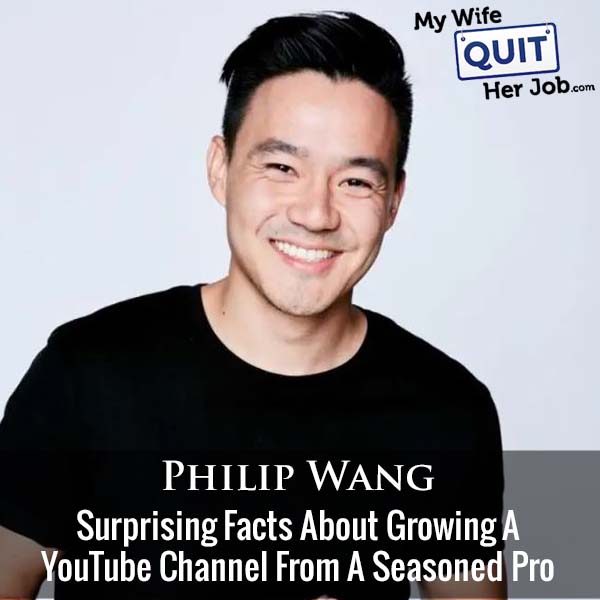
In this episode of the My Wife Quit Her Job podcast, I sat down with Philip Wang, co-founder of Wong Fu Productions and the Bopomofo Cafe chain in San Gabriel and Artesia. Phil started Wong Fu in 2003 with Wesley Chan and Ted Fu while they were students at UC San Diego, two years before YouTube even existed.
Below is the full story he walked me through, including how Wong Fu got its first audience through college instant-messenger buddy lists, why he thinks he is “a terrible YouTuber” despite the subscriber count, how the revenue actually breaks down, and what he learned opening a boba shop while a Wong Fu movie premiered on YouTube Red.
Get My Free Mini Course On How To Start A Successful Ecommerce Store
If you are interested in starting an ecommerce business, I put together a comprehensive package of resources that will help you launch your own online store from complete scratch. Be sure to grab it before you leave!
Table of Contents
Key takeaways
- Wong Fu predates YouTube. Their first videos went out in 2003 on a GeoCities site with paid server space; YouTube did not launch until 2005.
- Early growth was 100% word of mouth on college instant-messenger buddy lists, away messages, and guest books, only because college campuses had the only fast internet.
- Phil says he is a “terrible YouTuber” because Wong Fu never followed the algorithm playbook. They made what they cared about, and fans followed the purpose, not a posting schedule.
- AdSense was never the main revenue. Merchandise (t-shirts, then the Awkward Animals plush line), college speaking tours at 20+ universities, brand deals, and licensed productions carried the business.
- They diversified early. When YouTube views declined as digital video “sprawled” across platforms, Wong Fu grew revenue by making campaigns for Viki, Netflix, and other partners.
- YouTube Red (now YouTube Premium) paid a fee to produce the “Single by 30” series in 2016. Wong Fu also experimented with paywalls on Vimeo Pro, Gumroad, and Indiegogo, releasing free after a window like traditional theatrical-to-TV.
- The Bopomofo Cafe brick-and-mortar business is Phil’s “hardest thing I’ve ever done,” harder than 20 years of Wong Fu, because there is no wrap date and Yelp can review it every day.
How Wong Fu Productions started before YouTube existed
Wong Fu Productions started in 2003 as a video project between three UC San Diego freshmen (Philip Wang, Wesley Chan, and Ted Fu) two years before YouTube launched. Nobody had a business model in mind and there was no path to money.
They were making video for fun in an era when the phrase “online video” still sounded strange.
To distribute their videos, they built a website on GeoCities and paid for server space. Their audience-building tools were the mainstream chat products of 2003, so they pasted video links into AIM away messages, buddy-list bios, and a guest book on their site, and college friends passed them around campus to campus.
The one asset college campuses had that no one else did was high-speed internet, which is why word of mouth caught fire there first. Guest-book entries from Canada or from another school were early signs the reach was going beyond one dorm.
The other tailwind was cultural. In the early 2000s there was almost no Asian American presence in film or TV outside imports like Jackie Chan, Jet Li, and Chow Yun-fat, so seeing three Asian American college students in a 240p Windows Media Player file was itself representation. That combination of new medium, new voice, and new audience is what let Wong Fu build a substantial college following by graduation in 2006.
How Wong Fu made money before YouTube ads existed
Wong Fu made money before YouTube ads existed by piecing together small production gigs, then by selling merchandise once fans started asking about the t-shirts they saw in the videos. YouTube did not launch its AdSense beta until 2009, so the first three years post-graduation had to be funded some other way.
The starter gigs were classic bootstrap work: a few hundred dollars per local TV commercial, roughly $500 per wedding video (early 2000s pricing), and nightclub videography where they showed up with cameras to film the room. It was not glamorous, but it kept the lights on.
The turning point was a t-shirt. Phil wore a Mandarin-slogan tee gifted by a fan in one of their videos and got flooded with “where did you get that shirt?” messages.
They designed and produced their own merch line, printing hundreds of units at a time, packing orders in the living room, buying boxes in bulk from Uline, and hauling shipments to the post office. Wong Fu was one of the earliest YouTube channels to build a real merchandise business.
Apparel eventually got hard because of sizing and returns, so Ted led an expansion into one-size-fits-all products, including the “Awkward Animals” plush toy line, which grew large enough to justify a real fulfillment center. Alongside merch, live speaking tours (20+ universities in the first six months after graduation, starting at $5 tickets and dorm-room couches) gave them their first taste of a paying real-world audience.
How Wong Fu Productions makes money today
Today Wong Fu Productions makes most of its money outside YouTube AdSense, from branded campaigns, licensed productions for other platforms, ongoing merchandise, speaking fees, and (increasingly) Phil’s brick-and-mortar Bopomofo Cafe business.
Even at the peak of Wong Fu’s YouTube views, AdSense was never the primary revenue line. Phil is direct about this: he considers himself “a terrible YouTuber” because Wong Fu never followed the algorithm playbook of daily uploads, trend-chasing, or format-of-the-week. They made what they were passionate about and let the brand carry the revenue instead of the ad rate.
Branded productions and licensing deals
The biggest current revenue stream is commercial and platform work. Wong Fu recently produced a major campaign for Viki, the Korean content platform, with a full series in development. They also produce “Spill the Boba Tea” for Netflix’s YouTube channel, where Phil interviews Asian American guests at his own cafe, and each of those productions carries its own budget.
Direct-pay experiments
For their own independent projects (Yappie, Dating After College, select short films), Wong Fu experimented with paywalls using Gumroad, Vimeo Pro, and Indiegogo, essentially charging a $10 “ticket price” for a higher tier of fans who wanted to support the work. After a window, the content typically went free, mirroring the traditional theatrical-to-home-video-to-TV release model.
Speaking, merch, and the YouTube Red era
Wong Fu still books paid speaking engagements, still sells merchandise (though less prominently than in the 2010s), and produced “Single by 30” for YouTube Red in 2016 for a flat production fee, back when every platform was trying to build a Netflix competitor.
Why Wong Fu’s YouTube views dropped but revenue went up
Wong Fu’s YouTube views dropped over the past decade because digital video audiences “sprawled” across TikTok, Instagram, Netflix, and other platforms, while revenue went up because Wong Fu had built a recognizable brand that other companies now hire to produce content for them. The billboard analogy is Phil’s, and it is a useful one.
In the early days of YouTube, everyone had more views for a simple reason: video only lived on one freeway (YouTube), so any billboard on that freeway got seen by every driver. Today there are dozens of freeways (TikTok, Instagram Reels, Netflix, streaming, podcast video, and Wong Fu’s own cross-platform channels), and traffic on any single one is diluted.
The advantage of having built a real brand across those years is that Wong Fu is now the studio brands come to when they want authentic Asian American storytelling at professional quality. That kind of revenue is more durable than AdSense because it does not depend on any single platform’s algorithm.
Phil’s advice for starting a YouTube channel today
Phil’s advice for starting a YouTube channel today is to accept that the game is harder, find your specific angle, make genuinely good content, and expect to work for free for a stretch while you build the audience. The rules that made Wong Fu work still apply, they just apply harder.
Three points stood out from the conversation:
- Content is still king. Every generation of content, from 1980s TV to 2000s early internet to 2020s YouTube, rewards good, helpful, meaningful work. That has not changed.
- Find your niche. What can you offer this space that no one else can? Or how can you package the same topic differently? On Instagram, Phil follows almost no one who does something identical to everyone else. The people he follows do it a little differently.
- Have patience and expect to work for free for a while. Any new business or new channel takes time. Be ready to eat some initial investment (of money or of unpaid time) before revenue catches up. I tell people to plan on doing it for at least three to five years. Phil’s addition: be willing to do it for free for a stretch too.
The Wong Fu insight I would highlight for anyone building a personal brand: they built the brand around a purpose (Asian American stories) rather than around Phil personally, which is exactly why the channel has lasted 20 years. Personality-only channels burn out. Purpose-built brands compound.
Opening Bopomofo Cafe: Phil’s hardest project
Bopomofo Cafe is Phil’s brick-and-mortar boba shop chain in San Gabriel and Artesia, and he describes it as “the hardest thing I’ve ever done,” harder than 20 years of Wong Fu. The cafe launched in the San Gabriel Valley (an area already stacked with dozens of boba shops) and a third location is now in the works.
The name “Bopomofo” comes from the phonetic alphabet used to teach Mandarin. It functions like the ABCs. The identity blends Eastern and Western sensibilities, mirroring the “traditional food at home, tater tots at school cafeteria” bicultural upbringing many Asian Americans grew up with.
Boba itself is deliberate. Phil traces his first boba visit to a shop outside UC Berkeley in 1999, when boba felt like a distinctly Asian American youth space.
He worked at a boba shop through college for three years for the same reason. Bopomofo Cafe is the grown-up version of that.
Why the physical business is harder than YouTube is straightforward. With Wong Fu, every project has a wrap date. You finish, dust off, move on.
With a cafe, every day is a new operating day for the rest of your life. Yelp can review your baby every 24 hours.
Staff management dwarfs product management. Landlords in a saturated market did not want to give two first-time operators a shot even after online proof.
Fans left comments assuming the cafe was an easy cash grab off Phil’s YouTube brand. His response: “This is not easy money. This is the hardest thing I’ve ever done.” He is physically at the shop serving drinks, three-and-a-half years in, and expects to be for a while longer.
How Phil balances Wong Fu, two cafes, a new marriage, and a baby
Phil balances Wong Fu, the Bopomofo Cafe locations, marriage, and a newborn by leaning heavily on his teams, family support, and grinding out creative work after 9 pm once the baby is asleep. He is honest that he does not consider himself especially graceful at this yet.
The team side is critical. Taylor and Benson now run day-to-day Wong Fu operations. His co-founder Eric Cheung and manager Gene handle most of Bopomofo Cafe when Phil is not there.
Both his mother-in-law (in Boston) and his mother (in NorCal) rotate stays with the family for weeks at a time to help with the baby.
The trade-off is personal time. He does not watch much TV. He has few hobbies right now.
Once the kid is down at 9 pm, he puts in another six or seven hours on scripts, emails, brainstorms, and creative work, because he only has about three creative hours in the morning otherwise.
He is developing five scripts in parallel. They move slower than he would like because everything is competing for his time.
Frequently asked questions
How did Wong Fu Productions get started?
Wong Fu Productions started in 2003 as a college side project between Philip Wang, Wesley Chan, and Ted Fu at UC San Diego, two years before YouTube existed. They hosted early videos on a GeoCities website with paid server space and grew the audience through instant-messenger buddy lists and college word of mouth.
How many subscribers does Wong Fu Productions have on YouTube?
Wong Fu Productions has more than 3.2 million subscribers on YouTube and billions of total views across their content, though views per new video are lower than in the early YouTube era because digital audiences now split across multiple platforms.
How does Wong Fu Productions actually make money?
Wong Fu Productions makes money primarily from branded productions, licensed content deals with platforms like Viki and Netflix, paid speaking engagements, merchandise (originally t-shirts, later the Awkward Animals plush line), and premium content experiments on Vimeo Pro, Gumroad, and Indiegogo. YouTube AdSense has never been the main revenue line.
What is Bopomofo Cafe?
Bopomofo Cafe is Philip Wang’s boba shop chain in the San Gabriel Valley (San Gabriel and Artesia) with a third location in development. The name refers to the phonetic alphabet used to teach Mandarin, and the concept is a fusion of Eastern and Western food and design inspired by bicultural Asian American upbringings.
Is running a boba shop harder than running a YouTube channel?
Phil says running Bopomofo Cafe is harder than running Wong Fu Productions because a physical business has no wrap date, involves daily staff and operations management, and gets reviewed publicly on Yelp every day, while a YouTube project has a defined start and finish. It is the hardest thing he has ever done.
What is Philip Wang’s best advice for starting a YouTube channel in 2026?
Philip Wang’s best advice is to find a specific niche, make genuinely good content, be creative in how you package the topic differently from competitors, and expect to work for free for a period before revenue catches up. Content is still king, but the market is more crowded, so patience and originality matter more than ever.