
Podcast: Download (Duration: 44:36 — 51.3MB)
Your social media strategy is not working because you are treating it like a set-and-forget marketing channel instead of a daily creative practice, you are trying to grow on three platforms at once with the same content, and you are quitting before the algorithm has enough data to give you a fair shot. Fix it by picking one platform, batch-creating a week of content in a single session, posting daily for at least 90 days, and hooking every post in the first three seconds.
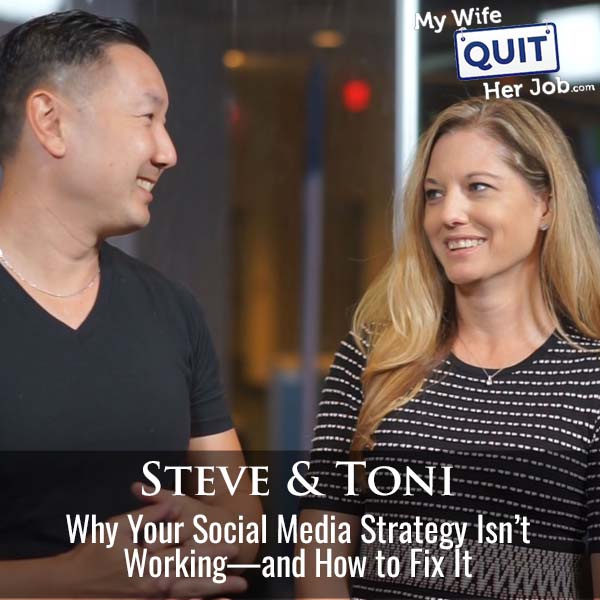
This episode is the final part of a four-part series on content creation, and it is a candid conversation with my longtime co-host Toni Herrbach about what is working on social media right now versus what most creators are wasting their time on. We cover the mindset shift that unlocks social, the exact posting frequency that grew Toni’s friend’s TikTok from 1,500 to 10,000 followers in four and a half weeks, why cross-posting the same reel to Instagram and TikTok underperforms, and whether a beginner should start on short form or long form video.
If your posts are getting 40 views and you are ready to give up, read this first.
Get My Free Mini Course On How To Start A Successful Ecommerce Store
If you are interested in starting an ecommerce business, I put together a comprehensive package of resources that will help you launch your own online store from complete scratch. Be sure to grab it before you leave!
Table of Contents
Key takeaways
- Social media is not set-and-forget. Growth is a numbers game, and consistency and frequency beat production value every time.
- You do not need a microphone, a vlogger camera, or editing software to start. Your phone is enough. Removing setup hurdles is more important than upgrading gear.
- Pick one platform and go deep before adding a second. Each platform rewards a different content style, and cross-posting the same clip everywhere underperforms.
- Batch content creation is the only sustainable rhythm. Film seven videos in one sitting, then drip them out over the week.
- The first three seconds of any short-form video decide whether it plays or gets scrolled. Never lead with “hi, I am [name].”
- Long-form YouTube is the highest-return investment for creators willing to grind for 12 to 18 months. Short form is the faster gateway drug if you need early wins to stay motivated.
- Old videos keep earning. A YouTube video that flopped at 60 views in month one can hit 80,000 views three years later once your channel builds authority.
Why most social media strategies fail
Most social media strategies fail because creators treat social like a broadcast channel they can post to twice a week, then check back on for results. Social platforms in 2025 reward frequency, consistency, and native format fluency, and none of those show up in a two-post-per-week cadence. The mindset shift is that social media is a daily creative practice, not a marketing activity.
The second failure mode is trying to be everywhere at once. Cross-posting the same reel to TikTok, Instagram, YouTube Shorts, and Facebook feels efficient. In practice, each platform has a distinctly different audience preference for editing, pacing, and polish, and generic cross-posts underperform native content on every one of them.
The third failure mode is quitting too early. Almost every creator I know who eventually broke through spent 12 to 18 months making content nobody watched before the algorithm gave them a real shot. If you quit at month three, you are quitting in the middle of the required investment.
The mindset shift required to grow on social media
The mindset shift required to grow on social media is accepting that it is a numbers game, and the number is total posts over time, not clever posts. Toni’s friend AJ Bufumo, who spent years making TikToks about mortgage refinancing to modest results, pivoted to making funny videos with his son. Today AJ has more than two million TikTok followers, has been on The Tonight Show, and gets his “bring the boom” dance imitated in the NFL end zone.
The pivot took years. AJ posted consistently the entire time, changing the format based on what the audience responded to, until something hit. That is the actual model.
The most common blocker I see is people convincing themselves they need better gear, a studio setup, or a content calendar before they can start. Our friend Tay from Financial Tortoise built a 300,000-subscriber YouTube channel in three years using only the microphone on his phone, filming straight into the camera. Our friend Jim Wang shoots his TikToks with no external mic at all.
How often should you post on social media
The minimum viable posting cadence for growth on any social platform in 2025 is one post per day, and the top performers post two or three times a day on their primary platform. Anything less than daily makes it very hard to signal to the algorithm that your account is active and worth distributing.
Batching is the only way to sustain that pace without burning out. You do not need to film every day; you need to post every day. Sit down on a Sunday with a shot list of seven ideas, change your shirt between takes if it matters, and film all seven in a single session. Then drip them out through the week.
I typically spend 90 minutes writing a long-form YouTube script and about 15 minutes filming it with a teleprompter. If I redirected that same 90 minutes to short form, I could bank roughly 10 videos, or two weeks of daily posts. The batching math is what makes daily posting realistic for someone with a full-time business.
Which social media platform should you focus on first
You should focus on one social media platform first, matched to your personality, the format of content you can sustain, and the audience you want to build. Trying to grow on three platforms simultaneously guarantees mediocre results on all of them. Pick one, commit for at least 12 months, then add a second only after the first is generating meaningful traffic or revenue.
Here is how Toni and I would match a platform to a creator profile:
| If you are | Best platform to start | Why |
|—|—|—|
| Willing to grind 12-18 months for compounding returns | Long-form YouTube | Highest per-video lifetime value, evergreen search discovery, best monetization |
| Someone who needs early wins to stay motivated | TikTok | Easiest platform to hit early growth from zero, quick feedback loop |
| Building a curated visual brand or lifestyle audience | Instagram | Rewards polished editing, voiceover, and aesthetic consistency |
| Text-first, opinionated, current-events-driven | X or Threads | Fastest way to build an audience around commentary and community |
| Selling to Gen Z or an aesthetic-heavy niche | TikTok + Instagram Reels | Where the buyers are and where discovery is fastest |
TikTok is the fastest way to see early growth
TikTok is the fastest social platform for a new creator to see early growth in 2025 because the algorithm still routinely pushes zero-follower accounts into the For You feed if a single video hits. Our friend Liz, who built the Influencer Fruit Chrome extension for Amazon influencers, had some downtime this fall and started posting on TikTok around one to two videos a day. She grew from 1,500 followers to 10,000 in about four and a half weeks.
She was not niched down. A lot of her content was around lifting heavy weights, but she also posted lifestyle videos, “where did you get that plant” answers, and whatever else felt fun. On TikTok, at the start, breadth beats depth. Post volume until the algorithm shows you what your audience actually wants.
Instagram rewards polished, edited content
Instagram rewards more polished, more curated content than TikTok, and the same clip cross-posted from TikTok to Reels usually underperforms. If TikTok is a raw finger-hitting-the-record-button aesthetic, Instagram is a voiceover-and-B-roll aesthetic. Bed-making content that goes viral on TikTok with someone throwing pillows around performs better on Instagram with a soft voiceover walking through the routine.
If Instagram is your chosen platform, invest in the extra editing pass. It is not optional.
YouTube long-form is the highest-return investment
Long-form YouTube is the highest-return social investment for creators who can commit 12 to 18 months before seeing meaningful results. The reason is that YouTube videos are evergreen. Almost 90% of the videos on my channel still get views today, some in trickles, some in waves, and they compound over time.
Our friend Andy from Marriage, Kids and Money made a video in his first six months that got about 600 views and left him convinced it was a failure. That same video now has more than 80,000 views and has earned him several thousand dollars over time. That is what I mean when I say YouTube is what blogging used to be: every piece of content is a stock that can only go up as your channel accumulates authority.
X and Threads are worth a specific play
X (formerly Twitter) still works for driving email subscribers if you post volume and engage in other people’s threads, but it is no longer possible to grow passively. I ran a full-year X experiment where I hired someone to post three to six times a day, taking snippets from my blog posts and turning them into short standalone posts with occasional lead-magnet links. I grew from roughly 4,000 to 40,000 followers in a year, and X became my third-largest source of new email subs.
The catch is that pure posting no longer works in 2025. You have to reply, quote-post, and get into conversations, or the algorithm ignores you. Threads is currently in the wild-west phase X used to be in, and our friend Deacon Hayes has grown fastest by taking transcripts of his short-form videos and posting them as threads.
How to batch social media content the right way
The right way to batch social media content is to plan a full week of posts in one session, film them back-to-back, and use a scheduling tool for platforms that support it while still posting manually where native uploads perform better. The single biggest lever is committing to one filming day a week and treating it as a non-negotiable calendar block.
- List seven ideas the day before. Ideas should each have a hook, a one-line message, and a payoff. Do not walk into the filming session without a shot list.
- Change outfits between clips. One shirt change per couple of videos is enough to make the drip feel fresh.
- Film all seven in one sitting. Vertical, phone camera, no external mic required. Post-production in your camera roll.
- Post at the same time each day. Consistency helps the algorithm profile your audience.
- Review analytics weekly, not daily. Adjust the next batch based on what actually performed, not what you assumed would.
How to hook viewers in the first three seconds
The first three seconds of any short-form video decide whether a viewer stays or scrolls, so the opening sentence has to be a real hook, not an introduction. “Hi, I am Steve from My Wife Quit Her Job” is the worst possible opening because it uses valuable attention on information viewers do not care about yet.
Strong hooks share a pattern: an unexpected claim, a specific number, a physical action, or a question the viewer wants answered. A video that opens “I refinanced my mortgage three times last year and here is the mistake that cost me $4,200” beats “hey guys, today we’re going to talk about mortgage refinancing” every time.
The finger-hitting-record opening is popular on TikTok because it signals “this is raw and unpolished,” which the TikTok audience specifically wants. On Instagram, the same energy needs to be baked into a voiceover.
Short form vs long form video for beginners
For most beginners, short-form video on TikTok is the better starting point because the early feedback loop keeps you motivated, and long-form YouTube is the better long-term investment because the videos keep earning for years. The right sequence for most people is short form first to build the muscle, then long form once you can stay on camera and hold attention.
Toni’s argument for starting long form is that YouTube is a stock that only goes up with more content, so the earlier you start planting videos, the earlier the compounding starts. My argument for starting short form is that if your personality needs quick wins to stay in the game, you will quit YouTube in month four when nothing is happening.
Both are correct. If you know you can grind for three years with zero visible results, start on YouTube long form. If you know you need a 5,000-view video in month two to keep going, start on TikTok short form and treat it as the gateway to long form.
Why old social content keeps earning
Old social content keeps earning because algorithms reward creator authority, and once your account establishes authority, the platform starts distributing your back catalog to new viewers. A video that hit 60 views in its first month can hit 80,000 views three years later because your channel now has enough weight for the algorithm to trust the recommendation.
I have watched this pattern play out on my own YouTube channel. Videos I made three years ago that started as duds now generate more money and more email subs than they did in their first year. The lesson is that every video you make in the early days is not a failure. It is a deposit into a compounding account you will withdraw from years later.
The same phenomenon shows up in blog content and Instagram carousels. Old, high-quality assets on any platform get rediscovered as your authority grows. Do not delete underperformers. Let them sit and compound.
Frequently asked questions
How often should I post on social media to grow?
The minimum posting frequency for growth on any social platform in 2025 is one post per day on your primary platform. Top performers post two or three times per day. Batch-filming a week of content in a single session is the only sustainable way to hit that cadence without burning out.
Which social media platform is best for beginners?
The best platform for beginners depends on personality. TikTok is the fastest for early growth from zero, YouTube long form pays off biggest over 12 to 18 months, and Instagram rewards curated visual content. Pick one and commit for at least a year before adding a second.
Do I need a microphone or a good camera to start?
No. A modern smartphone is enough to create video content that competes on TikTok, Instagram Reels, and YouTube Shorts. Financial Tortoise built a 300,000-subscriber YouTube channel using only the phone’s built-in microphone. Removing gear hurdles matters more than upgrading gear.
Should I post the same content on TikTok and Instagram?
You can cross-post the same short-form video to TikTok and Instagram Reels to save time, but native content built for each platform’s aesthetic will outperform generic cross-posts. TikTok favors raw and unpolished clips; Instagram favors polished, edited content with a voiceover.
How long does it take to grow a social media account?
Realistic timelines are four to eight weeks for early TikTok traction, three to six months for a Threads or X breakthrough, and 12 to 18 months for meaningful YouTube long-form growth. Anything faster than that is an outlier, not a plan.
Is X (Twitter) still worth posting on in 2025?
Yes, X still drives real email subs and traffic if you post volume (three to six times a day) and engage actively in other people’s threads. Passive posting no longer works. Threads is currently the wild-west alternative with more growth headroom for new accounts.
Why do my early videos get so few views?
Early videos get low views because the algorithm does not yet know who to show them to, and your account has no authority to boost distribution. That is normal. Those same videos often get thousands to tens of thousands of views a year or two later once your channel grows, so leave them up and keep posting.