
Podcast: Download (Duration: 1:04:20 — 88.6MB)
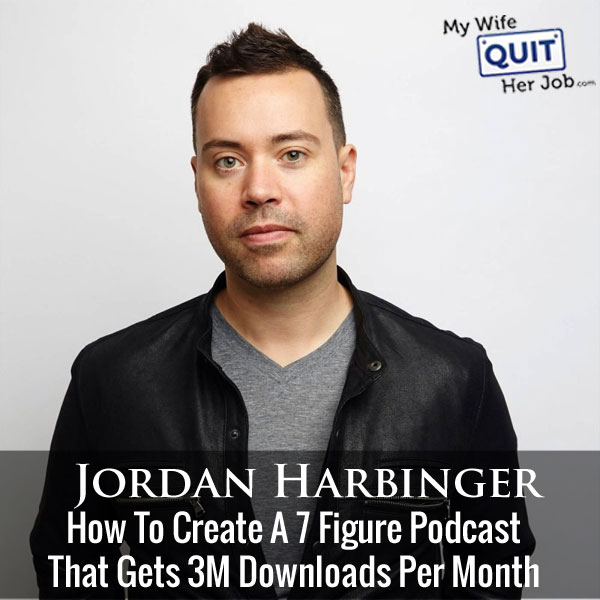
By the time your podcast is large enough to earn a living from advertising, you long ago passed the audience size needed to make far more from your own product. Jordan Harbinger runs a show doing 3.26 million monthly downloads, and he still describes podcast advertising as the worst way to make money from a podcast.
His show grew 5.26 times in three years, from roughly 620,000 monthly downloads in July 2014 to 3.26 million by April 2017. None of that came from paid acquisition.
Jordan runs The Art of Charm, a residential training program plus online courses, with the podcast serving as lead generation. Ad revenue would be seven figures if he sold every slot, and the training business is larger.
This episode covers the arithmetic of podcast sponsorship at different audience sizes, why his CPM is more than 20 times a typical YouTube channel, how publishing frequency produced superlinear growth, and how to land guests before you have numbers.
A note on timing: this is a 2017 conversation. Rates, platforms, and podcast discovery have shifted since, and the underlying economics still hold.
Get My Free Mini Course On How To Start A Successful Ecommerce Store
If you are interested in starting an ecommerce business, I put together a comprehensive package of resources that will help you launch your own online store from complete scratch. Be sure to grab it before you leave!
Table of Contents
Key takeaways
- The show grew 5.26 times in three years with no paid acquisition, entirely on content quality and sharing.
- Podcast ads pay roughly $45 to $50 CPM for an educated affluent audience, against about $2 CPM on YouTube.
- A show with 25,000 downloads per episode nets around $4,000 monthly from two ads at $20 CPM.
- Those same 25,000 listeners buying a $40 product at low single digit conversion produce far more.
- Going from one to two episodes a week produced 2.2 times the downloads rather than double.
- Four episodes a week broke the pattern, so three plus two short formats became the cadence.
- Big guests do not promote their own appearances, so the interview quality is what drives sharing.
- 92% of his listeners hold a bachelor’s degree against a US average of 37%, which is what justifies the CPM.
How much money can a podcast make from ads?
Far less than most people assume, and the math is unforgiving at realistic audience sizes. A show doing 25,000 downloads per episode at $20 CPM earns $500 per ad slot.
Two ads per episode makes $1,000. Weekly publishing brings that to about $4,000 a month.
Hosting costs eat into it immediately. Jordan pays around $2,000 monthly at his scale, and a smaller show should expect several hundred.
At 3,000 downloads the numbers collapse. Even at a well-negotiated $30 CPM, two ads per episode weekly produces about $720 a month.
The average podcast does around 200 downloads. Most shows are nowhere near any of these figures.
Why selling your own product beats podcast sponsorship
The audience required to live on ad revenue vastly exceeds what you need to profit from a product. That gap is the central point.
Run the comparison at 25,000 downloads. Advertising yields roughly $4,000 monthly, while a $40 product converting at a low single digit percentage of those listeners yields multiples of that.
It holds at small scale too. Three thousand engaged listeners can support a few-hundred-dollar product far beyond $720 a month.
Jordan sells sponsorships anyway for specific reasons. His own products all cost over $2,000, so most listeners cannot buy them, and his CPM is unusually high.
What CPM do podcasts get compared to YouTube?
Jordan gets $45 to $50 CPM across three ad slots on his midweek episodes. Some YouTube creators with millions of subscribers earn around $2 CPM.
Advertisers price attention accurately. An hour of sustained listening is worth more than a two-minute video someone clicked past.
Audience quality drives his rate. His listener research found 92% hold a bachelor’s degree against a US average of 37%, and 45% earn over $100,000 against a US average of 18%.
He benchmarked that against NPR. NPR shows 58% with a college degree and 73% earning over $50,000, against his 92% and 85%.
The data came from a third party. A research firm paid separately from him and from advertisers collected it, which is what makes it credible to buyers.
Proper audience research runs around $20,000. Smaller shows should look for cheaper approaches.
Does publishing more episodes grow a podcast?
Up to a point, and the returns were better than proportional. Moving from one to two episodes a week produced 2.2 times the downloads.
Three episodes tripled it. Four broke the pattern entirely and felt like too much, so he pulled back.
The mechanism is engagement rather than volume. More frequent publishing pulled listeners into a habit instead of checking in every couple of months.
Downloads per episode also rose, which is the metric that actually matters. That indicates deeper engagement rather than a larger back catalog.
The final format segments by attention span. Short Monday episodes, two midweek interviews, and a Friday listener-questions show.
Each format serves a different listener. Some people only want the interviews, some only want the advice segments, and some cannot sustain attention past ten minutes.
How do you grow a podcast without paid ads?
Make episodes people want to share and publish them consistently. Jordan does no paid acquisition at all.
Podcasts resist paid promotion structurally. Nobody clicks a Google ad to commit to a 79-minute conversation about spacetime.
Host skill is the growth lever. Constant work on presentation and research is what produced the compounding.
His preparation for large guests is extreme. Before Shaquille O’Neal he interviewed mutual acquaintances, read everything available, and watched years of video.
For Peter Diamandis he read every book and took notes. He arrived knowing more about the recent work than most prior interviewers.
That depth produces incremental gains. Listeners who came for one guest discover the back catalog and stay.
Do big guests actually grow your podcast?
Not by promoting the episode. Neil deGrasse Tyson is not telling his followers to download your show.
Sharing comes from listeners who found it good. The guest name gets people in the door and the interview quality determines whether they return.
A bad interview with a famous guest actively hurts you. Jordan knows shows booking guests as large as his whose listenership is declining because people sampled them and left.
Marketing skill does not save it. Those hosts are better marketers than he is, and audiences that decided the show was weak stop clicking.
Front page placement on iTunes follows from the same thing. Enough sharing and consumption in a short window is what trends an episode, and it is not something you arrange.
How do you book podcast guests without an audience?
Offer what you can actually deliver and build social capital over years. Five thousand listeners can sell a few hundred copies of a book, which is worth a Skype call.
Introductions multiply your value. Offering to connect an author with five other shows of similar size makes you more useful than your download count suggests.
Being easy to work with compounds. Prepared, professional, and reliable gets you referred to that author’s publicist and agent.
Warm introductions do most of the heavy lifting. Jordan still works through mutual connections for a large share of bookings.
Patience closes the hardest ones. Mike Rowe took about a year of politely circling back without becoming entitled about it.
Accumulated names eventually speak for themselves. A pitch listing Shaq, Neil deGrasse Tyson, Tony Hawk, and Mike Rowe gets a chance from people who would otherwise ignore you.
Rejection stays constant regardless. Jordan estimates he is still ignored about 80% of the time.
Should you travel to record podcast interviews?
Yes, when the guest warrants it and needs it. Jordan flies to guests, records at their offices, and has gone to homes and studios.
Skype excludes older guests. Someone unfamiliar with the software may simply decline rather than troubleshoot it.
Insisting on your studio costs you the best bookings. A publicist asked to send a major guest to your house will hang up.
Competition sets the bar. Some hosts fly guests in, put them up, and provide a car, a set, and full crews.
Should you make branding decisions based on sponsors?
No. Jordan turned down enough money to buy the house he grew up in twice because the sponsor wanted him to cover finance.
His network was furious. He declined because he would have hated the content and his audience would have too.
The reasoning is time horizon. Networks optimize for revenue, and he is optimizing for audience over the long run.
Bad ads cost listeners in both directions. Promoting a poor product undermines the audience quality that commands his rates.
The same logic drove a major format shift. The show moved from dating and relationships toward high performers and critical thinking, and he was content to lose listeners who objected.
What does a podcast network do for you?
Sells your advertising and cross-promotes you on other shows. An ad on a large show in the network can bring 10,000 new listeners.
Entry requires scale. Jordan’s network will not take a meeting below 25,000 downloads per episode.
Promotion favors the top. A network with 300 shows promotes its earners, so you have to grow before you are worth promoting.
Commitment matters to them too. Most podcasters quit, reportedly more than nine in ten by episode six.
Should you start a podcast?
Probably not, and Jordan gives that answer deliberately. The market is saturated and hosting is a performance skill requiring research and practice.
He compares it to public speaking. Good speakers rehearse extensively, take classes, do improv, and craft material, while poor ones assume talking is enough.
The format is unforgiving of absence. A blog can hire writers, and nobody can host your show for you next week.
His talk on this is titled as a plea not to start another podcast. Most rooms he delivers it to are relieved.
The people who should do it will ignore the advice. Anyone genuinely drawn to the conversations should test it, and anyone acting on fear of missing out should not.
Frequently asked questions
How much do podcast ads pay?
Jordan gets $45 to $50 CPM across three slots, driven by an unusually educated and affluent audience. Smaller shows using an agency should expect closer to $20 CPM.
How many downloads do you need to make money podcasting?
More than most people expect. At 25,000 downloads per episode with two ads at $20 CPM, weekly publishing yields about $4,000 monthly before hosting costs.
Is it better to sell ads or your own product?
Your own product, at nearly any size. The audience required to live on advertising far exceeds the audience needed to profit from something you sell directly.
Does publishing more episodes grow a podcast?
Yes, superlinearly up to a point. One to two episodes weekly produced 2.2 times the downloads and three tripled it, while four proved to be too many.
Do famous guests grow your podcast?
Less than expected. Big guests rarely promote their appearances, so growth depends on whether listeners find the interview good enough to share.
How do you get guests with a small podcast?
Offer what you can deliver, such as selling a few hundred books or introducing them to similar shows. Be prepared and reliable, and let referrals compound over years.
Is a podcast network worth joining?
It sells your ads and cross-promotes you, and most require at least 25,000 downloads per episode. Networks promote their largest shows first.
Why is podcast CPM higher than YouTube CPM?
Engagement. An hour of sustained listening is worth far more to advertisers than a short video view, which is why podcast rates can exceed YouTube’s by more than twenty times.