
Podcast: Download (Duration: 46:00 — 63.4MB)
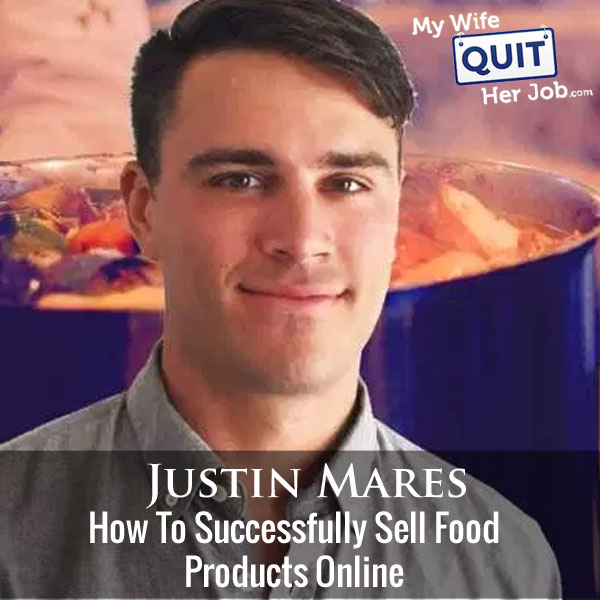
Justin Mares validated a food business with $80 in ads and a landing page whose checkout was a PayPal address typed into a button. That test produced about $500 in orders for a product that did not exist, which he refunded.
He then wired roughly $120,000 to a co-packer for a first production run of 30,000 units. Kettle and Fire reached seven figures within 18 months and secured a national Whole Foods rollout within six months of launch.
The company sells shelf-stable grass-fed bone broth. Choosing shelf stable over frozen is the decision that made everything else possible.
This episode covers how to test a food idea before it exists, what USDA approval involves, why co-packers set high minimums, how the shelf-stable choice unlocked Amazon and retail, and what Whole Foods actually evaluates.
A note on timing: this is a 2017 conversation. Regulatory thresholds, ad costs, and retail relationships change, so verify current requirements. Health effects described here are reported by Justin and his customers rather than established claims.
Get My Free Mini Course On How To Start A Successful Ecommerce Store
If you are interested in starting an ecommerce business, I put together a comprehensive package of resources that will help you launch your own online store from complete scratch. Be sure to grab it before you leave!
Table of Contents
Key takeaways
- Validate before building: $80 in ads produced $500 in orders through a PayPal checkout for a nonexistent product.
- Bing ads were cheaper than Facebook for reaching statistical significance on an unknown audience.
- He called about 300 manufacturers before finding one around number 280 who could make the product.
- USDA regulation kicks in above roughly 3% meat content, covering facility, sourcing, formula, and packaging language.
- Co-packers refuse small customers, and a 30,000-unit minimum run cost over $100,000.
- Shelf stable beat frozen because frozen shipping runs $20 to $40 per order, often equal to unit cost.
- Cold outreach offering free samples to influencers produced Instagram posts, blog coverage, and email features.
- Whole Foods evaluates dollars per store per week, and benchmarks vary enormously by category.
How do you validate a food product before making it?
Build a landing page, buy a small amount of traffic, and take real orders for something that does not exist yet. Justin spent about $80 on ads and collected roughly $500 in orders.
The page was deliberately crude. An orange buy button sent people to PayPal with instructions to send $29 to a Gmail address.
That crudeness strengthens the signal. People pushed through an obviously unpolished checkout to buy something unavailable.
He refunded every order. Then he emailed those buyers asking why they wanted it and how they had heard of bone broth.
Bing carried the test rather than Facebook. Cheaper clicks meant reaching significance faster, and overbidding competitors on search terms was affordable.
Search also fit the unknown audience. Facebook excels at interest targeting, and he did not yet know who his customer was.
What does it take to sell food products legally?
Small-scale selling is largely unregulated, and scale changes everything. Farmers market and home kitchen exemptions exist, and Justin cites a threshold around $100,000 a year.
Retail is the harder line. You cannot sell into stores without proper certification regardless of volume.
His product falls under USDA because of meat content. Bones typically carry tendon scraps, pushing past the roughly 3% threshold that triggers oversight.
USDA review is comprehensive. They examine the co-packing facility, sourcing, formula, and the exact language on your packaging.
Cost is mostly time rather than money. Working through a co-packer means submitting documentation and waiting.
How do you find a manufacturer for a food product?
Call until someone says yes. Justin contacted roughly 300 companies before finding one around number 280 who could produce it.
That manufacturer solved the next problem too. They could make it and needed a formula, and referred him to a developer who had worked on Iron Chef.
Consistency is the real formulation challenge. Bones sourced nationally vary, and holding a product steady across that variance is difficult.
He knew nothing about any of this beforehand. The knowledge came from the calls themselves.
Why do co-packers require large minimum orders?
They will not work with small customers, because their equipment only pays for itself at volume. Justin’s minimum first run was 30,000 units at over $100,000.
The machinery explains it. A co-packer with five to ten million dollars in equipment needs high utilization, and a few large customers at full capacity supports a healthy business.
That capital requirement is what deters most food entrepreneurs. Justin funded the first run himself, and most first-time founders will not commit that upfront.
Knock-off risk is low. Running a co-packing operation and building a consumer brand require entirely different skills.
Should you sell frozen or shelf-stable food?
Shelf stable, when you can afford the delay and the capital. Frozen shipping costs $20 to $40 per order, which frequently equals the unit cost itself.
Frozen is dramatically faster to launch. You can make it in your kitchen, sell it at a farmers market, and handle USDA questions once you have a real business.
Shelf stable requires everything upfront. USDA approval, sourcing, formula, and full product development before selling a single unit.
The payoff is every channel opening at once. Shelf stable made Amazon, retail placement, and affordable direct shipping possible in ways frozen competitors could not match.
It also matched his skills. An online marketing background is far more valuable without prohibitive shipping costs attached to every order.
How do you get influencers to promote a food product?
Cold email offering a free sample, with a brief founding story. Justin’s outreach was two sentences about why they made it, followed by asking for an address.
The ask is easy to accept. You are offering a free product to someone likely to enjoy it.
Coverage followed naturally. Early supporters posted on Instagram, wrote blog posts, and featured the product in emails without being asked.
The product being genuinely differentiated is what made it work. Being first with something convenient and shelf stable gave people a reason to talk.
Influencer traffic arrives in bursts. That volatility is why he shifted investment toward content and SEO for steadier volume.
How do you get a product into Whole Foods?
Apply and prove your numbers in a regional test. Kettle and Fire got in within six months of launching and earned a national rollout after strong regional performance.
Anyone can apply, and most get declined. Products that are undifferentiated or off-trend do not make it.
Differentiation is their actual criterion. New and interesting products are the main advantage Whole Foods holds over larger grocers.
The application covers sourcing practices, financial stability, production capacity, and samples. Nothing exotic.
Regional testing determines everything after that. Strong numbers in a limited rollout is what triggers expansion.
The argument that closes it is revenue. When your data shows the retailer is losing money by not carrying you, the decision becomes easy.
What margins and volumes does retail expect?
Whole Foods generally looks for 30% to 40% margin, so your wholesale price has to accommodate that. Volume expectations are measured in dollars per store per week.
Benchmarks vary enormously by category. A cereal product might need $20 per store per week while a juice or kombucha needs $200.
The retailer knows the benchmark and you will not. They will tell you what average looks like in your category.
Underperformance has a clear consequence. Products below the benchmark typically get removed within six to twelve months.
What return on ad spend can a food product get?
Justin ran 300% to 400% on early search campaigns, bidding on bone broth terms and related amino acid keywords. He describes the campaigns as far from optimized.
Costs rose as the category grew. Those keywords were inexpensive when nobody was competing for them.
Search worked because demand already existed. People were actively looking for the product in a space with almost no competition.
How do you structure a subscription for a consumable product?
Discount the subscription meaningfully and default to monthly. Kettle and Fire prices subscriptions about 25% below one-time purchases.
Monthly was chosen without much analysis at first. Refining it with data came later.
Retention benefits from replacing an existing habit. Many customers were making broth themselves before finding a convenient alternative.
Why you should avoid hard selling a health product
Overselling damages trust in the entire product category, not just your brand. Justin points to people aggressively marketing similar supplements as a cautionary case.
His alternative is education. If someone decides they want the product, being the best available option should be enough.
That reframes the marketing problem. The work becomes explaining the category rather than pressuring the purchase.
Email follows the same approach. Site visitors get 10% off, blog readers get a recipe book, and the sequence covers benefits and what makes the product distinct.
Should you build your own production facility?
Probably not while you are still growing. Justin estimates three to seven million dollars to build his own, and that capital may do more invested in growth.
Growth is what the category rewards. Retailers and large consumer goods companies evaluate food brands on trajectory.
Outgrowing a co-packer eventually happens. He expects to reconsider production once capacity becomes a real constraint.
The company bootstrapped to profitability before raising a small round. That funding covered inventory, brought in people who knew the space, and relieved cash flow pressure on hiring.
Frequently asked questions
How do you test a food product idea?
Build a simple landing page, buy a small amount of search traffic, and take real orders. Justin spent $80 and collected $500 in orders before the product existed, then refunded everyone.
Do you need USDA approval to sell food?
It depends on your product. Meat content above roughly 3% triggers USDA oversight covering facility, sourcing, formula, and packaging language, while small-scale sales often fall under exemptions.
How much does a first food production run cost?
Justin’s minimum was 30,000 units at over $100,000. Co-packers set high minimums because their equipment only pays off at volume.
Should you sell frozen or shelf-stable food online?
Shelf stable if you can fund it. Frozen shipping costs $20 to $40 per order, frequently equal to the unit cost, and shelf stable opens Amazon and retail.
How do you find a food co-packer?
Volume of outreach. Justin called about 300 manufacturers before finding one around number 280 who could make his product and referred him to a formulator.
How do you get into Whole Foods?
Apply with a differentiated product, prove yourself in a regional test, and let the numbers make the case. Kettle and Fire got in within six months of launching.
What margin does Whole Foods require?
Generally 30% to 40%, so your wholesale price must accommodate that. They also measure dollars per store per week against a category benchmark.
How much should you discount a subscription?
Kettle and Fire prices subscriptions about 25% below one-time purchases, defaulting to monthly delivery.