Podcast: Download (Duration: 49:44 — 57.2MB)
You can validate a product before you launch by building a deliberately unpolished landing page, driving a few thousand Facebook clicks to it, and measuring what percentage of visitors click add to cart. Kevin Williams looks for a minimum 3% add-to-cart rate, and the Brush Hero test hit nearly 8% on roughly 8,000 to 9,000 clicks.
Kevin describes his previous career as a venture capital mercenary, parachuting into companies to fix, improve, or close them on behalf of angel investors and VCs. That experience convinced him the real skill is testing opportunities cheaply and early rather than spending tens of millions before discovering the answer.
Brush Hero is a hose-powered spinning cleaning brush that appeared on Shark Tank, and Kevin’s company licenses patents rather than inventing products. This episode covers his validation method, the licensing terms he pays, why he keeps landing pages deliberately half-finished, and the mechanics of selling to Costco and Walmart.
Get My Free Mini Course On How To Start A Successful Ecommerce Store
If you are interested in starting an ecommerce business, I put together a comprehensive package of resources that will help you launch your own online store from complete scratch. Be sure to grab it before you leave!
Table of Contents
Key takeaways
- Build a rough landing page, send Facebook traffic to it, and route add-to-cart clicks to a “sold out, leave your email” page. Measure intent before you build anything.
- Set a 3% add-to-cart minimum. 8% is exceptional, and dropping to 3% is fair when you have no video.
- Write your target number down before the test and seal it in an envelope, so you cannot rationalize a weak result afterward.
- Keep test pages deliberately unfinished. The more effort you invest, the more likely you are to fall in love with a bad concept.
- Patent licensing runs roughly 4% to 5% of gross sales on the core product, dropping to 2% to 2.5% on derivative products.
- Costco marks up physical products by only 14.6% because their profit comes from memberships.
- Costco pallets hold 75 units versus 800+ for standard retail, because they engineer scarcity into the shopping experience.
- Only invest in products with a consumable element, so you have something to remarket to customers.
How do you test whether a product will sell before you build it?
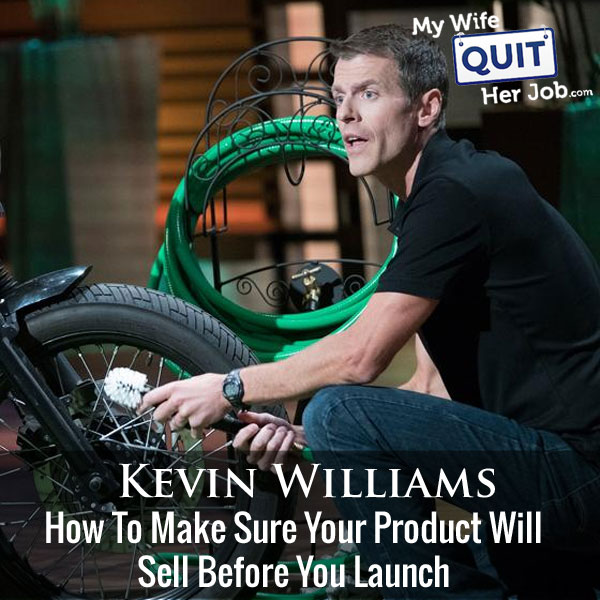
Build a simple landing page, drive paid traffic to it, and count how many people click add to cart. Kevin’s Brush Hero test was a single page with sales copy, a video of him squatting next to his car cleaning a wheel, more copy, and one large call to action in the middle.
The mechanic that makes it a test rather than a launch is what happens after the click. Instead of a checkout, visitors reached a page saying the product was sold out and inviting them to leave an email for restock notification.
He sent roughly 8,000 to 9,000 clicks through Facebook campaigns across a few different audiences. The best-performing campaign produced an add-to-cart rate approaching 8%.
He shot the photos himself in a light box as an amateur photographer, along with a couple of quick dirty-wheel-to-clean-wheel clips. The whole page took a few hours.
What add-to-cart rate means a product is worth pursuing?
Three percent is Kevin’s floor and 8% is exceptional. Those numbers assume a rough page rather than an optimized one, which is what makes them meaningful.
Purchase conversion is a separate target. He wants to see 2.5% to 4% actual purchase conversion once a real store exists.
Adjust for what you have. With no video, a 3% add-to-cart rate is respectable where a video-backed page should be reaching 5% or 6%.
Why you should keep test landing pages deliberately unfinished
Investing time and polish into a test page makes you fall in love with the concept, which destroys your ability to walk away. Kevin builds them half-finished on purpose.
The failure mode is predictable. A weak result arrives, you start reasoning that half a percent might be good enough, or that you just did not execute it properly.
His countermeasure is a sealed envelope. He writes down the target number before the test, sets it aside, then opens it afterward and holds himself to it as honestly as he can.
That target varies by product and comes from instinct rather than formula. Committing to it in advance is what makes the instinct useful rather than self-serving.
How do you test a product that does not physically exist yet?
Photograph a prototype and edit it in Photoshop, changing colors, adding backgrounds, and pushing the copy harder. Kevin runs this test routinely on patents he has not licensed and products he cannot yet manufacture.
Video is the format he prefers when it is available. His team specifically hunts for products with visual demonstrability, such as the dirty-wheel-to-clean-wheel transformation.
Personality works as well as mechanics. His cooking product line features the patent holder, a White House cook, who carries a video on presence alone.
How does licensing a patent work for a physical product?
Kevin’s company buys or licenses patents rather than inventing, paying roughly 4% to 5% of gross sales on the core product. Derivative products built on the same intellectual property drop to 2% to 2.5%.
He always secures exclusive global rights to the underlying IP, effectively permanently. That matters because a limited territory license caps where the business can go.
The opportunity exists because inventors rarely market well. Thousands of genuinely useful patents sit idle with people who built something clever and cannot sell it.
Brush Hero came from an engineer in Oxford, England whose product was going nowhere in the UK. Kevin’s partner bought one as a car enthusiast, could not find a second, tracked down the original seller, and cold-called him.
They keep inventors involved as partners with incentives to keep developing. That usually comes with a first right of refusal on their future products.
What comes after a successful validation test?
Move to a genuine minimum viable product test, which for Brush Hero meant importing 1,000 units and hiring a low-budget video crew for content. The spend moves from four figures to five figures at that point.
Amazon enters the picture early, and not as a discovery channel. Kevin is explicit that Amazon is poor at introducing genuinely new products and excellent as infrastructure.
That infrastructure advantage is the reason. Multichannel fulfillment lets you ship product to Amazon, stand up a Shopify store, connect the two through something like ShipStation, and fulfill everything without building a warehouse.
The same approach works for new markets. Before entering Europe they shipped 500 to 1,000 units, launched a German-language site, and ran German direct response advertising, which grew into seven figures of European revenue.
How do you launch a genuinely new product on Amazon?
New products are hard on Amazon because nobody is searching for something they do not know exists. Kevin targets the category keywords instead, in his case wheel brush and detail brush.
The launch stack combines aggressive early review generation, influencer outreach, and demonstrating sales velocity to the ranking algorithm. Traffic comes from Facebook and from an influencer network.
He avoids incentivized reviews and uses disclosed influencer arrangements to get product into the right hands. Blog coverage follows from those relationships.
How do you find influencers for a new product?
Prospect on YouTube yourself rather than using influencer marketplaces. Kevin has tried several services and had consistently better results reaching out directly.
His selection criterion is trajectory rather than size. He targets creators with tens of thousands of followers who appear to be on the upslope, then invests in many of them as a portfolio.
Shared interest opens doors that money does not. Brush Hero’s primary market is cars and motorcycles, and Kevin races mountain bikes and cyclocross, which let him approach that community as a member rather than an advertiser.
The compensation is modest as a result. Free product, roughly $500 in prizes for sponsoring a race, and a private affiliate program that produces limited direct sales while keeping creators motivated to mention the brand.
Should you send ads to your own site or to Amazon?
Send ads to your own site and accept that a large share of that traffic will complete the purchase on Amazon anyway. Kevin estimates roughly 40% of people who add to cart on his site bleed off to Amazon.
Capturing the customer is why the site wins. Average order value is considerably higher on his own store, and only there can he remarket to those buyers.
Because of the bleed, judging Facebook campaigns on their own cost per acquisition understates performance badly. He evaluates at the enterprise level instead, folding the Amazon spillover into the cost of sales calculation.
Two situations flip the priority. Ranking pushes send traffic straight to Amazon deliberately, and running low on stock during the holidays means shifting advertising to Amazon so their fulfillment covers last-minute buyers.
How do you track sales from ads sent directly to Amazon?
Associates links are the best known method and sit in a gray area of Amazon’s terms of service, which is why Kevin generally avoids them. The alternative is inferring from Amazon’s own metrics.
That method works directionally. Knowing your typical session percentage and traffic level, you push several thousand Facebook clicks to an Amazon link and look for the movement in those numbers.
He calls it a low-yield analysis and a hairy way to optimize campaigns. It gives you a general read rather than reliable attribution.
Brand search volume is the cleaner long-term signal. Brush Hero now sees hundreds of people typing the brand name into Amazon daily even during periods with no advertising running.
Why does Kevin only invest in products with a consumable element?
A consumable component gives you something to sell the customer again, which is what makes the acquisition cost worthwhile. It is a required criterion for anything his company invests in.
Brush Hero consumes bristles and they sell soaps alongside it. The cooking line has spices, oils, and other repeat purchases.
That requirement changes which patents are worth licensing. A brilliant one-time purchase with no follow-on has a fundamentally weaker business behind it.
How does selling to Costco actually work?
Costco marks up physical products by only 14.6%, because their profit comes from memberships rather than from product margin. That structure is publicly documented in their financial filings.
The practical effect is a strong wholesale price. On a $25 retail item, Kevin’s gross revenue is about $21.
Pricing is a conversation rather than a formula, and what Costco wants is turnover and member value. A bundle worth $50 elsewhere priced at 40% to 50% off reads as genuine value to members, which is what keeps memberships renewing.
Pallets are engineered to be inefficient on purpose. A standard retail pallet carries over 800 units and a Costco pallet carries 75, because wall-to-wall stacking hurts the shopping experience and visible scarcity encourages buying.
What does Costco packaging cost a small brand?
Costco packaging can cost more than the product itself at small volumes. Kevin’s 75-unit pallet requires custom cards in two layers of 24-point card stock with a blister in between, roughly 14 inches by 13 inches.
Those cards then need a customized interlocking tray set so pallets can be double stacked. Every element is specified.
Economics improve at tens of thousands of units and a trial run is break-even at best. Kevin’s own trial covered 16 stores and generated learnings on pricing, positioning, and packaging rather than profit.
How do Walmart terms differ from Costco?
Walmart operates on far thinner per-unit margins and vastly greater volume, and demands operational precision Costco does not. Kevin is entering roughly 3,800 Walmart stores against about 500 Costco locations domestically.
The inventory model inverts. Costco takes 75 units per store, Walmart might take 46 and expect to sell half a unit per store per week across hundreds of thousands of competing SKUs.
That means constantly fulfilling small case quantities into the Walmart distribution system. Kevin is hiring a dedicated retail channel manager specifically to handle that bureaucracy.
Walmart has zero tolerance for lateness, operational shortcomings, or product issues. Kevin’s description of the buyers is a kindly uncle who is entirely open about the fact that failure ends the relationship.
Why price integrity matters before you enter retail
Once a price exists in the wild it becomes your price permanently, so getting it wrong in either direction is costly. Set it too low and you leave money on the table forever, set it too high and you miss the turnover retailers require.
Brush Hero’s direct-to-consumer price is $34.99, and Kevin expects retail to settle around $29.99. That $5 difference is pure margin, which is why the negotiation matters.
The trade is margin for volume. That only works if the volume is genuinely substantial.
What are the cash flow risks of selling to big retailers?
You pay for inventory 30 days out and get paid 30 to 60 days after delivery, which creates a working capital gap that bootstrapped businesses are not built for. Some Walmart arrangements reportedly pay 60 days after the sale rather than after delivery.
Guaranteed sale terms add the other risk. Kevin’s Costco agreement lets them return anything unsold by early August, which is substantial exposure on a seasonal product.
He manages that by calculating a breakeven unit count in advance and confirming comfort with it. Unsold inventory can still move through a discounted bundle or special offer on his own site.
The scale of this pushed a proudly bootstrapped company toward outside financing. Trade finance, factoring, and revolving credit lines are what wholesale working capital requires.
Was Shark Tank worth it without getting a deal?
Shark Tank paid off through brand awareness and durable Amazon sales even though Brush Hero left without a deal. The application process took months and months.
Producers screen out publicity seekers, so Kevin and his partner decided in advance they would genuinely take a deal. They wrote down an acceptable figure and equity percentage in advance, then ignored it in the room.
Each airing produced spikes of several thousand simultaneous users, across three separate time-zone broadcasts in one night. It was a strong day rather than a record one.
The lasting effect showed up on Amazon, with 700 to 1,000 brand searches per day afterward. Airing in January was poor timing for a hose-mounted product, and the exposure still pays as the product reaches retail shelves where seven million viewers might recognize it.
Frequently asked questions
How do you test a product idea without building it?
Build a rough landing page with sales copy and imagery, drive paid traffic to it, and route add-to-cart clicks to a sold-out page that captures emails. Measure the add-to-cart rate as your signal of purchase intent.
What add-to-cart rate indicates a good product?
At least 3%, with 8% being exceptional. Expect lower numbers without video, and remember that these are on deliberately unpolished pages.
What royalty do you pay to license a patent?
Roughly 4% to 5% of gross sales on the core product, dropping to 2% to 2.5% on derivative products built on the same intellectual property.
Is Amazon good for launching a brand new product?
Not as a discovery channel, since nobody searches for something they do not know exists. Amazon is excellent as fulfillment infrastructure that lets you skip building a warehouse.
How much does Costco mark up products?
About 14.6% on physical products, because Costco’s profit comes from membership fees rather than product margin. That leaves a strong wholesale price for suppliers.
Why are Costco pallets so small?
Costco uses roughly 75-unit pallets against 800-plus for standard retail, because dense stacking hurts the shopping experience and a half-picked pallet creates a sense of scarcity that drives purchases.
What are the payment terms with large retailers?
Typically 30 to 60 days after delivery, with some arrangements reportedly paying 60 days after the item sells. You pay for inventory well before that, which is why wholesale requires real working capital.
Does Shark Tank help if you do not get a deal?
Yes. Brush Hero saw traffic spikes across three airings, lasting brand search volume of 700 to 1,000 per day on Amazon, and recognition value heading into retail distribution.