
Podcast: Download (Duration: 44:37 — 51.3MB)
The single highest-leverage move in ecommerce retention is getting a customer’s second purchase within 90 days. Dustin Robertson has run that analysis at multiple companies, and the finding holds every time: a customer who buys twice inside 90 days has roughly a 90% probability of becoming one of your best customers.
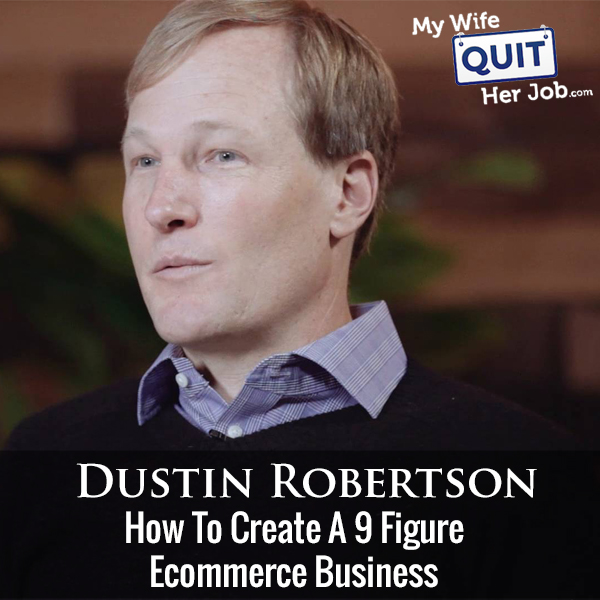
Dustin is the CMO of Drip, and before that he built the digital marketing strategy for Backcountry.com from the ground up to over $350 million in revenue. He has also been CMO at Armada Skis and Vegas.com and advises brands including Liftopia, Altitude, and RallyMe.
Below is the 90-day rule, the segments worth building, why Amazon solved buying and never solved shopping, and what to do with subscribers who stop opening.
Get My Free Mini Course On How To Start A Successful Ecommerce Store
If you are interested in starting an ecommerce business, I put together a comprehensive package of resources that will help you launch your own online store from complete scratch. Be sure to grab it before you leave!
Table of Contents
Key takeaways
- A second purchase within 90 days raises the probability that a customer becomes one of your best customers by roughly 90%.
- Amazon solved buying and never solved shopping. Any purchase requiring one extra step of guidance is where specialty retailers win.
- Backcountry segments by lifetime value and has category experts personally call the top 20% of customers.
- Never delete an unengaged email address. Stop mailing it and use it for Facebook, Instagram, Gmail, and AdWords bid enhancement.
- Resending to non-openers typically produces about a 15% revenue increase.
- A 15% open rate is the line below which something is broken. Well-segmented lists hit 40%.
- Post-purchase emails should start by confirming the customer is happy, not by selling the next item.
- Cast-and-blast always produces revenue in the short run while quietly burning through your list.
How Dustin Robertson helped build Backcountry.com
Backcountry.com started with ski bums selling avalanche beacons on the internet in the mid-1990s. Dustin had moved to Utah for school because it was 27 miles from Alta, and he met the founders while working room service at the ski resort.
Avalanche beacons were obscure backcountry equipment you had to order from Europe, and the team typically got theirs from the resort ski patrol. When a delivery arrived one year, his friend John suggested selling them online.
Dustin had studied marketing and advertising, where you learn theories about reach and impressions without learning whether any of it works. The internet appealed to him precisely because everything was measurable.
They built a brand that was 100% native to the internet with no physical presence.
How Backcountry used community content for SEO
Backcountry built its own review system before 2005, specifically to generate SEO. Fresh content posted to product pages meant Google indexed more often, and customers were the cheapest source of that content.
They then added questions and answers, then photos and videos, then a community leaderboard for contributions that gamified the whole thing. That is what got the brand going and the customer base engaged.
The larger strategy was opening each marketing channel as it appeared. Before Google was a place you could advertise, they made sure they were indexed organically. When AdWords launched, they got very good at placing and converting there.
Email started around 2000, and the reason it worked was the product. Backcountry sold people their passion, and customers described themselves as athletes first: a dentist would say “I’m a cyclist, I do dentistry.”
Why Amazon solved buying but never solved shopping
Amazon made buying things extremely easy and has never solved shopping. The moment a purchase requires one additional step, Amazon stops being the best place to do it.
Dustin’s example is an avalanche beacon. If you want to learn what beacons do, figure out which one fits you, understand how to use it, and know what else you need alongside it, none of that happens on Amazon.
Amazon has all the data it wants and will not spend the time bringing context, timing, guidance, or expertise into the conversation. That gap is the entire opportunity for specialty retailers.
Layer a brand the customer actively wants to associate with on top of that expertise and you have built a moat Amazon cannot cross.
The infrastructure barrier that used to define ecommerce is gone. In the early 2000s Backcountry built its own platform and solved its own hosting and scalability problems, and today a $49 a month Shopify store gets effectively unlimited storage and compute.
That means the differentiator is no longer technology. It is the relationship and the data you hold that Amazon does not.
How Backcountry uses expert personal outreach
Backcountry runs a VIP shopper program called Gearheads: real people who are genuine experts in a category. Customers have them on speed dial and can text, call, email, or simply follow them for recommendations.
This scales because it is targeted by lifetime value. The 80/20 rule applies, roughly 20% of customers generate 80% of revenue, and those are the ones who get called.
Amazon is never going to do this.
How to calculate customer lifetime value
Start simple with gross merchandise value through the door minus returns. More sophisticated versions add acquisition cost and margin.
Dustin’s practical recommendation for getting started is RFM scoring: recency, frequency, monetary. It is an old direct mail concept and it still works.
He does this in a spreadsheet for his own small Shopify store. SaaS platforms are increasingly calculating it natively, and he expects Shopify to do so.
Why the second purchase within 90 days matters most
Customers who made exactly one purchase are the most valuable segment to work on. Getting that second purchase inside 90 days raises the probability of them becoming a top customer by roughly 90%.
Dustin has run extensive data analysis at every company he has worked at trying to identify the right window, and it always lands at 90 days. Most sophisticated retailers who have done this analysis put substantial effort into that window.
You should absolutely have an automated flow driving toward it. A one-size-fits-all flow will underperform, because what triggers a second purchase depends entirely on what the customer bought first.
Someone who bought shoes needs a different follow-up than someone who bought jeans, and someone who shopped women’s needs something different from someone who shopped men’s.
What a post-purchase sequence should actually do first
Follow up seven to nine days after purchase to confirm the customer is happy, not to sell them the next item. If they are not happy, there is no second sale to get.
Ask for a review, ask directly whether they are satisfied, or run an NPS score. Check that box before anything else.
Once they are happy, follow with genuinely useful content for that category. Someone who bought a tent gets maintenance advice on making it last a lifetime.
That is where you can slip in a small $10 item, like a waterproofing solution. You get a second purchase without asking for another $400.
If that does not land, keep enriching the content and start tracking clicks. Send a sleeping pad guide, and if they engage with it, tag them as in-market for sleeping pads and make an offer sized to the tent they already bought.
This gets intricate quickly with a large catalog. Big retailers with dedicated teams upload flows through spreadsheets, and small stores should stick to their biggest cash-cow categories rather than building a thousand branches.
What happens after the second purchase
A second purchase within 90 days moves the customer into the high-LTV bucket. At Backcountry that typically meant four purchases that year.
From there it becomes ongoing personalization: identify the categories they care about, send content in those categories, and mix offers into that content.
Backcountry’s offers are content-led. A customer who bought a tent gets kitchen category information, such as a camp stove guide, with an offer inside it.
Which email segments every ecommerce store should build
| Segment | Why it matters |
|---|---|
| Bought once, never again | Highest-value opportunity. Target the 90-day second purchase window. |
| Engaged but never purchased | Opening and clicking without buying. Find what content they click to learn what is blocking the sale. |
| High LTV | Your top 20%. Worth personal outreach and first access to limited inventory. |
| Lapsed by category cycle | Depends on purchase frequency. In travel, 24 months since purchase signals readiness to buy again. |
| Unengaged | Stop mailing frequently. Keep the address for paid targeting. |
The engaged non-buyer segment is the one most stores miss. Someone opening every fourth email and clicking through without ever purchasing needs analysis, not a generic abandonment sequence.
Look at what content they consistently click. That tells you what they actually want and why the rest is not converting.
Automation is powerful, and leaning on it too heavily makes you miss exactly these situations.
How to segment a list that was never segmented
Start with the highest-level split you can construct: product category or simply recency of engagement. People who engaged in the past 90 days are the strike-while-the-iron-is-hot group and your best bet.
Then bucket outward. People who bought 24 months ago raise the question of why they have not returned, and the answer depends on your product’s natural purchase cycle.
At Vegas.com, the 24-month segment was genuinely valuable because many people take a trip roughly every two years. The message writes itself: it has been a while since your last trip, let us help you find the next one.
For physical goods, work out the replacement or repurchase characteristics of what you sell.
How to build an email list on a new store
The first-purchase discount popup works, which is why everyone uses it, and Dustin recommends a contextual content offer instead. It is a more graceful ask and it captures intent data alongside the address.
The mechanism is waiting until someone has clicked through a page or two so you have context, then offering content specific to what they are looking at.
Liftopia’s version: a visitor browsing Snowbird gets a popup offering a guide to the 10 best runs at Snowbird. The visitor gets something genuinely useful and Liftopia gets an email plus the knowledge of which resort they want.
You can then append a trip date and build a flow around it. Whether they have booked or not, you now know what to say and when.
Delivery can be a PDF, a link to a blog article, or content rendered on the page itself.
When to introduce the offer in a nurture sequence
Match aggression to the buying cycle. A ski trip involves roughly 45 days of research and planning, so the first touch should not attempt to close.
The sequence gets more aggressive as the research window closes. Have you booked yet, no, then let us help, and eventually offer a phone call or another higher-touch moment.
Why cast-and-blast email quietly destroys your list
Sending irrelevant offers to everyone always generates revenue in the short run, which is why it persists. Engagement declines slowly, open rates and click rates drift down, and a fast-growing store masks the damage by continually adding new subscribers.
New subscribers tolerate cast-and-blast for the first couple of months of the relationship. Then they stop opening too.
The real cost shows up later. Once a customer has been trained to ignore you, your genuinely retargeted message does not get seen either.
Dustin sees this at Backcountry today. When a brand goes on sale, the entire list receives it regardless of relevance, and it is usually unrelated to what he buys.
His position is that receiving email twice a week is fine if the offers are relevant to what you actually do. Customers choosing to engage deserve that consideration.
What to do with subscribers who stop opening
Stop mailing them frequently and never delete the address. An email address is the key to digital marketing well beyond your inbox.
Unengaged addresses still power Facebook and Instagram custom audiences. Google is opening its networks too, so you can enhance your AdWords bid when a known customer is searching, and run Gmail advertising.
Those are the two biggest places people search, so an address you cannot email productively still has real value.
Dustin suggests trying to reengage roughly once a quarter with something targeted. Offer a call, or open a different kind of conversation, since some of those people may simply want to tell you something.
Should you resend emails to non-openers?
Yes, and Dustin sees roughly a 15% revenue increase from it. Sometimes the second attempt is simply the one that lands.
The caveat is who you are resending to. Someone who has not opened anything in a long time should not receive resends, because that is a signal to move them into the unengaged bucket instead.
Some email practitioners restrict resends to only the most important campaigns out of deliverability concerns. Dustin finds it hard to tie the practice directly to deliverability and agrees the logic makes sense for chronically unengaged addresses.
What is a good email open rate for ecommerce?
Around 15% is the industry average and Dustin treats it as the line below which something is broken. Falling under it means the content is not resonating, the list is not segmented, or you are mailing too often.
A genuinely engaged audience receiving relevant content can hit 40%. Published averages are hard to use as benchmarks because so many senders email poorly.
Reaching customers on the channel they actually use
Customers want to be contacted the way they choose and will not tell you explicitly. They will opt into email and never open one, while reading every text message you send.
The merchant has to notice that pattern and record it on the customer profile. Automated flows should then follow up on Facebook or SMS rather than assuming email landed.
This kind of multi-channel awareness used to be available only to large retailers and is now accessible to smaller stores.
Building a brand around a movement instead of a product
Dustin’s own Shopify store sells reading glasses, which is about as commoditized as a product gets, and it works because of the movement built around it. The brand is about aging awesome.
His friend started it after hitting the standard problem of not being able to read menus, and finding that the only options were an expensive optometrist visit or drugstore granny readers. Neither appealed.
The brand serves people who need reading glasses and refuse to sacrifice style. The framing is Generation X refusing to stop doing what they have always done.
They launched with four models plus an influencer movement and it worked immediately. The monthly broadcast has nothing to do with glasses and everything to do with interesting things people are doing in life.
That effectively makes it a blog with products behind it that let readers participate in the movement. The brand positioning also opens easily into other categories.
Either your product naturally attracts a passionate following, or you build the movement around it deliberately. Both work.
Where Amazon fits for a brand-led store
Dustin’s reading glasses store does about 50 orders a day and roughly one a day from Amazon, with minimal effort invested there. He would keep the focus on the store regardless.
His view is that selling on Amazon is a cash flow exercise, useful for converting inventory into cash. You do not get the customer, and someone who bought on Amazon will return to Amazon rather than joining your brand.
The reason his glasses sell poorly there is mindset. Nobody starts a search for interesting reading glasses on Amazon, and someone who does is expecting to pay $12 rather than $90.
What actually drives repeat purchases beyond email
Treat customers as people and stop always trying to sell them. That is Dustin’s summary of what builds loyalty.
Once someone becomes a customer, the work is enrolling them in the brand and making them feel part of the movement rather than part of a funnel. That is what turns customers into promoters.
Much of that happens through email, and the essential piece is tracking what they do so you know what they care about. Getting customers to contribute content and write reviews is central today, for the same reason it worked at Backcountry two decades ago.
You can find Dustin on LinkedIn and Twitter at @DustinRobertson.
Frequently asked questions
How soon should a customer make a second purchase?
Within 90 days. Dustin Robertson’s analysis across multiple retailers consistently shows that a second purchase inside that window raises the probability of a customer becoming one of your best customers by roughly 90%.
What should a post-purchase email sequence say first?
Confirm the customer is happy, roughly seven to nine days after delivery, before attempting any additional sale. An unhappy customer will not buy again, so satisfaction has to be verified before you move to a cross-sell.
Should you delete unengaged email subscribers?
No, unless they asked to be removed. Stop mailing them frequently and keep the address for Facebook and Instagram custom audiences, Gmail advertising, and AdWords bid enhancement when they search.
Does resending emails to non-openers work?
Dustin sees roughly a 15% revenue increase from resending to people who did not open. The exception is chronically unengaged subscribers, who should be moved out of your regular sending instead.
What is a good email open rate for an ecommerce store?
About 15% is average and represents the point below which something is wrong. A well-segmented list receiving relevant content can reach 40%.
Why is sending the same promotion to your whole list a problem?
It generates revenue immediately while steadily lowering engagement, so a growing store can mask the damage with new subscribers. Once customers learn to ignore your email, your genuinely targeted messages stop getting seen too.
How do you compete with Amazon as a specialty retailer?
Sell into purchases that require guidance. Amazon made buying easy and never solved shopping, so any category where a customer needs context, expertise, or help choosing is where a specialty retailer wins.
Should you focus on Amazon or your own store?
Your own store. Amazon is useful as a cash flow exercise for converting inventory, and it does not give you the customer, so buyers who find you there tend to return to Amazon rather than joining your brand.