
Podcast: Download (Duration: 48:13 — 55.5MB)
A social media strategy for a new ecommerce store should start with organic TikTok, because roughly one in ten posts carries some viral component and the organic reach dwarfs what Facebook and Instagram now offer. Ads come later, built from the organic content that already proved it works.
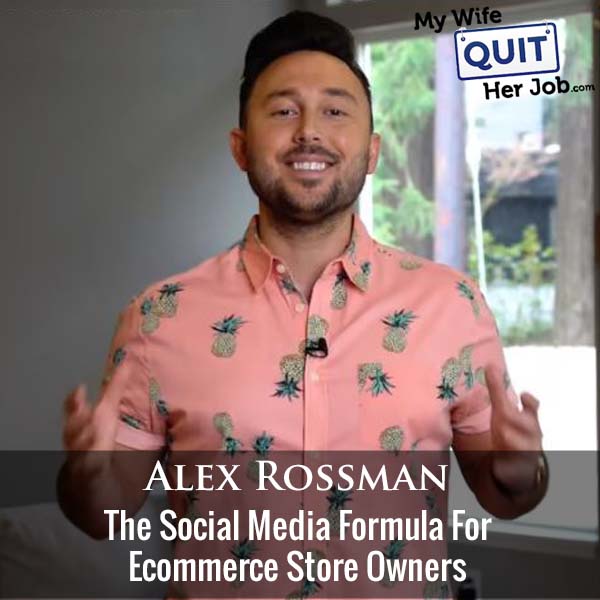
In this episode I sat down with Alex Rossman, founder of Rossman Media, named best social media agency of 2020 by Business Insider, whose clients include Bose, Orange Theory, and Airbnb.
Below is the full breakdown: how to start on TikTok, what actually goes viral, influencer rates, the TikTok ad placements Facebook cannot match, and how to rank every platform on a limited budget.
Get My Free Mini Course On How To Start A Successful Ecommerce Store
If you are interested in starting an ecommerce business, I put together a comprehensive package of resources that will help you launch your own online store from complete scratch. Be sure to grab it before you leave!
Table of Contents
Key takeaways
- Start with organic TikTok. Roughly one in ten posts has a viral component.
- Post one to five times a day early on. Volume is the mechanism.
- Educational demos outperform polished content. Show plainly how the product works.
- TikTok influencer rates range from $100 to $40,000 per post with no established norms.
- Judge influencers on engagement, not followers. Count how many videos actually went viral.
- Run ads from proven organic content. Polished creative fails on TikTok.
- Ads are not the fast path to sales. There is a longer ramp than Facebook.
- Instagram Reels get algorithmic priority over standard feed posts.
Why TikTok is where new ecommerce brands should start
TikTok is the first platform in years genuinely competing with Facebook, YouTube, and Instagram, and its organic reach makes it the obvious starting point for a brand with no audience.
The demographics broadened substantially during the pandemic. What started as a Gen Z platform now spans a wide age range, including middle-aged users looking for entertainment during the day.
The mechanism that makes it work for small brands is volume. Alex’s rough figure is that one in ten posts carries some viral component, which is a very different distribution than mature platforms offer.
My own experience matches. Two months on TikTok produced about 45,000 followers, and roughly one in ten videos took off, including one that crossed a million views.
The near-term development is in-platform checkout. Both TikTok and Instagram are moving toward buying directly in the app rather than routing to a landing page and checkout, which Alex expects to arrive around the same time on both.
How to get started on TikTok as a brand
Follow existing trends before creating your own, because the algorithm weights hashtags heavily and trending hashtags are how new accounts get distribution.
Collaboration is the platform’s design intent. Duets exist to be used, so when a creator posts something that fits your product, build a video with them rather than beside them.
Posting frequency is the other lever. Major TikTok accounts post once or twice daily, and the ones that built followings fastest posted up to five times a day.
The alternative if you will not go on camera: send product to creators who fit your audience, let them post on their own accounts, and get the raw footage back to repost on yours.
What kind of TikTok content actually goes viral
Short educational demonstrations tend to outperform anything polished, and the videos that work are frequently ones the creator did not like.
Alex’s example is a friend who launched a makeup travel case with no marketing budget. She posted three to five times a day for several weeks, hit videos at one, two, and three million views, and sold out within the first month.
Her winners were five to ten second clips showing plainly how the product worked. She leaned on the satisfying snap of the case closing, which is a simple sensory detail rather than a produced concept.
The audience surprise is worth noting. She expected beauty enthusiasts and it took off with gamers who wanted to travel with their equipment. The right audience frequently finds you rather than the reverse.
Calls to action were nearly absent. She included light branding, no swipe-up language, and no hard push to a link.
That matches what I have seen. Steering people toward a website suppresses reach, and anyone who wants your product will search for it. The implication is having an omnichannel presence ready, since a viewer who does not tap your bio link will go to Google or Amazon next.
Posting frequency can drop once you have a following. Alex’s friend tapered off and still gets reach, since an established account distributes better than a new one. Followers do not guarantee engagement, so new content still has to earn it.
How much do TikTok influencers cost?
Rates range from $100 to $40,000 per post with almost no established norms, because many creators went viral without ever learning what to charge.
YouTube and Instagram have settled pricing tied to follower count and engagement. TikTok has not, which cuts both ways for a brand negotiating.
Alex’s recommendation for small brands is going after micro and nano influencers, which on TikTok means roughly 10,000 to 200,000 or 300,000 followers.
Product trades frequently work at that tier. Creators need a steady supply of content ideas, so working with brands benefits them, especially micro influencers building a catalog.
The evaluation criterion is engagement rather than follower count. Alex looks at how many of a creator’s videos actually went viral and what engagement each post generates, since TikTok weights engagement much more heavily than subscriber counts.
What TikTok ads offer that Facebook does not
TikTok offers branded hashtag challenges and branded filters, placements that have no Facebook or YouTube equivalent.
Branded hashtag challenges. Pay to occupy one of the top three slots on the discovery page with your own hashtag, which TikTok launches using its influencer network. The result is a domino effect of user content created continuously around your brand, since participation typically requires including your username or branded hashtag.
Branded filters. Custom effects appearing in the top three to five filter options, which Coca-Cola among others has used. Primarily a brand awareness play.
Both sit at higher budget levels and can outperform standard feed ads.
The ad manager splits into self-serve for small businesses testing the waters and managed services for TikTok or an agency running the campaign. Managed services offers more targeting flexibility, which Alex says works around some iOS restrictions.
Targeting resembles Facebook with custom audiences and lookalikes, and TikTok’s lookalike threshold is lower at roughly 500 records against Facebook’s thousand. Interest targeting is less advanced, which is not necessarily a problem since fewer choices still reach a large audience.
CPMs started higher than Facebook and have fallen since. One client Alex started six months prior saw CPMs drop 30% to 40% over that period.
How to make TikTok ads that work
Use organic content that already performed well as your ad creative, because polished production fails on this platform.
Alex’s first campaign for a client used heavily produced creative resembling a Facebook or Instagram ad, and the audience rejected it outright.
Ads have to match the platform’s native look, feel, and pacing. If a viewer recognizes it as an ad, it is over.
The correlation is reliable enough to systematize: content that performs organically generally performs as a paid ad, which is why testing organically first saves money.
The timing caveat is important. If you need conversions immediately, TikTok ads are the wrong tool because the ramp is longer than Facebook’s. Build the organic channel first, then layer ads on once sales are coming in.
How iOS 14 affected each ad platform
The impact is uneven and unpredictable. Some of Rossman Media’s Facebook accounts are affected and others are not, with ecommerce hit harder than lead generation.
Established accounts fare better because pre-existing data cushions the loss. A new ecommerce brand starting on Facebook now faces a genuinely difficult environment requiring more upfront investment than a year ago.
Google has been largely unaffected and Alex has seen his Google campaigns improve, which fits the pattern of browser-based tracking surviving where app-based tracking did not.
TikTok has workarounds Facebook lacks, particularly on the interest side, plausibly because it has accumulated less purchase data to begin with.
Is organic reach still possible on Facebook and Instagram?
Organic reach on Facebook and Instagram has declined to the point that Alex ranks TikTok, LinkedIn, and YouTube as the genuinely organic-friendly platforms.
Instagram publicly acknowledged this when it announced an attempt to recover the organic potential it had at launch, prompted by creators openly migrating to TikTok.
The friction is visible in policy. Instagram now suppresses Reels carrying a visible TikTok watermark, since cross-posting from a competitor is exactly what it is trying to stop.
Reels themselves get algorithmic priority over standard feed posts, which my own numbers confirm at roughly twenty times the reach. I repost TikToks there with the watermark removed, working within Instagram’s 30-second limit against TikTok’s minute.
Alex’s advice for Instagram and Facebook is leveraging influencers rather than posting into a dead feed, plus treating social as genuinely two-way. Comments and direct messages move the needle more than posting and hoping.
I make more sales from DMs than from posts.
How to rank the platforms on a limited budget
Alex’s order for a new ecommerce brand: TikTok first, Instagram Reels second, Facebook retargeting third, YouTube fourth.
Facebook earns its place through retargeting rather than organic. Once TikTok and Reels drive site traffic, even $10 a day in retargeting is worth running.
YouTube ranks last on his list for speed and remains genuinely viable, particularly if you collaborate with other creators and accept a long build.
My own ranking puts YouTube alongside TikTok at the top, because YouTube traffic is durable. Instagram and Facebook require constant posting, while a YouTube hit pays out for years and TikTok hits can run for a month or more.
Alex agrees with the caveat that YouTube works best as an SEO play. Content answering a commonly searched question lives permanently, and tools like BuzzSumo help identify what is already generating interest.
Snapchat may have a limited argument. Twitter has produced nothing meaningful for the ecommerce brands Rossman Media works with.
Frequently asked questions
Which social media platform should a new ecommerce store start with?
TikTok, because roughly one in ten posts carries a viral component and organic reach far exceeds what Facebook and Instagram now offer. Build the organic channel first, then add Instagram Reels, Facebook retargeting, and YouTube.
How often should you post on TikTok?
One to five times a day when starting out, since volume is the mechanism that produces hits. Frequency can drop once you have a following, because an established account distributes better, though followers alone do not guarantee engagement.
What kind of TikTok content works for products?
Short educational demonstrations, often five to ten seconds, showing plainly how the product works. Polished production underperforms. Follow trending hashtags and use duets, since the algorithm weights hashtags heavily and the platform is built for collaboration.
How much do TikTok influencers charge?
Anywhere from $100 to $40,000 per post, with far less established pricing than YouTube or Instagram. Target micro and nano influencers between roughly 10,000 and 300,000 followers, where product trades often work, and evaluate on engagement rather than follower count.
Do TikTok ads work better than Facebook ads?
Not for immediate conversions, since the ramp is longer. TikTok offers placements Facebook lacks, including branded hashtag challenges and branded filters, and CPMs have dropped 30% to 40% for some accounts. Use organic content that already performed as your ad creative.
Is organic reach still possible on Instagram?
Through Reels, which get algorithmic priority over standard feed posts and can produce roughly twenty times the reach. Instagram suppresses Reels carrying a visible TikTok watermark. For regular feed content, influencer partnerships work better than posting alone.
How did iOS 14 affect ad platforms?
Unevenly. Ecommerce advertisers were hit harder than lead generation, and established accounts fared better because of accumulated data. Google was largely unaffected, and TikTok has workarounds Facebook lacks, likely because it holds less purchase data.