
Podcast: Download (Duration: 53:12 — 61.2MB)
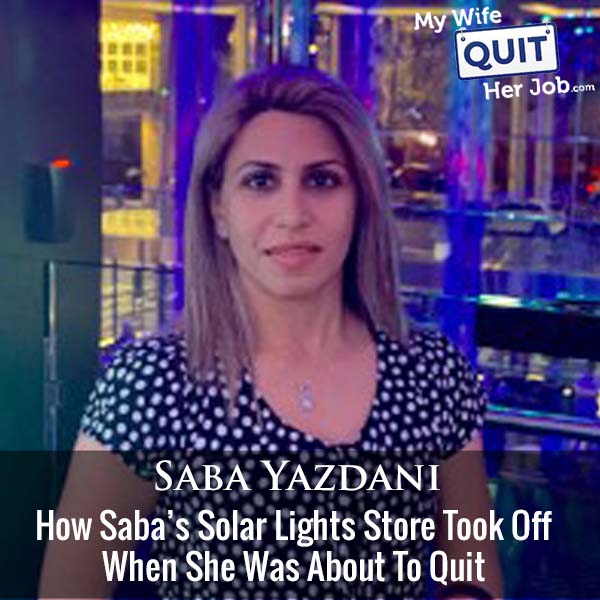
SEO for a brand new ecommerce store realistically takes about two years to reach page one, and revenue during that period is genuinely discouraging. Saba Yazdani spent 24 months adding products and blog posts to Sunshare Solar while celebrating $300 months, then hit page one for her main keyword and has stayed there since.
In this episode I sat down with Saba Yazdani, a student in my Create A Profitable Online Store course since 2015, who quit her job with no other income lined up and started with a $5,000 credit card limit.
Below is the realistic timeline: the niche criteria she used, four months of supplier testing, the two years before SEO worked, how a newspaper feature produced a single $800 day, and the drop-ship-then-stock model she uses now.
Get My Free Mini Course On How To Start A Successful Ecommerce Store
If you are interested in starting an ecommerce business, I put together a comprehensive package of resources that will help you launch your own online store from complete scratch. Be sure to grab it before you leave!
Table of Contents
Key takeaways
- Two years before SEO produced meaningful traffic. Page one arrived in month 24 and has held since.
- Started with $6,000 total. A $5,000 credit card plus $1,000 borrowed from a friend.
- Four months and 30+ suppliers to find the right partners. Two of the original three are still her suppliers six years later.
- First order was 10 units. Two lantern models and five charger models, five products total on the site at launch.
- $300 a month was a good month for two years. Every dollar went back into more product listings.
- Drop ship first, then stock the winners. Find a similar product from a stocking supplier once a keyword ranks.
- Australian search is far less competitive than the US. Her main keyword had 8,800 monthly searches with a competition score of 28.
- Five sales channels now. Two websites, eBay, Catch, and a wholesaler.
How long does SEO actually take for a new store?
Two years is the realistic answer for a store starting from zero with no existing authority. Saba launched in early 2016 and reached page one for “solar lights” in Australia in May 2018.
What happened in between was not nothing, and it was slow. Monthly revenue crept from essentially zero to around $1,000 by the time rankings arrived. A $300 month was cause for celebration.
The work during that period was consistent rather than dramatic: adding a few pages to the site every month, either blog posts or new products, plus backlink building through local business directories, community websites, and networking groups.
Once page one arrived, the position held. She has stayed there since 2018.
The niche criteria that led to solar lights
Saba tested five or six niches before landing on solar lights, using two numeric criteria: monthly search volume around 8,000 and a keyword competition score below 30.
“Solar lights” in Australia had 8,800 monthly searches at a competition score of 28. She then confirmed several related keywords (solar garden lights, solar LEDs) also cleared the threshold, giving her five target keywords to build the site around.
Notably, she had no prior connection to solar products. The niche came entirely from the numbers, arrived at by working from renewable energy down to the most accessible consumer application.
The rejected candidates included silver dinnerware, educational games, and wooden toys.
Worth noting for anyone outside the US: Australian search competition is dramatically lower. A keyword with those metrics would not exist in the American market.
How to find suppliers when you have no track record
Contact suppliers with an email that presents you as larger than you are, request samples from many of them, and expect the process to consume months.
Saba contacted over 30 suppliers, took samples from roughly 15, and spent close to half her total starting capital on samples alone. The process took four months and was the single most time-consuming part of launching.
She started with the cheapest products in her keyword set (solar lanterns and solar chargers) while deliberately choosing suppliers who also carried the higher-priced products she intended to sell later.
The payoff: two of the three suppliers she selected are still her suppliers six years later. She never ordered lanterns or chargers from them again, and the relationship built on those small orders carried into everything since.
What a realistic first order looks like
Her first order was ten units total, spread across two lantern models and five charger models. The site launched with five products.
That is far smaller than most people assume is viable, and it is what $5,000 of credit card capacity minus supplier samples allows.
The reinvestment cycle from there: every dollar earned went into more product variety rather than more inventory depth. Buying five units of a new product to list it beat buying more of something already selling, because the goal was building out categories that could rank.
The first sale and what it does psychologically
Saba’s first sale arrived months after launch, after she had already started listing on eBay out of discouragement. Two solar lanterns, source unknown.
Her description of the effect is worth quoting: it changed her. She went from believing it was not going anywhere to acting on the business again, immediately starting Facebook boosted posts and getting more sales.
This matters practically. The first sale is disproportionately important as evidence, and getting to it fast is worth more than getting to it profitably.
The newspaper feature that produced a single $800 day
In January 2017, with a personal record of $300 per month, Saba’s phone started pinging on a Sunday. Twelve sales in one day, roughly $800.
She had no idea why until a customer called the following day and mentioned seeing the product in a Sunday newspaper feature. A local paper had included her solar charger in a back-to-school collection.
Nobody contacted her. The paper presumably found her through search.
The revenue was a one-off, and the effect on her willingness to continue was substantial. That is genuinely the value: an external signal that the business is real, arriving at a point where she needed one.
The drop ship then stock model
The model Saba runs now: drop ship to identify what sells, then carry inventory on the winners.
The complication is that the exact product you drop ship frequently is not available from a supplier who will sell you wholesale inventory. Her workaround: when a keyword starts ranking or a product gets traction, find a comparable product from a stocking supplier by matching functions and specifications.
Her drop ship suppliers are Australia-based, which keeps delivery times short.
Inventory she does carry sits in a storage room at home. There is no warehouse.
Why she started a second website
Saba launched a second site in late 2020 targeting commercial and government buyers with commercial-grade solar lights and street lights, separating it from the consumer store.
The results so far: three government customers found through search, plus one through a wholesaler who acted as intermediary.
The full channel mix now: two websites, eBay, Catch (an Australian marketplace), and a wholesale lighting store that resells. eBay is under 5% of sales, with eBay and Catch together contributing around 15%.
Google Ads that failed and then worked
Saba ran Google Ads for three months in 2017 and turned them off because they were unprofitable. She restarted with Google Shopping in early 2021 and it has been profitable since.
The difference is worth noting: the same channel that fails on a thin, low-authority store can work once the site has product depth and established rankings. Testing a channel early and concluding it does not work is not the same as concluding it will never work.
What kept her going through two unprofitable years
Saba came close to quitting many times. What kept her going was watching other students in the course succeed, which gave her evidence the model worked even when her own numbers said otherwise.
Her practical method during low periods: return to the course videos and attend the live classes, specifically to see other people getting results.
Her advice to her 2015 self is not about tactics. It is to have more faith in the process and be easier on herself, because the doubt and disappointment were unnecessary and made a hard period harder without changing the outcome.
The underlying discipline was simply consistency: adding a little every week, even without visible results.
Frequently asked questions
How long does SEO take for a new ecommerce store?
Roughly two years to reach page one from a standing start with no existing authority. Saba launched in early 2016 and hit page one for her main keyword in May 2018. Revenue during that period grew slowly from near zero to about $1,000 monthly.
How much money do you need to start an ecommerce store?
Saba started with $6,000: a $5,000 credit card limit plus $1,000 borrowed from a friend. About $1,100 went to the course, roughly half the remainder went to supplier samples, and her first inventory order was ten units across seven product variations.
How do you find good suppliers with no track record?
Contact many of them with an email presenting your business as larger than it is, and request samples widely. Saba contacted over 30 suppliers, sampled from 15, and spent four months on the process. Two of her original three suppliers are still her partners six years later.
What niche criteria should you use for product research?
Saba used monthly search volume around 8,000 and a keyword competition score below 30. Her winning keyword had 8,800 searches at a score of 28. She confirmed several related keywords also cleared the threshold before committing, giving her five terms to build the site around.
Should you drop ship or hold inventory?
Both, in sequence. Drop ship to identify what sells, then carry inventory on the winners. The complication is that the exact drop-shipped product often is not available wholesale, so match functions and specifications to find a comparable product from a stocking supplier.
Why do Google Ads fail for new stores?
A thin site with no rankings and limited product depth converts poorly, so the same campaigns that lose money early can become profitable later. Saba ran ads unprofitably in 2017, stopped, and restarted Google Shopping profitably in 2021 with a much stronger site.
How do you stay motivated when a business is not working?
Watch other people who are succeeding with the same approach. Saba returned to course videos and live classes specifically to see other students getting results. Her retrospective view is that the doubt itself was unnecessary and only made a difficult period harder.