

Podcast: Download (Duration: 49:18 — 56.7MB)
Getting a licensing deal with a professional athlete when nobody knows who you are means building the product first and putting it physically in front of them. Dave Manley spent a year making prototypes, then stood in three-hour autograph lines holding a bobblehead instead of a photo, pitching fighters in the seconds before security moved him along.
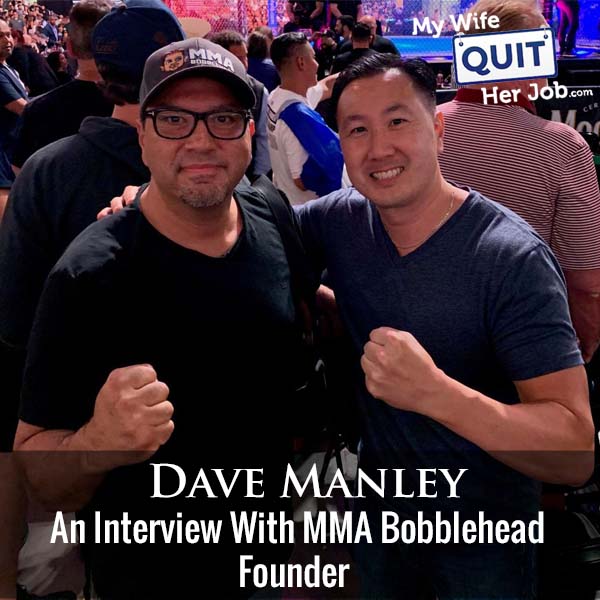
Dave runs MMA Bobblehead, selling high-detail bobbleheads of UFC fighters including Dan Henderson and Chuck Liddell. He was a finalist on The 5 Minute Pitch.
This episode covers how he learned to manufacture, how he got his first athlete signed, why his first release sold terribly, and how organic Instagram took him to $25,000 months.
Get My Free Mini Course On How To Start A Successful Ecommerce Store
If you are interested in starting an ecommerce business, I put together a comprehensive package of resources that will help you launch your own online store from complete scratch. Be sure to grab it before you leave!
Table of Contents
Key takeaways
- Build the product before approaching the talent. A finished prototype is what got fighters to listen.
- His first two US-made prototypes cost $1,000 and were, by his own account, terrible.
- A Hong Kong toy trade show is where he found the manufacturer that made the economics work.
- His first signed release sold 50 units of 1,500 made. Great product, no marketing.
- Month seven hit $25,000 after he started showing up personally on social media.
- Total 2019 ad spend was about $150. Nearly everything was organic Instagram.
- He answers every message himself, treating each buyer as the only buyer.
- Buyers become collectors. One purchase reliably leads to the next release.
Where the idea came from
Dave was at a UFC fight in Las Vegas, three rows from the cage, at 40 or 41 years old.
An hour in, he found himself thinking that if he were ten years younger he would dedicate his life to the sport and find a way to make a living inside that community.
A week later he cleared a shelf in his office intending to collect MMA memorabilia.
He wanted a bobblehead of his favorite fighter and none existed. Nor for the next fighter. Nor for Conor McGregor, the most famous fighter in the sport.
That gap was the entire business case. Bobbleheads have existed for every other sport for fifty years, and MMA is the fastest growing sport in the world.
How to validate an idea when your friends laugh
Dave’s inner circle reacted badly. He was a financial planner who wore a suit to work, and friends whose money he managed found the idea funny.
The reaction changed completely once he asked MMA fans rather than friends.
Every fan said the same thing: how do they not make MMA bobbleheads already?
That distinction matters. The people close to you are not your market, and their reaction says nothing about demand.
How to learn manufacturing from nothing
Dave’s approach was not hiring someone to handle it, because he wanted to understand the process himself while bootstrapping.
He went deep on YouTube: figurines, model painting, clay, paint spraying, bobblehead construction.
Then he researched and cold-contacted model makers and figurine makers, which is a genuinely small niche community. Professional model painters who work on film studio miniatures were part of that search.
His answer to how he convinced anyone to work with an unknown was blunt. Money.
The first two prototypes cost about $1,000 for the pair, which he attributes to not knowing better and being desperate to learn.
He keeps that first bobblehead on his desk. It looks terrible and reminds him how far the product has come.
Why the poses were the actual product differentiator
Dave’s complaint about stadium giveaway bobbleheads is that they are cheap and entirely generic.
Every figure holds a ball in the same motion and looks cartoonish. Without the name on the base you would not recognize LeBron James or Clayton Kershaw.
His approach was capturing fighters in their iconic moments. MMA produces photographs that become famous within the sport, and building those exact poses means a fan recognizes the specific fight and the specific day.
His broader argument is that bobblehead technology has not advanced in decades, because teams only need them good enough to fill seats early and sell more beer.
How he found a manufacturer that made the numbers work
After roughly three US makers, Dave flew to Hong Kong and attended a toy trade show.
The economics there made the business viable, where the US route was an impossibility at any scale.
The current process spans continents. Artists in the US, Europe, and Asia depending on what the specific fighter design needs, his budget, and the level of detail. His lead artist is in Europe.
They build a physical prototype rather than a 3D model, and his lead painter in Orange County paints two or three versions until it is exactly right before production.
Design costs run into a few thousand dollars per fighter depending on detail. Manufacturing is roughly $20 per unit.
How to approach athletes when you have no access
Dave describes this as the hardest part of the business and the part he is asked about least.
The problem is straightforward. You cannot phone LeBron James, and his agent receives a flood of calls.
His first tactic was going where fighters would be, whether a nightclub or an event, and identifying who they were with. When a friend of the fighter separated from the group, he would approach the friend with the bobblehead or a photo of it and explain what he was making.
Most people looked at him as though he were insane.
The autograph line pitch
The breakthrough tactic was three-hour autograph lines.
Everyone else was holding a photo and a pen. Dave was a 41-year-old man holding a bobblehead with no photo.
His pitch had to fit in seconds before security intervened. He would say he was a big fan, that he was making bobbleheads, that he could do a really great job, and ask whether the fighter wanted one made of him, while physically holding the product in front of them.
Security would move him on. He would then approach the next major fighter two spots down the line and do it again.
The prototype he carried was Nate Diaz, in a famous pose, made purely to demonstrate quality. He never claimed to have Diaz signed and still does not have those rights.
How the first real deal happened
Dave was getting rejected constantly and starting to doubt the whole thing after a year of work and money spent.
The call came through four degrees of separation. A friend had a friend who had a friend who knew Dan Henderson, the fighter Dave had originally wanted a bobblehead of.
Henderson wanted to speak within the hour. The call went well enough that they agreed to meet at the MGM the next day, since both were in Vegas.
Dave showed him the work, and Henderson agreed on the spot.
Roughly six months later he released his first legally sellable bobblehead.
Why the first release sold 50 units out of 1,500
Dave manufactured 1,500 Dan Henderson bobbleheads, believing that was conservative given millions of fans.
He sold about 50 in the first month.
His distribution was a new ecommerce site, Henderson promoting it on social, Dave promoting it to 200 Instagram followers, and some Facebook and Instagram ads.
His honest diagnosis is the useful part. He had spent all his time learning to make a perfect bobblehead and zero time learning ecommerce.
The product was excellent and iconic. Nobody came, because nobody knew.
How he turned it around with organic social
The change was becoming the face of the company rather than presenting as a business.
His reasoning was showing MMA fans this was not a conglomerate making a money grab, but someone who is a fan first, exactly like they are.
That runs on Instagram primarily, with Facebook secondary. Roughly 11,000 Instagram followers to 2,000 on Facebook, all built within a year.
Total ad spend across Facebook and Instagram for 2019 was about $150.
By month seven he was making $25,000 in a month, and a later release produced $17,000 to $18,000 in the first few days.
What to post before you have anything to announce
Dave started with photography, since he genuinely loves it. Photos of fighters with his own commentary.
Once he had a bobblehead, the content became process. Photos of the painting, the mold, himself with Dan Henderson or Chuck Liddell, the signings.
He describes it as grassroots baby steps until he had content people would set a timer to watch.
He posts on Instagram every day, mostly about fights happening that week rather than his own products.
Content specifically about the bobbleheads goes out every couple of weeks, deliberately avoiding oversaturation.
How he runs announcements and giveaways
The pattern for a launch is posting that he has a major announcement and will go live in two hours.
People join the Instagram Live, he answers questions directly, and he gives away a bobblehead during it.
His framing is Gary Vaynerchuk’s jab jab jab right hook, which he was living before hearing the term. Give repeatedly, so that asking does not feel unearned.
He asks buyers to tag him, reposts every tag, and answers every message personally with no social media manager.
Why he treats every buyer individually
Dave’s stated approach is treating every person who buys as though they are the only person buying.
The business reason is that buyers become collectors. Someone who buys one buys two, and someone who buys two can be counted on for the next release regardless of which fighter it is.
His complaint about other accounts is instructive. Businesses with 30,000 followers getting 200 likes on a video are either buying followers or doing something wrong.
With 11,000 followers he knows they are real people, because they interact.
What Dave Manley would do differently
His first answer is more money at the start, meaning better allocation rather than borrowing recklessly.
His funding came in layers. About $7,000 to start, then $5,000, then another $5,000, with safety nets built in so he could stop if there was genuinely no interest.
The expense he regrets is ad spend without measurement. He ran $200 over ten days with no pixel, no return data, and no way to know whether it worked.
His advice is either preparing properly before spending or bringing in a consultant, rather than throwing money into the abyss.
The thing he would do more of is video. His takeaway from The 5 Minute Pitch was Scott Voelker’s line that he has a genuinely cool product and nobody knows about it.
Frequently asked questions
How do you get an athlete to license their likeness?
Build a finished product first and put it physically in front of them. Dave Manley pitched UFC fighters in autograph lines holding a completed bobblehead rather than a photo.
How much does it cost to develop a collectible figure?
A few thousand dollars per design depending on detail, plus roughly $20 per unit to manufacture. Dave Manley’s first two US-made prototypes cost about $1,000 for the pair.
Where do you find manufacturers for figurines?
Trade shows. Dave Manley found his manufacturer at a toy trade show in Hong Kong after roughly three US makers proved economically unworkable.
Should you validate a product idea with friends?
No. Dave Manley’s friends laughed at the idea, while every MMA fan he asked responded by wondering why nobody made MMA bobbleheads already.
Why did a great product fail to sell?
Because nobody knew it existed. Dave Manley made 1,500 units and sold 50 in the first month, having spent a year learning manufacturing and no time learning ecommerce.
Can you build a business on organic social media?
Yes. Dave Manley reached $25,000 months on roughly 11,000 Instagram followers, with total 2019 ad spend of about $150.
What should you post before you have a product?
Content your audience already cares about. Dave Manley posted fight photography with his own commentary, then process content showing the painting, molds, and athlete signings.
How do you turn buyers into repeat customers?
Treat each one individually. Dave Manley answers every message himself and reposts every customer tag, and buyers reliably become collectors who purchase each subsequent release.