

Podcast: Download (Duration: 50:57 — 58.6MB)
Creating superfans means inverting the funnel. Instead of pouring traffic in the top and stopping at customer, you start at customer and move people upward through community into genuine fandom. Pat Flynn’s argument is that a thousand superfans paying $100 a year is a six figure business, and that building for them makes the experience better for everyone else too.
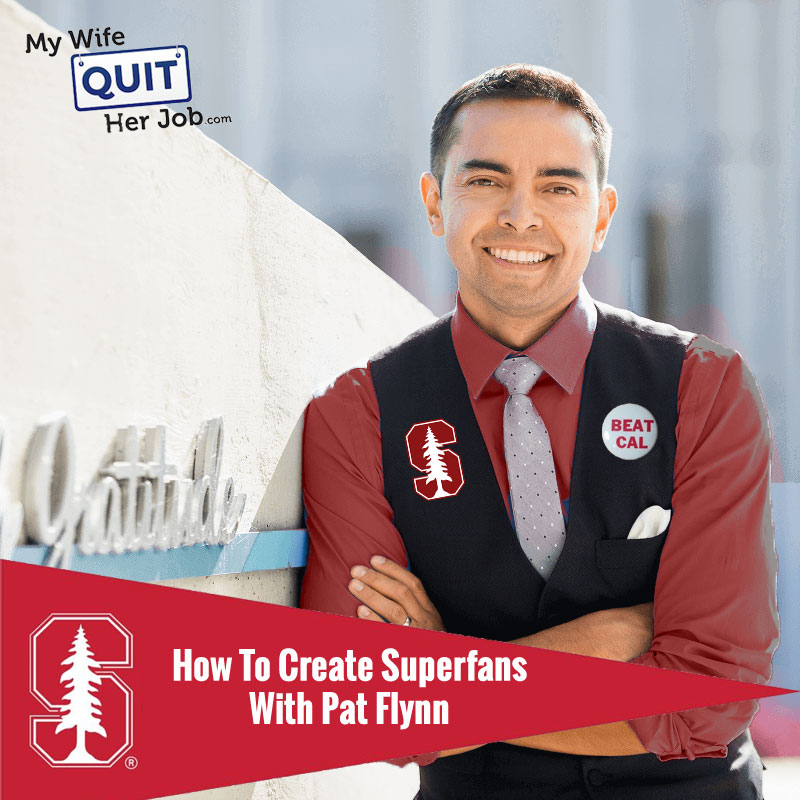
Pat wrote Superfans and hosts Smart Passive Income. He also co-created the SwitchPod, a handheld tripod that raised roughly half a million dollars on Kickstarter, hitting its $100,000 goal in 11 hours and 26 minutes.
This episode covers the superfan pyramid, how to speak your audience’s language, why customers should be the hero, and the specific tactics that turn buyers into advocates.
Get My Free Mini Course On How To Start A Successful Ecommerce Store
If you are interested in starting an ecommerce business, I put together a comprehensive package of resources that will help you launch your own online store from complete scratch. Be sure to grab it before you leave!
Table of Contents
Key takeaways
- A thousand superfans at $100 a year is a six figure business, from Kevin Kelly’s 1,000 True Fans essay.
- Fans are created over time. The song is the entry point, not the fandom.
- Know the lyrics. Use your audience’s exact words in headlines, subject lines, and sales pages.
- Your customer is the hero and your product is the tool, not the other way round.
- Personal video messages after purchase convert customers into advocates at almost no cost.
- Name your community so members can recognize each other.
- Open the factory doors. People genuinely want to see how things are made.
- The pyramid inverts the funnel. Most activity happens at the top, not the bottom.
What a superfan actually is
The concept comes from Kevin Kelly’s 2007 essay, 1,000 True Fans.
His argument was that an artist or creator does not need a blockbuster hit. A thousand true fans is enough for an extraordinary business.
The definitions are behavioral. For a musician, someone who drives ten hours to see your set. For a product creator, someone in line to buy before they know exactly what it is.
Pat’s own version was hosting FlynnCon, where 400 people flew to San Diego with no information beyond the fact that he was holding an event.
The arithmetic is simple. A thousand people paying $100 a year, which is under $10 a month, is $100,000.
Superfans are also the ambassadors who wave your flag and defend you from trolls.
Why one superfan is worth far more than one sale
Pat’s first fan came from his architecture exam business.
A woman named Jackie signed an email “your biggest fan,” which he found genuinely confusing at the time. You are a fan of an athlete or a musician, not someone who helps you pass an exam.
Two months later, 25 customers arrived from the same company domain.
She had convinced everyone in her office to buy his guide. She could simply have shared her copy, and she wanted to support him instead.
Why fandom is built rather than triggered
Pat’s point is that a fan is not created in one moment.
You do not buy VIP tickets and go backstage after hearing one song. The song is the entry point.
Then the album, then a concert, then VIP tickets. Eventually, travelling hours just to see the band play.
His argument is that businesses can build the same escalation deliberately, and that most physical product sellers never try. Most Amazon purchases are purely transactional.
How to learn your audience’s language
Pat calls this knowing the lyrics.
The story behind the chapter is his wife April, a Backstreet Boys superfan with a box of memorabilia in her closet.
Her trigger moment was hearing Quit Playing Games With My Heart shortly after a significant breakup, where every lyric described what she was going through.
The business application is getting genuinely in tune with the specific words your audience uses about their problems.
Those words then appear in email subject lines, website headlines, and product pages. For the SwitchPod, phrases like easy to pack came directly from conversations with videographers, deliberately countering the product they were already frustrated with.
The framing goes deeper than features. Not just that it opens and closes fast, but that it lets you create faster and capture moments quicker.
Why your customer is the hero
Pat credits Donald Miller’s Building a StoryBrand for the structure.
Your customer is the character in the story. Their problem is the villain. You are the guide.
You are not the hero, and neither is your product. Your product is the tool the hero uses.
The practical consequence is spotlighting customers so others want to live that story too.
Podcasting suits this particularly well. Inviting customers and students on to describe where they were, what they struggled with, and how they got through it produces the most natural and authentic testimonials possible.
How to build community around a physical product
Pat’s example of a clothing company doing this exceptionally well is Chubbies.
Their models are their own customers. Photo shoots and Instagram features use community members rather than professionals.
They run a hashtag reflecting their culture and repost community members using it, which encourages everyone else to do the same.
Mini Cooper does the same thing with contests about how much you can fit inside one, which both energizes the community and shows outsiders something they did not know about the product.
For the SwitchPod, the plan was monthly drawings for people submitting videos filmed with it, then featuring those creators by name.
Why to give your community a name
Taylor Swift has Swifties. Star Trek has Trekkies.
Pat’s example of what that produces is a Swiftie taking an entire album display stand at Target and rolling it to the checkout.
The SwitchPod version would be switchers, and the value is recognition. Videographers attend the same conferences repeatedly, so two people with the same product have something to connect over.
A named community also makes merchandise meaningful, because buying it becomes a way to support something you belong to.
Why to show people how your product is made
Pat’s chapter on this is about opening the factory doors.
The instinct with a physical product is protecting the secret sauce, and even Apple, historically secretive, now takes people inside the factory during keynotes.
The reason is that people simply love knowing how things work, which is why shows like How It’s Made run for decades.
The effect on the customer is memory. Brewery tours and chocolate factory tours give you something to recall every time you see that product afterward.
Pat posted factory floor photos of SwitchPods being packed, including his partner Caleb assembling one, which brought backers along on the ride.
How to make individual customers feel seen
The tactic Pat considers most underused in physical products is individualized personal attention.
When someone publicly thanks you for a product on Instagram, go to their profile and send a direct video message.
His script is short. Thank them by name, invite them to send the next video they film with it, tell them they are officially part of the community, and ask what other products would help them.
It does not scale, and that is exactly why it lands. Almost nobody receives that from a company.
How to automate the personal video message
The tool Pat names is Bonjoro, connected to your shopping cart.
A purchase triggers a notification. Swiping it opens a video screen, and you record a short message immediately.
The message covers who you are, that you saw their order, when it ships, and an invitation to ask questions.
Receiving that within minutes of clicking buy produces three effects. More anticipation for the delivery, a higher chance of them replying and interacting, and a much higher chance of them sharing the product publicly.
The physical product advantage is visual. People can photograph a product and show friends how it works, which is far harder with an online course.
How to make it manageable at volume
You do not have to do this for every order.
Pat’s suggestion is blocking 30 minutes on a Friday and working down the list, reaching perhaps 40 customers.
Some are left out, and those 40 receive an interaction they get nowhere else.
My own store does a more selective version. Large orders that look like event planners get a phone call thanking them, which is less overwhelming than trying to reach everyone.
How to handle email once you have too much
Pat’s advantage advice for beginners is that having few people contacting you is itself the opportunity, because you can give everyone extra attention and get ahead of larger competitors.
At scale it breaks. He reached 10,000 unread emails and felt bad about every new one arriving.
The fix was hiring. He declared email bankruptcy, started fresh, and built a system with an assistant that now answers 99% of emails without him.
The insight is that people want the answer rather than the answer specifically from you, and getting it faster matters more. His contact page states plainly that he cannot reply to everyone and that someone will.
The weekly call handles the rest. His assistant runs through 50 items needing his input verbally, he answers, and she writes the replies in his voice.
How to use email to spotlight customers automatically
The automated version fires two to three weeks after purchase.
It checks in, then highlights community members by name: someone filming at a lake, someone who found an unexpected way to use the product that the company never thought of.
Then it invites the reader to reply with their own innovative uses, with the possibility of being featured in a future newsletter.
That gives the recipient a reason to interact and gives you a supply of content produced by customers.
Whether VIP tiers alienate everyone else
The concern is that separating an audience creates resentment.
Pat’s reframe is that seeing a roped-off area at a concert produces aspiration rather than jealousy. Not there yet, rather than excluded.
The rule is that VIP additions must not remove anything the general audience would otherwise expect.
At FlynnCon, VIPs got a photo shoot and special lunches with real costs attached. Everyone still saw Pat at the pool party, and everyone got a signed copy of the book.
The line he draws is illustrative. Giving VIPs a free book while charging everyone else would cross it.
Some people genuinely want to pay for deeper access, and Kickstarter tiers work the same way, where a high pledge might include visiting the factory.
Why the superfan pyramid inverts the funnel
The pyramid in the book puts superfans at the narrow top, then community, then subscribers, then casual audience at the widest base.
Flipped upside down, that is a conventional funnel, where the top is traffic and everyone concentrates on ads, keyword research, and SEO.
The problem with the funnel model is that it implies people pour through automatically and it ends at customer.
Building for superfans moves in the opposite direction, upward against gravity, which takes deliberate effort. It starts at customer rather than ending there.
The result is the familiar concentration. Roughly 20% of your audience producing 80% of revenue.
My own store’s numbers are similar. The top 10% of customers generate close to 50% of revenue, the top 20% around 67%, while 45% of customers who spend little produce about 12%.
Those low-spending customers also generate the most problems, asking for discounts and complaining.
How to build superfans for a mundane product
Pat’s answer is that people do not become fans of the product. They become fans of what the product means.
The SwitchPod packaging says made for creators by creators, which positions it as a tool for their craft rather than a tripod to follow.
For something genuinely unglamorous like garbage cans, the move is finding the movement behind it.
His off-the-cuff version is a productive cleanup crew, built on the premise that a clean house makes you more productive. That gives you content, language, and even a potential brand ambassador in someone like Marie Kondo, who would never partner with a garbage can and might partner with a movement about tidiness and mental health.
The same logic gave the SwitchPod room to expand. The company’s actual purpose is making creating easier, so any new product gets evaluated against that rather than against being a tripod.
Frequently asked questions
What is a superfan?
A customer who advocates for you actively: driving hours to see you, buying before knowing details, defending you publicly. Kevin Kelly’s framing is that a thousand of them at $100 a year is a six figure business.
How do you turn customers into superfans?
Give individualized attention at points where nobody expects it, spotlight customers as heroes of the story, name your community, and show people how your product is made.
What is the fastest way to make a buyer feel special?
A short personal video message after purchase, triggered through a tool like Bonjoro connected to your cart. It costs nothing but time and almost nobody does it.
Should your product or your customer be the hero?
Your customer. Donald Miller’s framing is that the customer is the character, their problem is the villain, and you are the guide whose product is the tool.
How do you build community around a physical product?
Feature customers rather than models, run a hashtag and repost members using it, hold contests around creative uses, and give the community a name members can identify with.
Do VIP tiers alienate your audience?
Not if the VIP offering only adds and never removes. Pat Flynn’s rule is that the general audience must still receive everything they would reasonably expect.
How do you build superfans for a boring product?
Identify the movement the product serves rather than the product itself. Nobody follows a garbage can, and people will follow a message about being more productive at home.
How do you handle email once you get too much?
Hire help and say so publicly. Pat Flynn’s contact page states he cannot reply to everyone, and his team answers 99% of email, since people mostly want a fast answer rather than a specific sender.

