

Podcast: Download (Duration: 53:35 — 61.9MB)
Growing on Instagram comes down to producing one substantial piece of content and breaking it into smaller pieces staggered across platforms, then earning attention by commenting on other people’s accounts rather than waiting to be found. Jasmine Star calls leaving thoughtful comments the single most scalable growth tactic available.
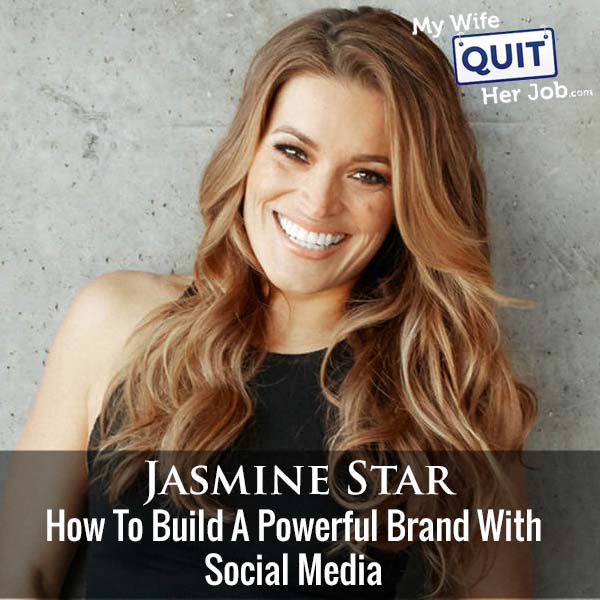
In this episode I spoke with Jasmine Star, founder of Social Curator. She walked away from a UCLA law school scholarship, became one of the top wedding photographers in the world, and now teaches business owners how to build brands on social media.
Below is her whole system: the content repurposing workflow, the staggering schedule across platforms, the 58-second cliffhanger, how she decides between feed and stories, and how to start from zero.
Get My Free Mini Course On How To Start A Successful Ecommerce Store
If you are interested in starting an ecommerce business, I put together a comprehensive package of resources that will help you launch your own online store from complete scratch. Be sure to grab it before you leave!
Table of Contents
Key takeaways
- Create one anchor piece, then break roughly a third of it into a blog post, video script, and social series.
- Stagger platforms deliberately. A week and four hours to the second platform, a week and eight to the third.
- Hook in three seconds, cliffhang at 58 so viewers click through to IGTV.
- Commenting on other accounts is the most scalable tactic, because other people see your comment too.
- Let engagement set your cadence. Three posts a day tanked hers, so she settled at roughly one.
- Attract or repel, never lukewarm. She has no interest in viral reach for its own sake.
- Hashtags drive discovery and not engagement. The content is what determines whether anyone stays.
- Do the unscalable things. A personal video DM often gets reposted to 300 or 400 followers.
How Jasmine Star built an audience before Instagram existed
Her foundation was blogging seven days a week about things other professionals told her nobody would care about.
She started sharing the small things. Getting her first camera, the lenses she bought, where she went on vacation, how she celebrated an anniversary.
Established photographers with studios and portfolios called it unprofessional, and it worked.
The traffic reached roughly 20,000 to 25,000 unique views a day, which she describes as the boot camp that taught her content creation.
The business result was compressed. She moved into a competitive luxury market in about two or three years, against competitors who had spent decades building their careers.
Her definition of a brand is worth keeping. People paying more, waiting longer, and driving farther to get the thing you are selling.
How to repurpose one piece of content across every platform
Start with an anchor piece, then use roughly a third of it as the basis for everything else.
Her current example started with a podcast episode on finding collaboration partners in a downturn.
The sequence built outward from there. Outline and script the podcast, expand it into a long-form PDF opt-in, then take about a third of that PDF for a blog post.
That same third becomes the video script, with small tweaks. A blog post says click here to download and a video says swipe up.
Then it multiplies. An Instagram Live discussing the opt-in becomes an IGTV that lives permanently, the blog post gets a Pinterest graphic, and everything points at the same opt-in.
The reason the core stays singular is that the message has been honed once. Her customers exist on different platforms, so the job is meeting them where they are rather than expecting them to come find her.
They aim for two to three new opt-ins a month built this way.
Why you should stagger content across platforms
Posting the same thing everywhere at once wastes the reach, because people platform hop.
Jasmine’s schedule is specific. Primary platform first, then a week and four hours later on the secondary, then a week and eight hours later on the tertiary.
At the time of our conversation that ordering was Instagram, then Facebook, then LinkedIn, with the LinkedIn version running longer.
The reasoning is about engagement probability. Someone who spends 20 or 30 minutes on Instagram may hop to LinkedIn or Facebook, and seeing identical content twice makes the second engagement unlikely.
The three-second hook and 58-second cliffhanger
Structure video to hook immediately and cliffhang right before the one minute mark.
The first three seconds have to capture why anyone would stay. Comedy, something jarring, or a strong statement of the benefit all work.
Then two or three immediately actionable things, which she calls the crunchy part.
The cliffhanger lands around second 58 or 59. That is where a viewer must click through to IGTV to continue, and that click is a strong organic reach signal on Instagram.
Jasmine is explicit that none of this was instinct. She studied how other creators held attention after failing to get the views she wanted.
How often to post on Instagram
Let your own engagement data set the cadence rather than copying anyone else’s.
Jasmine posts six to seven times a week, essentially daily.
She tested three posts a day because she had seen creators sustain that with engagement holding across all of them.
Her engagement dipped sharply, which she read as her audience telling her it was too much.
Her current mix spans short-form video under 59 seconds, IGTV for anything longer, one or two Lives a week converted into IGTVs, three Reels a week, and longer educational static posts.
Stories run at least two a day, and she treats them as interconnected with everything else.
Why stories affect whether people see your feed posts
Story engagement signals to the algorithm that someone is invested in your account.
Roughly 25% of people watch stories, and what matters is what those people do rather than the count.
Engagement tools are the mechanism. Polls, sliders, and quizzes require an action, and taking that action marks the viewer as highly engaged.
That designation increases the likelihood they see your feed content and see your stories earlier in their lineup.
How to decide between a feed post and a story
Stories carry no obligation to be polished, which makes them the right home for anything spontaneous.
They disappear in 24 hours, so nothing has to be curated or beautiful.
Jasmine uses them for memes she did not create, which credits another creator, drives conversation, and does not have to represent her brand permanently.
Her filter for all content is binary. She is trying to attract or to repel, and has no interest in people who watch lukewarmly without engaging.
She states plainly that she has no desire for a viral video or a million followers for their own sake. Attracting people who go deep is the objective.
How to grow an Instagram account from zero
Create content consistently, then go make people care by caring about them first.
Her framing on a blank account is that it carries no rules and no expectations, which makes it a passport rather than a deficit.
Consistency matters more than volume. Whether your number is daily or twice a week, people need to know who you are and why you do it.
Creating content is only half the job. Nobody knows your account exists, so you have to build pathways to it.
Those pathways are comments, DMs, and poll responses on other people’s accounts. Give the engagement you want to receive.
The framing that governs it all is that people follow accounts for what those accounts do for them. Social media is entirely about the viewer.
Why commenting is the most scalable growth tactic
A thoughtful comment reaches the account owner and everyone else reading that post.
Jasmine cites a photographer who went from zero to over 10,000 followers in under a year by spending a couple of hours daily leaving comments.
She uses hashtag following to find where to comment. Following a hashtag routes new posts using it into her feed, which makes finding like-minded accounts effortless.
She also responds to new followers directly with video messages or DMs, and jumps into poll responses to talk trash with people who voted against her.
Why unscalable personal outreach actually scales
One personal message frequently gets shared to hundreds of people.
Jasmine runs zero automation and zero bots, on the view that they damage an account long term.
The mechanism that makes it scale is resharing. A video response, voice message, or annotated photo often gets posted to that person’s story.
The average Instagram account has 300 to 400 followers, so a single unscalable message reaches an audience you never targeted.
The relationship changes too. Showing up for someone individually makes them show up for you many times over.
What hashtags actually do
Hashtags produce discoverability and never produce engagement.
Jasmine’s position is that the right hashtag does not exist, and the quality of the content is what determines whether a hashtag appears to work.
Her analogy is a crowded bus. The hashtag is a neon sign that gets someone to notice you, and the caption is the conversation that determines whether they engage.
A caption that is nothing but stacked hashtags gives a viewer no reason to stay. A compelling photo and caption is what earns the engagement.
Search-based marketing versus stumble-upon marketing
Jasmine runs both deliberately and treats them as serving different moments.
Search-based marketing serves intent. Someone going to YouTube or Google knowing exactly what they want, which is why she still blogs three to four times a week.
Her approach there is volume over optimization. Multiple posts on a topic rather than one heavily optimized post, with Pinterest pins pointing at whichever performed best.
Stumble-upon marketing serves people who do not know they need something until they see it. A 15-second Reel contrasting what people think online business owners do against reality reached over 200,000 views in under a week and drove a measurable jump in opt-ins.
Her conclusion is that both are necessary, since neither reaches the audience the other one does.
The YouTube mistake she still regrets
Jasmine started a YouTube channel around 2009, reached roughly 50,000 subscribers, and abandoned it.
The early videos were rough. No lighting, a collaged wall behind her, and twelve minutes of talking about photography.
She stopped because individual videos were only getting a few hundred views and it felt like nothing was happening.
Two years later she found those same videos sitting at 30,000 to 40,000 views each, having quietly accumulated on what had become the second largest search engine.
She restarted about two years before our conversation and gets criticism for videos with a few hundred views, which she brushes off.
The production fix is practical. Shoot with the camera pulled back far enough that the same footage can be edited vertically for IGTV and horizontally for YouTube.
Frequently asked questions
How do you grow an Instagram account from zero?
Post consistently at whatever cadence you can sustain, then go leave thoughtful comments and DMs on other accounts. Nobody knows your account exists, so you have to build the pathways to it yourself.
What is the most scalable way to get Instagram followers?
Leaving comments on other people’s posts. The account owner sees it and so does everyone else reading that post. Jasmine Star cites a photographer who reached over 10,000 followers in under a year doing only this.
How often should you post on Instagram?
Let engagement tell you. Jasmine posts six to seven times a week. She tested three times a day, watched engagement drop sharply, and read that as her audience saying it was too much.
How do you structure an Instagram video?
Hook in the first three seconds, deliver two or three immediately useful things, then cliffhang around second 58 or 59. That forces a click through to IGTV, which is a strong organic reach signal.
Do hashtags actually work on Instagram?
For discovery only. Hashtags get you noticed and the content determines whether anyone engages. A caption stacked with hashtags gives a viewer no reason to stay.
Should you use Instagram automation or bots?
Jasmine runs zero automation, on the view that it damages accounts long term. Personal video DMs frequently get reshared to that person’s 300 or 400 followers, which is how unscalable outreach actually scales.
How do you create content for many platforms without burning out?
Build one anchor piece and reuse roughly a third of it everywhere. Jasmine’s podcast becomes a PDF opt-in, a blog post, a video script, an Instagram Live, an IGTV, and a Pinterest pin.
Should you post the same content on every platform at once?
No. People platform hop, so identical content seen twice rarely gets engaged with twice. Jasmine staggers by a week and four hours to her second platform and a week and eight to her third.

