
Podcast: Download (Duration: 54:08 — 62.2MB)
Using TikTok for business means creating edutainment rather than advertising, posting one to three times a day, and sandwiching potentially viral content between business videos so new visitors land on a profile that explains what you do. Keenya Kelly grew to 450,000 followers and generated well over $100,000 in a year from that approach.
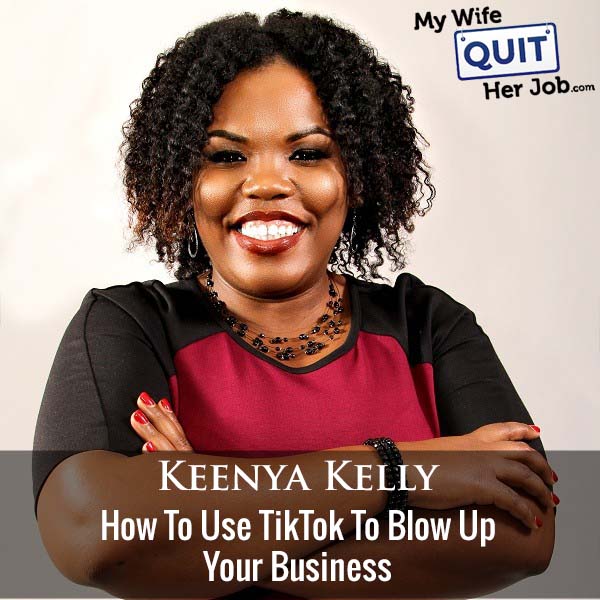
In this episode I sat down with Keenya Kelly, CEO of If You Brand It, who is one of the people who convinced me to start on TikTok in the first place. My own account reached about 47,000 followers in the months after we recorded.
Below is the whole system: how to train the algorithm, what actually makes a video go viral, the cover and caption mechanics most people skip, how hashtags really behave, and why going live changes everything.
Get My Free Mini Course On How To Start A Successful Ecommerce Store
If you are interested in starting an ecommerce business, I put together a comprehensive package of resources that will help you launch your own online store from complete scratch. Be sure to grab it before you leave!
Table of Contents
Key takeaways
- TikTok is not just teenagers. People in their 30s through 60s are there, mostly consuming rather than posting.
- Train the algorithm first. Hold down on content you dislike and mark it not interested.
- Use the business sandwich. Business video, potential viral video, business video.
- Hashtags cut both ways. They also determine what appears in your own feed.
- Set a custom cover with text. It is what convinces profile visitors to keep scrolling.
- Text on screen is mandatory. Many viewers have sound off depending on where they are.
- Going live boosts your whole account. One two-hour live drove a video to 3 million views.
- Even a non-viral video gets 5,000 views, which would be excellent on Facebook.
Why TikTok is not just for teenagers
People in their 30s, 40s, 50s, and 60s are on TikTok in large numbers, and the age skew people notice is in who posts rather than who watches.
Younger users post far more. Everyone older is mostly consuming content silently, which is exactly the audience most businesses want to reach.
The reason the platform feels young when you arrive is that you have not trained it yet.
How to train the TikTok algorithm
Hold your finger down on any video you do not want and tap “not interested,” then keep scrolling until your For You page reflects what you actually care about.
Newer versions let you pick interest categories at signup, which speeds this up.
The algorithm responds fast and specifically. Keenya’s feed is cats, soldiers coming home, and proposals because that is what she engaged with.
The second step for a business owner is the Discover tab. Search your industry term, whether that is beauty products, real estate, or podcasting, and study what people in your category are posting and how those videos perform.
The reason this matters is cultural. Most people arrive wanting to behave the way they do on Facebook or Instagram, and TikTok has a genuinely different culture that you have to observe before you can participate in it.
Why TikTok content has to be different
TikTok rewards edutainment, because it is an entertainment platform first and a marketing channel second.
Keenya’s analogy is the Super Bowl. Doritos behaves completely differently on Super Bowl Sunday than on an ordinary day, and everyone waits to see what they do. TikTok expects that energy every day, and it costs 15 minutes rather than millions of dollars.
Repurposing directly from Facebook and Instagram mostly fails. A static shot of someone talking into a microphone will not perform.
What does work from existing content is extraction. Pull the hottest seven to fifteen second moment from a longer piece, the one that makes someone say “what,” and use it to drive them to the full version.
How TikTok trends work
A trend is a sound or format that many unrelated accounts replicate, and copying is the expected behavior rather than a faux pas.
This inverts Instagram and Facebook norms, where copying gets you criticized. On TikTok it is the mechanism of the platform.
You find trends on the For You page by noticing the same sound or structure appearing repeatedly from people who do not know each other.
Trends are optional. Keenya did not know how to use the features when she started and still grew, and direct-to-camera teaching content performs well on its own.
The reason to use them is the boost. A trending sound gets algorithmic lift, and Keenya has attached a trending sound to a video with no thematic connection and watched it go viral on that basis alone.
There is a second, subtler benefit. When the audience recognizes a sound, they know something will change at the end, so they watch to find out what you did with it.
How to adapt a trend to your business
Take the trend’s structure and swap your business message into the payoff position.
Keenya’s example is the Busted Challenge, where someone appears fresh out of bed, the sound changes, and they reappear glammed up before twerking.
Her version kept everything except the ending. She appeared in a Christmas onesie in her bathroom, transformed when the sound changed, then said that instead of twerking, she would help you get to $10,000 per month.
It went viral because it stayed inside the trend, people watched to see what she would do, and the payoff was her actual offer.
What makes a TikTok video go viral
Grab attention in the first one to two seconds, hook in the middle, and end unexpectedly enough that people rewatch.
Rewatches are the signal. A video people watch repeatedly and share gets pushed hard by the algorithm.
Keenya’s business videos that went viral are extremely short and built on a single surprising claim. One is simply that she was broken after her divorce and made $400,000 in eighteen months after leaving. Another is stating that she is the person who helps people reach $10,000 a month, then walking off screen.
Her framing is that these must be hooky without being fake or manipulative. The claims are true and the delivery is compressed.
TikTok also rewards what she calls petty, meaning content with a bit of edge.
The opening line matters most. Never start with “hi, my name is,” because nobody cares in the first two seconds.
The business sandwich strategy
Post a business video, then your potentially viral video, then another business video immediately after.
The logic is what happens when the middle video takes off. Thousands of people arrive at your profile, and you want them to land somewhere that explains what you do.
Keenya is direct that business content does not go viral as reliably as funny content, which is exactly why the sandwich exists. You use the entertaining video for reach and the surrounding videos for conversion.
Her daily mix runs three or four videos, with roughly one being goofy and the rest closer to business.
Off-topic content is fine in small doses. Her seven-day dating campaign had nothing to do with her business and led to Netflix, BET, and a European network contacting her.
Why non-viral TikTok videos still matter
A video that gets 5,000 views on TikTok is routine, and 5,000 views on Facebook would be an excellent result.
Keenya’s point is that the floor is high enough that you win without going viral. She can reach 5,000 views on a video within a week without anything unusual happening.
For context on the ceiling, she goes viral five to ten times a month.
How to structure a TikTok video
Four elements matter in order: the first two seconds, text on screen, the caption, and the cover.
The first one to two seconds. Whatever appears immediately determines whether anyone stays.
Text on screen. Effectively mandatory, because many viewers have sound off depending on where they are. Use the text duration feature so lines appear and disappear in sync with what you are saying.
The caption. Some people read the caption before deciding to watch. Keep it short and provocative, something like “they said I couldn’t bounce back from divorce,” which makes people decide quickly either way.
The cover. Set a custom cover image with a few words of text explaining what the video is about. This is what profile visitors scan when deciding which of your videos to watch next.
Keep the cover text shorter than the caption so they are not identical. If the caption is eight words, make the cover four, and size the text to fill the frame since you cannot control font size directly.
Should you add a trending sound to every video?
Keenya used to attach a trending sound to everything, sometimes muted, and has moved away from it because TikTok now favors original content.
The tension is real and unresolved. Trending sounds still earn a boost, and the platform is also pushing people talking without borrowed audio.
The practical answer is mixing. With three posts a day, use a trending sound on one and skip it on the others, then watch what your own account responds to.
How TikTok hashtags actually work
Hashtags direct your content toward a specific group, and they also determine what appears in your own feed.
The second half surprises most people. Using a hashtag tells TikTok you want to see that content too, so adding #FYP fills your feed with whatever teenagers using #FYP are posting.
That also makes #FYP useless for reach. It does not push you to more people, it pushes you to everyone else using it.
The right approach is specificity. Keenya reaches her target audience with tags like over 30, over 30 club, adult TikTok, moms on TikTok, and TikTok moms.
Size matters inversely. A hashtag with 1.3 billion views buries you, while one with 249,000 views means your content is a meaningful share of what people browsing that tag will see. Aim for roughly 100,000 to 2 million.
Hashtags are optional. Keenya has cut back to about once a day, largely because researching good ones takes time, and she has seen no downside. Followers still see your content regardless.
How much time TikTok content actually takes
Keenya does everything inside the app and can now edit a video in about a minute.
Her workflow: save videos to favorites while scrolling, pull up the saved ideas at the office, record three or four in a batch, add placeholder text to remember what each is about, then edit and post them individually through the day.
The honest caveat is the learning curve. It took her a long time at first because of how many buttons the app has, and the investment pays back once the interface becomes automatic.
Posting times follow attention. She posts early morning while getting dressed, around lunchtime, around 5pm when people finish work, and sometimes late at night.
Scheduling is limited. You can schedule from a computer and not from the phone, and drafts do not sync between the two, which makes the whole process largely manual.
That same gap makes delegation hard. Drafts live only on your phone, so teams that outsource editing create content outside the app and upload the finished file, which TikTok permits without penalty.
How much to post when starting out
Post one to three times a day, and keep it up for at least ten days before evaluating anything.
The reason is how people decide to follow. Someone landing on a profile with one video has no idea what your content will be, so they scroll to see whether it is worth following.
Do not dump ten videos at once. Post them individually over time, because the order people discover you in is not the order you posted. Video one might get three views and video two might get 10,000, and people who like the second will go find the first.
Why you should go live on TikTok
Going live boosts your entire account, because live videos surface on the For You page for non-followers as well as followers.
The mechanism compounds with existing momentum. Keenya did a two-hour live while being interviewed on her computer, and that day’s video reached 3 million views in eight days while she gained roughly 67,000 followers.
Beyond reach, live is where trust forms. People ask hard questions and hear you answer them in real time, which reveals depth that short videos cannot. She has gained clients directly from live streams.
Lives currently disappear rather than staying on your feed, though they can be downloaded from the backend.
She goes live roughly daily.
How to make money from TikTok
Four paths, most of which route people off the platform.
Driving traffic to your own business. The main one. Keenya has a TikTok freebie in her bio and adds people to her email list daily.
The Creator Fund. Requires being 18 with roughly 10,000 followers and 100,000 views in 30 days, then pays per view like AdSense.
The Creator Marketplace. Opens at 100,000 followers, after which brands approach you directly for paid partnerships.
Live gifts. Viewers can send money during live streams.
For getting people off the platform, the tools are your bio link, which unlocks at 1,000 followers, your connected Instagram and YouTube handles, and on-screen text in videos telling people where to find more. Before Keenya had a clickable link, she typed a plain URL in her bio and people manually entered it.
Which platform to prioritize
Keenya makes the most money from Instagram and would start with TikTok if beginning today.
Instagram converts better for her because DMs there reach the right people. TikTok DMs bring genuine business inquiries alongside messages from 12 and 13 year olds, which is a filtering problem.
The case for starting on TikTok anyway is reach. She sat at 5,000 Instagram followers for years and grew to 17,000 largely from TikTok traffic, while reaching 450,000 on TikTok itself.
The Tabitha Brown example makes the point at scale. She was doing well with 300,000 followers on Instagram and Facebook until her daughter began reposting that content to TikTok, where she gained 2 million followers in four months and went on to deals with Ellen and Oprah.
Which brands are doing TikTok well
Glow Recipe, Chipotle, McDonald’s, Fashion Nova, and Dr Pepper are all using the culture rather than importing traditional ads.
Keenya’s read is that most large brands have not arrived yet, and the ones that have and understand the format are performing exceptionally.
The overproduction question matters less than people assume. Jason Derulo and Will Smith succeed with heavily edited content while unedited in-app content also succeeds, and audiences respond to authenticity because they are used to reality television.
Frequently asked questions
How do you use TikTok for business?
Create edutainment rather than ads, post one to three times a day, and place potentially viral videos between business videos so new visitors land on a profile that explains what you do. Keenya Kelly generated well over $100,000 in a year this way.
Is TikTok only for teenagers?
No. People in their 30s through 60s are on the platform in large numbers, mostly consuming content rather than posting. The younger skew people notice reflects who posts. Training your For You page by marking content not interested changes what you see quickly.
Do you need to use trending sounds?
No, though they earn an algorithmic boost and audiences watch to see how you use a familiar sound. TikTok is now also favoring original content, so mix both. Direct-to-camera teaching videos perform well with no trending audio at all.
How do TikTok hashtags work?
They direct your content toward a group and also determine what appears in your own feed. Using #FYP fills your feed with whatever others tagging it post, and does not increase reach. Target tags with roughly 100,000 to 2 million views rather than billions.
How often should you post on TikTok?
One to three times a day, especially when starting, so profile visitors can see enough content to decide whether to follow. Post videos individually rather than dumping a batch, since people frequently discover your videos out of order.
Should you put text on your TikTok videos?
Yes. Many viewers watch with sound off depending on where they are, so text on screen is close to mandatory. Also set a custom cover with a few words describing the video, since that is what profile visitors scan when choosing what to watch.
Why should you go live on TikTok?
Live videos appear on the For You page for people who do not follow you, and going live while a video is performing amplifies both. One two-hour live drove Keenya’s video to 3 million views and gained roughly 67,000 followers.