
Podcast: Download (Duration: 55:06 — 63.3MB)
Authors make money from three sources, and book royalties are the smallest of them. Mike Michalowicz, author of Profit First, gets roughly one-third of his company revenue from royalties and advances, and the other two-thirds from licensing deals (mid-six figures per book, plus 15% of licensee revenue) and consulting.
On a traditionally published hardcover, the author nets about $4 per copy sold, so a single book almost never funds a living. A compendium of books plus a licensing model does.
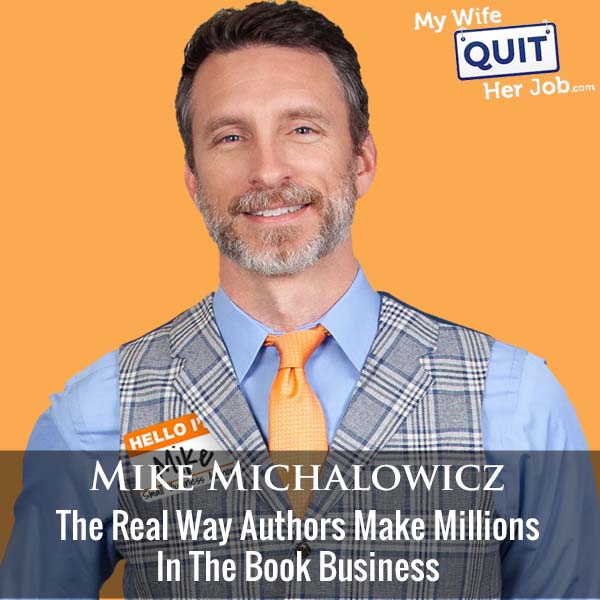
In this episode I sat down with Mike Michalowicz, author of Profit First, Clockwork, The Pumpkin Plan, Fix This Next, and Get Different, to break down the real economics of the book business: what a publisher actually pays, why the advance is the only thing that matters in a traditional deal, why bestseller lists are worthless, and the marketing tactics that actually move books in 2022.
Below is the full breakdown: royalty math, the licensing model that generates most of his income, self-publishing versus traditional versus hybrid, why he never uses an agent, and the five marketing channels ranked by what actually works.
Get My Free Mini Course On How To Start A Successful Ecommerce Store
If you are interested in starting an ecommerce business, I put together a comprehensive package of resources that will help you launch your own online store from complete scratch. Be sure to grab it before you leave!
Table of Contents
Key takeaways
- Royalties are ~1/3 of income. Licensing is the bigger half. Mike sells exclusive teaching licenses per book at mid-six figures plus 15% of licensee revenue.
- You net about $4 per traditionally published hardcover. Amazon buys at ~$12 wholesale on a $25 retail book, publisher pays you 25% of that.
- The advance is the only real benefit of traditional publishing. Ryan Holiday’s rule: your advance should be so high you are unlikely to earn it out.
- Publishers do almost no effective marketing. 99.99% of book marketing is the author’s job, starting the day you begin writing.
- Bestseller lists are worthless and buyable. $50K-$100K buys you a New York Times or Wall Street Journal listing. Word of mouth is what actually sells books.
- Webinars convert at 20-30% on the spot. Podcasts have lost most of their book-selling power. Webinars are the current best channel.
- Amazon ads did not work across two years of testing. On/off tests showed no change in book volume. Facebook ads worked only for list building.
- Build the compendium. About 20% of readers who find one book buy more. A new front-list release lifts your entire back-list.
How much money do authors make per book sold?
Authors make about $4 per traditionally published hardcover copy sold. The chain works like this: a $25 retail hardcover is sold to Amazon at a wholesale “discount price” of roughly $12, the publisher keeps that $12 regardless of what Amazon charges the customer, and the author gets 15% to 40% of the publisher’s take depending on the deal (25% is a common fixed rate at major publishers).
Amazon can then sell the book at any price it wants. It might drop a $25 book to $13 or even $5 as a loss leader, because its algorithm knows that book buyers also buy grills and furniture. That price cut comes out of Amazon’s margin, not the publisher’s or the author’s.
Self-publishing flips the math entirely. Mike printed hardcovers at $3.50 per unit at 20,000-unit volume and sold at $25 retail, netting about $11 per book, or roughly $8 profit per copy after costs.
The licensing model that generates most of an author’s income
The licensing model that generates most of Mike’s income works by selling one exclusive teaching license per book to a company that already delivers that service well but lacks marketing reach. They pay a one-time licensing fee (now mid-six figures) plus 15% of the revenue they generate.
The structure is symbiotic. Mike markets the book, all leads funnel to the licensee, and the licensee handles delivery and service. He does not build or run a consulting business, which frees him to write more books instead of getting trapped servicing one.
He has five licensees across five books, and already sold the license for a book that will not publish until next year. When a new licensee comes on, they typically get 500 to 1,000 qualified prospects in the first week of a book launch, versus maybe 1,000 prospects over a couple of years on their own.
Why 15% is the right licensing revenue share
Fifteen percent is the right licensing revenue share because it leaves the licensee with enough margin to stay confident and profitable. Mike researched this by calling licensees of other author-led programs (Michael Gerber’s E-Myth, the EOS Traction implementers) and asking what worked.
Companies taking 50% of top-line revenue destroyed their licensees financially. Those licensees said the deal was not worth it. Companies taking too little left money on the table.
At 15%, a licensee earning $100,000 writes a $15,000 check and keeps $85,000. They see the value, they stay motivated, and they push for more book sales because more books means more leads for them.
Should you self-publish or go with a traditional publisher?
The only meaningful benefit a traditional publisher offers is the advance, so the decision comes down to whether the advance beats what you would earn self-publishing over the same period. A large advance ($100K+) is usually worth taking. A small advance ($10K-$20K) is often beaten by a few weeks of self-published sales.
Ryan Holiday’s framing, which Mike cites: your advance should be so high that you are unlikely to sell enough volume to earn it out. The moment you earn out, you left money on the table upfront. The counterweight is that publishers get gun-shy about your next deal if you never earn out.
Traditional publishers also provide better developmental and line editing (a genuinely valuable second set of eyes), plus international distribution networks that are faster than doing it yourself. Both can be replicated by self-publishers who hire well.
Why publishers do almost no marketing for your book
Publishers do almost no effective marketing for your book because you are one of dozens of titles in their launch queue. They will notify a list of 200-250 podcasts about your book, the same list they notify five times a week about every other book they launch, and you might get picked up by one or two.
They will not spend money on Facebook ads or Amazon ads for an unknown-quantity title. The irony is that publishers increase marketing spend AFTER a book proves itself. Penguin put more money behind Profit First years after launch than they ever did at release, because by then they knew it worked.
Plan for 99.99% of the marketing to be your job. Start the day you begin writing, not the month before launch.
Why bestseller lists are worthless (and buyable)
Bestseller lists like the New York Times and Wall Street Journal are worthless for actually selling books, and they can be purchased outright for $50,000 to $100,000 through companies that orchestrate bulk buys and reimburse the buyers.
Mike has hit the Wall Street Journal list twice through organic sales and says it produced zero measurable value. Nobody bought more books because of it. The dust-jacket “Wall Street Journal Bestseller” label moves nothing.
What actually sells books is word of mouth. A reader recommending your book to someone else beats any list placement. Bought listings can even backfire, since a reader who sees a bestseller label on a book nobody has heard of gets confused rather than impressed.
The organic path: sell 10,000 books a week for three to four consecutive weeks in individual purchases (bulk corporate buys do not count) and you will hit the New York Times list in non-fiction.
What actually sells books: the 5 channels ranked
The five channels that actually sell books, ranked by effectiveness: your own email list, your influencer network, webinars, multi-book offers, and out-of-the-box campaigns. Paid ads do not make the list.
- Your own email list. The single most reliable channel regardless of size. 100 subscribers or 100,000, these are people who chose to hear from you. Mike could move a few thousand books through his list alone.
- Your influencer network. Build genuine relationships with other creators years before you need them. Dig the well before you are thirsty.
- Webinars. Currently the highest-converting channel. Teach the book’s principles on someone else’s audience, then invite them to buy. 20-30% of the audience buys on the spot.
- Multi-book offers. Get one motivated reader to buy four copies and gift three. Publishers see the volume, which matters for your relationship with them.
- Out-of-the-box campaigns. Anything nobody else is doing. See the pay-it-forward and lost-content tactics below.
Why podcasts stopped working for book launches
Podcasts stopped working for book launches because the tactic became saturated, the same way guest blogging died 15 years ago. Fifteen years ago, hitting the main blogs moved a boatload of books. Today, hitting the main podcasts might not move any.
The replacement is webinars. Instead of a 45-minute interview where the book is mentioned twice, you get a live teaching session where you deliver the book’s framework and then ask for the sale directly. You can watch the Amazon ranking drop in real time as the chat fills with purchase confirmations.
Mike did roughly 50 webinar appearances for Get Different. Webinars will eventually saturate too, and then something else will replace them. Everything in marketing has a shelf life.
Two book-launch tactics that actually work
Two book-launch tactics that consistently work are the “lost content” bonus and the pay-it-forward gift campaign. Both beat the tired “buy 40 books and get $7,000 in bonus value” offers that readers have learned to discount.
Lost content (a tactic Mike learned from James Clear): every book has material that gets cut in editing. Save it, and offer it as a bonus for multi-book purchases. The irony is that readers want it precisely because it was rejected. It is voyeuristic and it cannot be obtained any other way.
Pay it forward: for every book purchased, ship a free copy to a recipient of the buyer’s choice, gifted in their name rather than yours. Publishers will supply the inventory cheaply (they print at ~50 cents per unit at their volume) if you frame it as a marketing campaign. The buyer gives a gift at no cost, the recipient gets a free book, and you build a list of new readers.
Do Amazon ads work for selling books?
Amazon ads do not work for selling books. Mike’s team spent tens of thousands of dollars testing over two years across multiple books, ad placements, and popularity tiers. Running ads for a month, then stopping for a month, showed no change in book sales volume.
The conclusion from the testing: the people clicking and buying through the ads were already seeking the book and would have bought it anyway. The ad spend simply intercepted an existing purchase intent.
His publisher’s co-op money confirmed it. When Penguin offered marketing dollars and Mike asked about Amazon ads, they reported no return. Facebook ads performed better only because they build an email list you can market other books to later.
Why you need multiple books, not one
You need multiple books because a single title almost never hits big enough to fund a living, and each new release lifts the sales of everything you published before it. About 20% of readers who discover you through one book will buy others.
The industry terms: a “front list” book is the current release your publisher’s sales team actively pushes. A “back list” book is everything older, where the publisher just presses print and all marketing falls to you. A strong front-list launch drives traffic to your entire back list.
Mike has eight books including a children’s title. Profit First remains his biggest hit and possibly always will be, and every subsequent book still gets on base and lifts the whole catalog.
Why the title matters more than almost anything else
The title matters more than almost anything else because readers judge books by their covers, and a title that delivers the entire solution in two words creates word-of-mouth virality. “Profit First” explains the whole system: take your profit first, the pay-yourself-first principle applied to business.
Mike has met readers who recommend Profit First without having read it. They heard the title, understood the concept from the title alone, implemented it, and got results. That is a title doing the entire job of the book.
The second ingredient: put a new spin on an established idea. Pay-yourself-first has been taught in The Richest Man in Babylon and Think and Grow Rich for a century.
Nobody had applied it to business cash-flow management. Old idea, new application, new idea.
Frequently asked questions
How much does an author make per book sold?
About $4 per traditionally published hardcover. A $25 retail book sells to Amazon at roughly $12 wholesale, the publisher keeps that $12, and the author gets 15-40% of it (25% is common at major publishers). Self-publishing nets roughly $8 profit per copy at volume.
How do authors actually make a living from books?
Most successful non-fiction authors make the majority of their income from things attached to the book rather than book royalties. Mike Michalowicz gets about one-third from royalties and advances, and the rest from licensing (mid-six-figure fees plus 15% of licensee revenue) and consulting.
Is a traditional publisher or self-publishing better?
It depends entirely on the advance. A $100K+ advance is usually worth taking. A $10K-$20K advance is often beaten by a few weeks of self-published sales, where you net roughly $8 per copy instead of $4. Traditional publishers also provide better editing and faster international distribution.
Do publishers market your book?
Barely. They will notify a list of 200-250 podcasts about your book, the same list they notify five times a week about every other title. They will not spend on paid ads for an unproven book. Expect 99.99% of the marketing to be your responsibility, starting the day you begin writing.
Are New York Times and Wall Street Journal bestseller lists worth pursuing?
No. They can be bought for $50,000-$100,000 through companies that orchestrate and reimburse bulk purchases, and they produce no measurable increase in book sales. Word of mouth is what sells books. The organic route requires 10,000 individual sales per week for three to four consecutive weeks.
What is the best way to market a book in 2022?
Your own email list first, then your influencer network, then webinars. Webinars convert 20-30% of the audience on the spot when you teach the book’s framework on someone else’s audience and then ask for the sale. Podcasts have lost most of their book-selling power due to saturation.
Do Amazon ads work for books?
No. Two years of on/off testing across multiple books, placements, and popularity levels showed no measurable change in sales volume. The buyers clicking through were already seeking the book. Facebook ads work only as a list-building tool, not for direct book sales.
How much do authors charge for book licensing deals?
Mike Michalowicz started at $50,000 for his first license (The Pumpkin Plan), moved to $100,000, and now charges mid-six figures per book, plus 15% of the licensee’s ongoing revenue. He sells one exclusive license per book, to a company that already delivers that service well.