
Podcast: Download (Duration: 50:28 — 58.0MB)
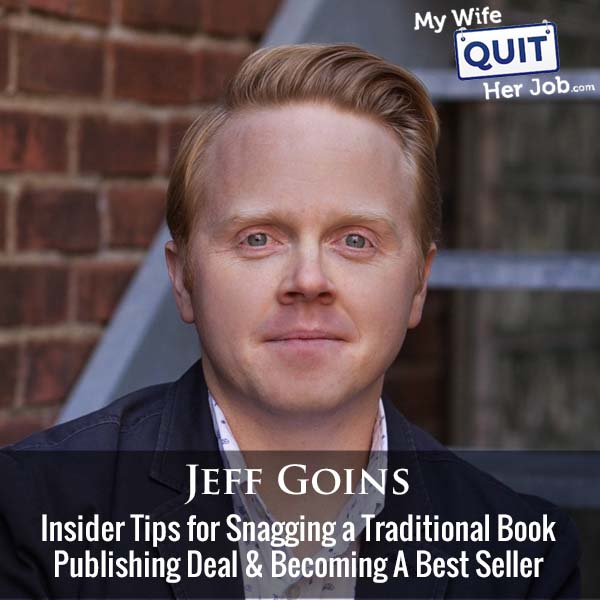
To get a traditional book deal with one of the Big Five publishers, you need three things before you pitch: an email list of at least 10,000 people, a genuinely differentiated idea, and a professional book proposal (typically 40 to 50 pages) shopped by a literary agent to editors those agents already know. That is the through line of my conversation with bestselling author Jeff Goins, founder of Fresh Complaint, who ghostwrote and shaped my book The Family First Entrepreneur into the six-figure HarperCollins deal I signed.
Jeff has published four traditional books, hit The Wall Street Journal and USA Today bestseller lists with The Art of Work (~100,000 copies sold), and has been guiding other authors through the same process for years. In this episode we walk through what a book proposal actually contains, why you almost always need an agent, how the writing itself happens, and what a real bestseller campaign looks like behind the scenes.
Below is a full breakdown of the traditional book publishing process, the real economics of a book advance, self vs traditional publishing, and answers to the questions I get asked most.
Get My Free Mini Course On How To Start A Successful Ecommerce Store
If you are interested in starting an ecommerce business, I put together a comprehensive package of resources that will help you launch your own online store from complete scratch. Be sure to grab it before you leave!
Table of Contents
Key takeaways
- The three prerequisites for a traditional book deal: a 10,000+ email list, a differentiated idea, and a professional book proposal shopped by an agent.
- A book proposal typically runs 40 to 50 pages and includes author bio, marketing/publicity plan, target market, comparable titles, annotated outline, and a sample chapter.
- Agents take 15% of everything (advance plus royalties) and are worth it: they get you into publishers, negotiate better deals, and protect your IP.
- To hit a national bestseller list you generally need to sell 5,000 to 6,000 US hardcover copies in a single week, and ebooks and audiobooks do not count.
- Jeff sold ~15,500 copies of The Art of Work in week one via a free-plus-shipping offer to his 50,000-person email list plus a network of affiliate partners; two-thirds of sales came from partner promotions, not his own audience.
- Free-plus-shipping bestseller campaigns work but come with real financial risk. Jeff was $200,000 in debt from unexpected costs before pulling a rabbit out of a hat with a post-launch product bundle.
- Self publishing (Amazon KDP) can be done in weeks and keeps all the profit; traditional publishing gets you into physical bookstores, on bestseller lists, and unlocks international rights sales.
Who Jeff Goins is and why he switched from online courses to book coaching
Jeff Goins is a four-time traditionally published author whose bestseller The Art of Work sold about 100,000 copies, and he now runs Fresh Complaint, an agency that helps authors plan, write, edit, and publish books. He co-shaped The Family First Entrepreneur with me, so this interview doubles as a candid behind-the-scenes look at that book.
For years Jeff ran a $500 self-guided online course business and did well with it. In 2020 he went through a personal reset (a midlife crisis and a divorce), courses stopped selling as consistently, and he had already started ghostwriting a book for our mutual friend Grant Baldwin as a side project.
By 2021 he sunsetted all his courses in a flash sale and went all-in on the agency. He says he misses selling products and will probably return to them eventually because they pair well with services.
Who can realistically get a traditional book deal
You need three things before a Big Five publisher will take you seriously: at least 10,000 people on your email list, an idea that is actually differentiated from the last ten books in your category, and a professional book proposal presented by a legitimate literary agent. Jeff will not take on a client with fewer than 10,000 email subscribers because publishers simply will not pay attention.
He also filters for interest, not just eligibility. He will not work on fiction, boring corporate books, or “just publish my blog posts” projects, because if the idea does not challenge him he checks out and the book suffers.
In my case, what got him excited was the tension of running multiple businesses while genuinely putting my family first. That was the “cool idea” he thought a publisher would buy.
What a book proposal actually contains
A traditional book proposal is typically 40 to 50 pages long (mine was 49) and it is what the agent uses to sell your book to publishers before you have written the book itself. It is essentially a business plan for the book.
The standard sections in a proposal are:
- Highlights about the author (credentials, platform, previous work)
- About the collaborator (if you are working with a ghostwriter or co-author)
- Marketing and publicity plan for the book
- Target market and audience
- Comparable titles (books like yours, and how yours is different)
- Annotated outline (every chapter, one paragraph each)
- A sample chapter
Writing the proposal is not fast. My proposal took a year of work with Jeff. Jeff says his team’s minimum is three to four months for a first draft, then another two to three months of revisions with the agent before it is ready to shop.
Why you need a literary agent (and what 15% actually gets you)
You need a literary agent because they get you into publishers you cannot reach cold, negotiate better contracts, and protect your intellectual property, and they typically pay for themselves by increasing the size of your advance. Agents take 15% of everything (advance plus royalties), and unagented authors make measurably less money on average.
The three things a good agent brings:
- Relationships. Agents already know acquiring editors at HarperCollins, Penguin Random House, Simon & Schuster, Hachette, and Macmillan. They set up meetings you would never get on your own.
- Legal protection. Publisher contracts routinely include language that could give the publisher rights over your derivative products (courses, membership sites, spin-offs). Jeff has had clients who almost handed away control of a course platform because the book was named after it.
- Editorial input. Many agents come from the publisher side. My agent Roger was previously an editor at HarperCollins, and he helped position the book to attract the best possible deal.
Even after four books, Jeff still uses an agent. If he ever went without one, he says he would at minimum hire an IP lawyer to review the contract.
How the writing actually gets done
There are roughly two types of book projects: an author with a big idea but no existing content (which requires weekly Zooms, transcribed interviews, and building the book from scratch), and an author with mountains of existing content (blog posts, courses, podcasts) that has to be organized into a coherent through line. The Family First Entrepreneur was the second type, since I came in with 800+ blog posts, 400+ course videos, and roughly 350 podcast episodes.
The writing process in that second case is asynchronous. Jeff and his team took my existing content, identified the through line, drafted ugly first passes, then iterated. Jeff calls the first stage “building the book” rather than writing.
The finished manuscript took about nine months to draft after the proposal was done. I read it probably 25 times before signing off. Jeff’s memorable line: “A book has to be really bad before it gets really good.”
The real economics of a book advance
A six-figure advance sounds huge until you do the math on when you actually earn out. Royalties on a traditionally published book are roughly 15% per copy sold. At a $30 cover price, that is ~$4.50 per book.
A $100,000 advance therefore requires around 22,000 copies sold before you earn a single additional dollar in royalties, and 22,000 copies is genuinely hard to hit. Most business books never earn out their advance.
I never expected the book to be a moneymaker. Every penny of the advance went back into marketing.
What it actually takes to hit a national bestseller list
To hit The Wall Street Journal, USA Today, or New York Times bestseller list you generally need to sell around 5,000 to 6,000 US hardcover copies in a single week, and ebooks and audiobooks do not count. Every sale must also be attributed to a unique buyer or IP address, so you cannot simply bulk-buy 6,000 copies for yourself.
The distinction matters because it changes your entire launch playbook. You cannot rely on Amazon sales alone (their weekly reporting to the lists is uneven), you cannot dump the numbers on your own list, and you need distributed demand across many buyers.
Jeff’s advice, echoing my book launch coach: do not try to sell the book. Sell high-value bonuses, and throw in the book. That is exactly the strategy I ran, offering $690 in bonuses (a print-on-demand workshop, a passive-income workshop, and a six-week Family First business challenge) to make ordering the hardcover a no-brainer.
How Jeff sold 15,500 copies of The Art of Work in week one
For The Art of Work, Jeff pre-sold 15,500 copies through a free-plus-shipping offer to his 50,000-person email list plus a network of affiliate partners, with roughly one-third of sales coming from his own audience and two-thirds from partner promotions. The offer was the paperback for free plus $6.99 shipping, which meant he ate about $8 in cost per book.
Sales broke down roughly like this:
- ~5,000 copies from his own 50,000-person email list (a 10% conversion, run over a six-week email sequence)
- ~10,000 copies from affiliate and JV partners emailing on his behalf
- A “couple thousand” attributable to podcast interviews (out of ~250 podcasts he appeared on for that launch)
The upsell was a $200 course built from the book’s chapters, offered immediately after the free-plus-shipping order. He needed a ~7% conversion rate to break even on the shipping subsidy. He got 4%.
The near-bankruptcy story behind The Art of Work launch
Behind the 100,000-copy career-defining book was a near-bankruptcy. Jeff had modeled his worst case at losing $70,000 (the cash he had in the bank). The actual outcome was ~$200,000 in unexpected costs (higher-than-planned book expenses, an unexpected $50,000 tax bill, and $23-per-book international shipments to Australia, Canada, and even Luxembourg).
He rescued the launch by taking Derek Halpern’s advice: find one thing your audience already wants, package it, and sell it fast. He rebundled an old writing course with the book, ran a two-week product launch, and cleared roughly $250,000, wiping out the debt.
The other landmine: Barnes & Noble sat on a 3,500-book pre-order shipment for three and a half weeks after launch, so Jeff spent that period fielding hundreds of angry emails per day from customers who thought he had scammed them. His takeaway is that he will never act as the bookseller himself again.
Traditional publishing vs self publishing: which one to choose
Traditional publishing is the right choice when you want physical bookstore distribution, a shot at national bestseller lists, and eventual international rights sales; self publishing (via Amazon KDP) is the right choice when you want speed, control, higher per-copy profit, or a niche book that will primarily sell to your own audience. They optimize for different things.
Traditional gives you:
- Placement in Barnes & Noble and independent bookstores
- A realistic path to WSJ, USA Today, and NYT bestseller lists
- A professional editorial team you would otherwise pay tens of thousands to assemble
- Foreign rights sales (Chinese, Korean, Spanish editions) that are extremely hard to close on your own
Self publishing gives you:
- A physical book in your hand in weeks, not years
- Roughly 70% margins instead of 15% royalties
- Full control over cover, pricing, and timing
- No proposal, no agent, no publisher approval loop
Jeff has done both. He self-published a book of poems as a Christmas gift for his wife using Amazon KDP and had a physical copy in his hand within two weeks.
If he had another big idea he wanted the world to hear, he would still go traditional. For a niche product he could sell to his own list, he would self publish.
What differentiates a book that gets a deal from one that does not
Books that get a deal have three things: a platform that gives the publisher a floor of sales, a clearly differentiated angle within a proven category, and an author the acquiring editor personally likes. Everything else is negotiable, but those three are effectively non-negotiable.
If any one is missing, agents will not shop the proposal and editors will not bid. If all three are present, agents compete to represent you and multiple publishers will submit bids, which is how you end up with a real auction.
The auction is what drives advances up. Publishers set a date, submit bids, and you pick the winner (usually on editor fit as much as dollars, since the editor is the person you actually work with for two years).
Frequently asked questions
How do you get a traditional book deal?
You need an email list of at least ~10,000 people, a differentiated idea in a proven category, and a professional book proposal (typically 40 to 50 pages) shopped to editors by a literary agent. The agent takes 15% and pitches the proposal to acquiring editors at the Big Five publishers, who then bid on the book.
How much does a book advance pay?
Business-book advances typically range from $10,000 for a first-time author with a smaller platform up to mid six figures for authors with major reach. Jeff’s first book (The Art of Work) was a $50,000 advance; his follow-up was $150,000. Advances are paid in installments (usually on signing, on delivery of the manuscript, on publication, and on paperback release).
Do you need a literary agent to get published?
You do not technically need an agent, but going without one usually costs you more than the 15% commission would. Agents get you meetings with editors you cannot access on your own, negotiate substantially larger advances, and protect you from contract clauses that could hand the publisher rights over your derivative products.
How many books do you have to sell to hit a bestseller list?
You generally need to sell 5,000 to 6,000 US hardcover copies in a single week to hit the New York Times, Wall Street Journal, or USA Today bestseller list, and every sale has to be attributed to a unique buyer or IP address. Ebooks and audiobooks do not count.
Does self publishing pay more than traditional publishing?
On a per-copy basis, yes, self publishing pays roughly 70% margins versus ~15% royalties for a traditional deal. Traditional publishing wins on physical bookstore distribution, bestseller list eligibility, and international rights sales, all of which are extremely hard to replicate as an indie.
How long does it take to write a traditionally published book?
Plan on at least two to three years end to end: three to twelve months to write the proposal, another few months to land an agent and sell the book, six to twelve months to write the manuscript, then another nine to fifteen months in the publisher’s production pipeline before the book actually ships.
What is a book proposal?
A book proposal is a business plan for your book that literary agents use to sell the book to publishers before you have finished writing it. It typically includes an author bio, marketing plan, target market, comparable titles, an annotated chapter outline, and one or two sample chapters, and runs 40 to 50 pages total.