
Podcast: Download (Duration: 49:20 — 56.7MB)
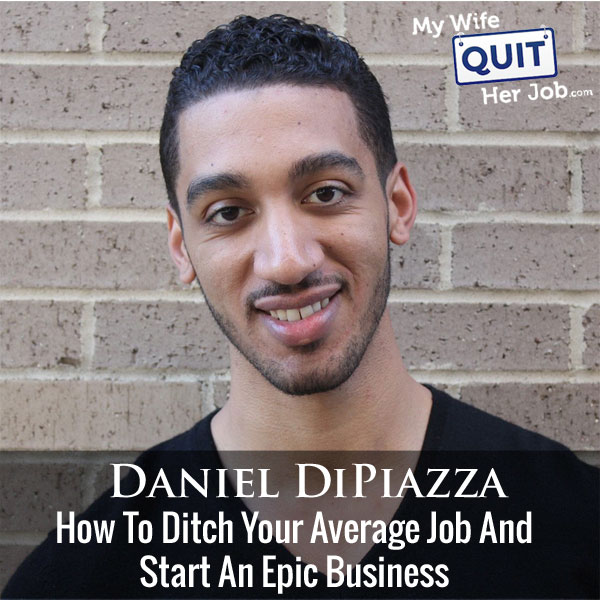
Daniel DiPiazza went from zero clients to ten in a single week. He found the consultants already serving his ideal customers, offered to perform a service they did not provide, and gave them 10% of the revenue.
Freelancing is the fastest route to income when you have no capital. It sells a skill you already have rather than requiring inventory, software, or ad spend.
Daniel runs rich20something.com, where he teaches people to start freelance businesses. He acquired under30CEO.com and published a book with Penguin Random House.
This episode covers how to find a problem worth solving, the partnership method that produced instant clients, when freelancing becomes a real business, and why consistency beats saturation.
Get My Free Mini Course On How To Start A Successful Ecommerce Store
If you are interested in starting an ecommerce business, I put together a comprehensive package of resources that will help you launch your own online store from complete scratch. Be sure to grab it before you leave!
Table of Contents
Key takeaways
- Identify a pain point other people have before deciding what business to start.
- Find who already serves your ideal client without providing your service, then partner with them.
- Offer to work with a few clients for free to remove all risk from the partnership.
- Look at the skills your job already pays you for and find the middleman to cut out.
- Notice what people repeatedly ask you for, since that request is a business.
- Freelancing trades time for money, and entrepreneurship builds systems that produce results.
- Content platforms look saturated because most people quit within 18 months.
- Start with the equipment you have, since information quality outranks production quality.
How do you find a business idea with no money?
Identify a problem other people are having rather than starting from what you want to build. Without a pain point, people invest in ideas that merely look successful for someone else.
Copying a headline is the failure mode. Seeing Snapchat go public does not make a Snapchat clone viable.
Forums are where the problems surface. Quora, Facebook groups, and niche communities show what people complain about.
Strong negative emotion signals demand. Frustration means someone is actively looking for a solution.
Match the problem to skills you have. Cross what you are good at against what people are struggling with.
What is the marsupial method for getting clients?
Find businesses already serving your ideal client without offering your service, then work under their brand. Daniel calls it the marsupial method because they shelter you while you grow.
The search is straightforward. He searched for pre-college counselors in Atlanta, since they already had SAT students.
The gap was obvious. Those counselors packaged applications and did not teach test prep.
The pitch was low friction for them. Add a service without adding headcount, and collect 10% of what he earned.
Results came immediately. His first partner sent ten clients in the first week.
Credentials helped establish trust. Having taught for Kaplan meant he had been vetted by someone.
How do you get a partner to trust you with their clients?
Offer to work with a few of their clients for free before discussing terms. Removing the risk entirely makes the decision easy for them.
Once you deliver, negotiate. Percentages and structure get settled after you have proven the work.
This applies beyond test prep. Any service business can enter a partnership this way.
How do you find a freelance skill you can sell?
Start with what your job already pays you to do and identify the middleman. Daniel earned $18 an hour teaching SAT prep while the agency billed $100.
The math makes the case. The agency needed his skill more than he needed their marketing.
Marketing yourself is the gap to close. That is the piece the middleman was actually providing.
Look at what people ask you for repeatedly. Daniel’s brother-in-law owns a truck and turned constant moving requests into a $60 an hour business.
Most people underestimate what they have. The assumption that everyone else has a skill and you do not is usually wrong.
How do you build an audience for a service business?
Publish free content aimed at a specific group, then collect emails from the people it attracts. One of Daniel’s students, a personal trainer, built a business on YouTube videos for mothers.
Specificity did the work. General personal training does not stand out, and helping busy moms regain their pre-baby fitness does.
The exercises themselves were not specialized. The positioning is what attracted the audience.
Consistency mattered more than production. Two or three videos a week, filmed on a phone at first.
The call to action was simple. A link in the description to a landing page collecting emails.
The result was a real business. Forty to fifty students at $100 a month.
Do you need expensive equipment to start a YouTube channel?
No. Search engines rank content on how well people watch it rather than how it looks.
The obstacle is perceived. Comparing your first video to a polished channel stops people before they start.
Viral videos are frequently rough. Information quality drives viewership.
Upgrade after you know your format. Daniel’s student bought a better camera three or four months in.
What is the difference between freelancing and entrepreneurship?
A freelancer trades time for dollars and an entrepreneur builds systems that produce the same result. Daniel resisted this distinction before accepting it.
The transition signal is in the questions. People stopped asking how to teach SAT prep and started asking how he got clients.
That second question is a product. It generalizes beyond any one service.
Overlap the two rather than switching. Daniel built products on the side while freelancing.
Capacity forces the decision. After a successful launch, product customers left no time for freelance clients.
How do you stand out on a saturated platform?
Outlast everyone else. Most podcasts stop by episode six or seven, which creates the illusion of saturation.
Past 18 months the field thins dramatically. Consistent creators rise because the competition disappears.
Consistency produces clarity. A clear message emerges from repetition over years.
Tony Robbins illustrates the point. Thirty years of motivational speaking makes his position unassailable.
The Art of Charm ran ten years and pivoted once. Long-running shows accumulate advantages newcomers cannot buy.
Even Tim Ferriss had a decade behind him. The fast success stories usually rest on earlier invisible work.
How long should you commit to a content business?
Five years, and ten years makes success close to certain. Daniel’s own site took roughly five years to reach its current position.
Profitability can come much sooner. Rich20something was profitable from its first product launch about two and a half years in.
The long timeline sets expectations. Judging results at two and a half years leads to quitting prematurely.
Enjoyment sustains the commitment. Picking a hot market you dislike will not carry you five years.
Patience develops through the craft. Getting good at something is what makes the wait tolerable.
Should you self publish or use a traditional publisher?
Traditional publishing is the only route into physical bookstores, and it brings distribution and credibility. Daniel published with Penguin Random House.
International reach comes built in. Publishers have distribution mechanisms an individual cannot replicate.
Press access improves. National outlets take traditionally published authors more seriously.
The advance has real value. It pays for the work upfront rather than after sales accumulate.
Self publishing can earn more long term. Daniel chose traditional for the first book deliberately.
You give up control over presentation. His cover came from many people’s input rather than his own vision.
Frequently asked questions
How do you start a business with no money?
Start with freelancing, which sells a skill you already have. Identify a specific problem people are struggling with, then build a service around solving it.
How do you get your first freelance clients?
Partner with businesses already serving your ideal client who do not offer your service. Daniel landed ten clients in a week by offering a consultant 10% of his revenue.
What skills can you freelance?
Whatever your job already pays you for, plus anything people repeatedly ask you to do. Look for where a middleman collects most of the value your work creates.
Do you need good equipment to start making videos?
No. Search platforms rank on watch behavior rather than production value, and you can upgrade once you know your format.
When should you stop freelancing and build products?
When people start asking how you built the business rather than about the service itself. Build the product alongside client work rather than quitting first.
Are content platforms too saturated to start now?
Most creators quit within 18 months, which leaves far less real competition than the numbers suggest. Consistency past that point is what separates people.
How long does a content business take to work?
Plan for five years, though profitability can arrive sooner. Daniel’s site was profitable about two and a half years in and took five to become a career.
Is traditional publishing worth it?
For bookstore placement, international distribution, and press credibility, yes. Self publishing can pay more per copy while offering none of those.