

Podcast: Download (Duration: 18:07 — 21.0MB)
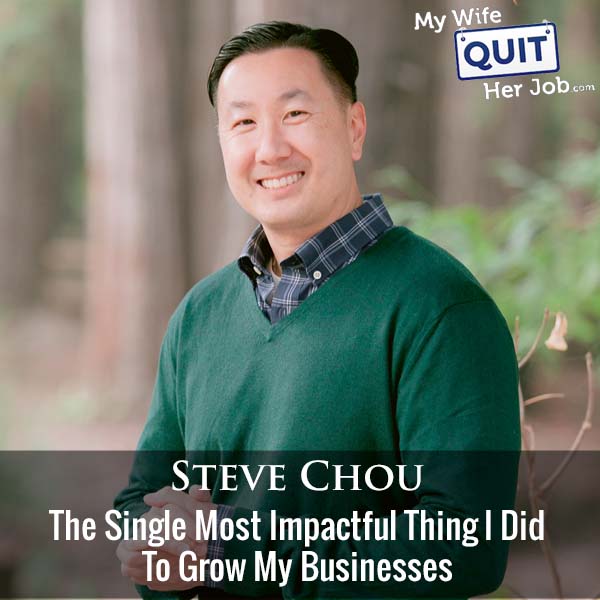
The single most impactful thing I did to grow my businesses was join a small, in-person mastermind group of other entrepreneurs. Every meaningful revenue jump in my career, from getting my e-commerce store past its plateau, to landing on Amazon, to breaking $1 million on my course business, came directly from a face-to-face conversation with another operator who was ahead of me on that specific path. This solo episode 443 of the My Wife Quit Her Job podcast is the exact story behind why.
A mastermind group is a small circle of entrepreneurs (usually 6 to 12) who meet regularly to help each other with their businesses. Everyone takes turns in “the hot seat” while the rest tear the work apart honestly. The value is not the room itself; it is that you finally get feedback and pressure from people who are further along than you and who have no reason to sugarcoat anything.
Below are three of my own case studies with the exact numbers, then the pattern that ties them together.
Get My Free Mini Course On How To Start A Successful Ecommerce Store
If you are interested in starting an ecommerce business, I put together a comprehensive package of resources that will help you launch your own online store from complete scratch. Be sure to grab it before you leave!
Table of Contents
Key takeaways
- A mastermind group of 6 to 12 entrepreneurs, meeting in person, was the single highest-ROI move I have made in 15+ years of building businesses.
- Getting my e-commerce store torn apart in a Montana mastermind led to a 7-week, $1,800 redesign that lifted desktop conversion 46 percent, mobile 21 percent, tablet 25 percent, and total sales roughly 30 percent.
- Lars Hundley hounded me for months to sell on Amazon; I sold out 60 units of initial inventory in 8 days as a brand-new seller, and Amazon now drives 15 to 20 percent of my store revenue.
- Grant Baldwin of The Speaker Lab showed me his webinar playbook; I made $60,000 on my first webinar in 90 minutes and hit $1M in course revenue a year later.
- Your local friends are almost never doing what you are doing. Live events (conferences, masterminds) are where you actually meet peers who can accelerate you.
- The reason cliches like “you are the average of your five closest friends” exist is because they hold up under stress test.
What is a mastermind group for entrepreneurs?
A mastermind group for entrepreneurs is a small, private circle of business owners who meet on a regular cadence to help each other grow their companies. Each meeting rotates through the “hot seat,” where one member presents a business problem, their numbers, or their site, and the rest ask hard questions and give unfiltered feedback. The rule is honest truth; no holding back.
Group size usually runs 6 to 12 people so that every member gets meaningful airtime and the group stays intimate enough to build real trust. Some masterminds meet monthly on Zoom, others gather for multi-day in-person retreats, and many blend both.
The reason masterminds work for entrepreneurs specifically is that starting a business is a lonely process, and your local friends almost never do what you do. A mastermind gives you a room of peers who can pattern-match your problem to something they solved last quarter.
Case study 1: how a Montana mastermind grew my e-commerce store 30 percent
The first mastermind I attended lifted my e-commerce store’s sales roughly 30 percent within weeks of getting home. My friend Andrew Youderian invited me to Montana about a decade ago with nine other entrepreneurs, and I walked in expecting praise. My store, Bumblebee Linens, was doing multiple six figures but had hit a plateau after years of double- and triple-digit growth.
When my turn on the hot seat came, I showed everyone the site, shared the numbers, and asked for feedback. What I got back was a public dismantling. Sample comments, verbatim as best I remember them:
- “This website looks like it was designed in the 90s.”
- “You run an online course that teaches this stuff? I would not take your class if I saw your website.”
- “These are exactly the kind of sites I like to buy, fix up, and resell at a massive profit.”
It hurt. It was also the single most useful hour of feedback I had ever received. Getting torn apart by nine peers who had no reason to lie to me was worth more than any consultant I could have hired.
The redesign numbers, week by week
I flew home, called my designer, sketched a mock in Photoshop based on the mastermind feedback, and started page by page. Every page on the site got rebuilt. I budgeted 6 weeks and 40 hours of my own time; the project actually took 7 weeks and cost $1,800 in design fees.
The conversion lifts showed up immediately:
- Desktop conversion rate: +46 percent
- Mobile conversion rate: +21 percent
- Tablet conversion rate: +25 percent
- Total store sales: roughly +30 percent
That year, Bumblebee Linens had the best growth it had seen in a while, and it was 100 percent attributable to getting beat up in one mastermind room.
Case study 2: how Lars Hundley pushed me onto Amazon
Fellow Montana mastermind member Lars Hundley pushed me onto Amazon so persistently that when I finally caved I sold out my initial 60-unit inventory in 8 days. This was a few years after the first mastermind (roughly 2015). Bumblebee was growing fine on its own site and I saw no reason to add a new platform where I did not control the customer.
Lars did not agree. His pitch was simple: “Right now Amazon is almost like an ATM machine. You just feed it products and money comes out.”
I still dragged my feet for months. He had nothing to gain from any of this; he was looking out for me.
How Lars broke through my resistance
When I still had not moved, Lars went on offense. Every single week I got another polite reminder email, then his monthly Amazon revenue numbers on a small set of products, then the specific listing tactics almost nobody was using yet. He mentioned they would make excellent material for my course, since at the time I did not cover Amazon at all.
I finally listed a few products on a whim. Results:
- Sold out of 60 initial units in 8 days as a brand-new seller
- ~$3,000 in the first month across just 3 products
- ~$5,000 per month one month later
- Amazon now runs 15 to 20 percent of total store revenue
- Same-product sales on my own site went up too, from an obvious halo effect
The Amazon story is not really about Amazon. It is about the fact that a mastermind peer with no ulterior motive kept applying pressure until I acted. That external pressure is what most entrepreneurs are missing.
Case study 3: how Grant Baldwin doubled my course revenue with webinars
Grant Baldwin, founder of The Speaker Lab, doubled my course business by handing me his complete live-webinar playbook after a single conversation. In 2015 I was making around $400,000 a year selling my e-commerce course on autopilot through a free 6-day email mini-course. I was pretty proud of that setup.
Grant listened patiently, congratulated me, then dropped an atomic bomb. He was making 5x what I was making, on a course that cost roughly 50 percent less than mine, with a smaller email list. His delivery mechanism was live webinars, running every week and pulling $30,000 to $50,000 per session.
The webinar playbook Grant handed me
Grant emailed me his actual spreadsheets showing revenue per webinar, conversion rates, and the specific tweaks he made between sessions. That was the entire playbook. I was intrigued and terrified in equal measure; I was scared of hitting the “go live” button with nothing to say.
Grant did what a good mastermind peer does: he applied pressure. Quick texts like “Hey Steve, did you go live yet?” and “Try this, I guarantee it will work.”
The one that finally worked was, “I just made 35K in 60 minutes. Do you want 35K in 60 minutes?”
What happened when I finally ran a webinar
As an engineer, I over-prepared. I watched more than 15 webinars from top influencers in one week and picked out which elements to steal. My business partner Tony helped me tune the performance.
The result of the first webinar:
- $60,000+ in course sales in 90 minutes
- Hit $1 million in annual course revenue within 12 months of adding webinars to the mix
Grant made 5x me on paper; giving me his playbook cost him nothing and doubled my business. That is what a real mastermind peer relationship looks like.
The one pattern behind all three stories
The pattern behind every one of those wins is the same: I met a peer at a live event, that peer applied pressure I could not apply to myself, and I acted on advice I would never have taken from a stranger on the internet. Andrew Youderian, Lars Hundley, Grant Baldwin, and my business partner Tony all came out of conferences and masterminds. I would not be where I am today without any of them.
The reason live events matter is proximity. Your local friends are almost certainly not doing what you are doing.
My close friends in California are doctors, lawyers, and engineers, and they could not relate to anything I was building. That is the loneliness that most entrepreneurs never talk about.
At a good conference, everyone in the room is running the same kind of business you are. You can talk conversion rates and Facebook CPMs at breakfast without boring anyone. You stop feeling crazy.
How to find a mastermind group as an entrepreneur
The best way to find a mastermind group is to attend a small, niche-specific conference and let it happen organically over meals and hallway conversations. Cold-applying to a public mastermind rarely works, because the good ones are built out of trust that already exists.
Practical steps:
- Pick 1 to 2 niche conferences a year that specifically match your business model, not generic “entrepreneur” events.
- Prioritize small events (usually under 300 attendees) over massive ones. Small rooms produce actual conversations.
- Eat every meal with people you do not know yet. Skip the friends you came with at lunch.
- Look for 3 to 5 people at a similar revenue level and stage. That is your future mastermind, whether they call themselves one yet or not.
- After the event, propose a monthly Zoom or Voxer group with a clear cadence. Do not wait for someone else to organize it.
My own Seller Summit runs this exact format on purpose. Attendance is capped around 200 e-commerce sellers, we run in-room masterminds during the event, and we cater in food so groups actually eat together instead of scattering. The 2023 Seller Summit is in Fort Lauderdale, Florida from May 23-25.
Frequently asked questions
What is a mastermind group?
A mastermind group is a small circle of people (usually 6 to 12) who meet regularly to help each other with their businesses or goals. Each meeting rotates through a “hot seat” where one member presents a problem and the rest give honest, unfiltered feedback. The term was popularized by Napoleon Hill’s Think and Grow Rich.
How much does it cost to join a mastermind for entrepreneurs?
Paid mastermind groups for entrepreneurs typically run from a few hundred dollars a year for peer-run groups up to $25,000 or more a year for high-end coach-led programs like Joe Polish’s Genius Network or Strategic Coach. Peer masterminds formed at conferences are often free once you have built the trust to start one.
How do I find a mastermind group?
The most reliable way is to attend a small, niche-specific conference in your industry, eat every meal with new people, and identify 3 to 5 operators at a similar revenue level and stage. After the event, propose a monthly Zoom or Voxer cadence and take responsibility for organizing it. Cold-applying to public groups rarely works.
Is a mastermind worth it for a small business?
For most operators, yes. Small business owners have almost no honest sounding board at their revenue level, and a mastermind fills that gap for a fraction of what a strategic consultant costs. My own Bumblebee Linens redesign after one mastermind meeting cost $1,800 and lifted total store sales roughly 30 percent within weeks.
How is a mastermind different from a coaching program?
A coaching program is one-to-many: the coach teaches, you consume. A mastermind is many-to-many: you present your business, and every peer in the room gives you feedback based on their own operating experience. Both have value, but masterminds tend to produce faster, more specific fixes because feedback comes from people currently doing what you are trying to do.
How often should a mastermind meet?
Most peer masterminds meet monthly for 90 minutes to 2 hours on Zoom, plus one or two in-person retreats per year. That cadence is frequent enough to hold members accountable to commitments made in the previous meeting, but sparse enough that everyone actually implements between sessions.
Do virtual masterminds work as well as in-person?
Virtual masterminds work well for ongoing accountability and quick problem-solving, but the deeper relationships and the “let’s try that new thing” push almost always come from in-person time. My three biggest wins (redesign, Amazon, webinars) all traced back to in-person conversations, and the follow-up nudges from those peers came over text and email afterward.