
Podcast: Download (Duration: 47:00 — 64.8MB)
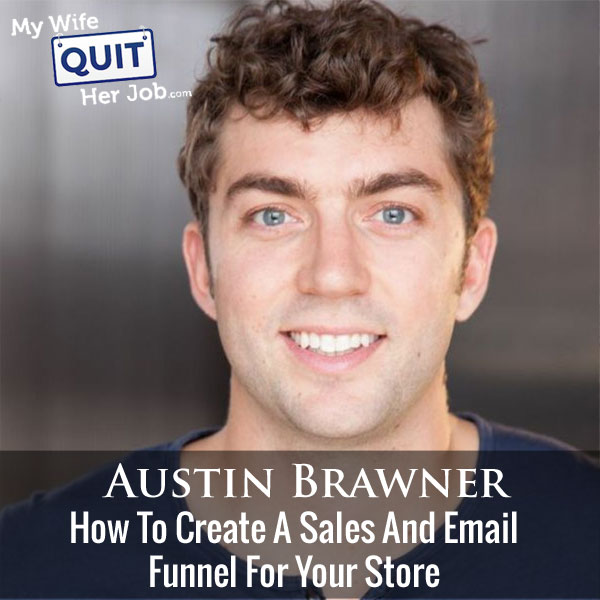
Austin Brawner runs a VIP email campaign with a 97% open rate. It goes to the top 5% of customers, triggered automatically once someone crosses $200 in revenue and three purchases.
Nearly every ecommerce business he audits is under-optimized on email. Stores acquire customers expensively on Facebook and then leave the lifecycle revenue sitting untouched.
Austin hosts the Ecommerce Influence Podcast and runs Brand Growth Experts. He previously helped scale a company from $200,000 to $11 million in two and a half years through email marketing, and recently took over as CMO of Boom Boom Energy.
This episode covers the four email campaigns every store needs, the math behind a free plus shipping offer, and how he rebuilt a company’s funnel from scratch in two months.
A note on timing: this is a 2017 conversation. Facebook ad costs and platform integrations have changed considerably since.
Get My Free Mini Course On How To Start A Successful Ecommerce Store
If you are interested in starting an ecommerce business, I put together a comprehensive package of resources that will help you launch your own online store from complete scratch. Be sure to grab it before you leave!
Table of Contents
Key takeaways
- Four email campaigns cover the customer lifecycle: indoctrination, post purchase, win back, and VIP.
- Send the discount only after the point where most customers would have bought anyway.
- Reacquiring a customer by email costs a fixed fee, while Facebook charges full price again.
- The top 20% of customers typically drive 65% to 75% of ecommerce sales.
- A VIP thank-you campaign to the top 5% hit a 97% open rate.
- Work backward from your upsell take rate to set an acceptable cost per acquisition.
- Video views at 3 cents for a 95% completion open the top of the funnel for retargeting.
- Build lookalike audiences from your best customers rather than your whole customer list.
What email campaigns does an ecommerce store need?
Four, mapped to the customer lifecycle. An indoctrination sequence for new subscribers, a post purchase sequence, a win back campaign, and a VIP campaign for top customers.
Almost every business Austin audits is under-optimized here. They drive traffic well and leave lifecycle revenue on the table.
Each campaign targets a different moment. Pre-purchase, immediately after purchase, at the repeat-purchase window, and for the highest-value segment.
Klaviyo handles the segmentation. Customer behavior on the site feeds the triggers automatically.
How do you structure a welcome email sequence?
Six emails that lead with the offer, build credibility, then escalate a discount only after the normal purchase window closes. Austin calls this the indoctrination sequence.
Email one delivers the offer they signed up for. Free shipping, 10% off, or whatever the popup promised.
Email two explains the product. For Boom Boom that means conveying what an all-natural nasal inhaler actually does.
Email three carries social proof. Reviews and other customers establish credibility.
Then the discount escalates. Ten percent, then twenty percent across the final two emails.
The timing rule is what makes it work. Identify how long customers normally take to buy, and withhold discounts until after that threshold.
Non-buyers roll into the newsletter. They get a weekly campaign, and Austin cleans non-openers at three to six months.
What goes in a post purchase email sequence?
The best actions you want customers to take, spread across roughly 14 days. Reviews, Instagram photos, referrals, and a genuine thank you.
The window depends on the product. A consumable warrants a different cadence than a refrigerator.
The sequence sets up the repeat purchase. It builds the relationship before any discount appears.
When should you send a win back campaign?
After the point where a typical customer would have repurchased on their own. Let them buy at full price first, then incentivize.
Identify your repeat purchase window. If most customers return at 45 days, that is when the campaign fires.
Email economics are why this matters. Reacquiring on Facebook costs another $15, and email costs a fixed platform fee.
Margin on the second purchase is where profit lives. Paying to reacquire the same customer erodes it.
Stack retargeting on top. Klaviyo segments sync to Facebook custom audiences dynamically, so emails and ads hit the same people together.
Offers can escalate by stage. A 45 day audience gets one offer and a 60 day audience gets another, switching automatically.
How do you build a VIP customer campaign?
Define the top 5% to 10% by revenue and purchase count, then trigger a thank-you campaign when someone qualifies. Austin uses $200 in revenue and three purchases as the threshold.
The concentration justifies it. Across roughly 60 ecommerce companies he has seen, 20% of customers drive 65% to 75% of sales.
The email fires 15 to 20 days after qualifying. It explains why they are valued and includes a discount on the next purchase.
Framing carries the campaign. For a brand that never discounts, this reads as a thank you rather than a promotion.
The open rate reflects that. One of these campaigns runs at 97%.
A survey follows 10 to 15 days later. Twenty-five questions, five to ten minutes, and about 25% of VIPs complete it.
What do you learn from surveying your best customers?
What to build next, and it frequently contradicts your assumptions. One client’s VIPs said 80% wanted more t-shirt designs, a product direction nobody had considered.
These are the people funding the business. Their preferences deserve disproportionate weight.
Bonobos ran the same play. Customer research showed their highest-value buyers were purchasing suits, so suits moved to the front of the site and the guide shops.
Suits are a small share of transactions. They are a large share of revenue, which is what made the redesign correct.
How does a free plus shipping offer work?
Give the product away and charge shipping, then take profit on the upsell after checkout. Boom Boom gives a triple pack normally priced at $16.95 and charges $6.95 shipping.
The unit economics run at a loss. Product cost is $6.95 and acquisition runs $4 to $5, so each customer costs $4 to $5.
Working backward sets the target. At a 7% to 10% take rate on an $80 upsell plus a small down sell rate, a $6 CPA breaks even.
The upsell fires after the transaction completes. One-click upsell charges the saved card without re-entering details.
The down sell is a discounted bundle. Fifty percent off a $59 festival pack with a hat, lanyard, and more product.
Cart pairing is why he chose that tool. Combined customer records in Shopify beat a separate ClickFunnels cart.
How do you use video to open the top of your funnel?
Run video purely for views, then retarget people who watched most of it. Boom Boom’s rap video reached 1.7 million views and generated few direct sales.
That was the intent. The video explains a product people struggle to understand without trying it.
The cost per completion is what matters. Three cents for viewers who watched 95% of the video.
Retargeting converts those viewers. Free plus shipping offers to 95% completers produce $4 to $5 acquisition costs.
The model came from proven examples. Dollar Shave Club and similar viral product videos set the template.
How do you build Facebook lookalike audiences from customers?
Use your best customers rather than your entire list. Export the highest-value segment that still meets the minimum audience size.
The whole customer list dilutes the signal. Your average buyer and your top buyer look different to the algorithm.
Repeat purchasers work as a proxy. For a store where most people buy once, the returning subset defines quality.
Size sets the floor. Take the most valuable customers you can while clearing the minimum.
What should you fix first in an ecommerce business?
Analytics, before anything else. When Austin joined Boom Boom, Google Analytics was not tracking at all due to a cart installation problem.
Nothing downstream works without it. Cost per acquisition targets and upsell math both depend on real numbers.
Shopify publishes an audit walkthrough. It covers verifying tracking and setting up enhanced ecommerce.
Goals and enhanced tracking come next. Those turn raw traffic into usable channel data.
Then find where the opportunity sits. For Boom Boom that meant top of funnel video plus the four retention campaigns.
Frequently asked questions
How many emails should a welcome sequence have?
About six. Lead with the promised offer, explain the product, add social proof, and escalate a discount only after your typical purchase window has passed.
When should you send a discount to new subscribers?
After the point where most customers would have purchased anyway. Discounting earlier gives away margin on people who were going to buy at full price.
What percentage of ecommerce sales come from repeat customers?
The top 20% of customers typically drive 65% to 75% of sales, based on Austin’s review of roughly 60 ecommerce companies.
How do you win back lapsed ecommerce customers?
Identify your normal repeat purchase window, then trigger discounted offers after it passes. Email reacquisition costs a fixed fee where Facebook charges full acquisition price again.
Does a free plus shipping offer make money?
Rarely on the front end. It works when the post-checkout upsell take rate covers the acquisition loss, which requires knowing your numbers before launching.
What is a good cost per acquisition for ecommerce?
Whatever your upsell math supports. Austin worked backward from a 7% to 10% take rate on an $80 upsell to reach an acceptable $6 target.
Should you survey your ecommerce customers?
Yes, and focus on your highest-value segment. One client learned 80% of VIPs wanted a product line that was not even under consideration.
How do you set up Facebook lookalike audiences for a store?
Build them from your best customers rather than your full list. Export the highest-value segment large enough to meet Facebook’s minimum audience size.