
Podcast: Download (Duration: 55:58 — 64.3MB)
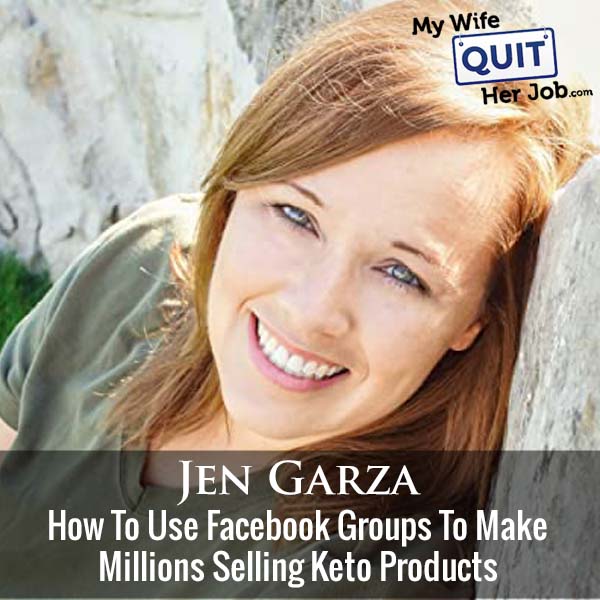
Growing a Facebook group starts by opening it to the public, funneling readers into it from blog posts your audience already reads, and moderating every single post yourself until the culture is set. Jen Garza checked her group every two hours from 8am to 11pm for two years, and that group is now the engine behind over 100,000 cookbook sales.
In this episode I spoke with Jennifer Marie Garza, founder of Low Carb Inspirations and author of Easy Keto for Busy People, one of the highest selling keto cookbooks ever published. She runs a group of nearly 200,000 members, a second group of 100,000, and a Facebook page with roughly 700,000 fans.
Below is her whole approach: how she seeds a new group, the two rules she enforces, how she moved from full moderation to volunteer moderators, and how the group translated into book sales without a single ad.
Get My Free Mini Course On How To Start A Successful Ecommerce Store
If you are interested in starting an ecommerce business, I put together a comprehensive package of resources that will help you launch your own online store from complete scratch. Be sure to grab it before you leave!
Table of Contents
Key takeaways
- Start the group public so people can find it, then switch it private within the first month.
- Blog posts are the best entry point. Someone who read the whole post is already qualified.
- Two rules only: be positive, and no self-promotion of any kind.
- Full moderation from day one. Jen approved every post herself, every two hours, for two years.
- She banned spammers immediately with no warning, because the warning was the signup rules.
- Every recipe links back to her site. Traffic goes somewhere that pays her.
- Over 100,000 books sold with no ads, driven by weekly Facebook Lives with keto experts.
- Sharing in other people’s groups is the fastest way to grow your own.
How to start a Facebook group from scratch
Start the group as public so anyone can find it, then promote it through the channels where your audience already pays attention.
Jen seeded each new group by sharing it to her existing Facebook page and her other group. The page is the wide-reach asset, and the group is where the actual conversation happens.
She also offered a specific reason to join. For her Chaffles group, that was a printable of the top 10 chaffle recipes, which gives someone a concrete payoff for clicking join.
Why your blog posts are the best Facebook group funnel
The strongest source of qualified group members is people who just finished reading a blog post on the topic.
Her reasoning is that reading a full blog post is a real filter. Getting anyone to read to the end is hard, so the ones who do have already proven they care about the subject.
Her advice for any business is mechanical. Take your top-traffic blog posts, and inside each one, explain the benefits of the group and place the invitation right there.
That is also why she rarely promotes the group on her Facebook page. She wants to be sure someone actually cares about the subject before inviting them in.
The Facebook page versus Facebook group distinction
Jen treats the page as a business card and the group as her living room.
The page is what a stranger stumbles onto. It is the first introduction, and it does not need to be conversational.
The group is where she invites people once they have shown interest. That framing dictates everything: the page is public and broad, and the group is protected and personal.
How to moderate a Facebook group so it does not fill with spam
Turn on full post approval from day one and read every post yourself, because the first impression sets the culture permanently.
Jen checked the group every two hours from 8am to 11pm, approving posts before anyone saw them. She did that for roughly two years.
Her reason was specific to her audience. People trying to lose weight are used to being body shamed, so she wanted a space where nothing negative ever surfaced.
This was before Facebook offered flagged-word filters, so catching a hostile post meant seeing it within the two-hour window.
The two Facebook group rules that filter everyone
Her entire rulebook is two lines: be positive, and no self-promotion of any kind.
Self-promotion is defined broadly. Any link, any product you sell, any affiliate offer, and any attempt to recruit members into your own group all count.
Enforcement is immediate. She bans on the first offense with no warning, because the warning was already given at signup when the member agreed to the rules.
The keto space made this necessary. Everyone and their mother sells exogenous ketones, and she wanted a group about real food.
How to hand off moderation to volunteers
Volunteers appear on their own once members feel genuinely connected to the group.
Jen’s approach was to be openly honest about the workload. She would apologize publicly for a negative post slipping through and mention how hard it was to keep up, and members offered to help.
She has run one paid moderator at about $25 a week, and the rest are volunteers. Today she has enough of them that she is no longer in the group every two hours.
She also recruits opportunistically. When a member messaged to report someone promoting a 28-day program, she offered them a moderator role on the spot.
What to post in a new Facebook group to start conversations
In a brand new group, over-deliver on answering questions rather than following a posting schedule.
Jen had no set cadence. With 10 members she answered everything attentively, and by 50 or 100 members other people started following her lead and posting on their own.
Her personal bar was that if someone had posted four hours ago without an answer, she felt bad. That is the standard that makes a small group feel alive.
For content ideas, she works backward from the member. She maps out the customer’s journey start to finish, surveys the group about where they are struggling, and uses AnswerThePublic to find what people actually ask.
Her honest reason for using a keyword tool is that she is too deep in the subject. What feels like common knowledge to her is exactly what a beginner needs explained.
Why authenticity outperforms promotion in a group
Posting your real struggles produces more engagement than posting your polished wins.
Jen posts non-scale victories, or NSVs, from her own weight loss journey. A fitting-room selfie about buttoning a pair of pants she never thought would fit, or buckling an airplane seatbelt with belt left over.
Those posts land because members recognize themselves in them. Some are at that exact moment now, and others remember when they were.
She deliberately does not promote all the time, because constant promotion reads as inauthentic. Her balance is roughly 10 answered questions for every one or two recipe posts a day.
How to monetize a Facebook group
Every recipe she posts links back to her own website rather than living inside Facebook.
Her logic is direct: she wants to be paid for her work, so traffic goes to a property she controls and monetizes. The recipe is also printable there, which gives members a reason to click.
That is why she declines groups that require you to paste the full recipe with no link. Those groups do not fit how she makes money.
How to grow a Facebook group by posting in other groups
Sharing your content inside other like-minded groups that allow it is the single fastest growth lever.
The mechanism is straightforward. A member who finds a genuinely useful recipe in another group follows the link, sees the group, and joins.
Read each group’s rules first. Some allow a website link, and some require the full recipe in-post with no outbound link.
How Jen sold over 100,000 cookbooks with no ads
She never ran a single ad and never used email for the launch, relying entirely on her group and page.
The tactic that moved the most books was a weekly Facebook Live with a different keto expert. They discussed struggles and solutions, and she mentioned the upcoming book briefly at the end.
Her delivery mechanics matter. She always went live on the page first so anyone could see it, then shared that video into the closed group.
The framing was soft. She positioned the book as one more tool for the reader’s keto journey, and noted that most of the recipes were still free on her site.
Industry benchmarks put this in perspective. She has been told 35,000 copies makes a published cookbook a success, and she cleared 100,000.
Working with a publisher versus self-publishing
A publisher is worth it when you need production capabilities you do not have, and self-publishing is worth it once you have proven you can produce the book yourself.
Houghton Mifflin Harcourt approached Jen because she had a large engaged audience she had never sold to. That combination is what publishers look for.
The production value is the real trade. She flew to New York for nearly two weeks, where a team of six shot every photo in a small studio: a photographer and assistant, a food stylist and assistant, and a head cook and assistant.
What an agent does is worth knowing. Her agent’s job was to negotiate the full expected lifetime earnings of the book as an upfront advance, so royalties are a sign the estimate came in low.
The advance her agent secured was double what she has seen other publishers offer, and her royalties still hit in the first payout period after publication.
She now self-publishes. Her Keto Chocolate Recipes book is hers, and she shot all the photos herself after the publisher deal gave her the confidence.
What building a group around a trend looks like
Launching a group around an emerging trend grows dramatically faster than launching one in an established category.
Jen’s Chaffles group hit 100,000 members roughly a year after launch, adding 500 to 1,500 people a day at its peak. A chaffle is cheese plus egg cooked in a mini waffle maker, spelled C-H-A-F-F-L-E.
She helped create the trend by building a product category that did not exist and showing what you could make with it. That gave the group a reason to exist rather than joining a crowded field.
Her caution is that the volume made vetting hard. Screening 1,500 profiles a day for spam accounts is a real operational problem.
Why Facebook groups still work as a searchable archive
Old posts resurface, which turns an active group into a compounding library of answers.
Jen tells members to search her name inside the group for anything they need. A post from three years ago can reappear in conversation with all its original comments and social proof attached.
Her before-and-after photos work this way. They keep getting surfaced, and each resurfacing restarts the conversation with new members.
Her one condition is moderation. That archive is only valuable if it was kept clean the whole time.
Why she moved to TikTok and skipped Instagram
Jen’s current focus is TikTok because the content is short, the tone is positive, and it converts curiosity into book sales.
Her Facebook complaint is about atmosphere. Her analytics show members leaving the platform, and her feed skews political and hostile in a way TikTok does not.
TikTok also solves a support problem. When someone in the group asks how to stay on keto when nobody else in the family is, she links the TikTok she already made rather than asking them to read a blog post.
The revenue is small directly. At 10,000 followers she is clear that TikTok does not pay much, and the value is people saying they bought her book because she explained something in a way they finally understood.
Instagram never fit. She describes it as a fake life of picture-perfect photos, which runs opposite to the raw honesty her audience responds to, so she has staff run that account.
Frequently asked questions
How do you grow a Facebook group from zero?
Start it as public so people can find it, share it from any existing page, email list, or blog you own, and offer a specific reason to join like a printable resource. Jen Garza’s strongest source was inviting readers at the bottom of high-traffic blog posts on the same topic.
Should a Facebook group be public or private?
Public at launch so people can discover it, then private once you have your first members. Jen switched hers to private within the first month at under 100 members, so her weight loss struggles were visible only to people who chose to be there.
How much moderation does a new Facebook group need?
Full post approval from day one. Jen approved every post herself every two hours from 8am to 11pm for roughly two years, because the first impression permanently sets whether the group feels safe.
What rules should a Facebook group have?
Two are enough: stay positive, and no self-promotion of any kind. Self-promotion includes affiliate links, your own products, and recruiting members into your own group, and agreeing to the rules at signup is the only warning members get.
How do you make money from a Facebook group?
Link every piece of content back to a website you own and monetize rather than posting it natively. Jen posts each new recipe in the group with a link to her site, where members can print it and where the traffic actually pays her.
How often should you post in a Facebook group?
There is no fixed schedule. Answer questions attentively while the group is small, and once you reach 50 to 100 members, others follow your lead and post on their own. Jen aims for roughly 10 answered questions to one or two recipe posts a day.
Can you sell books through a Facebook group?
Yes. Jen sold over 100,000 cookbooks with no ads and no email campaign, driven mainly by weekly Facebook Lives with keto experts where she mentioned the book briefly at the end.
What is the fastest way to grow a Facebook group?
Share genuinely useful content in other like-minded groups that permit links, so their members follow you back to your own group. Check each group’s rules first, since some require the full content in-post with no outbound link.