
Podcast: Download (Duration: 42:54 — 49.4MB)
Webinars that sell content-creator courses convert dramatically worse than webinars that sell ecommerce courses because the buyer’s biggest objection is not “does this business model work” but “am I good enough to do this.” Selling a physical product is a familiar mental model everyone has walked through a store to understand. Selling your own voice, face, or knowledge triggers a much deeper self-doubt loop, and a curriculum-heavy how-to webinar cannot bulldoze through that.
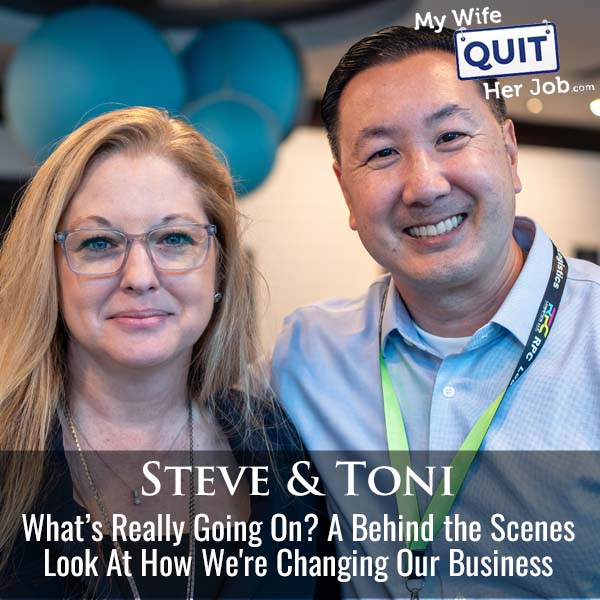
My co-host Toni Herrbach and I ran this episode as a live, unfiltered brainstorm because the same three-day workshop format that converts great for my ecommerce class underperforms for our content-creator class. We wanted to walk through the specific fixes we are testing.
Below we cover why content webinars convert worse, the identity gap between “I can sell a product” and “I can sell my knowledge,” how to reframe the “this takes a year” slide without lying, the pricing model tradeoff between one-time and $99/month, and the balance between real teaching and the aha-moment framing that content buyers need before they will click “buy.”
Get My Free Mini Course On How To Start A Successful Ecommerce Store
If you are interested in starting an ecommerce business, I put together a comprehensive package of resources that will help you launch your own online store from complete scratch. Be sure to grab it before you leave!
Table of Contents
Key takeaways
- Ecommerce webinars sell better because “buy a product, list it, sell it” is a mental model everyone already has.
- Content-creator webinars sell worse because the core objection is identity, not economics. Buyers do not believe they personally are good enough.
- The “you will not make money for a long time” slide is honest and correct, but it lands as a downer on an audience already fighting self-doubt.
- Content webinars need real, named examples of people who look like the audience earning real money, not just generic case studies.
- Deep how-to teaching converts great for buyers who already have confidence. It converts poorly for buyers who need to believe they can even start.
- Pat Flynn’s Pokemon shorts channel hit around $1,200 a month by month three with no audience leverage, which is proof of concept in a form beginners can copy.
- Charging $99/month for open-ended access is easier to sell than $997 up front, but has an ethics problem when people pay for 17 months.
- Reframe the how-to workshop toward “here is the one thing you need to do first” instead of “here are the twelve advanced tactics.”
- Fully rah-rah, teach-nothing webinars convert well but leave attendees with nothing. That is not a tradeoff we are willing to make.
- One-on-one calls with content buyers are always about talking them into believing in themselves. With ecommerce buyers, they are usually about talking them out of premature scaling.
Why do content-creator webinars convert worse than ecommerce ones?
Content-creator webinars convert worse than ecommerce webinars because the objection sitting between the audience and the buy button is identity-based, not economic. Everyone has walked into a store. Everyone has bought a product online. “Sell a physical product” is a familiar mental model, so an ecommerce buyer needs mostly a tactical playbook to move forward.
A content-creator buyer needs to believe two harder things first. That making money from information, video, or audio online is real, not a fake internet fantasy. And that they personally are interesting enough, expert enough, or on-camera enough for anyone to care.
Both beliefs sit deeper than any tactic can reach. That is why the same three-day, curriculum-heavy format that packs my ecommerce workshop with buyers converts poorly on the content-creator side.
The identity gap: selling a product vs selling yourself
The core reason content webinars underperform is what Toni calls the identity gap. Selling a product is easy to justify to yourself and everyone around you. Selling yourself, your knowledge, or your voice feels like standing on a chair and yelling “look at me,” which is exactly what most people spend their whole lives being told not to do.
Her exact phrase captures it. “Selling a red pen is easy. Selling my own talents, really hard.” A product can fail because the packaging was bad, the ads did not convert, or Amazon changed its algorithm. A content brand that fails feels like a referendum on you as a person.
That is why our one-on-one calls with content-side prospects are almost always about talking someone into believing they are worth listening to. The mental health coach in our course, for example, gets discouraged when a webinar attendee does not follow through, and internalizes it as evidence about her as a person rather than as a marketing variable to adjust.
Why the “this takes a year” slide is the wrong opener
The “you will not make money for a long time” slide, delivered on slide three of a webinar, is technically true but strategically wrong for a self-doubting audience. It sits on top of an existing pile of “I am probably not good enough at this” and pushes the attendee straight out the door before you have earned any belief.
The intent is good. Neither of us wants to sell a get-rich-quick fantasy. My ecommerce workshop uses the same “this will take a year” framing and it lands fine, because ecommerce buyers know they need to source, sample, and ship inventory. They can picture the year. Content buyers cannot picture even the first step, so a year sounds infinite.
The fix is a reframe. Set honest expectations without leading with the downer. Show a range: some people move fast with the right idea and format, most take longer, none get rich in a weekend. Then move to the belief work before the timeline work.
Pat Flynn’s Pokemon shorts as a repeatable case study
The clearest recent example of a content channel that hit money fast without pre-existing audience leverage is Pat Flynn’s Pokemon shorts channel, which reportedly cleared around $1,200/month by month three with no cross-promotion from his existing platforms. He deliberately built it as an independent case study.
The structure is copyable even for beginners. Buy a pack of Pokemon cards. Open one on camera in under 60 seconds. Show the reveal. Repeat. It works because it stacks three of the most reliable short-form ingredients at once: a huge existing audience of interested viewers (people who buy Pokemon cards), a built-in gamble-and-reveal narrative structure, and a length short enough that even non-fans keep watching.
For our purposes, the point is that if you have any idea that fits that framework (short, story-driven, taps a large existing enthusiasm), traction inside 12 months is achievable. Faster is possible if the format snaps into place immediately.
Comparison: what ecommerce buyers and content buyers actually need
| Dimension | Ecommerce buyer | Content-creator buyer |
|---|---|---|
| Core objection | How does the business model work | Am I good enough to do this |
| Mental model | Buy → list → sell → ship, familiar | Speak → publish → attract → monetize, foreign |
| Most needed on the webinar | Tactical depth, specific playbooks | Belief, examples that look like them, aha moments |
| Our 1-on-1 conversation direction | Talk them out of over-scoping | Talk them into starting |
| Best proof | Real revenue screenshots from stores | Named creators with modest audiences making real money |
| Timeline framing that works | “About a year, here is why” | “Some fast, most slower, here is what fast looks like” |
What content-creator webinars actually need
Content-creator webinars need to prioritize belief-building alongside tactical teaching, because the audience needs to answer “can I do this” before they can even hear “here is how to do this.” That is the shift we are testing.
Concretely that means more real, named case studies of people who look like the audience earning real money. Our own examples are always suspect because everything we build now benefits from an existing audience, so we have to lean on students in our course and independent creators like Pat Flynn who ran the same play from zero.
It also means one clear aha moment during the webinar. Not just “here is how affiliate links work” but a moment where the attendee thinks “oh, I actually could do this.” I did not have belief until I had my first $50 day. We cannot manufacture a $50 day for the attendee in real time, but we can manufacture a moment where they see their own idea would work.
The $99/month vs one-time pricing tradeoff
The $99/month subscription model is easier to sell to a content-creator audience than a $997 one-time payment, but it creates an ethics problem when subscribers stay for 17 months without noticing that a lifetime option was cheaper. That is the exact conflict we ran into when we ran monthly billing before.
The one-time price is honest and generous. Everyone gets everything, no upsells, no separate module unlocks. The friction is that a self-doubting content-creator buyer looks at $997 up front and hears “commit before you know if you can do this.”
$99/month solves the friction. It also creates its own moral drag when a customer forgets they subscribed and pays $1,683 over 17 months for what they could have owned outright for $997. Our current thinking is to bring the monthly option back but explicitly cap the cumulative charge (or auto-convert to lifetime after 12 months) so nobody ends up overpaying because they missed a calendar reminder.
How much teaching is too much teaching in a webinar?
The right amount of teaching in a webinar is enough that the attendee walks away with one usable thing even if they never buy, but not so much that you cover 12 advanced tactics they cannot yet act on. The current version of our content workshop is too far toward “cover everything,” and it is one of the reasons the conversions lag.
We already know the “teach nothing, only sell” model works commercially. We watched a lot of those before launching our workshop and hated all of them, because you leave with nothing. That is a boundary we are not willing to cross. But it does convert. So the honest read is: there is real conversion lift on the “less teaching, more clarity” side of the spectrum, and we have to find our version of that.
The specific test we are running is a workshop that focuses on one thing (getting started, plus a framework for picking what you are good at) instead of the current pretty-advanced sweep that includes ad exclusions, affiliate deep-dives, and sponsorship strategy on day two.
Why faceless AI channels tempt beginners (and why they are a trap)
Faceless, AI-generated video channels appeal to content-creator beginners because they remove the identity problem entirely. If a channel does not have your face, your voice, or your name on it, then when it fails there is nothing personal to internalize.
The tradeoff is that you are not building an audience for yourself, you are building an audience for a bundle of AI content that any competitor can replicate in a weekend. Toni and I both feel a little uncomfortable about even including a faceless AI lesson in our course, because we do not think the long-term earnings hold up. The short-term earnings are real, though. On my TikTok feed right now roughly 40 percent of what I see is AI-generated shorts.
Our current position is to teach it as one option, with a clear caveat that we believe it is a short-lived opportunity and that building a real personal or product brand is what has held up over 10+ years.
The 4-part fix we are testing
Rather than rewrite the workshop end to end, we are testing four discrete changes and measuring their impact separately. That is a small-experiment approach that will let us keep whatever works and roll back whatever does not.
Fix 1: Reframe the timeline slide
Drop the flat “you will not make money for a long time” opener. Replace with a range that includes real recent fast-growth examples (Pat Flynn’s shorts, our creator-course students, the TikTok house-flipper who went from zero to huge in six weeks), then honest expectations that most creators take longer.
Fix 2: Lead with belief before tactics
The first 20 minutes rebuild identity, not curriculum. Named students, revenue numbers, and demonstrations that the attendee’s own knowledge is sellable. Only after the belief work do we move into how-to.
Fix 3: Rebuild the pricing option
Bring back a $99/month option, but with a hard cap so it converts to the lifetime license after 12 months. Nobody overpays through forgetfulness.
Fix 4: Narrow the workshop to one thing
Cut the day-two advanced content. Focus the whole workshop on getting started, picking your topic, and shipping the first piece of content. Deep tactics stay inside the course, where paying students actually use them.
Frequently asked questions
Why do content-creator webinars convert worse than ecommerce webinars?
Content-creator webinars convert worse because the buyer’s main objection is identity, not economics. Ecommerce buyers already believe the business model works and need tactics. Content buyers need to be convinced first that they personally are good enough to sell their voice, knowledge, or face online.
How much money can a beginner content creator realistically make in the first year?
Most beginners take longer than 12 months to see meaningful revenue, but a strong topic in a strong format can hit $1,000+ per month inside 6 months. Pat Flynn’s Pokemon shorts channel reportedly cleared around $1,200 per month by month three with no audience leverage, which sits at the fast end of the realistic range.
Is a $99/month subscription better than a one-time course fee?
A $99/month subscription is easier to sell for higher-doubt audiences because the up-front commitment is smaller. The downside is that customers who stay past roughly 10 months end up paying more than a one-time license would have cost, which creates an ethics problem worth solving with a cap or auto-conversion after 12 months.
Should content webinars be more “rah-rah” and less tactical?
Pure rah-rah webinars convert well but leave attendees with nothing usable. The better balance for content webinars is one clear aha moment plus one usable tactic, packaged around belief-building examples of creators who look like the audience.
Are AI-generated faceless YouTube and TikTok channels a good starting point?
AI-generated faceless channels can produce short-term revenue and remove the identity barrier that stops most beginners, but they build an audience for the content, not for you, and are easy for competitors to replicate. Treat them as a short-term opportunity rather than a durable brand strategy.
What is the biggest mistake creators make when starting?
The biggest mistake is trying to learn every tactic before shipping the first piece of content. Most creators need to publish 20 to 50 mediocre pieces before they figure out their voice, and every hour spent studying instead of shipping delays that discovery.
How do I know if my knowledge is worth selling?
If you have solved a problem in your own life that other people are actively googling, you almost certainly have knowledge worth selling. The audience will tell you what parts of your experience are valuable by which pieces get the most engagement, so start publishing and let the signal come to you rather than trying to decide up front.