
Podcast: Download (Duration: 44:15 — 50.9MB)
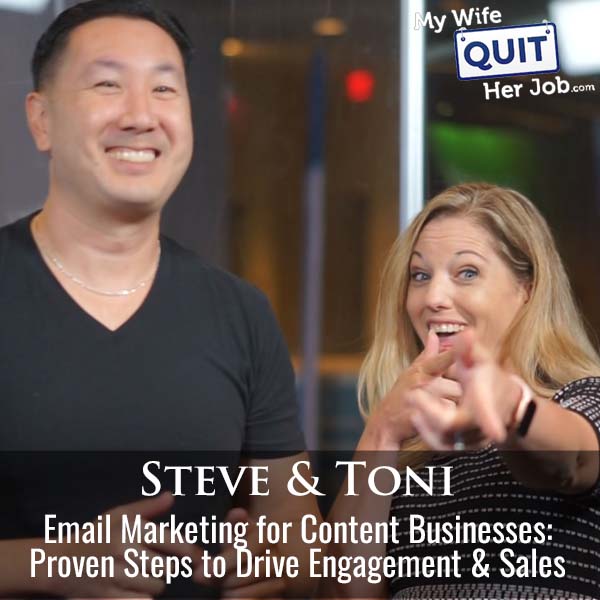
Email marketing for a content business works best when you build it around one tightly focused lead magnet, one simple welcome automation, and one weekly text email that gives more than it sells. Kit (formerly ConvertKit) is now free up to 10,000 subscribers with one included automation, so the old “email is too expensive to start” objection is dead. In this episode co-host Toni Herrbach and I walk through the exact setup that got both of our lists to pay for themselves, including the affiliate-first monetization path we recommend before you ever build your own product.
The short version: if you are running a blog, a podcast, or a YouTube channel and still do not have an email list, you are leaving revenue on the table that compounds every year you wait. Affiliate links inside emails routinely convert 3 to 10 times better than the same links inside a blog post, and a small list of 250 to 500 loyal readers can still produce meaningful sales when you time a promotion right.
Below we cover why Kit’s free tier removed the last excuse, how to build a lead magnet that matches your content, weekly send cadence and format, how to monetize with affiliates before you have your own product, and the mobile design and CTA rules that quietly kill most emails.
Get My Free Mini Course On How To Start A Successful Ecommerce Store
If you are interested in starting an ecommerce business, I put together a comprehensive package of resources that will help you launch your own online store from complete scratch. Be sure to grab it before you leave!
Table of Contents
Key takeaways
- Kit is free up to 10,000 subscribers and now includes one automation, which removes the biggest historical objection to starting a list.
- One highly targeted lead magnet almost always beats a pile of medium-fit ones. Match it to what you actually sell (or plan to sell) later.
- Affiliate offers in email are the fastest path to first revenue. Direct links convert far better than sending traffic to a blog post first.
- Amazon affiliate links are not allowed in email. Route around this by writing the sales pitch in the email and linking to the blog post that holds the Amazon link.
- Send at least one email per week so subscribers do not forget who you are and your list does not go cold.
- Text-based emails with a strong hook in the first line usually beat heavily designed template emails for content sites.
- Ask for one action per email. Multi-CTA emails almost always underperform single-CTA emails.
- Small lists convert. 250 to 500 highly engaged subscribers routinely produce 10 to 15 percent conversion on the right promotion.
Why email marketing still matters for a content business in 2025
Email is the only channel a content business fully owns, so it protects revenue from algorithm changes on Google, YouTube, Pinterest, and TikTok. Subscribers you can reach directly are worth an order of magnitude more than followers on any platform that can throttle your reach overnight. That is why every experienced creator we know treats their list as the retirement fund of the business.
The economics have also shifted in the creator’s favor. Kit’s free tier at 10,000 subscribers means you can go from zero subscribers to a fully monetizable list without paying a cent for infrastructure. Most content sites will take a year or two to grow into that ceiling.
Once you are on a paid plan, the math still works because email tends to carry the highest revenue per visit of any channel a content site runs. A single well-timed weekly send to an engaged list of a few thousand people often out-earns weeks of social posting.
How to pick a lead magnet that actually converts
The best lead magnet is the one most tightly aligned to the product you sell (or plan to sell) later, because that alignment determines whether the subscribers you attract will ever buy from you. A recipe blogger who monetizes with kitchen product affiliates should not offer a gluten-free lead magnet if half their recipes contain gluten. The lead magnet decides which subscribers you pay to keep on the list.
Sidebar signups pull almost nobody in 2025. You need a specific, valuable reason for a visitor to trade an email, and “I will email you once a week” is not it. Give away a checklist, a mini course, a printable pack, a swipe file, or a short video series that solves one concrete problem.
Two more rules from experience:
- Cap yourself at one or two lead magnets to start. Every extra one splits your effort and complicates your automation setup.
- Include a short intro video in the first delivery email. Even a 30-second phone-recorded hello lifts engagement and helps subscribers self-select in or out fast.
Ecommerce vs content lead magnets: what to offer
Content sites and ecommerce stores need different lead magnet formats because the buyer’s intent on arrival is different. Content site visitors are researching a topic, so an informational asset (a checklist, mini course, or printable) fits their frame. Store visitors are shopping, so an incentive on the purchase (a discount, free gift with purchase, or bundle upgrade) usually converts better than an information download.
For my store, Bumble Bee Linens, I run a modified spin-to-win popup that converts between 7 and 8 percent to email and about 50 percent from email on to phone number. The two-step design (email first, then phone for redemption) collects more contact data than a single-field popup, at the cost of a slightly higher friction.
A few ecommerce popup rules worth applying:
- Do not fire the popup on arrival. Delay it or trigger it on scroll speed or exit intent. Google nerfed mobile exit intent about a year ago, so on mobile detect fast upward scroll as a proxy.
- Never show the popup to shoppers who have already purchased.
- Test “email for free gift with purchase” against “email for percent off.” A gift preserves margin better.
Setting up your first welcome automation in Kit
The minimum viable welcome automation is five to seven emails that introduce you, deliver the lead magnet, tell a story about why the topic matters, and make one soft affiliate or product recommendation before the sequence ends. Kit’s free plan includes one automation, which is exactly what a new content business needs. You can add more automations later, but one well-written sequence covers most of the ROI.
The sequence should feel like a friend explaining the topic, not a corporate newsletter. Use plain text, first-person voice, and short paragraphs of one to three sentences.
Toni ran on a single automation for the first two years of her list and it still delivered the majority of her early affiliate revenue. My own longest sequence today is roughly 60 emails, but the first 5 in that sequence do most of the work.
How to monetize a content email list with affiliates
Promoting other people’s products through affiliate links is the fastest path to first revenue on a content list, because you do not need a product of your own and the audience trusts your recommendation. My first meaningful email revenue came from promoting Ramit Sethi’s Earn 1K course to a small list, which produced about 13 sales at his then-price near $1,000. Those commissions paid for years of my email software.
Almost every serious company runs an affiliate program today. Course creators, SaaS tools, physical product brands, book authors, and even ad networks all pay commissions on referred sales. Search “[your topic] affiliate program” and you will find more offers than you can promote responsibly.
Two rules keep affiliate email profitable long term:
- Route around the Amazon email restriction. Amazon’s Associates terms forbid Amazon links in email. Write the pitch in the email, then link to your blog post that contains the Amazon link.
- Diversify. When one affiliate goes under or cuts your commission, you do not want to lose five figures overnight. I once lost about $5,000 per month when a single affiliate program shut down.
Why you should still build your own product to sell
Every mature content business eventually needs at least one product it owns, because affiliate income disappears the moment the partner changes terms or goes out of business. Toni promoted a bread-making course as an affiliate that sold 700 copies through her list, earning about $5 per sale on a course that retailed for $29. A first-party product on the same funnel would have kept the full margin.
You do not need to launch a $2,000 flagship course to start. A $9.99 or $19.99 mini course, a paid printable pack, or a template bundle all work as first products. The point is to have something you fully control, so that a good promo email pays you and not an affiliate partner.
The reputational argument matters too. When you send a subscriber to a third-party product that later declines in quality, the trust hit lands on you, not the vendor. Owning the product protects both your income and your brand.
How often to email your content list (and when to send)
Send at least one weekly email so your list stays warm and your sender reputation stays healthy. Silence beyond four to six weeks kills open rates because inactive addresses accumulate, subscribers forget signing up, and spam filters start penalizing sends to disengaged inboxes. A weekly campaign send at a fixed day and time is the safest baseline.
Test the actual send time. I ran a test this week moving one campaign to 6 AM and saw a noticeably higher open rate than my usual afternoon send, after 10 years of sending in the afternoon. The right time for your audience is often not the one you have been using.
Do not confuse “regular” with “constant.” One well-written email a week outperforms three lazy emails a week almost every time.
Text-based emails vs designed templates
Plain text-style emails almost always outperform heavily designed HTML templates for content businesses, because they read as personal correspondence rather than marketing. Both of our lists moved from designed templates to text-forward emails and open rates went up slightly with no drop in click-through. Design still matters for pure ecommerce broadcasts and product launches, where visuals sell the product.
Keep the format consistent so subscribers know what to expect:
- A subject line that promises a specific benefit or reveals a hook.
- A one-line first sentence that pulls the reader in (“confession time: my kids hate crock pot meals”).
- Two to four short paragraphs of context.
- One clear call to action, ideally as both a text link and a button.
Ask for one action per email
Every email should ask the subscriber to do exactly one thing, because multiple CTAs split attention and reduce total click-through. If the goal is to sell, sell only that. If the goal is to drive traffic to a new blog post or YouTube video, promote only that.
The single-action rule is the single most reliable email-optimization habit I know.
The one exception is a scheduled newsletter that is explicitly framed as a roundup (“this week: three things”). Even then, use one primary CTA above the fold and treat the rest as secondary.
Grocery-aisle logic applies. Give a reader 52 flavors of jam and they buy zero.
Design for mobile: font size, link size, and buttons
Optimize every email for mobile first, because the majority of opens now happen on phones and thumb-tap targets are unforgiving. Use at least 16 to 18 point body font, H2 headings at 22 to 24 point bold, and a real button (not a text link buried in a paragraph) for the primary action. Space CTAs so a fat thumb cannot mis-tap between two adjacent links.
Two extras that quietly lift performance:
- For any e-commerce or product send, offer three ways to reach the same destination (link on the hero image, a text link in the body, and a button). All three go to the same URL.
- Preview every email on your own phone before sending. If you cannot click your primary CTA on the first try, neither can your subscriber.
Use your email list to feed your other channels
An email list is the single most reliable growth channel for any new YouTube, podcast, or physical-product launch, because subscribers convert to viewers, listeners, and buyers at rates no cold traffic source can match. Every creator I know who launched a YouTube channel with an existing email list had a measurable head start over creators launching cold. The same is true for launching a physical product outside Amazon.
Concrete plays that work:
- When a new YouTube video goes live, email the list, ask for a view and a comment, and route them directly to the video (not a blog post about it).
- Add a “Pin this for later” button at the bottom of every recipe or evergreen email. On my food list, that button is the second most-clicked link in every send.
- For a physical-product launch, warm the list for two weeks with behind-the-scenes content before the launch email.
Why small lists still convert
A list of 250 to 500 highly engaged subscribers can convert at 10 to 15 percent on the right offer, because early subscribers are almost always your most loyal readers. Case studies of first launches from tiny lists are everywhere for that reason. Loyalty compounds long before size does.
The people who sign up before you have polished lead magnets, funnels, or a big brand tend to be the ones who buy first, promote you to friends, and stay on the list for years. Treat them accordingly. A launch to 500 people that produces 50 buyers at $30 each pays for the whole first year of your list.
Size follows loyalty, not the other way around.
Frequently asked questions
What is the best email marketing platform for a content business in 2025?
Kit (formerly ConvertKit) is the best default for content businesses because its free plan now covers 10,000 subscribers and includes one automation, which is enough to run a real welcome sequence and weekly newsletter. Once you outgrow the free tier, its pricing and creator features remain competitive with MailerLite, Beehiiv, and Substack.
How big does an email list need to be before it makes money?
An email list can produce revenue at a few hundred subscribers if the audience is well matched to the product and the offer is timed to a real need. Case studies of 250 to 500 subscriber launches converting at 10 to 15 percent are common. Growth beyond 10,000 subscribers usually pays for the software and then some.
Are Amazon affiliate links allowed in email?
Amazon Associates explicitly prohibits Amazon affiliate links in email. The workaround is to write the sales copy in the email and link to a blog post on your own site that hosts the Amazon affiliate link, which keeps you compliant while still capturing the click.
How often should I email my subscribers?
Email your subscribers at least once a week to stay top of mind and keep deliverability healthy. Sending less than once a month risks list decay, higher spam complaints, and a cold list that requires warmup before a real promotion.
Should content business emails be plain text or designed?
Plain text-style emails usually outperform heavily designed templates for content businesses because they read as personal correspondence. Save designed templates for e-commerce broadcasts and formal product launches where visuals help sell the product.
What is the best lead magnet for a new content site?
The best lead magnet is a small, specific asset that solves one problem for the exact reader who will eventually buy your product. A mini course, checklist, printable, template, or short video series all work well. Avoid generic offers (“join my newsletter”) that fail to filter for buyer fit.
How do I use my email list to grow a YouTube channel?
Email your list every time a new video goes live, ask for a view, a like, and a comment, and link directly to the YouTube video rather than a blog post. Loyal subscribers deliver watch time and engagement signals that help YouTube’s algorithm push the video to a wider audience.