
Podcast: Download (Duration: 42:50 — 49.3MB)
Blogging is not dead in 2025, but standalone content sites without a business behind them are on life support after Google’s recent Helpful Content and core updates. Ecommerce blogs attached to a real store are the clear winners of the shift, because Google is now visibly favoring pages tied to a legitimate business with real products, reviews, and transactions. If you are running an ecommerce store, blogging is one of the best things you can do for traffic. If you are trying to build a pure affiliate blog from scratch, I would not start one today.
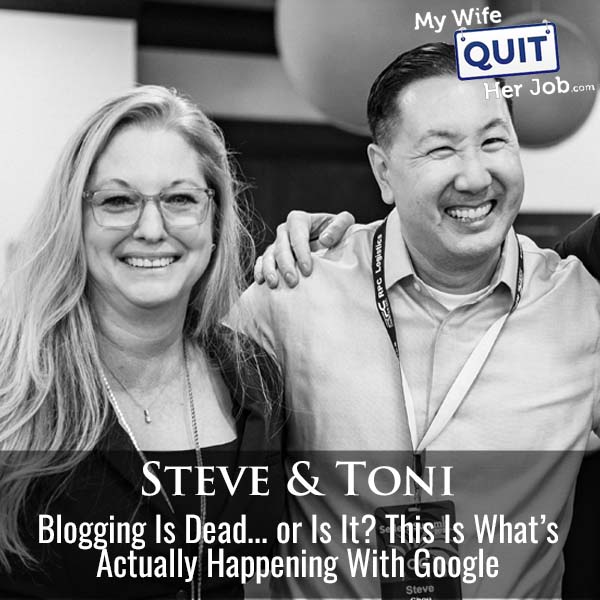
This episode is part of a four-part series with my longtime co-host Toni Herrbach on how to create content to promote your business. We break down exactly what Google changed, why my own standalone site got hurt while my Bumblebee Linens ecommerce blog got promoted, and what still works if you want to rank in search in 2025. We also cover whether AI Overviews are actually killing search clicks (spoiler: the data is more nuanced than the headlines), and why every content creator still needs an owned home base even if they never write another blog post.
Below is the full breakdown for both camps: ecommerce sellers who want to blog, and standalone bloggers wondering whether to keep going.
Get My Free Mini Course On How To Start A Successful Ecommerce Store
If you are interested in starting an ecommerce business, I put together a comprehensive package of resources that will help you launch your own online store from complete scratch. Be sure to grab it before you leave!
Table of Contents
Key takeaways
- Standalone content blogs got hammered by Google’s recent Helpful Content updates. Blogs tied to real ecommerce businesses got a boost.
- Google’s over-correction was aimed at AI-generated spam sites, and a Google representative has publicly admitted the algorithm went too far. Expect further tuning, but not a reversal.
- AI Overviews appear on roughly 7% of general search queries and 17% of ecommerce queries. Studies have found search clicks actually went up as users click through to verify AI answers.
- Google still owns roughly 90% of global search share in 2025. ChatGPT, Perplexity, and Google’s Gemini together account for low single-digit search share.
- The mobile-first design rule is now non-negotiable. Roughly 75% of blog traffic is mobile, and full-width desktop layouts are painful to read.
- Every serious online business needs an owned home base with an email list. Depending only on social platforms puts your audience one algorithm change away from zero.
- Do not launch a standalone affiliate blog today. Build a store, a course, or a product first, then add the blog underneath it.
Is blogging dead in 2025
Blogging is dead as a standalone business model in 2025, and blogging is alive and well as a traffic channel for ecommerce stores, courses, and product businesses. The difference is whether Google can see a legitimate business under the content. If it can, the blog gets rewarded. If it cannot, the content is treated with suspicion regardless of quality.
My own site, mywifequitherjob.com, is a pure content site with no products for sale, and my traffic is down materially since the Helpful Content updates. My Bumblebee Linens blog sits on top of a working ecommerce store with real reviews, real customers, and real transactions, and its blog traffic is up. Same author, same writing standards, wildly different outcomes.
The pattern is not hypothetical. I have talked to multiple SEOs, and Google has publicly acknowledged that the algorithm changes over-corrected against helpful independent publishers. Expect further tuning, but do not expect Google to reverse course on the underlying signal: they want to rank pages attached to real businesses.
Why Google is favoring ecommerce blogs over standalone blogs
Google is favoring ecommerce blogs over standalone blogs because AI-generated content flooded the web starting in 2023, and the fastest way for Google to filter it out at scale was to weight signals only a real business can produce. Real businesses have product listings, verified purchases, customer reviews, transactional pages, and brand mentions on third-party sites. A pure content blog has none of that.
The Bumblebee Linens blog is a good example of the flip side. It ranks well for anniversary gifts and wedding handkerchief content because those posts sit on the same domain as the actual product catalog, the reviews, and the checkout flow. Google can verify the business is real. That trust flows into the blog content.
This is genuinely good news for ecommerce store owners. Blogs and traditional content sites have historically outranked stores for informational queries. That advantage has narrowed sharply since 2023.
What actually changed with Google’s algorithm updates
Google’s recent Helpful Content and core updates changed three things that matter for anyone writing on the web. First, they devalued content on domains without a clear business or brand entity behind them. Second, they raised the bar on E-E-A-T (Experience, Expertise, Authoritativeness, Trustworthiness) signals, which favor named-expert authors with verifiable credentials. Third, they got more aggressive at spotting AI-generated or thin content and demoted the sites hosting it.
The practical consequence is that a site with 500 well-written blog posts and no product, no course, and no author brand behind it is now competing with a site that has 20 posts, 200 product SKUs, 4,000 reviews, and a founder with a public LinkedIn. The second site wins on trust signals Google can measure directly.
I don’t think this reverses. What I do think is that Google will keep tuning to protect independent publishers who are clearly experts in their niche. Signals like a named author with a real bio, published dates, updated dates, and third-party citations of your work matter more than they did a year ago.
Are AI Overviews killing search clicks
AI Overviews are not killing search clicks at the scale most creators fear, based on the data available in late 2024 and early 2025. Google’s AI Overview box appears on roughly 7% of general search queries and 17% of ecommerce queries, not the near-universal presence it briefly had when it first launched. And multiple studies have found that when an AI Overview appears, click-through to the underlying source pages actually goes up, because users click to verify the AI summary they don’t fully trust.
The impact is real but bounded. If your content targets high-informational queries where a two-sentence answer is enough (unit conversions, definitions, quick facts), AI Overviews will cannibalize some of your clicks. If your content targets commercial or transactional queries (best of, product reviews, buying guides), AI Overviews rarely trigger and even when they do, users still click through.
The medium-term move is to write content that is both AI-friendly and click-worthy. Direct answers up top, deep original detail below, so the AI Overview cannot fully replace your page.
How much search market share has Google actually lost
Google has lost only low single-digit percentage points of search share to ChatGPT, Perplexity, and other AI assistants as of early 2025. Google still processes roughly 90% of global searches. The Google antitrust case may eventually force structural changes, including ending the multi-billion-dollar default-search deal with Apple, but the reporting suggests those changes are five or more years away from any real effect.
The strategic implication is that SEO is still the single highest-ROI content investment for ecommerce, and the fundamentals that rank a page in Google are the same fundamentals that get your brand cited in AI answers. ChatGPT and Perplexity both draw heavily on Google-quality signals like backlinks, authority, and structured content.
I have tested this directly. When I ask ChatGPT for the best place to buy wedding handkerchiefs, Bumblebee Linens shows up in the answer, because it ranks number one on Google for the same query. Rank on Google today, get cited by AI tomorrow.
How to write for the web in 2025
Writing for the web in 2025 means throwing out most of what you learned in eighth-grade English class and writing for people scanning content on a phone screen. Long paragraphs, five-sentence intros, and academic prose lose. Short paragraphs, clear headings, and scannable structure win.
Here are the rules Toni and I teach every ecommerce blogger:
- Paragraphs of one to two sentences. Anything longer is a wall of text on a phone.
- Bold key phrases and use plenty of H2 and H3 headings. Most readers scan headings first, then decide whether to read.
- Break up text with images every 200 to 300 words. Visual breaks keep mobile readers scrolling.
- Cut ruthlessly on the second pass. Every sentence should earn its place. If you can say it in six words instead of ten, do it.
- Design for mobile first. Roughly 75% of blog traffic is mobile in 2025. Preview every post on your phone before you publish.
- Constrain content width on desktop. Full-width text is hard to track back to the next line. Keep the reading column around 700 pixels wide.
- Run a final grammar pass through AI. Paste your draft into ChatGPT or Claude with the prompt “fix grammatical and spelling errors without changing the content.” Typos on a store page kill trust.
How to do SEO for an ecommerce blog in 2025
SEO for an ecommerce blog in 2025 still follows the same core loop: pick a keyword with real search volume and buyer intent, write the most useful, answer-first, well-structured post on the internet for that keyword, and interlink it with your product and category pages. What changed is that the site under the post matters more than the post itself.
Here is the compressed playbook I run for Bumblebee Linens and teach in my course:
- Keyword research. Use Ahrefs if you can afford it, Ubersuggest if you cannot. Look for keywords with real monthly search volume, low-to-medium competition, and clear buying intent.
- Match search intent. Google the target keyword and see what already ranks. If the top results are comparison posts, do not publish a definition; publish a better comparison.
- Answer the question in the first sentence. AI Overviews and human scanners both extract the top of the page. Lead with the direct answer, then add the depth.
- Use every related keyword the tool surfaces. Cover the full semantic footprint of the topic in one post.
- Interlink to product and category pages. This is the ecommerce advantage. Send blog readers into the store with contextual links.
- Update the post twice a year. Refresh stats, screenshots, and dates. Freshness is a ranking signal Google measures directly.
Ahrefs vs Ubersuggest for keyword research
Ahrefs is the best keyword research tool on the market because it has the most accurate data, largely because their Chrome extension collects real browsing signals from millions of installs on top of their standard crawl. It is expensive, and for a serious ecommerce operator it is worth every dollar.
Ubersuggest is the budget alternative. Neil Patel’s team offers lifetime deals periodically, usually to email subscribers, so join his email list before buying. The data is less comprehensive than Ahrefs but good enough for a small store’s monthly content planning.
Should every ecommerce store have a blog
Not every ecommerce store needs a blog, but every ecommerce store needs some form of content marketing built on its own domain. If you sell fashion where buyers make decisions from photos, a blog is the wrong medium and you should invest in short-form video and influencer content. If you sell products that require explanation, comparison, or teaching (technical products, specialty foods, hobby gear), a blog is the highest-leverage content investment you can make.
The filter is: does someone need to be talked into your product, or is the buying decision purely visual? Explanation-heavy products need blogs. Visual products need video.
Even for visual-product stores, you still need an owned home base with an email capture form. Social platforms can, and do, zero out your reach overnight. An email list is yours forever.
Why every content creator still needs an owned home base
Every content creator still needs an owned home base with an email list because social platforms can, and repeatedly do, destroy audiences that were built entirely on their turf. I personally built a large Facebook Messenger subscriber list before Facebook effectively killed the feature in a single announcement. Every hour of work that went into that list was gone the next day.
The pattern repeats. Facebook throttled organic Page reach, forcing brands into paid ads. Google penalized affiliate blogs. Twitter (now X) changed algorithms, changed rules, and changed hands. Instagram capped links. TikTok is under repeated US regulatory pressure. Every platform that owns your audience can take it back.
An owned website with a working email capture form is the one asset no algorithm can take from you. If your business plan is “I’ll rely on my TikTok audience,” you do not have a business, you have a lease from a landlord who can evict you at any time.
What to do instead if you were going to start a blog
If you were going to start a pure content blog for affiliate income in 2025, do not. Start an ecommerce store, a course, or a productized service first, then build the blog underneath it. The blog will rank better because Google now trusts pages attached to real businesses, and your monetization will be dramatically stronger than affiliate percentages.
If you already have an audience on social and want a home base, the right build is a simple two-to-five-page site with an about page, a contact page, an email opt-in with a lead magnet, and one or two cornerstone content pieces that establish authority. You do not need 300 posts. You need the audience to have somewhere to land.
If you already have a standalone content blog that has lost traffic, the two moves worth trying are consolidation (merge thin posts into deeper hub pages) and adding a real product or service under the site so Google can see a business behind the content. Rebuilding under a store is a bigger project, but the traffic upside is real.
Frequently asked questions
Is blogging dead in 2025?
Blogging is not dead as a channel; it is dead as a standalone business model without a product, course, or store attached. Ecommerce blogs, product-company blogs, and brand blogs are ranking well and driving real traffic. Pure content sites with no business underneath have been hit hard by Google’s Helpful Content and core updates.
Should I start a blog in 2025?
Start a blog in 2025 only if you have a product, course, or business it can drive traffic to. If you are considering starting a pure affiliate blog from scratch, the ROI is significantly worse than it was five years ago, and I would not recommend it. Build a product or a store first, then blog to promote it.
How much has AI Overviews reduced search traffic?
AI Overviews appear on roughly 7% of general search queries and 17% of ecommerce queries as of 2024-2025. Multiple studies have found that when AI Overviews appear, click-through to source pages actually increases modestly, because users click to verify the AI answer. The doomsday click-loss scenarios have not materialized broadly.
What ecommerce topics are best to blog about?
The best blog topics for an ecommerce store are informational and commercial queries your buyers search on the way to purchase: buying guides, “best of” comparisons, product tutorials, use-case articles, gift guides, and glossary or definition pages that map to your product categories. Every post should interlink to product and category pages.
Which keyword research tool should I use?
Ahrefs is the best keyword research tool available in 2025 for accuracy and depth, though it is expensive. Ubersuggest by Neil Patel is the strongest budget option and often runs a lifetime deal for email subscribers. Both work; the difference is data completeness and cost.
Is SEO still worth doing with ChatGPT and Perplexity gaining share?
Yes. Google still handles roughly 90% of global search, and the ranking signals that get you on page one of Google are the same signals that get you cited in ChatGPT, Perplexity, and Google’s AI Overviews. Rank on Google today; get cited by AI tomorrow.
How long is a blog post supposed to be in 2025?
Length is a downstream result of covering the topic completely, not a target. Match the depth of the top-ranking results for your keyword and beat them on original detail, then stop. Most useful ecommerce posts land between 1,200 and 2,500 words. The 5,000-word content-farm era is over.
Do I need a website if all my sales come from Instagram?
Yes. Instagram can throttle, ban, or algorithmically hide your account overnight, and every follower you built is gone with it. An owned website with an email capture form is the one asset the platform cannot take from you. Even a simple two-page site is enough to protect the audience you are building.