
Podcast: Download (Duration: 39:09 — 45.1MB)
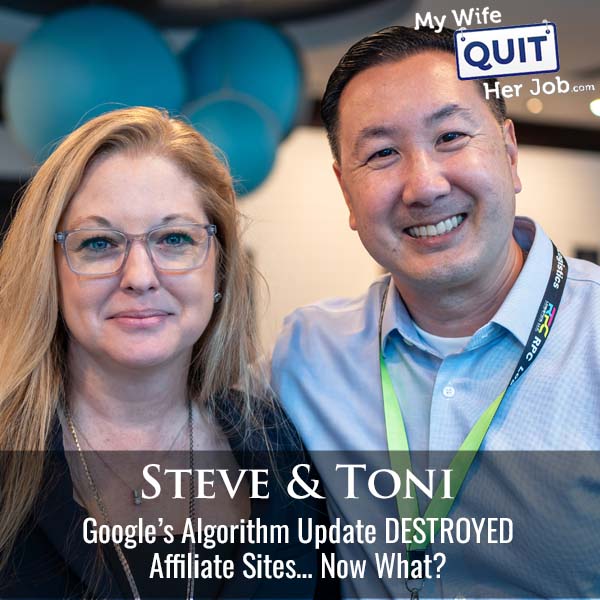
Affiliate marketing is still very much alive after Google’s algorithm updates, but the money has moved off standalone affiliate blogs. Pure review sites without a real business or service behind them are getting almost no organic traffic today, so the affiliate dollars now live in short-form video (especially TikTok Shop), long-form YouTube tutorials, and email lists that already have an audience. On this episode my co-host Toni Herrbach and I broke down where affiliates are actually earning, how to negotiate deals that pay a flat fee plus commission, and why teaching-style YouTube videos convert affiliate links better than almost anything else.
If your Google Search Console impressions have flatlined and your affiliate checks have followed them down, this post is for you. The playbook is different now, but the opportunity is still real if you meet buyers where they already have their credit card open.
Below we cover what changed with Google, how to salvage an existing affiliate blog, why TikTok Shop is the easiest affiliate program to start today, how to negotiate flat fee plus commission deals with brands, and the exact mistakes that get creators dropped after one campaign.
Get My Free Mini Course On How To Start A Successful Ecommerce Store
If you are interested in starting an ecommerce business, I put together a comprehensive package of resources that will help you launch your own online store from complete scratch. Be sure to grab it before you leave!
Table of Contents
Key takeaways
- Pure affiliate blogs with no product or service behind them are effectively dead for organic SEO. Google is not ranking them.
- Existing blog posts that still get traffic from Pinterest or long-tail Google searches are worth updating first. Toni found one 13-year-old post that resurfaced on Pinterest and doubled her Commission Junction check after she fixed the broken affiliate links.
- TikTok Shop is the easiest affiliate program to start in 2026. Commissions run 10 to 15 percent (sometimes with bonuses), versus Amazon Associates at roughly 1 to 4 percent, and the checkout is two taps.
- YouTube tutorials that teach a tool or workflow are the highest-converting affiliate format that you own. Viewers land on your video already trying to buy.
- Every creator deal should be flat fee plus affiliate commission, not one or the other. Ask for the “double dip.”
- Bring conversion data (click-through rate, sales driven, past case studies) to every brand pitch. Follower count without conversion data is why $25,000 media kits get ignored.
- Do not let a brand write your YouTube title or thumbnail. It will flop, and you own the flop.
What Google’s algorithm updates changed for affiliate marketing
Google’s recent algorithm updates decimated standalone affiliate blogs by demoting review and comparison content that is not attached to a real business, service, or first-hand experience. Independent affiliate sites without a broader brand behind them lost most of their organic traffic, which is why so few small blogs are publishing new review posts anymore.
The knock-on effect is that the web is quietly emptying out. As Toni put it on the show, “all these Google changes in the past couple of years have really decimated the entire blogging community to the point where at some point AI is not going to have any content to digest.”
If Google was your only traffic source and you did not build an email list, a social following, or a Pinterest presence, you probably have no other way to get eyeballs to your affiliate links right now. That is the real problem.
The affiliate mechanics still work fine. The traffic pipe is broken.
Is affiliate blogging dead in 2026?
Blogging as a standalone affiliate business is dead in 2026, but blogging as one channel inside a larger content operation still works. If you already have a blog with existing traffic, keep publishing and keep using affiliate links. Just do not build a new blog whose entire monetization plan is affiliate commissions from Google search traffic.
The blogs still earning affiliate income today are the ones connected to a service, a product, an email list, a YouTube channel, or a Pinterest account driving the traffic. Google alone will not float a review site anymore.
If you fit that profile, the smart move is to layer video into your written posts. For a vacuum review, embed a short clip of you emptying the Dyson canister or running it across three floor types. That is the first-hand demonstration that both readers and Google’s helpful-content signals actually reward now.
How to salvage an existing affiliate blog after a Google update
The single highest-ROI move for an existing affiliate blog is auditing your Google Search Console report every month and updating any old post that is still getting impressions. Old posts resurface constantly (usually via Pinterest or a long-tail query), and most of them have broken affiliate links pointing to products that are no longer sold.
Toni ran into this after Christmas when her Commission Junction deposit came in at roughly double the usual amount. When she dug into Search Console, one 13-year-old post had resurfaced on Pinterest and was quietly driving affiliate revenue with completely broken links. Every Amazon link on the page pointed to a product that was no longer for sale.
The tracking still fires (so any Amazon purchase in the next 24 hours still credits her account), but if the reader lands on a dead product page they almost always bounce. Fixing those links to currently-sold, on-topic products can multiply the revenue from a single resurrected post without writing a new word.
The workflow is simple:
- Open the Google Search Console monthly performance email and sort by impressions, not just clicks.
- Flag any post from three or more years ago that has meaningful impressions.
- Open the post and click every affiliate link. If it 404s, redirects to a listing page, or shows an out-of-stock product, replace it with a current equivalent.
- Refresh the intro, add a “last updated” date, and where possible embed a short video showing the product in use.
Where the affiliate dollars actually live now
The affiliate dollars in 2026 live in three places: TikTok Shop, YouTube long-form tutorials, and email lists to a warm audience. Blogs and Instagram sit further down the list because Instagram will not let you post clickable links in the caption and blogs no longer get free Google traffic.
Here is how the main affiliate channels compare on ease of getting a click and typical commission range:
| Channel | Ease of getting a click | Typical commission range | Best for |
|---|---|---|---|
| TikTok Shop | Highest (two-tap in-app checkout) | 10 to 15 percent plus bonuses | Impulse and low-consideration products |
| YouTube (long form) | Medium (link in description) | Whatever the brand pays; often 5 to 20 percent | Tools, software, gear tutorials |
| Email to your list | Very high (direct click) | Whatever you negotiate; often 5 to 30 percent | Higher-ticket items, warm audiences |
| Pinterest to blog | Medium (visual to article to link) | Whatever the merchant pays | Home, DIY, recipes, fashion |
| Low (no clickable in-caption links) | Same as your other channels | Discovery only; not conversion | |
| Standalone blog (SEO only) | Very low now | Same as above | Rebuilding brand, not primary income |
Why TikTok Shop is the easiest affiliate program to start in 2026
TikTok Shop is the easiest affiliate program to start in 2026 because the checkout happens inside the app with saved payment details, so a viewer can go from watching your video to placing the order in about two taps. That eliminates the biggest killer of affiliate conversion, which is friction between “I want this” and “I bought it.”
The commission economics are also better than the incumbents. TikTok Shop pays creators 10 to 15 percent on many products, sometimes with additional bonuses layered on top. Amazon Associates, by comparison, pays roughly 1 to 4 percent in most categories after years of rate cuts.
YouTube and Instagram are rolling out similar in-app shop programs, but TikTok is the one that actually works today.
The catch is that you are entirely beholden to the platform. Toni and I both know creators who racked up big TikTok Shop balances, got a single content-policy strike, and never received their payout. Treat TikTok Shop money like cash flow, not like the foundation of your business.
How to negotiate flat fee plus commission with brands
The best creator deal is a flat fee up front plus an affiliate commission on any sales you drive, not one or the other. Most creators leave money on the table because they either quote a flat sponsorship fee with no back-end or take affiliate-only and eat all the risk if the brand’s product page does not convert.
Toni calls this “the double dip.” Even if the brand quotes a standard 5 percent affiliate rate, ask for 7 percent. Even if they offer a flat fee, ask for an affiliate commission on top. Most of the time the brand will say yes, because the marginal cost of paying you an extra 2 percent on actual sales is trivial compared to the risk of a sponsored post that flops.
If you are a small creator without a track record, lead with the affiliate structure only. Prove you can drive sales. Once you have real click-through and conversion data from your own affiliate links, you have permanent leverage to ask for the flat fee on top of the commission on your next deal.
Why brands drop creators (and how to not be one)
Brands drop creators after one campaign when the creator collects a big upfront fee, delivers weak results, and then goes silent. If you charge $10,000 for a YouTube video and drive 15 clicks, that brand will not work with you again and will tell their peers. PR and marketing agencies talk to each other constantly.
The creators who build multi-year, multi-deal relationships do two things differently. First, they bring conversion data to every pitch so the brand knows what to expect. Second, when a piece of content underperforms, they fix it.
They re-edit, change the thumbnail, promote it a second time, or bring in their community to help push it.
Toni’s early wins are a good template. A baby-bottle brand paid for her ticket and hotel at BlogHer 2009 in exchange for a blog post. That post drove traffic, so the same brand paid her for a second sponsored post, then made her a brand ambassador on their blog for several thousand dollars a year.
The initial gig was worth about $900 in comps. The full relationship was worth many multiples of that because she delivered on step one.
Never let a brand write your YouTube title or thumbnail
Never let a brand dictate your YouTube title or thumbnail, because the title and thumbnail are 80 percent of the reason a video succeeds and you will own the flop even if the brand caused it. Brand marketers often want their product name shoved into the title for keyword recognition, which almost always tanks click-through rate.
I ran this exact experiment. A prior sponsored video where I had full creative control on the title and thumbnail hit 150,000 views.
The same brand re-upped, insisted on inserting their brand name into the title, and I warned them upfront it would not perform. That version got 7,000 views. I have not heard from them since.
The right move is to tell the brand yes to their brand values and guidelines (those are legitimate), and firmly no on titles, thumbnails, and pacing. Frame it as protecting their spend, not your ego. If they still insist, get the “you accepted the risk” note in writing.
Why teaching-style YouTube videos convert affiliate links best
Teaching-style YouTube videos convert affiliate links better than any other content format because viewers arriving at a tutorial are already at the bottom of the funnel. They searched “how to do X with tool Y.” They are pre-qualified. They just need someone to show them the tool works.
This is Toni’s bread and butter as an affiliate. She teaches how to use a specific software or tool, viewers watch, and a meaningful share of them buy the tool through her affiliate link inside the same session. The affiliate revenue is a byproduct of genuinely useful teaching, not a distraction from it.
Storytelling channels can still win, but the mechanics are harder. Our friend Jamerill’s mega-cooking channel is a storytelling format at heart, but when she says “this is the only stew pot I use” and links it, viewers who came for the story convert on the product. The teaching moment is woven into the story, on purpose.
What Jim Wang did that most affiliates never do
Jim Wang built one of the largest personal-finance affiliate businesses ever by treating every referral link as a conversion-optimization problem, not a set-it-and-forget-it link. He A/B tested button copy, placement, colors, and landing-page framing on every affiliate promotion he ran. Most content creators drop a link and hope.
That is the difference between an affiliate hobby and an affiliate business. If you already have an audience, the highest-leverage next move is not more content. It is spending a week auditing your top ten highest-traffic posts, testing different link placements, and measuring which layouts and CTAs actually drive clicks and conversions.
The compound effect of a 20 percent lift in conversion across your top posts is often more than the effect of publishing another six posts. Fewer creators do this work because it is unglamorous, which is exactly why it still pays.
Frequently asked questions
Is affiliate marketing still worth it in 2026?
Yes, affiliate marketing is still worth it in 2026, but the format has shifted from SEO-driven blogs to short-form video (TikTok Shop), long-form YouTube tutorials, and email newsletters. Pure affiliate blogs that rely on Google organic traffic no longer work as a standalone business model.
How much did Google’s algorithm updates hurt affiliate blogs?
Google’s algorithm updates over the past several years effectively removed most standalone affiliate review sites from search results. Small independent bloggers stopped publishing because pages that used to rank now get almost no traffic. The remaining survivors are large sites attached to a real brand, service, or first-hand testing operation.
What is the best affiliate program for beginners?
TikTok Shop is currently the easiest affiliate program for beginners in 2026 because commissions are 10 to 15 percent (versus Amazon’s 1 to 4 percent), and the in-app checkout removes almost all conversion friction. The trade-off is platform risk. Do not build your entire income on a single platform’s policies.
How do I get paid more than a flat fee from brand deals?
Ask for the “double dip”: a flat fee plus an affiliate commission on any sales you drive. Even if a brand quotes affiliate-only or flat-fee-only, most will agree to layer a modest commission on top because the marginal cost of paying you on actual sales is small compared to the risk of a flopped campaign.
What should I do with my old affiliate blog posts?
Open your Google Search Console monthly report and identify any old post still getting meaningful impressions. Click every affiliate link on those posts. Broken links pointing to discontinued products are extremely common on posts more than three years old, and simply repointing them to current products can multiply the revenue with no new writing.
Why do brands pay $25,000 for a single Instagram post?
They often pay it because the creator has a big follower count and the brand does not know how to negotiate for performance data. The creators who charge those rates but cannot show click-through rate, conversion rate, or past case studies rarely get re-booked once the brand tracks the results, which is exactly why bringing conversion data to a pitch is such powerful leverage.
Can I still make money from Amazon Associates?
You can, but Amazon commissions have been cut repeatedly and now sit at roughly 1 to 4 percent in most categories. Amazon Associates works best as a passive layer on top of content that already gets traffic, not as a standalone business. Smaller brands often pay 5 to 20 percent for the same referral, so switch categories to direct brand affiliates wherever possible.