
Podcast: Download (Duration: 42:34 — 49.0MB)
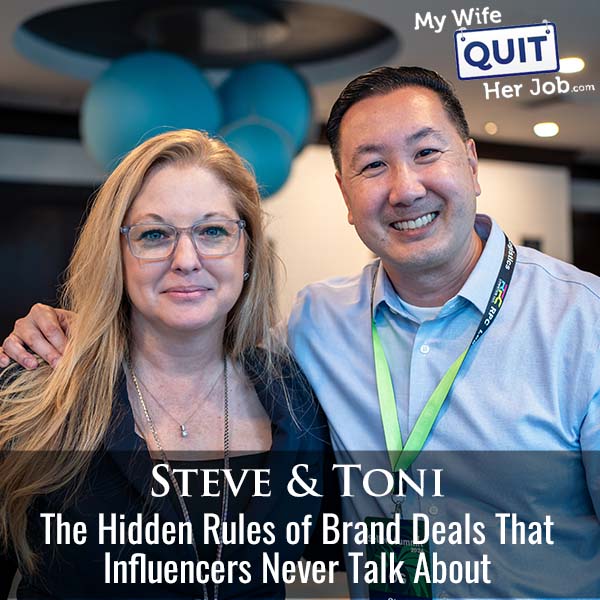
The hidden rules of influencer brand deals are that the money is rarely the real payment, the biggest risk is your own channel, and the most valuable skill is knowing when to walk away. My co-host Toni Anderson and I have been in the influencer game since blogs paid in Twinkies, and in podcast episode 614 we broke down every mistake we have made and every rule we now use to decide whether a brand deal is worth taking.
The gap between what influencers post publicly and what they actually deal with behind the scenes is huge. There are net-90 payment terms that vanish for three months, legal reviews that kill deals silently, scripts that would tank a channel, and back-and-forth negotiations that eat more time than the actual content. Every one of those is a normal part of the job.
Below is the full playbook we walked through: how to price, negotiate, protect your reach, spot bad deals early, build a lightweight media kit, and think about brand alignment before saying yes.
Get My Free Mini Course On How To Start A Successful Ecommerce Store
If you are interested in starting an ecommerce business, I put together a comprehensive package of resources that will help you launch your own online store from complete scratch. Be sure to grab it before you leave!
Table of Contents
Key takeaways
- Money alone is rarely worth a bad brand deal. Time to script, edit, and negotiate almost always outweighs the fee.
- The biggest risk of a brand deal is your channel, not the fee. One misaligned sponsorship can reduce reach for months on YouTube, TikTok, and Instagram.
- Alignment matters more than money. A sponsored email for a movie or product your audience finds offensive can trigger thousands of unsubscribes in one send.
- Always ask up-front for creative control at the outline level, and get the list of banned words and competitors in writing.
- Read the contract, and paste it into ChatGPT to surface hidden clauses like net-90 payment terms.
- Ask for half up-front on any long-form video project, or walk.
- Small brands give you more creative freedom; big brands survive legal review but often kill deals silently. Both have tradeoffs.
- Build a media kit even if you rarely take deals, so pricing conversations are quick and defensible.
What influencer brand deals actually pay (and why the fee is rarely the point)
Influencer brand deals actually pay in three currencies: cash, product, and experience. In the early days a brand deal often paid only in product (a box of Weight Watchers Twinkies was Toni’s very first “payment” in 2008). Today cash fees can hit $5,000 for a single restaurant mention or six figures for a large campaign, but the fee is rarely the real point.
The real question is what a deal costs you: hours to script, days to produce, and reach lost if the content misaligns. A $5,000 dedicated YouTube video that takes 15 hours to script, film, edit, and negotiate is a low hourly rate once you count the calendar time. A cheap deal that tanks your algorithm for a month is negative EV even if the check clears.
That is why the most experienced creators say “no” more than they say “yes.” The floor is not the fee. The floor is whatever the deal costs your channel.
How to price an influencer brand deal (media kit, rate cards, and negotiation)
You price an influencer brand deal by starting from a documented media kit, not by guessing per email. A media kit at minimum should include audience size and demographics per platform, engagement metrics, average views on recent sponsored content, and links to two or three case studies with real results (views, comments, click-through rate, conversions).
If sponsored content is a primary revenue stream, publish the media kit on a static web page and share the link every time a brand asks. If it is occasional revenue, keep the kit private and share it only for deals you actually want. Public rate cards are optional; most experienced creators keep pricing private because it lets them quote higher on deals they do not want, and take them if a brand accepts.
Every “extra” a brand asks for is a separate line item: base video price, cross-post to Instagram, cross-post to TikTok, embed in a blog post, short-form derivative video, exclusivity window, whitelisting for paid ads. Price each one. They do not come free.
The ChatGPT contract check
Paste every brand contract into ChatGPT and ask “what are the important stipulations I need to be aware of here” before signing. This catches net-90 payment terms, unusual exclusivity clauses, and usage rights that would prevent you from repurposing the content on your own channels. One expensive mistake I made pre-pandemic was signing a net-90 contract without noticing, then forgetting the deal existed until the payment finally landed three months later.
Negotiate payment terms whenever possible. Large corporations may be locked into a 90-day AP cycle, but small and mid-size brands will often move to net-30 or split payment (half up-front, half on delivery) if you ask.
Why misaligned brand deals hurt your channel more than they help
Misaligned brand deals hurt your channel more than they help because your subscribers followed you for a specific point of view, and content that violates it triggers unsubscribes and lost reach. One friend of ours took a sponsored email deal for the movie The Shack based on its Christian marketing, then lost thousands of subscribers in one send when parts of her conservative audience objected to the theology.
The pattern generalizes: a mutual friend of ours took a payday-loan sponsorship a decade ago and permanently damaged his recommendation credibility, because payday loans are widely seen as predatory. Nestle did enough sponsored influencer work during their formula controversy to give the creators involved significant blowback.
The rule is simple. Read the brand’s press coverage before signing, and refuse any deal you cannot honestly stand behind for a decade.
The FTX celebrity trap
The FTX celebrity trap is a good reminder that even huge brands can be dangerous. Tom Brady and other celebrities took millions to endorse FTX. The crypto exchange turned out to be a large-scale Ponzi scheme, and the endorsers ended up in class-action lawsuits and permanent reputation damage.
You cannot fully vet every brand, but you can decline categories where the risk of hidden fraud is elevated (unregulated financial products, medical devices, MLM structures).
Time cost of a brand deal: the hidden line item
The time cost of a brand deal is the hidden line item that kills more sponsorships than any price disagreement. A single Kraft cheese-brand campaign in the blogging era required Toni to host an actual party, invite family members, prepare cheese sandwiches, photograph the whole event for a blog post plus three Pinterest images plus Instagram content. That is a week of work for what was effectively coupon compensation.
Today the time cost has shifted from parties to production. A short-form phone video is one to two hours; a long-form scripted YouTube video is 10 to 20 hours across script, film, edit, and revision cycles. The revision cycles are usually where the deal breaks.
I once negotiated a dedicated YouTube video for a specific tool, scripted it over three weeks, filmed to the approved script, and then had the brand demand at the 11th hour that I double the length from 15 to 30 minutes. There was no additional payment offered. I walked away, published the video with a redesigned narrative anyway, and it did over $5,000 in AdSense revenue on its own.
Creative control on brand deals: outline over script
Creative control on brand deals should be negotiated at the outline level, not the script level, because reading a script tanks engagement on any conversational channel. Ask the brand up-front for three to five talking points you must hit and a written list of banned words, banned phrases, and competitor names you cannot mention. Then produce the content in your own voice.
The banned-word list is a hidden trap most creators miss. Every large brand has one or two phrases they refuse to be associated with (I have hit this with Frito-Lay and Procter and Gamble campaigns), and you need the list in advance or the video gets rejected in review.
Refuse any deal that demands a verbatim script unless the fee more than pays for the reach damage. Your audience will feel the difference immediately.
Small brands vs big brands for sponsored content: the real tradeoffs
Small brands and big brands both have real tradeoffs for sponsored content. Small brands give you far more creative freedom, move faster, and are more willing to negotiate on price and terms, but they carry payment risk (they may vanish) and hidden reputational risk (you may not know how they are run). Big brands survive legal review with paperwork and pay reliably, but the deal cycle is longer, the creative control is tighter, and legal can kill an agreed deal without notice.
Toni worked with Jim Wang on a financial project where they agreed on everything with a brand only to hear “we just need to send this to legal.” The project sat there for months and effectively died.
When to prefer big brands
Prefer big brands when payment risk is a bigger concern than creative friction. A small brand can go bankrupt before invoicing, and there is no legal recourse worth pursuing. A large brand pays net-30 or net-60 like clockwork, and gives you a case study you can put in your media kit.
When to prefer small brands
Prefer small brands when you are getting started or when creative freedom matters more than absolute reliability. Small brands often let you keep the creative wheel because they do not have a legal team, and they are grateful for your reach. That produces better content, which usually converts better for them.
Brand deal red flags: how to spot a bad deal before you sign
Brand deal red flags to watch for before you sign include: verbatim scripts with no creative flexibility, net-90 payment terms without an offset, no half-up-front option on long-form work, exclusivity clauses longer than 90 days, no written list of banned words or banned competitors, refusal to let you use your own affiliate link where one exists, and a brand rep who spams you daily without personalizing outreach.
The affiliate-link point is worth calling out. Always ask whether you can layer your existing affiliate link on top of the paid deal; many brands will say yes, some refuse, and a few will get angry later when they see the commissions. Get the answer in writing before the content ships.
How to use an affiliate cut to double a brand deal
You can double a brand deal by asking the brand to layer an affiliate commission on top of the flat fee for the sponsored post. It is a normal ask for most brands with an existing affiliate program, and the smart brands offer it up-front because affiliate tracking is the cleanest way to measure whether an influencer actually drives revenue.
If the brand has no affiliate program, you can sometimes negotiate a custom discount code as a proxy (both a small perk for your audience and a tracking mechanism for the brand). Refuse the deal if the brand blocks both an affiliate link and a discount code and has no other tracking, because then neither side can prove the deal worked.
Building a lightweight media kit that closes deals
Building a lightweight media kit that closes deals takes an afternoon and pays for itself the first time a brand asks for your rate. My current recommendation is a single web page with: audience size and demographic breakdown per platform, real-time subscriber and view feed, three case-study videos with view counts and engagement stats, and a note on how to inquire about rates.
For a podcast the equivalent is a page with monthly downloads charted, listener demographics, and top-episode metrics. Do not publish the price list. Send that only to brands you actually want to work with, so you can quote based on fit rather than a public number.
The other benefit of a media kit is it stops the back-and-forth. If a brand emails asking for rates and you send a link with all the answers, you save two to four hours of email volleyball per lead.
How to say no to brand deals without burning the bridge
You can say no to brand deals without burning the bridge by being direct about what you would take, so the brand knows how to come back with something better. When a rep pitches me a product I would not use, I tell them exactly that, and I ask them to be more selective about future outreach. Every “yes” costs a real slice of my week, so my baseline is skepticism.
The other useful move is a rate high enough that only deals worth doing get accepted. If you would only do a video for $20,000 because the topic is off-brand, quote $20,000. Sometimes a brand will accept, and then you have a moral commitment to actually deliver the video.
When “experience payment” is worth more than cash
Experience payment is worth more than cash when the trip, event, or access itself is something you would have paid for anyway. Toni did years of unpaid influencer work for Disney because the exchange was free park tickets, Disney Halloween party access, Christmas party access, and fast passes for a family with young kids. The out-of-pocket savings alone (Disney tickets plus $75 per person for special events) exceeded what a small cash fee would have paid.
The rule is: if the experience is on your bucket list and the brand covers it, count that as compensation. Just do not let experience-only deals dominate your calendar, because swag does not pay rent.
Documenting your work is the actual influencer hack for 2026
Documenting your work publicly is the actual influencer hack for 2026 because algorithms and brands both reward the loudest expert on any topic, and AI is compressing everyone else. A friend of ours has a college-aged son who walked onto TikTok, filmed a daily “here is what I am wearing today” video, and now has clothing companies paying him to wear their products.
He is not doing anything special. He is documenting, consistently, publicly.
The point generalizes past outfit-of-the-day content. Any consistent public documentation of your expertise (case studies, teardown threads, project updates, screen recordings) puts you in front of brands who would never find you through a search.
The internal version of the same rule: the loudest qualified person in a room usually gets the opportunity. In 2026 that room is the internet.
Frequently asked questions
How much do influencer brand deals pay?
Influencer brand deals pay anywhere from free product plus experiences (at the entry level) to five- and six-figure fees for creators with large engaged audiences, and pricing scales with reach, engagement, exclusivity, and content type. A short-form phone video from a mid-tier creator commonly quotes in the low four figures. A dedicated long-form YouTube video from an established creator can quote $5,000 to $50,000 or more.
Should influencers do brand deals with big brands or small brands?
Influencers should do brand deals with big brands when payment reliability and case-study value matter most, and with small brands when creative freedom and speed matter more. Big brands survive legal review and pay net-30 or net-60, but the deal cycle is longer and can be killed silently by legal. Small brands move fast and give you more creative control, but they carry payment risk and hidden reputational risk.
What are net-90 payment terms in a brand deal?
Net-90 payment terms mean the brand has 90 days after invoicing to pay you, which is standard for many large corporations but can be a serious cash-flow problem for a creator. Always ask a brand to move to net-30 or split payment (half up-front, half on delivery) before signing, and paste any contract into ChatGPT to surface payment terms and other buried clauses.
Can I use my own affiliate link on a sponsored post?
You can use your own affiliate link on a sponsored post in most cases, but you must ask the brand in writing before the content ships. Some brands will refuse, most will approve, and a few will get angry retroactively when they see commissions posted. Getting a “yes” in advance protects both the relationship and the revenue.
Do influencers need a media kit?
Any influencer taking paid brand deals needs a media kit, even a lightweight one, because it shortens the sales cycle, defends higher rates, and answers the brand’s baseline questions without back-and-forth. The kit should include audience size and demographics per platform, engagement metrics, and two to three case-study links with real results.
How do I decide if a brand deal is worth taking?
You decide if a brand deal is worth taking by asking four questions: does the product align with what my audience already trusts me on, does the fee cover both my production time and the reach risk, do I have creative control at the outline level or is this a scripted read, and are the payment terms reasonable. If any answer is no, the deal is usually not worth it regardless of the check.
How do I get brands to reach out for deals?
You get brands to reach out for deals by consistently documenting your expertise or lifestyle publicly on the platforms your target brands care about, then making it easy to find your media kit and contact info. Consistency beats reach in the outreach phase; a college student posting a daily outfit-of-the-day video on TikTok will get clothing deals faster than an occasional poster with 10x the followers.