
Podcast: Download (Duration: 55:37 — 63.9MB)
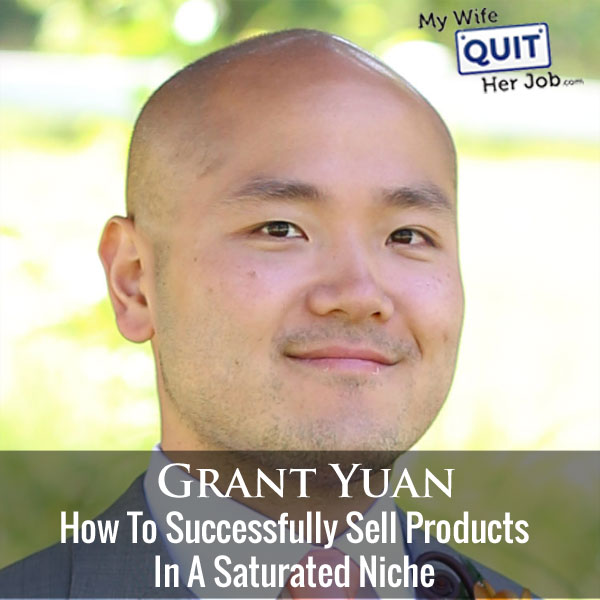
Grant Yuan holds the number one Google spot for “cutting board” against Amazon, Macy’s, and Bed Bath & Beyond. He bought the exact-match domain from a North Carolina barbecue restaurant for a low five figures.
Winning a commodity category means picking where you fight. Grant sells at the high end, ranks organically rather than buying attention, and bids on paid ads only in the hours and states where his economics work.
Grant co-hosts the Ecom Crew podcast with Mike Jackness. He runs cuttingboard.com alongside several Cinnabon franchise locations.
This episode covers how much a keyword domain is worth, his relationship-driven approach to link building, the guerrilla tactics that make AdWords profitable against giants, and why he keeps a brick and mortar business alongside ecommerce.
A note on timing: this is a 2017 conversation. AdWords is now Google Ads and search ranking factors have shifted since.
Get My Free Mini Course On How To Start A Successful Ecommerce Store
If you are interested in starting an ecommerce business, I put together a comprehensive package of resources that will help you launch your own online store from complete scratch. Be sure to grab it before you leave!
Table of Contents
Key takeaways
- An exact-match keyword domain roughly halves the SEO work required to rank.
- Adding a third word to a domain drops its ranking value from a ten to a five or six.
- Compete at the high end of a commodity category rather than fighting on price.
- Build links by giving first with no expectation of return, over months or years.
- Use day parting and geographic targeting to bid only where your margins survive.
- Skip 2 AM ad traffic, since late-night shoppers browse rather than buy.
- Stock inventory rather than drop shipping, since broken delivery promises are unrecoverable.
- List everything first, then source your own version of whatever sells.
Are keyword domains worth buying?
Grant treats them as a force multiplier that makes the same SEO effort roughly 50% more effective. He paid low five figures for cuttingboard.com and ranks first for the term.
The drop-off past two words is steep. On a ten point scale, cuttingboard.com rates a ten and cuttingboardfactory.com rates a five or six.
Long tail coverage is what you lose. A two word domain captures a far broader set of searches than a three word variant.
The domain alone does nothing. Ranking still requires knowing how to work it properly.
Your background should decide this. Keyword domains suit an SEO approach, and brandable names work fine when you compete through paid marketing.
Brandable names clearly succeed. Nobody searched for Man Crates or ModCloth before those companies existed.
How do you build backlinks without buying them?
Give something genuinely useful first and accept that many recipients will never link back. Grant compares it to meeting your neighbors with a cake rather than asking them to watch your house.
Links still drive rankings. PageRank has been modified heavily and links remain the foundation.
Volume is where most people fail. Grant prioritizes quality and automates nothing.
For cuttingboard.com the outreach is charitable. He sponsors culinary school job training programs and donates product where it is needed.
The link is optional in his pitch. He offers the package and says a link would be welcome and is not required.
Patience defines the approach. He has kept in touch with one domain owner for three years, including advice that works against his own interest.
How do you make AdWords profitable against large retailers?
Bid selectively by hour, day, and state rather than competing for the top position everywhere. Grant calls it guerrilla warfare against competitors with better buying power and deeper data.
The top spot is a trap. It draws the most clicks at a premium price without proportionally better conversion.
Geography follows your shipping costs. Grant ships from Seattle, so the West Coast is profitable and Texas and remote states are not.
Time of day matters as much. Monday and Tuesday mornings convert, and Friday brings browsers.
Late night traffic is the clearest waste. Shoppers at 2 AM click every ad and rarely buy.
Large advertisers report in monthly averages. An executive asks about overall ROI and nobody examines Monday at 3 PM, which leaves gaps you can occupy.
How do you compete on a commodity product?
Sell at a price point the discount retailers do not serve. Grant’s average order runs around $100, and buyers under $50 are not his customers.
Cheap versions are everywhere. Competing for a two or three dollar margin on a bamboo board is not a market worth entering.
His products sit above mass retail. You would find comparable boards at Williams Sonoma rather than Bed Bath & Beyond.
Free shipping starts at $75. That threshold is high deliberately, given products averaging 15 to 20 pounds.
Volume buyers are the second segment. Businesses ordering many boards get competitive pricing.
Should you drop ship or hold inventory?
Hold inventory. Grant and his partner were burned drop shipping fitness equipment, where broken delivery promises damaged the business.
Ecommerce punishes failures publicly. Customers make noise when something goes wrong and it gets published prominently.
High value items leave no margin for error. Cheaper products tolerate more mistakes.
Grant splits fulfillment across locations. An East Coast 3PL, his own West Coast warehouse, and Amazon for select items.
Shipping weight drove that decision. A 15 to 20 pound package from Seattle to New York cost close to $29 even with a consolidator discount.
Self-fulfillment taught him the details. Three years later he renegotiated parcel rates from a position of real knowledge.
What should you learn before handing fulfillment to a 3PL?
How your specific product needs to be packed. Grant went through five packing configurations before finding one that survived long-haul shipping.
Paper and wood failed first. Boards arrived beaten up after repeated drops.
Bubble wrap solved damage and cost time. The packing labor became the new problem.
Custom foam corners worked. That became the spec handed to the 3PL.
Defaults will damage your product. Left alone, a 3PL packs like Amazon, with a small item loose in a large box.
How do you decide which products to source yourself?
List everything first, see what sells, then manufacture your own version of the winners. Grant calls it reverse engineering what the customer wants.
Reselling was the safe start. Beginning at 100% resale removed the inventory risk.
The margin math forced the change. Fifty percent cost of goods plus 30% shipping plus merchant fees leaves almost nothing.
Own products now carry half the business. Roughly 50% resale and 50% private label.
Traffic came before the product plan. He knew search volume supported the category and let customers determine the catalog.
Why run a brick and mortar business alongside ecommerce?
For diversification against risks that do not overlap. Grant’s Cinnabon locations generate more revenue than cuttingboard.com with a far simpler operation.
Ecommerce attracts the strongest competition. The advantages are widely known, which draws smart operators and well-funded entrants.
Retail risk is more predictable. Rents rise about 2% a year and mall traffic in a strong metro area is dependable.
Ecommerce risk is harder to forecast. A Google penalty or an Amazon move can change everything within a few years.
Mall quality determines the outlook. A-rated malls in high income metros continue performing while C-rated malls decline.
Grant works shifts himself. He is skeptical of the fully outsourced business as a realistic outcome for most owners.
Frequently asked questions
Do keyword domains help SEO?
In Grant’s experience they roughly halve the work required to rank. An exact-match two word domain rates far above a three word variant on ranking value.
How much should you pay for a keyword domain?
Grant paid low five figures for cuttingboard.com and ranks first for the term. Value it against the acquisition cost and competitiveness of the niche.
How do you build backlinks in ecommerce?
Give something genuinely useful and accept that many recipients never reciprocate. Grant sponsors culinary programs and donates product without requiring a link.
How do you compete with Amazon on price?
Do not. Sell above the price point discount retailers serve, where product quality rather than cost decides the purchase.
How do you make Google Ads profitable in a commodity niche?
Bid selectively by hour, day, and state rather than chasing the top position. Large competitors report in monthly averages and leave profitable gaps unattended.
Should ecommerce stores drop ship?
Grant avoids it. Failing to deliver on a promise damages an ecommerce brand publicly, and high value items leave no margin for fulfillment errors.
How do you choose which products to private label?
List a wide selection first, identify what sells, then source your own version. Let customer demand determine the catalog rather than guessing upfront.
Is brick and mortar retail still viable?
In strong locations, yes. A-rated malls in high income metros continue performing, and the risks differ enough from ecommerce to work as diversification.