

Podcast: Download (Duration: 47:25 — 86.8MB)
The Facebook ads funnel strategy that took iRestore from launch to eight figures in two years splits every campaign into three stages: a top of funnel that breaks even to acquire the pixel, a middle of funnel that hits people with matched social proof and low-cost offers, and a bottom of funnel built on dynamic product ads that carry the return. Kevin Chen’s single biggest shift was to stop judging individual ad sets on return on ad spend and start judging the account as a whole.
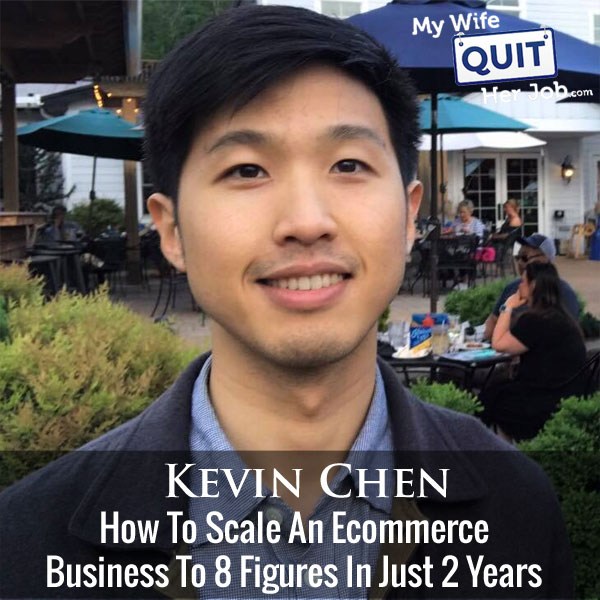
Kevin runs iRestore, a home laser hair growth device that sells for roughly $600. The product came out of his family’s smoking cessation clinic business, which was capped by how many people you can physically treat in Los Angeles, so they took clinical laser therapy and put it in a helmet people could use at home.
This episode covers his video creative testing method, how he segments audiences by age and gender, the free-plus-shipping and giveaway campaigns that fill the middle of his funnel, how he scaled lookalike audiences from a few hundred thousand to a few million, and the fake one-star review attack that nearly sank his Amazon listing.
Get My Free Mini Course On How To Start A Successful Ecommerce Store
If you are interested in starting an ecommerce business, I put together a comprehensive package of resources that will help you launch your own online store from complete scratch. Be sure to grab it before you leave!
Table of Contents
Key takeaways
- Break the ad account into cold, warm, and bottom funnel campaigns and judge return on ad spend at the account level, not the ad set level.
- Top of funnel targets 100% to 150% return on ad spend, meaning break even, because its job is acquiring pixel data and email addresses.
- One good two-minute video creative can carry a business for years. Kevin still runs the original commercial profitably.
- Test the first five seconds of a video separately from the rest, since attention grabbers and opening text drive most of the performance difference.
- Split audiences by age and gender, then match testimonial creative to each segment so older men see older men.
- Lookalike audiences outperform interest targeting. Scale by widening from 1% to 5% and stacking multiple lookalikes into multi-million-person pools.
- Free-plus-shipping offers and monthly giveaways work best on warm middle of funnel traffic, since cold traffic brings freebie hunters.
- Amazon did essentially nothing when competitors hit iRestore with fake one-star reviews, even with a lawyer’s letter. Diversify off Amazon.
How do you structure a Facebook ads funnel for ecommerce?
Structure a Facebook ads funnel into cold campaigns, warm middle funnel campaigns, and bottom funnel retargeting, then evaluate performance holistically across all three. Kevin’s earlier approach was watching every single ad set like a hawk, which he now considers the wrong way to run a Facebook account.
The mental shift is accepting that you will lose money or break even at the top of the funnel. That spend buys pixel data, email addresses, and video view audiences you monetize later.
Before he restructured, iRestore had no real middle of funnel at all. The strategy was showing the same video to a cold audience and hoping people bought.
What return on ad spend should top of funnel campaigns target?
Top of funnel campaigns should target roughly 100% to 150% return on ad spend, which is break even. Kevin explicitly does not chase profit at that stage.
His three cold creatives each do a different job. The two-minute commercial explains the product, a clinical study video featuring a doctor delivers credibility, and a 15-second montage of user photos exists purely to stop the scroll.
That third video barely converted and earned an extremely high relevance score. People tagged friends, shared it, and made fun of it, which is exactly what a top of funnel attention grabber should do.
Should you run video views or conversion campaigns at the top of funnel?
Run conversion campaigns rather than video view campaigns, and optimize for purchase conversions specifically. Kevin tested both extensively with significant spend behind each, and conversions won by a wide margin.
He also tested add-to-cart conversions against purchase conversions. Purchase conversions performed better even at the cold traffic stage.
That result cuts against a common tactic of running video engagement first to accumulate social proof, then switching the same ad to conversions. Kevin’s data pointed the other direction.
What makes a good Facebook video ad for a high ticket product?
A good Facebook video ad walks a cold viewer through the problem, the product, the proof, how it works, and the guarantee, all in about two minutes. Kevin’s original commercial follows exactly that sequence and still runs profitably years later.
The structure is worth copying. Ten to fifteen seconds on the problem, then the product and its FDA clearance to build trust, then a how-it-works section using 2D and 3D animation, then the money-back guarantee and the offer.
Production was in-house with one editor and a voiceover running throughout, plus text callouts reinforcing key points. It was not a slideshow and it was not a big-budget affair.
Kevin’s view is that a great video creative is worth a thousand images. One video can move someone from cold prospect to buyer, or at minimum to someone willing to keep hearing from the brand.
How do you test video ad creative efficiently?
Test the opening five seconds as its own variable before you test anything else, because that is where you win or lose the viewer. Kevin produced one core video, then cut many variations with different intros.
Specific things he tested in those first three to five seconds: a flashing red screen to arrest attention, and different text slides including money-back guarantee mentions versus questions. Only after finding a winning intro did he move on to split testing the ad copy.
Repurposing the same expensive video also stretches the budget. Cut a sub-one-minute version for Instagram and a longer version for Facebook, then adapt it to the different ad formats available.
How should you segment audiences for a Facebook ads funnel?
Segment by the demographic splits that change how you would talk to the customer, which for hair loss meant gender and age. Kevin tests older females, younger females, older males, and younger males as four distinct groups.
Within each group he varies the copy by hair loss stage. Early-stage prospects hear a message about stopping hair loss before it worsens, and advanced-stage prospects hear about regrowing hair and looking younger.
Facebook offers no hair loss interest category, so early targeting layered hair care and hair loss brand interests over the demographic splits. Going broad first and then narrowing worked better than trying to find a precise niche interest.
That approach evolved once the customer list grew. Lookalikes built from real customer data now outperform the interest overlays he started with.
How do you build lookalike audiences with no customer data?
Start with video view audiences when you have no purchase data, grouping viewers who watched 50% or 75% of your video and building lookalikes from them. Kevin used conversions where he could and leaned on video views to fill the gap early on.
As the business matured he layered in more sources. Email list uploads, page likes, and video view audiences all feed lookalikes that get blended together.
Lookalikes are now his best performing audiences by a wide margin. Nothing in interest targeting comes close.
How do you scale Facebook ads without conversions dropping?
Scale by widening the audience rather than pushing more budget into a small one, because showing the same creative repeatedly to a narrow pool burns it out. Kevin expanded lookalikes from 1% and 2% up to 5%, then combined multiple lookalikes into a single larger pool.
The scale change is dramatic. His early audiences were a few hundred thousand people and his scaled audiences run into the millions, with Facebook’s optimization doing more of the work.
Small audiences make sense early. When your ad account has little data and you are still hunting for your best-converting segment, tight targeting helps you find it.
Do free plus shipping offers work in ecommerce?
Free-plus-shipping offers work best as middle of funnel lead generation aimed at warm traffic, where the cost per lead drops sharply. iRestore runs one on its hair supplement, a complement to the $600 core device, alongside a shampoo, serum, and hair gummy.
The campaign is designed to break even, and it delivers a genuine surprise. A meaningful share of free-plus-shipping traffic ends up buying the full kit instead, apparently because the offer reminded them of the brand or of an abandoned cart.
That secondary effect makes the campaign profitable on return on ad spend even though profit was never its goal. The primary metric Kevin tracks on it is cost per lead.
How do you run a giveaway that actually generates sales?
Run the giveaway to warm middle of funnel traffic and follow it with a structured email sequence that converts entrants into buyers. iRestore gives away product every month using a Gleam.io widget on a dedicated landing page.
Cold traffic giveaways attract freebie hunters, which is especially costly when the prize is a $700 device. Running to warm audiences produced a better cost per lead.
The email flow does the actual selling. Entrants get welcomed and told about the contest, then introduced to the unique selling proposition, then walked through the core products, and at the end of the monthly contest they receive a 10% to 15% off offer.
One creative note from Kevin: any movement in the ad, whether a GIF or a video, dramatically outperforms a static image and is worth the production time.
How do you set a cost per lead target on a high ticket product?
Kevin sets his cost per lead target by backing into it from an estimate of what share of leads eventually convert into customers. That math is the honest way to set the target rather than copying someone else’s benchmark.
He also tracks cost per click for awareness reasons. Not everyone has hair loss, and almost everyone knows someone who does, so shares and comments carry real value that never shows up in attribution.
Being data driven and accepting imperfect attribution is uncomfortable. Kevin’s position is that the intangible value from people seeing and sharing the contest is real even when he cannot measure it.
Why last click attribution breaks down on Facebook
Facebook attribution windows cap out at 28 days and default to shorter, which makes ad-set-level return on ad spend an unreliable basis for decisions. Kevin evaluates at the campaign level and then the account level instead.
His questions are structured accordingly. What are we comfortable losing on this middle of funnel campaign, how much is the bottom funnel earning back, and what is the account-wide return on ad spend?
Off-platform effects compound the problem. iRestore’s Amazon business grows in direct correlation with Facebook ad spend, and none of that revenue appears in the Facebook dashboard.
Some campaigns genuinely lose money on their own numbers. Running them anyway requires accepting that they feed the campaigns that convert.
Why dynamic product ads deliver the highest return on ad spend
Dynamic product ads produce the highest return on ad spend of any campaign type iRestore runs, even though video creatives generate more total conversions. Kevin’s blunt advice is that any ecommerce seller not running them should start.
He segments them by time since last visit rather than by offer, showing the same offer throughout. The highest converting windows are seven days, 14 days, and 30 days.
High ticket products justify unusually long retargeting windows. About 10% of iRestore’s converters buy 30 or more days after their first visit, and Google Analytics undercounts that, so Kevin retargets out to 60 and 90 days.
Adding GIFs to the dynamic product ad feed alongside the static images gave him another lift. Movement in a carousel grabs attention in the feed.
How do you find influencers for a health or beauty product?
Search YouTube for your problem keywords, then work through the videos and the suggested videos YouTube surfaces, reaching out to everyone relevant. Kevin used a PR agency for outreach and found this manual method reliable.
His selection rule is the important part. Reach out to creators who actually have the problem rather than to anyone with a million followers, because someone speaking from real experience reads as authentic instead of as an advertisement.
Negotiate for asset reuse in every deal. iRestore owns the rights to most of its influencer content, which then becomes middle of funnel creative served back to matched audiences.
How do you use testimonials in middle of funnel retargeting?
Match the testimonial to the viewer’s demographic, so an older man sees an older man’s testimonial and a younger woman sees a younger woman’s. Kevin splits his library of customer and influencer testimonials across the same age and gender segments he uses for cold targeting.
He also keeps running the top of funnel creative to warm audiences. Plenty of people need multiple exposures to the same video before they convert.
Why FDA clearance became a competitive moat for iRestore
A hard regulatory approval process keeps competitors out, which is exactly what happened with iRestore’s laser device. Any medical device containing lasers requires an FDA 510(k) submission, and clearance takes anywhere from three to 12 months.
Kevin’s first submission was rejected outright and had to be resubmitted. The process involves extensive paperwork and testing.
That difficulty paid off on Amazon. High barriers to entry meant few competitors doing anything sophisticated, so basic sponsored products, headline search, and product display ads were enough to reach number one for the niche keywords.
Kevin is candid that this was luck rather than strategy. His conclusion stands regardless: selling a me-too private label product is a way to squeeze out a few months of revenue, and building a brand requires a product other people find difficult to create.
What happens when competitors leave fake reviews on Amazon?
Amazon does very little, even with clear evidence and a lawyer involved. iRestore got hit with a sustained wave of one-star reviews as its rankings climbed, including detailed multi-paragraph essays with photos and illustrations, running for months.
Kevin escalated through every available channel: seller support, his performance manager, an email to the Jeff Bezos executive address, and a letter from a lawyer. After weeks of effort Amazon removed exactly one review.
One review had been left immediately after purchase, before the product could physically have arrived. Kevin pointed that out and Amazon did nothing.
His conclusion is that you have to defend your own listing and build an off-Amazon business before you need one. What actually stabilized the rating was continuing to generate genuine positive reviews faster than the attack could accumulate.
Why sell on Shopify when you started on Amazon?
Amazon demand is finite because it is intent based, while Facebook lets you create demand across an entire addressable market. iRestore started on Amazon and used that cash flow to fund the Shopify store, which now outsells the Amazon channel.
The addressable market is the argument. Roughly 80 million Americans experience hair loss, and only a fraction of them ever search Amazon for a solution.
Platform risk is the other half. Amazon suspended iRestore for about two weeks for no stated reason, with no meaningful recourse through seller support.
Does Messenger marketing work for ecommerce?
Messenger abandoned cart sequences deliver strong returns, and broader Messenger marketing has been less productive for iRestore. Kevin describes the abandoned cart flow as possibly the best return on investment they have achieved relative to effort.
The mechanic uses an opt-in below the add-to-cart button, and shoppers who opt in and then abandon get retargeted through Messenger. Facebook has since removed the ability to pre-check that box for new advertisers, so the workable approach now is offering an incentive in exchange for the opt-in.
Frequently asked questions
What return on ad spend should I aim for at each funnel stage?
Aim to break even at the top of funnel, around 100% to 150% return on ad spend, and make your profit at the middle and bottom of the funnel. Judge the whole account rather than each stage in isolation.
How long should a Facebook video ad be?
Around two minutes works for a high ticket product that needs explaining, since it gives you room to cover the problem, the product, proof, how it works, and the guarantee. Cut a sub-one-minute version for Instagram from the same footage.
Are lookalike audiences better than interest targeting?
Lookalike audiences outperformed interest targeting by a wide margin for iRestore. Build them from purchase data if you have it, and from video view audiences if you do not.
How do you scale Facebook ad spend without losing performance?
Widen the audience rather than increasing spend against a small one. Expand lookalikes from 1% to 5% and combine several into a pool of a few million people.
Do free plus shipping offers make money?
They usually break even on their own and pay off through the customers who buy your full-price product instead. iRestore’s supplement offer became profitable because a share of that traffic bought the $600 device.
How long should you retarget a high ticket product?
Retarget out to 60 or 90 days for expensive products with a long research cycle, since roughly 10% of iRestore’s converters buy 30 or more days after their first visit. Lower ticket items do not need windows that long.
Can you get Amazon to remove fake competitor reviews?
Rarely. iRestore escalated to seller support, a performance manager, the Bezos executive email address, and a lawyer’s letter, and Amazon removed one review out of many obviously fraudulent ones.
Should you start on Amazon or your own website?
Starting on Amazon gives you cash flow and existing buyer demand with no traffic costs, which is what funded iRestore’s Shopify store. Build the owned channel before you need it, since suspensions arrive without warning or recourse.

