
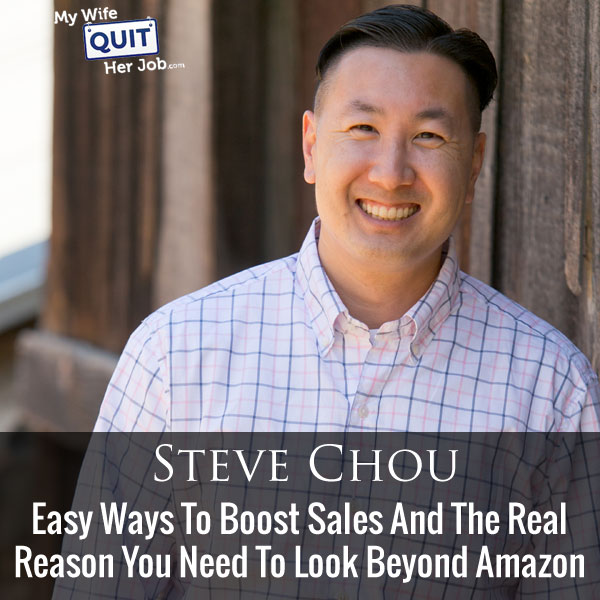
Podcast: Download (Duration: 21:56 — 30.4MB)
For years I assumed my wedding linen customers never came back. Weddings happen once, so the logic seemed obvious, and I never checked.
Then I exported the data and found one customer who had ordered 150 times. Others collect handkerchiefs, decorate with them, or use them for crafts.
Converting an existing customer is roughly 65% easier than finding a new one, according to the Small Business Administration. In my own store, email marketing produced over 21% of holiday revenue and ads to existing audiences return five or six times ad spend.
Here are the six tactics I use to sell more to people who have already bought: find hidden business customers, isolate repeat buyers, build lookalike audiences, cross sell complementary products, run a referral program, and send tiered coupons based on time since purchase.
None of these work on Amazon, eBay, or Etsy. Those platforms keep the customer emails, which is the real argument for building somewhere you control.
Get My Free Mini Course On How To Start A Successful Ecommerce Store
If you are interested in starting an ecommerce business, I put together a comprehensive package of resources that will help you launch your own online store from complete scratch. Be sure to grab it before you leave!
Table of Contents
Key takeaways
- Converting an existing customer is about 65% easier than acquiring a new one.
- Export your transaction data, since you cannot know your customer patterns without looking.
- Flag abnormally large orders and business-sounding email addresses to find wholesale buyers.
- Phone your business customers directly and become their single point of contact.
- Upload repeat customers to Facebook to build lookalike audiences of similar buyers.
- Cross sell by finding customers who bought item A and not complementary item B.
- Scale coupon size by how long it has been since someone last purchased.
- Amazon accounted for 15% of retail sales in 2016, leaving 85% elsewhere.
Why sell to existing customers instead of finding new ones?
Because they already trust you and have opened their wallets once. The Small Business Administration puts the conversion advantage at 65%, and in my experience it is considerably higher.
The numbers in my own store bear it out. Email marketing to existing customers drove over 21% of holiday revenue.
Repeat business is a real segment. Just under a third of our business comes from returning buyers like event planners, hotels, and small airlines.
Ad performance follows the same pattern. Campaigns targeting existing audiences return five or six times ad spend.
Step 1: Find the hidden business customers in your data
Export your customers and transactions to a spreadsheet, then flag anyone buying abnormally large quantities. Shopify and BigCommerce both export this directly, and Klaviyo tracks it automatically.
Set the threshold above normal personal use. Most napkin buyers take one or two dozen, so three dozen or more suggests an event or a business.
Scan the email addresses too. We found our first airline customer because the company name was in the address.
Then pick up the phone. Call to verify their deadline, which opens a natural conversation about their business.
Offer to be their single point of contact. Give them your direct number and commit to getting their order there on time.
That relationship is what marketplaces cannot replicate. Event planners with last minute requests need someone to call.
Step 2: Isolate your repeat customers
Filter the same spreadsheet for anyone who has purchased more than once. These buyers may order small quantities and they order consistently.
You will not find them by assumption. I spent years believing our customers were all one-time wedding buyers.
Run promotions specifically to this list. Conversion rates on repeat buyers run far above cold traffic.
Email them more frequently. Existing customers tolerate and respond to more contact than prospects.
Step 3: Build lookalike audiences from your best customers
Upload your business and repeat customer lists to Facebook and let it find people matching those profiles. A lookalike audience finds users within 99% of your uploaded list’s demographic.
The scale is immediate. I built a two million person audience from my repeat customer list in about ten minutes.
These are genuinely new prospects. They have never bought from you and closely resemble people who have.
Lookalike audiences are how businesses scale. I currently run a free plus shipping offer to two of them.
This requires owning your email list. Marketplace sellers have no list to upload.
Step 4: Cross sell complementary products
Find customers who bought item A but not complementary item B, then market B to them specifically. Your product mix usually reveals natural pairings.
Napkins illustrate it. Dinner napkin buyers are strong candidates for placemats or cocktail napkins.
Accessories work the same way. Someone who bought a handkerchief may want a box for it.
The friction is already gone. They have paid you before and trust the transaction.
Klaviyo automates the segmenting. Create a segment of people who bought dinner napkins and not cocktail napkins, then email them or push the audience to Facebook.
Step 5: Turn one-time buyers into referrals
Offer a coupon or gift card for referring a friend, plus a discount for that friend. Wedding customers will never buy again, and they know other people planning weddings.
The incentive works both ways. Rewarding both parties makes the referral easy to make.
Word of mouth drives significant ecommerce revenue. Anything that amplifies it is worth building.
Services like ReferralCandy handle the mechanics. That removes the technical work of tracking referrals.
Step 6: Send tiered coupons based on time since purchase
Scale the discount to how long someone has been away, so you never discount a sale you would have made anyway. My tiers run at two months, two and a half months, and three months.
Small coupon at two months. Enough to prompt someone who is still engaged.
Larger at two and a half. The signal is weakening and warrants more.
Largest at three months. At that point they are probably gone, so it is a last effort.
Recent buyers get nothing. Discounting them costs margin on a sale already coming.
Loyal customers are the exception. Repeat buyers get special promotions as recognition rather than incentive.
Coupon recipients often spend the same or more. Feeling like they got something for free tends not to reduce basket size.
Why should you sell beyond Amazon?
Because you cannot do any of this without customer emails, and Amazon keeps them. That removes email, retargeting, lookalikes, cross sells, referrals, and coupons all at once.
External ads lose their measurement. Running ads to an Amazon listing gives you no conversion data.
Affiliate links are not the workaround. Driving affiliate revenue to your own listings violates Amazon’s terms.
Brand recognition does not accrue to you. My own mother assumed every Amazon product was sold by Amazon.
The market is far larger than Amazon. It accounted for 15% of retail sales in 2016, leaving 85% elsewhere.
Marketplace revenue can vanish. A ban or a cheaper competing listing can end it without warning.
Repeat customers work like recurring revenue. That foundation is what makes a business durable.
Frequently asked questions
How much easier is it to sell to an existing customer?
The Small Business Administration puts it at roughly 65% easier than converting a new one. In my own store the difference is considerably larger.
How do you find business customers in your ecommerce data?
Export transactions and flag orders far above normal personal quantities, then scan email addresses for company names. Call those customers directly.
What is a Facebook lookalike audience?
An audience Facebook builds from a list you upload, finding users within 99% of that demographic. Uploading your repeat customers produces the strongest results.
How do you cross sell to existing customers?
Segment people who bought one product and not its natural complement, then market the complement to them by email or ads.
How large should a win back coupon be?
Scale it to time since purchase. Small at two months, larger at two and a half, largest at three, and nothing to recent buyers.
Do coupons reduce how much customers spend?
Usually not. People often spend what they planned regardless, since the discount feels like a bonus rather than a budget.
Can you email customers who bought on Amazon?
No. Amazon retains customer emails, which blocks email marketing, retargeting, lookalike audiences, and every other tactic built on owning your list.
Should you stop selling on Amazon?
No. Amazon works well for cash flow, and building your own store alongside it protects you from bans, price competition, and having no brand equity.