
Podcast: Download (Duration: 57:35 — 66.2MB)
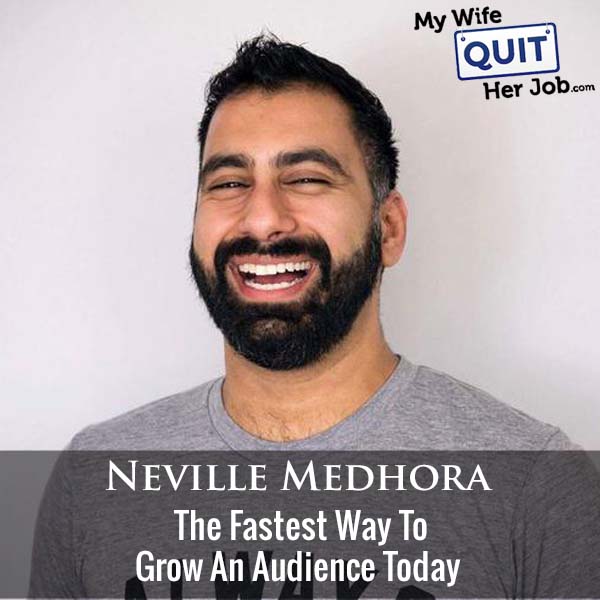
In this episode of the My Wife Quit Her Job podcast, I sit down with Neville Medhora, founder of CopywritingCourse.com, to unpack the modern audience-growth playbook. His answer, if he had to start over today, is to skip WordPress entirely, start on Twitter, and use one blog post as source material for YouTube, TikTok, threads, and a weekly newsletter.
Neville was one of the original AppSumo team, runs an active paid community for copywriters, and recently migrated his entire site off WordPress onto forum software so that blog comments live in the same feed as community discussions. His view is that WordPress has not moved past the 1999 model of “publish and hope somebody visits,” and social platforms and community software have surpassed it for engagement.
Below I have organized the tactics we walked through: which platforms to prioritize, how to grow Twitter and YouTube, why targeted SEO beats vanity SEO, and how to run a paid community that keeps recurring revenue predictable.
Get My Free Mini Course On How To Start A Successful Ecommerce Store
If you are interested in starting an ecommerce business, I put together a comprehensive package of resources that will help you launch your own online store from complete scratch. Be sure to grab it before you leave!
Table of Contents
Key takeaways
- If starting fresh in 2023, start on Twitter (not a website) to meet the right people, then layer in a landing page for email capture through tools like ConvertKit, LeadPages, or MailChimp.
- Curate your Twitter feed down to about 100 accounts and use Twitter Lists for topical feeds. That single change turns Twitter into a competitive news advantage instead of noise.
- Post consistency beats post quality on YouTube. Neville’s YouTube channel brings in 2,000+ email signups per month even when he has not uploaded in two months, because a handful of evergreen videos drive the traffic.
- Untargeted SEO traffic (like generators and tools) can drive 450,000 monthly visits without contributing to sales. Targeted keyword traffic and branded search are what actually convert.
- Repurpose one blog post into a YouTube video, multiple TikToks and Reels, a Twitter thread, a podcast episode, and a newsletter section. One idea, six placements.
- Community software like Circle.so is now the recommended path for course creators, replacing the old stack of WordPress plus a bolted-on forum plus billing bridges.
What is the best strategy to grow an audience today?
The best strategy to grow an audience today is to start on social (Twitter first for business audiences), publish one long-form asset per week (a blog post or YouTube video), and repurpose that asset across every short-form platform your audience uses. Email capture is still the conversion engine, so drive all traffic to a lead magnet regardless of where the audience first meets you.
Twenty years ago the sequence was website first, then traffic. Today the sequence is audience first, then a landing page. Social platforms already do publishing, commenting, discovery, and reach in one place, which is what a personal blog used to do alone.
The old playbook still works, but it is slower. The new playbook lets you start conversations with real people (including well-known ones) inside a week, instead of building a website nobody visits for six months.
Why start on Twitter instead of a website?
Start on Twitter instead of a website because Twitter compresses months of relationship-building into days. You can DM founders like Marc Andreessen or Balaji Srinivasan and get real responses, join the same conversations as your target audience, and validate an idea before spending a dollar on hosting or design.
The trap of buying a domain first is that it locks you into a specific business. If you buy yellowlegalpads.com you feel obligated to sell yellow legal pads, even if the market wants something else entirely.
Social also removes the setup tax. No hosting, no WordPress theme, no plugin conflicts, and no five-year wait for SEO to kick in. Just start publishing and see what resonates.
How do you grow a Twitter account from scratch?
Grow a Twitter account from scratch by writing threads (repurpose your best blog posts), posting frequently enough that a random 20% will “hit” without you knowing why, curating your own feed down to 100 accounts, using Twitter Lists for topical channels, and engaging with the accounts of people slightly above your level.
Threads work because Twitter’s algorithm rewards engagement, and long threads produce comments like “unroll” and “thread reader” that count as signals. Some of your best-performing threads will be old blog posts reformatted into 8 to 12 numbered tweets.
Consistency is the harder half. Noah Kagan’s YouTube channel exploded because he posts constantly. Sam Parr has barely missed a day on Twitter in two years. The tactical secrets are known and cheap. Actually showing up daily is where most people fail.
One underrated tactic: private group chats (WhatsApp, iMessage) with peers at a similar audience size. Everyone posts daily, everyone engages on each other’s posts, and the algorithm rewards the mutual comment activity by showing your posts to their followers.
How do you grow a YouTube channel with SEO?
Grow a YouTube channel with SEO by making a handful of “how to” or “what is” videos that map to real search queries, embedding those videos on your top-ranking blog posts to boost dwell time, and letting Google’s ranking + YouTube’s recommendation loop do the compounding work.
Neville’s top YouTube videos are all voiceover-only recordings of his best blog posts, no face on camera. The “How to become a copywriter” video has hundreds of thousands of views, drives 2,000+ email signups per month, and he has not touched it in months.
The virtuous cycle looks like this: a blog post ranks number one for a query. You embed the video at the top of that post. Visitors watch the video, boosting dwell time, which keeps the post at number one. YouTube sees the watch time and recommends the video, which drives more traffic back to the blog. Rinse and repeat.
Face-to-camera videos and celebrity interviews will get views from your existing audience, but they rarely drive new subscribers. Educational videos on high-search-volume topics do.
Why untargeted SEO traffic does not convert (and what to do instead)
Untargeted SEO traffic does not convert because the searchers are looking for something adjacent to your business, not the thing you actually sell. CopywritingCourse.com hit 450,000 monthly SEO visits partly through tools like a “Japanese name generator.” When the site lost 8 months of that traffic in a domain migration, sales did not change.
The lesson: total traffic is a vanity metric. Targeted-keyword traffic and branded search are the metrics that map to revenue.
The strongest search intent of all is branded (“Steve email templates,” “Neville email templates”). Every appearance on TikTok, YouTube, and podcasts drives a lift in branded search volume, even when the platform itself does not send measurable clicks. Featured mentions on shows like CNBC produced a 20X spike in branded search for my Bumblebee Linens store, which is far more valuable than a random SEO placement.
Focus your next 12 months of SEO effort on high-intent keywords in your niche and on building the brand recognition that fuels branded search. Everything else is a distraction.
The one-blog-post repurposing framework
The one-blog-post repurposing framework is: write one blog post per week, turn that post into a YouTube video (script it like you talk), extract 3 to 6 short clips from the video for TikTok, Reels, and YouTube Shorts, publish the video as a podcast episode, and convert the headings into a Twitter thread.
Here is the practical order of operations for one weekly blog post:
- Write the blog post in a conversational voice, structured with clear H2 headings and short paragraphs. That structure is what makes repurposing fast later.
- Record a YouTube video using the blog post as your script. Cut the fluff, keep the substance.
- Chop the video into 3 to 6 vertical short-form clips for TikTok, Instagram Reels, and YouTube Shorts.
- Publish the audio as a podcast episode on a separate channel.
- Convert the headings into a Twitter thread, posted once per week (threads take real time to assemble).
- Include the post in your weekly newsletter as the featured item.
You get six placements for the effort of one idea. This is how consistent creators show up everywhere without burning out.
Why WordPress is no longer the best platform for content businesses
WordPress is no longer the best platform for content businesses because it treats every blog post as a static page instead of a live conversation. Comments are siloed on individual posts, there is no unified feed, and native community features (real-time discussion, member profiles, threaded engagement) do not exist. Social media and modern community software have moved past it.
The problem is not publishing. WordPress publishing is fine. The problem is engagement. When you publish on WordPress, nobody sees the post unless you email your list, post on social, or wait for Google. When you publish on a modern community platform, subscribers see the post in a live feed and engage immediately.
Neville migrated CopywritingCourse.com off WordPress to a heavily modified Invision Community install for exactly this reason. His new setup unifies blog posts, community threads, and comments in a single feed where every post lands in front of active members the moment it publishes.
How to build a paid community for a content business
Build a paid community for a content business by starting with individual courses (one topic per course), watching the natural progression toward bundles and monthly subscriptions, and choosing community software that handles courses, discussion, billing, and email in one system. Circle.so is the current recommendation for most creators.
The typical arc for course creators is predictable. You launch a single course at $69, it works, so you launch another. Eventually you have 10 courses with overlapping content, and buyers get confused about which one they need.
The fix is a bundle at a higher price point ($400), then a monthly subscription for all courses at $69 per month. That last step converts you from a course creator to a community operator with recurring revenue.
The technology choice matters more than most creators realize. Bolting WordPress + a forum + a separate billing system + an SSO bridge is fragile. Any update can break the billing sync. A single-platform tool like Circle.so, which handles courses, community, billing, and member email natively, is the modern recommendation.
Why Facebook Groups and Discord fall short for a paid community
Facebook Groups and Discord fall short as paid community platforms because they lack the format control (long copy, image-heavy sales pages, headers, native formatting) and the durable thread structure that a serious community needs. Discord in particular is a growing text file with no tagging, which makes historical threads impossible to find days later.
Facebook Groups work for casual communities where every post is a short update. They fail for use cases like copywriting critiques, where a member needs to post a 5-page sales letter with images and formatting for the group to review.
Discord’s other problem is signal decay. A great thread today is buried under 48 hours of new messages by the weekend. You cannot tag a thread as “SEO” or “onboarding” and reference it three months later, which is what a knowledge base is for.
Real community software (Circle.so, Invision Community, and similar) solves both. Threads persist, tags make them findable, and formatting supports whatever content your audience actually creates.
Why email is still the highest-converting channel
Email is still the highest-converting channel because you own the list, engagement rates on well-run newsletters (30 to 40% open rate) exceed almost every other channel, and one send can produce thousands of clicks and dozens to hundreds of replies. Every social platform is rented; the email list is yours.
Neville converts 1 to 3% of his traffic into email subscribers and runs them through a long autoresponder sequence. That single conversion step is what turns anonymous visits into a durable audience.
The 70/30 content-to-sales rule is his standing recommendation. Give subscribers 70% valuable content and only 30% sales content, and they will stay on your list for years. Pitch every email and they unsubscribe fast.
How to write a newsletter people actually open
Write a newsletter people actually open by using a repeatable format with 3 to 5 named sections, sending it on the same day at the same time each week, and building each section around the kind of content that already gets engagement on your social feeds. Formats like Tim Ferriss’s “5-Bullet Friday” and James Clear’s 3-2-1 newsletter work because subscribers know what to expect.
Neville’s newsletter is called “STUPID” (Swipe, Thought, Uplifting, Picture, ID something) and it goes out every Friday. Open rates run 30 to 40%, and the most-responded-to email he sends every week is the newsletter, because the format sets expectations subscribers look forward to.
The trick is that each section maps to content that already performs on social. If old vintage ads do well on your Twitter, one section becomes “Swipe of the week: this Ogilvy ad.” If book highlights work, one section becomes “Book quote.”
Frequently asked questions
What is the best platform to grow an audience in 2023?
The best platform to grow an audience in 2023 depends on your niche, but for business, marketing, and tech topics, Twitter is the fastest for meeting influential people and building a personal brand. YouTube is the strongest for compounding SEO through evergreen “how to” videos. Blog SEO still works but takes 12+ months to pay off. Start with the platform your target audience already uses daily.
Should I start with a website or social media first?
Start with social media first if you do not yet know exactly what you are selling. Social lets you validate ideas, build relationships, and test messaging in days rather than months. Add a landing page for email capture (ConvertKit, MailerLite, LeadPages) as soon as you have something to give away. Buy a full website only after you have proof that your audience wants what you are selling.
How often should I post on Twitter to grow?
Post on Twitter about 3 times per day plus one longer thread per week to grow consistently. Consistency beats perfection. Roughly 20% of your posts will hit and 80% will fall flat, and you cannot always predict which. Pre-schedule content so you keep posting through weekends and busy weeks.
How much SEO traffic do you need to make sales?
SEO traffic quantity matters less than SEO traffic quality. One CopywritingCourse case study showed a site losing 450,000 monthly SEO visits with no measurable impact on sales, because the traffic came from off-topic generators. A few thousand targeted, high-intent visits per month can produce far more revenue than hundreds of thousands of untargeted visits.
Is WordPress still the best platform for a content business?
WordPress is still fine for pure content publishing but no longer optimal for creators who need real-time community engagement. Its comment system is siloed by post, it has no native feed, and modern community platforms like Circle.so integrate courses, discussion, and billing in one system. If community is central to your business, consider migrating.
How do you build a paid community from scratch?
Build a paid community from scratch by first proving one course or piece of paid content works, then bundling multiple courses at a higher price, then converting to a monthly subscription for all-access. Choose a single platform (Circle.so, Mighty Networks, Invision Community) that handles courses, discussion, billing, and email natively rather than stitching multiple tools together.
What is the ideal content-to-sales ratio for email newsletters?
The ideal content-to-sales ratio for email newsletters is 70% content and 30% sales. Most of every email should deliver value with only a light sales mention, and you can occasionally do a full hard-sell email when you have a specific launch. Subscribers who feel they are getting more value than pitches stay on your list for years.