

Podcast: Download (Duration: 45:50 — 52.7MB)
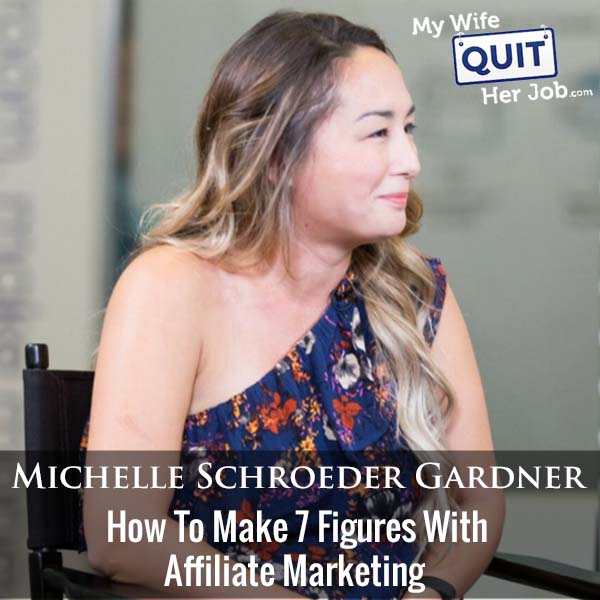
Affiliate marketing works for bloggers when the recommendation genuinely fits what your readers came for, which is why copying someone else’s winning offers rarely works. Michelle Schroeder-Gardner earns $50,000 to $60,000 a month consistently from affiliate marketing on Making Sense of Cents, with roughly two thirds of her posts carrying no affiliate links at all.
Michelle started her blog in August 2011 while working as a financial analyst, with over $40,000 in student debt. She went full time in October 2013 and now travels full time.
This episode covers how she picks affiliate offers, why she fired every client in 2015, her Pinterest strategy, and how she writes two to three posts a week months in advance.
Get My Free Mini Course On How To Start A Successful Ecommerce Store
If you are interested in starting an ecommerce business, I put together a comprehensive package of resources that will help you launch your own online store from complete scratch. Be sure to grab it before you leave!
Table of Contents
Key takeaways
- Only about a third of her posts contain affiliate links, and they are placed naturally rather than planned upfront.
- Firing all her clients tripled her income within about a month.
- Check affiliate tracking regularly. One network silently recorded zero clicks for ten days.
- Refreshing Pinterest images works. Her VA updates five to ten posts’ images weekly.
- Roughly 35% to 40% of Pinterest users are men, so the audience objection is outdated.
- Facebook groups now outperform pages, since pages compete against ads for reach.
- Posts run 1,500 to 5,000 words. Her old 200-word posts did essentially nothing.
- Ten to twenty posts out of roughly 2,000 generate almost all her traffic.
How Making Sense of Cents started
Michelle started the blog in August 2011 with no intention of making money from it.
She was reading Cosmopolitan, saw the personal finance site DailyWorth mentioned, started reading it, then started reading the comments to compare her own financial situation to other people’s.
Many of those commenters had personal finance blogs, so she started one anonymously as a writing hobby.
The irony is that she had no interest in writing through high school or college, and thinks her English teachers would find her current career odd.
She still writes 99% of what appears on the blog, with an editor improving flow afterward.
Why writing like a friend made the blog take off
The feedback she gets consistently is that she writes differently from most financial blogs.
The style is conversational, as though talking to a friend.
Readers describe it as more relatable, more personable, and easier to understand.
She did essentially nothing else for traffic early on, just interacting with other bloggers and readers through comments and emails.
Why she fired every client in 2015
In the early years the income was diversified across social media management, staff writing for other blogs, sponsored posts, display advertising, and a little affiliate marketing.
The problem was enjoyment. She found no joy in social media management or writing for other people’s blogs.
In 2015 she fired every client over the course of a day or two, giving notice and working until each found a replacement.
Her income roughly tripled within a month of focusing solely on her own blog.
The freed-up attention went into growing traffic through Pinterest, Facebook, Facebook groups, and Twitter.
How to choose what to promote
The mistake Michelle sees constantly is treating affiliate marketing as posting links, where the entire post amounts to telling people to buy something.
The correction is starting from your readers. What do they want to read about, what are you genuinely expert in, and what do you actually use?
The specific failure she encounters is people copying her offers directly and finding they do not convert, because their blog has nothing to do with money or finance.
Roughly two thirds of her posts have no affiliate connection at all. The other third has links that fit naturally.
The placement is often retrospective. She writes a post, and a year later realizes something belongs in it.
How to find an affiliate offer for a post you already wrote
Her example is a post about work-from-home scams, which has no obvious product attached.
One of her affiliates had a free printable going deeper on work-from-home scams.
Promoting the freebie generated leads into that affiliate’s paid product, which then converted more easily later because readers already knew who she was recommending.
That is the broader principle. Introduce your readers to your affiliates before you ask them to buy from them.
Where to find affiliate programs
The simplest method is searching the product name plus affiliate program in Google, which almost always surfaces something.
Affiliate networks are the other route, and a good starting point for new bloggers.
Michelle’s three are CJ.com, Impact Radius, and ShareASale, with Impact Radius being the most user friendly.
The thing to evaluate beyond product selection is the network itself. Whether affiliate managers are responsive, whether the tracking is trustworthy, and whether the system stays up.
Why you must check your affiliate tracking
Michelle logged into a network where a newly promoted product was generating $400 to $500 a day.
She checked regularly for the first twelve or thirteen days and everything worked normally.
Then she went ten days without internet access, and those exact ten days recorded zero clicks.
Her affiliate manager confirmed it was broken.
Her system is an Excel sheet checked monthly or every few months. When tracking fails, managers typically pay an average of the working period, or negotiate a figure if a post went viral during the gap.
The signal to watch for is a steady click stream suddenly dropping to zero or half, which usually means a technical problem rather than an audience one.
Where her traffic actually comes from
Direct referral is first, followed by Facebook, Pinterest, and organic search.
Facebook here means her page and her groups rather than ads.
She posts two to three times a day on the page, down from five, and asks a lot of questions rather than posting only links.
Her free Facebook group gets a link to a Making Sense of Cents post nearly every day, and now generates considerably more traffic than the page.
Her explanation is that pages compete against Facebook ads for reach, while groups let readers talk to each other and create their own threads.
What to post in a Facebook group for engagement
The format is a link to a recent or old post with a question as the caption.
Her strongest example was a guest post about a couple keeping separate finances, captioned by asking whether readers would keep separate finances from their spouse.
That generated substantial engagement from people on both sides of a debatable topic.
She also posts standalone questions with no link at all, purely to drive discussion, and finds those work well.
Most posts are scheduled, and a genuinely good question gets asked immediately, partly because the answers generate new post ideas.
How to refresh Pinterest images for old posts
The tactic Michelle has found most effective recently is updating Pinterest graphics on existing posts.
Her VA creates a brand new image with different wording, a different question, and crucially a genuinely different picture, so Pinterest recognizes it as new.
The cadence is five to ten posts per week.
She removes the old image rather than A/B testing both, on the reasoning that a five-year-old pin can simply be improved.
The posts she prioritizes for refreshing are the ones underperforming, to see whether a new image lifts them.
Pinterest traffic is unusually consistent for her. A post on 75 ways to make extra money, published four or five years ago, remains one of her top Pinterest referrers month after month.
How to get started on Pinterest as a blogger
Her first rule is creating a Pinterest image for every single post, which takes five to ten minutes.
Images must be tall. Horizontal images do not perform.
Avoid faces and obvious stock photography unless you are a fashion or clothing brand. She does use stock images, just not the recognizably cheesy ones.
Study what performs. Look at your home feed and at what others in your niche are doing successfully.
Her scheduling runs 20 to 30 pins a day, roughly 60% her own content and 40% other people’s, since pinning only your own posts repeatedly reads as spam.
Volume varies enormously between successful accounts. She knows people pinning 200 times a day and people pinning twice a day, both generating substantial traffic.
Why Pinterest is good for new bloggers specifically
Pinterest does not weight follower count heavily. It is about the pin.
That levels the field for someone starting out, unlike platforms where an established audience compounds.
Michelle was among the first financial bloggers on Pinterest and was told repeatedly it was a waste of time because users only cared about clothes and food.
The other outdated objection is gender. She cites a statistic putting men at roughly 35% to 40% of Pinterest users.
The tradeoff is quality. Pinterest tends toward high bounce rates, though she has still found genuinely loyal readers through it.
How Michelle writes two to three posts a week
Posts run from about 1,500 words to 5,000, and she wrote two 5,000-word posts in the week we spoke.
Her early 200 to 300 word posts accomplished essentially nothing, and she recommends at least 750 words as a floor for a post that genuinely helps someone.
The process starts from a running notepad of post ideas, each with bullet points of what she wants to cover, which makes the draft largely a matter of expanding an existing outline.
She proofreads and checks it makes sense before handing it to her editor.
Her output is uneven by design. She may write nothing for a month, then write thirty posts in another, because forcing it makes a single post take weeks.
The solution is working two to three months ahead, which also covers the periods when she has no internet while traveling.
What an editor actually costs
She started with a proofreader at roughly $10 per post, which was the going rate.
Her editor charges hourly, originally for grammar and smaller corrections.
The role has expanded to improving flow, adding sentences, and restructuring paragraphs.
Time per post varies from about 20 minutes to two hours depending on length, which is what makes the cost vary.
Her recommendation is that more bloggers hire an editor or proofreader if they struggle to make their own posts better.
What is realistic to earn from affiliate marketing
Michelle’s own figure is $50,000 to $60,000 a month, consistently, over three or four years.
Results for her students vary enormously. Some report making $100 two days after taking her course, five days into blogging. Others report six months with nothing.
Her caution is that the average blogger quits around six months in, so getting past that point matters more than the timeline.
The variables that determine it are traffic volume, whether the person takes their email list seriously, and how much work goes in.
Her advice for diagnosing a problem is asking for feedback in a community, because there is almost always an obvious mistake the writer cannot see.
Why only a handful of posts drive her traffic
Michelle has roughly 2,000 posts, and 10 to 20 of them generate almost all her traffic.
New posts perform for about a week when she emails them to her list.
Her top posts stay consistent over time, and she does not prune the archive beyond deleting genuinely outdated items.
She writes about money, travel, boating, life, confidence, and her pets, and has no plans to narrow that.
What she does for email and Instagram
She had no real email list for the first five years, only starting seriously around 2016 when she built her affiliate marketing course and moved to ConvertKit.
What she offers subscribers is access to her. She replies personally to nearly every email she receives, so any newsletter can be replied to directly.
Instagram generates little traffic and produces loyal readers. She never discusses money there, posting only her travel and behind-the-scenes life.
Michelle Schroeder-Gardner’s advice for new bloggers
Claim your usernames on every platform first so nobody else takes them.
Then work through them one at a time, since nearly all can be scheduled or automated.
For a genuinely new blogger, she recommends SEO and Pinterest as the two highest-value starting points, with Twitter useful for networking and a Facebook group preferable to a page.
Her own SEO has been entirely accidental. She has never written for search or done deliberate link building, and search still drives significant traffic, which is why she was taking an SEO course to pursue it properly.
Frequently asked questions
How much can bloggers make from affiliate marketing?
Michelle Schroeder-Gardner earns $50,000 to $60,000 a month consistently. Results vary enormously by traffic, email list quality, and effort, with some of her students earning within days and others taking six months.
Should every blog post have affiliate links?
No. Roughly two thirds of Michelle’s posts have no affiliate connection at all, and links are placed naturally where they genuinely fit rather than planned in advance.
Where do you find affiliate programs?
Search the product name plus affiliate program in Google, which almost always works. Networks like CJ.com, Impact Radius, and ShareASale are good starting points for new bloggers.
How do you know if affiliate tracking is broken?
Watch for a steady click stream dropping to zero or half. Michelle had a network record zero clicks for ten days, and affiliate managers typically pay an average of the working period when it happens.
Does refreshing Pinterest images work?
Yes. Michelle has a VA create genuinely new images for five to ten existing posts weekly, since Pinterest recognizes them as new content and it lifts underperforming posts.
Is Pinterest worth it for non-lifestyle niches?
Yes. Michelle was among the first financial bloggers there despite being told it was pointless, and roughly 35% to 40% of Pinterest users are men.
How long should a blog post be?
At least 750 words, with Michelle’s own posts running 1,500 to 5,000. Her early 200 to 300 word posts accomplished essentially nothing.
Should bloggers use Facebook pages or groups?
Groups outperform pages now, because pages compete against ads for reach while groups let readers create their own threads and discussions.