

Podcast: Download (Duration: 51:59 — 59.8MB)
What separates high earning affiliate marketers from everyone else is conversion tracking, because most affiliates only see clicks and never learn which link, page, or offer actually produced the sale. Larry Ludwig tracked every outbound affiliate click with a unique ID that came back on conversion, which let him treat affiliate offers exactly like his own products.
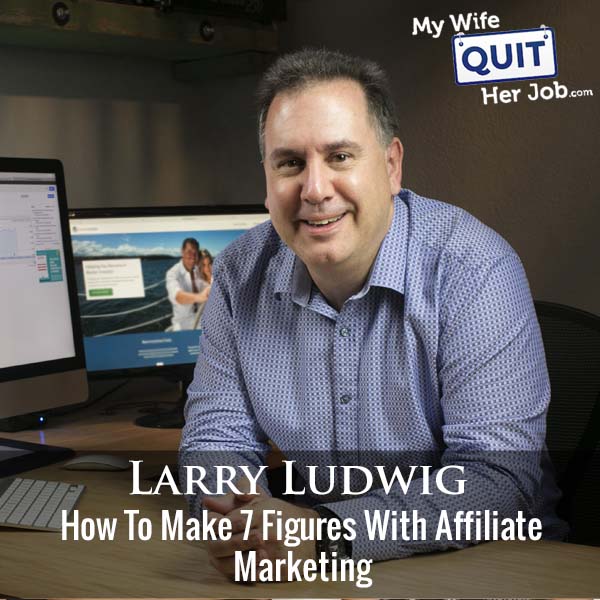
In this episode I spoke with Larry Ludwig, who built Investor Junkie into a personal finance authority site and sold it for a mid seven figure sum. He has been in my mastermind group for years and is the most technically sophisticated affiliate marketer I know.
Below is the whole approach: how he chose the niche, why he stayed anonymous, how he ranked for competitive keywords without buying links, how the tracking actually works, and how to run paid traffic on affiliate offers.
Get My Free Mini Course On How To Start A Successful Ecommerce Store
If you are interested in starting an ecommerce business, I put together a comprehensive package of resources that will help you launch your own online store from complete scratch. Be sure to grab it before you leave!
Table of Contents
Key takeaways
- Track conversions, not clicks. Pretty Links tells you clicks and never tells you what converted.
- Sub-ID and postback is the mechanism. Pass a unique ID out, get it back on conversion.
- Roughly 20% of pages produce 80% of affiliate revenue, and tracking is how you find them.
- Divide and conquer a topic completely so Google treats you as the authority on it.
- He bought no backlinks and did no link building until 2016, focusing on content and on-page experience.
- Google dislikes affiliate content that goes straight for the transaction. Push calls to action below the fold on organic pages.
- Roughly 70% of his effort went to updating existing content rather than publishing new posts.
- He stayed anonymous deliberately, because a brand tied to one person is much harder to sell.
How to choose a profitable affiliate niche
Pick a topic with genuine demand where the existing sites are crowded around one angle and ignoring another.
Larry started by watching Bankaholic sell for a large sum as a one-person site monetized entirely through affiliate marketing and SEO.
His first attempt failed on economics. He built a site around CD and savings rates just as the Fed pushed rates to zero, which left no money in the category.
Investor Junkie was the correction. The personal finance space was crowded, and sites focused purely on investing were not, so he narrowed to that.
The gap he found was audience level. Plenty of investment newsletters existed and few sites explained the basics or reviewed the services people were actually considering.
Timing helped. Robo advisors like Betterment were becoming popular and largely unreviewed, which is where the traffic came from.
His pivot point is the part worth noting. He nearly quit after writing about what interested him personally, and the business worked once he wrote for readers instead.
Why he kept his face off the site
Larry deliberately built Investor Junkie as a brand rather than a personal brand, because a business built around one person is hard to sell.
He tested the alternative. Adding his bio and photo, following Pat Flynn’s example, produced almost no clicks or interest.
The exit consideration was explicit. Asking himself whether he would buy a blog built around an individual, the answer shaped the decision.
He also did not want to be the investing guru. Having others write and offer opinions produced a stronger site than positioning himself as the sole expert.
The cost showed up in personal channels. SEO does not care much who is speaking, and email, video, and podcasting all need a person, so his newsletter open rates were weak.
His regret is not running both in parallel. Building a personal brand alongside the corporate one would have made starting his next thing far easier.
How to structure content so Google treats you as the authority
Cover a topic completely rather than only targeting the commercial keywords in it.
Larry calls this divide and conquer. For robo advisors, that meant reviewing every service, explaining what a robo advisor is, and covering tax loss harvesting.
The commercial and informational terms both matter. Betterment review earns revenue and what is tax loss harvesting establishes the topical coverage that makes the review rank.
Internal linking ties it together. A reader arriving on one article moves to another and then another, which is the on-page engagement Google rewards.
Editorial planning followed a calendar. He modeled Investor Junkie on Money Magazine, which cycles the same topics roughly every two years, so tax season in April and year-end planning in December became recurring.
Life events drive the timing in personal finance. Marriage, a child, a death in the family, a new job, job loss, and approaching retirement are when people actually think about investing.
How to match content to search intent
The article has to match what the searcher wants, or Google will not rank it regardless of quality.
Larry’s example is the clearest version. What is a mortgage and what is the best mortgage rate are entirely different intents.
Putting a rate comparison table in front of someone searching the definitional query makes the page unhelpful for that reader.
That distinction also predicts revenue. Best mortgage rate converts far better, and definitional pages can produce many clicks with few conversions.
How he ranked without buying backlinks
Larry did no deliberate link building until 2016 and focused entirely on content and on-page experience.
He declined the private network offers circulating among bloggers in his space, on the reasoning that Google would eventually catch it, which it did.
His research tooling was limited then. Before Ahrefs he used Google Trends for popularity and the search results themselves for clues on ranking style and intent.
His current recommendation is different. If you are serious about SEO, Ahrefs or SEMrush pay for themselves in time saved on competitive analysis.
What an SEO firm can and cannot do for you
Larry hired a firm to recover from an attack and for technical insight, not for content.
The problem was a negative SEO attack. Over roughly three months his site accumulated more than a thousand low quality backlinks from spam and pornographic sites, and his rankings dropped.
Google’s official position is that this does not affect you, and his experience contradicted that.
The recovery used the disavow tool on around 700 links, plus weekly strategy and review meetings.
Their real value was breadth. He knew investing deeply and they knew SEO across many verticals, which surfaced technical improvements he would not have found.
He also removed ad banners entirely as part of improving the on-page experience.
His warning on firms is strong. Most are poor, guarantees of first page rankings in a set number of days are a red flag, and you should understand SEO yourself before hiring anyone.
How affiliate conversion tracking actually works
Pass a unique ID with every outbound affiliate click, and have the merchant’s system return that ID when the conversion happens.
The industry terms are sub-ID and postback. The sub-ID is data you push into the merchant’s affiliate system, and the postback is how that system returns it to you.
The loop closes on conversion. Your tracker knows the click happened two days ago and the sale happened today, and can attribute the sale to the specific link, page, and traffic source.
Larry used ClickMeter for this, and the requirement is that the merchant’s affiliate platform supports sub-ID and postback, which most major networks do.
Link management alone is not tracking. Pretty Links redirects a clean URL to your affiliate link and reports clicks, and it cannot tell you what converted.
The data can flow onward. Pushing it into other analytics tools lets you see the full history of a visitor across email opens, push notifications, and your own product purchases.
What to do with affiliate conversion data
Find the pages producing most of your revenue, then improve those specifically.
The distribution is consistent. Across the clients Larry consults for, roughly 20% of pages generate around 80% of affiliate revenue.
Click counts mislead you. A page can generate heavy clicking with poor conversion because the intent behind the query was informational.
Button-level detail is what tracking buys. With the same offer linked several times on a page, you learn which placement actually earns.
Paid traffic makes it mandatory. You are spending real money, and Larry cites a widely repeated statistic that the large majority of Google Ads campaigns run at negative ROI.
The improvements are incremental. Once you know your money pages, 1% to 5% gains on those pages move the business, which is why this matters mainly above roughly five figures a month.
How to improve conversion on your best pages
Heat mapping tools show where readers click, scroll, and drop off, which is what tells you where to intervene.
Larry names Hotjar and Crazy Egg for this. Both reveal what people actually interact with rather than what you assume they do.
Investor Junkie built custom widgets and comparison tools. The design principle was showing limited data at a time rather than overwhelming the reader.
The metrics were not only monetary. Time on page, bounce rate, and clicks through to other pages all mattered, since Google rewards those independently of revenue.
His framing is that the incentives align. Readers, publishers, and merchants all benefit from the best user experience.
Why Google penalizes transactional affiliate pages
Google expects organic affiliate content to add value before it asks for the click.
The distinction Larry draws is between organic and paid. Paid traffic can be fully transactional and go straight for the conversion.
Organic cannot. A call to action placed above the fold on an organic page reads as going for the kill without adding value.
Investor Junkie moved calls to action well below the fold deliberately. More content ahead of the link meant more engagement and less immediate bouncing.
Value add is what earns the ranking. Content, widgets, calculators, and comparison tools are what justify the affiliate link at the end.
Why updating content beats publishing new content
Roughly 70% of Investor Junkie’s content effort went into updating existing articles.
Accuracy is the reason in finance. Services announce new features constantly, and a review six months stale misses what the reader is looking for.
Rate-sensitive content is worse. Sending someone to an affiliate link showing a different rate than your page states is a poor experience Google eventually penalizes.
The general principle applies outside finance. Existing pages that already rank respond faster to improvement than new pages do to publication.
How to run paid traffic on affiliate offers
Most merchants prohibit bidding on their brand keywords, so you bid on comparison and alternative terms instead.
The workaround Larry used was emotional. A personal finance service with unhappy customers meant people were actively searching for alternatives, and he promoted a competitor to that audience.
Trademark rules constrain the ad copy. Google frequently lets you bid on a brand keyword while prohibiting the trademark in the ad text, so the ad offers an alternative without naming the brand.
The productive keyword patterns are predictable. Alternatives, this service versus that service, and even whether a service is any good all convert.
Best-of pages sidestep the trademark issue entirely. Best robo advisors or best CD rates are commercial without bidding on any brand.
Landing page format needs testing. Dedicated landing pages usually win, and Larry has seen clients convert worse after stripping navigation because the audience preferred an editorial format.
How to compete when everyone promotes the same offers
Offer an exclusive bonus that no other affiliate can provide.
The options are a negotiated exclusive promotion through the merchant, or a value add you create yourself.
Larry’s own test was bundling a free course with a Bluehost signup. A walkthrough of how to use and maximize a service works the same way.
Fulfillment is usually manual, and it does not have to be. With conversion tracking in place you can fire the bonus delivery automatically when the sale registers.
FTC disclosure is required regardless. If you order a comparison page by what pays you most rather than by merit, that has to be disclosed.
Which affiliate niches pay the most
Larry’s framework is three areas of transformation: health, personal finance, and relationships.
The reason those work is permanence. People always have problems in all three, and always look for solutions.
Payout structure is why physical products struggle. Commission rates are low enough that volume becomes the only path.
Niching down is still required. General personal finance is not a viable target, and investing specifically was.
His argument for adding affiliate offers to any existing business is worth hearing. If you sell classic car restoration parts and not tires, recommending a tire and rim combination earns revenue with no inventory and strengthens the customer relationship.
Affiliate offers also work as product research. A category that performs as an affiliate offer is a candidate for something you sell yourself later.
Frequently asked questions
How do you track affiliate conversions?
Pass a unique ID with each outbound click using the merchant’s sub-ID field, and their system returns it via postback when a sale happens. Larry Ludwig used ClickMeter for this, and most major affiliate networks support the mechanism.
Is Pretty Links enough for affiliate tracking?
No. Pretty Links manages and shortens affiliate URLs and reports clicks, and it cannot tell you which clicks converted. Heavy clicking with poor conversion is common when the search intent behind the page was informational.
Which pages produce affiliate revenue?
Roughly 20% of pages generate around 80% of affiliate revenue, a pattern Larry sees consistently across the clients he consults for. Conversion tracking is how you identify which ones so you can improve those specifically.
Do you need to buy backlinks to rank an affiliate site?
Larry ranked Investor Junkie for competitive personal finance keywords without buying any, doing no deliberate link building until 2016. He focused on complete topical coverage, content quality, and on-page experience instead.
Why does Google penalize affiliate pages?
Google expects organic content to add value before asking for the click. A call to action above the fold reads as going straight for the transaction. Paid traffic can be fully transactional, and organic cannot.
Can you run paid ads on affiliate offers?
Yes, with constraints. Most merchants prohibit bidding on brand keywords, and Google often lets you bid on a brand term while barring the trademark from your ad copy. Alternative, comparison, and best-of keywords work well.
Should you publish new content or update old content?
Larry put roughly 70% of his content effort into updating existing articles. In finance the accuracy matters, since a stale review misses recent features and mismatched rates produce a poor experience Google penalizes.
Which niches pay best for affiliate marketing?
Health, personal finance, and relationships, because people always have problems in those areas and always seek solutions. You still have to narrow within them, the way Larry narrowed from personal finance to investing specifically.

