Podcast: Download (Duration: 53:11 — 61.1MB)
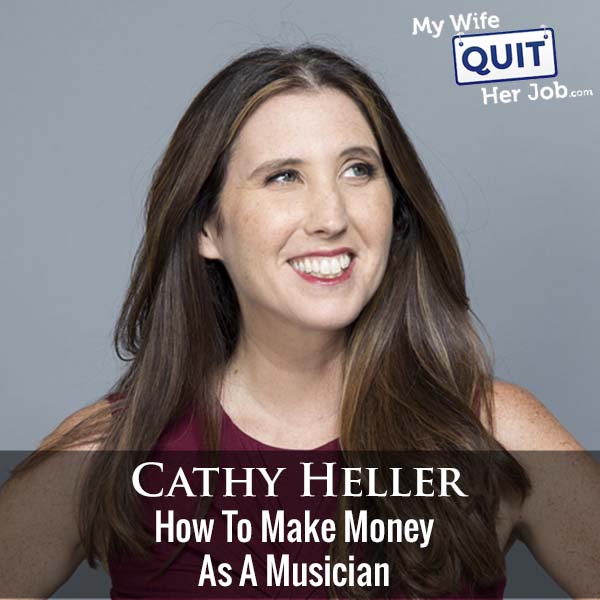
The most profitable path for a working musician is licensing songs to television and advertising rather than touring or selling records. Cathy Heller made $300,000 to $400,000 a year for a decade doing exactly that, after being signed and then dropped by Interscope.
Cathy hosts the podcast Don’t Keep Your Day Job and wrote the book of the same name. She has been featured in Forbes, Entrepreneur, HuffPost, and the New York Times.
This episode covers why licensing pays better than any other music revenue stream, the outreach method that landed her 28 placements, how pricing works, and how she turned the same approach into a two million dollar course.
Get My Free Mini Course On How To Start A Successful Ecommerce Store
If you are interested in starting an ecommerce business, I put together a comprehensive package of resources that will help you launch your own online store from complete scratch. Be sure to grab it before you leave!
Table of Contents
Key takeaways
- A TV placement pays roughly $5,000, while a national ad can pay $50,000 to $80,000 for one song.
- Ad licenses are typically non-exclusive, so the same song can be licensed again elsewhere.
- Ask what story the supervisor needs told rather than sending your existing catalog.
- Her coffee-delivery PDF got 28 yeses from 65 emails, and all 28 became placements within a year.
- Let the buyer name the budget first, then ask politely for a small increase.
- She never turned down a license, including a low-budget one that led to far larger work later.
- Seven deposits before one withdrawal. Build the relationship long before you sell anything.
- Her first course launch converted 147 of about 1,000 subscribers at $997, from a single free masterclass.
How Cathy Heller went from a record deal to music licensing
Cathy moved to LA at 24 in a beat-up Volvo, wanting to make music.
Her childhood was difficult. Her parents’ marriage was tumultuous, her mother struggled with depression, her father left after the divorce, and music was the constant she wrote her way through.
After two years of writing progressively better songs and recording demos, she signed with Interscope. She was in the studio while Lady Gaga recorded Paparazzi.
It ended within months. Her producer called to say the label was not confident they could sell enough records and would not take the chance, and she was dropped.
She took a commercial real estate job in Brentwood paying $150,000 at 26, which she describes as golden handcuffs. She lasted 18 months before concluding that money without fulfillment was unlivable.
How she discovered music licensing
The turning point was an article about independent artists licensing songs to shows like Grey’s Anatomy and to brands like Tropicana and Old Navy.
She quit her job with about three months of savings, which she now advises against. Her current teaching is to build the bridge before you cross it.
The research question was who actually chooses music for film and television. The answer is music supervisors.
She used IMDb to build lists of who handled music for each show, then hunted down email addresses.
Roughly six or seven months later she started getting traction, and 18 months in she was making $300,000 to $400,000 a year.
Her placements included Pretty Little Liars, Switched at Birth, Criminal Minds, Younger, and Parks and Rec, plus ads for Crate and Barrel, Walmart, McDonald’s, and Kellogg’s.
Why licensing pays better than touring or record sales
Touring does not work unless you are already famous.
Driving to clubs around the country means paying for gas, sleeping on couches, and drawing perhaps eight people.
Record sales collapsed because of unbundling. Getting one Cyndi Lauper single once required buying the whole album at twelve dollars, and now the buyer spends 99 cents on the single alone.
What replaced that revenue is video. Streaming services, cable, and screens everywhere including gas pumps all need music, which makes this an unusually good time to be a musician.
How a music supervisor’s budget actually works
The economics of a season budget are what create the opening for independent artists.
A show with 22 episodes gets one music budget for the entire season, say $200,000.
If the director insists on a specific U2 song for the final scene, that single placement can consume $75,000, leaving $125,000 for everything else.
With roughly six songs needed per episode across 22 episodes, the supervisor needs affordable music. At around $5,000 per track, an independent artist fits the budget.
There is also an editorial reason. Discovering new bands makes a show feel current, so supervisors actively want to give those opportunities.
Cathy has a friend who built a relationship with the supervisor on Days of Our Lives, a daily show needing songs every day, at about $1,500 per song.
Why advertising pays far more than television
Brands run national spots every four to six months rather than daily, so the per-placement budget is much larger.
A single ad typically uses one song, and the budget can be $60,000 to $80,000.
The comparison that makes it worthwhile for the brand is the alternative. Licensing Charlie Puth or Lady Gaga could cost a million dollars.
The brand’s goal is selling a product rather than showcasing a famous artist, so as long as the music fits, an indie artist gets paid.
Cathy would do about six ads a year plus television work, which is what produced $300,000 to $400,000 annually.
How to get a music supervisor to read your email
Email addresses are widely available. Getting the message read is the actual problem.
Most artists lead with the pitch, sending fourteen paragraphs about themselves and why the supervisor should listen to their music. That does not work, because it hands the recipient homework.
Cathy’s approach was making it about them. Short, personable emails asking a simple question rather than attaching music, building a human connection first.
Her breakthrough was a scrappy PDF titled Mochas and Music, showing a picture of her playing guitar, a plus sign, and a Starbucks latte.
The three steps were: tell me your favorite Starbucks drink, tell me what date and time to drop it off, and I will come to your office with music and caffeine.
She sent it to about 65 people. Roughly 20 never responded, about 20 declined, and 28 said yes.
She visited all 28 offices with lattes. A year later Billboard reported that she had licensed songs to 28 shows, and every one came from that list.
Why you should ask what songs they need
The second lever is writing to the brief rather than pitching your catalog.
Asking what story a supervisor needs to tell gets a genuinely relieved response, because every other artist is sending breakup songs and love songs.
The real answer might be a song about sisters, about overcoming the odds, or about female empowerment, depending on what they are working on.
Then you go to the studio and write it authentically. That is what strong artists do, and Cathy points to Randy Newman writing for Toy Story as the model: sit with a director, find out what is needed, and make it sound like you while serving the larger story.
The resulting songs are not jingles. Christina Perri’s A Thousand Years for Twilight is the example of what writing to a scene can produce.
How to price a music license
Every market already has a low end and a high end, so research where yours sits.
Starting out, price at the low to middle of the market and work your way up over time.
The tactical rule is letting them name the number. When a supervisor asked what she wanted, Cathy asked what their budget was.
Supervisors are salaried employees at Netflix or CBS rather than commissioned agents, so there is no incentive for them to lowball and pocket the difference.
Once they named a figure, she would ask politely whether there was wiggle room to go slightly higher, while making clear she wanted the placement either way. Sometimes she got more and sometimes she did not.
Why she never turned down a license
On the film Southpaw with Jake Gyllenhaal, the supervisor called needing a feel-good song for a scene, with almost no budget left after Eminem.
She said yes immediately.
That supervisor, John Houlihan, went on to other work including a Hanes commercial where he used her track.
When a reporter later asked for quotes about her, he said he would always work with Cathy because she was a generous artist who would not get in the way of a project, and who protected the relationship rather than maximizing a single fee.
Why building the business backwards fails
Cathy’s diagnosis is that most people go into a laboratory alone, build something brilliant in isolation, release it, and find nobody cares.
The fix is taking someone’s order before you make the thing.
Her framing is radical empathy at the core of the business, because someone handing you their money is telling you they value this specific thing.
The model already exists at scale. Coca-Cola and Apple run focus groups asking their demographic what color, what flavor, when they use it, and what problem needs solving.
She applied it to music by asking supervisors what they needed, and later to her podcast by continually asking her audience about their pain points. Listeners wanted to hear themselves, so she started interviewing listeners and reading their letters.
How to find out whether people want what you make
Start by validating with people who are genuinely your customer.
Cathy’s version is gathering a few likely buyers, offering a taste, and asking what they like, what they do not, and what they would pay.
I would add one adjustment. Friends give feedback designed not to upset you, so strangers give better data.
The tool I use is PickFu, which runs on Amazon Mechanical Turk. You can target demographics, and within about fifteen minutes you get written paragraphs of genuine feedback.
I have my students post their store before launch and ask whether people would shop there and whether it looks trustworthy. The results are frequently the opposite of what the owner expected.
Why you must make deposits before asking for a sale
Cathy’s rule is roughly seven deposits before one withdrawal.
The relationship is the prerequisite. People buy when there is trust and intimacy, and when they already know you make the thing they need.
Seth Godin’s definition on her show was that marketing is communication, meaning you effectively communicated what you do to the person who needs it.
That runway runs long before any invitation to buy. When the sale finally comes, all you are saying is that the thing you have been discussing is now available if they want it.
The reason selling feels bad is that most people skip that entirely and walk up to a stranger trying to prove themselves.
Why content is the most efficient way to build trust
Content is the deposit mechanism that scales, and nobody has to give you permission to make it.
Cathy publishes her podcast, posts on Instagram and stories, and writes her own posts, all of which builds intimacy with an audience.
Vulnerability is what makes it work. Inviting people into something that has you all over it, rather than only the product, produces buyers who could get the same thing elsewhere and choose you.
The common objection is having nothing exceptional to say. Adam Grant’s answer on her show was that you do not have to say something new if you say something true.
The evidence is in how people consume. Nobody struggling in their marriage ever sees enough posts saying it is normal to fight, and nobody who loves hand lettering ever sees enough hand lettering.
How Cathy Heller launched a two million dollar course
When artists started asking her to teach them, she began with classes in her house, then moved to a local theater.
Going online required starting from nothing. She had no email list, no podcast, and no Instagram, because her business had been B2B selling music to Netflix and Lionsgate.
Her first step was a free cheat sheet covering the ten things she had learned about licensing music.
The ad leaned into vulnerability rather than income claims. She described getting dropped from the label, pulling over on the side of the road, taking a job she hated, and finding her way into licensing.
She spent about $100 on Facebook ads with an audience she now admits was far too broad, and got roughly 1,000 downloads.
She then emailed that list offering a free masterclass, taught with no slides, and gave away everything she knew in an hour. Her reasoning was that sincerity would matter more than polish given how much hype exists in webinars.
The first launch sold 147 seats at $997, which is a conversion rate she did not realize was unusual at the time.
She later moved to $1,997 for six months, which produced her biggest launch. The price increase came with genuine confidence in the value: it is a live class where she reviews student music weekly and brings in real music supervisors monthly to give feedback.
At that price, launching twice a year, the course reached two million dollars annually. About 25% of students each year were getting songs placed on television in real time, and those students became the ambassadors who filled the next class.
Why writing music commercially is not selling out
The belief that commercial work compromises artistry is both common and false.
Jeff Goins makes the historical case in Real Artists Don’t Starve. Michelangelo was commissioned for every piece he made, told exactly what to paint, with what materials, and which biblical scenes to depict on the ceiling.
That did not make the Sistine Chapel less beautiful. Mozart was commissioned for his symphonies, and John Williams composes to Spielberg’s films.
The starving artist ideal is recent, roughly the La Boheme and Rent era, and it turned deprivation into a credential.
The commercial reality contradicts it. Taylor Swift’s operation involves extensive audience testing and deliberate brand construction, which is far more calculated than it appears.
Cathy’s reframe is that asking what people want is the opposite of selling out. It means using your gift for something beyond yourself, the way an audience at a Paul Simon concert waits for the song that has become theirs rather than only his.
The potter who stopped starving
A guest on Cathy’s show trained as a potter making avant-garde sculpture and was genuinely starving.
His work occasionally got praised in art journals, which did not pay.
A woman asked whether he could make pastel ice cream bowls and offered to pay him. He needed money, so he made them.
Her friend called wanting some. Then a boutique called. Then Urban Outfitters ordered thousands.
He now runs a factory in Philadelphia employing many people, shipping thousands of orders weekly worldwide, and occasionally makes something only he and a couple of art critics appreciate.
His own conclusion is that making something people genuinely like feels better than making something three people like.
How to figure out what you actually want to do
Cathy’s observation from her listeners is that most people know they are unhappy without having clarity on the alternative, because they stopped asking the question years ago.
The cause is protective. Growing up seeking parental approval keeps you inside the lines, and accumulated heartbreak teaches you that dreaming leads to being hurt.
Her exercises are about restoring access to the question. Make a list of five lives you would love to live ignoring practicality, write a letter to yourself at seven years old, or write a letter from your seven-year-old self about what they wanted.
Then explore physically. Go to a museum and write about it afterward, go to a play and notice what you feel, take a class, or pick up a camera.
The cheesecake shop that started on Facebook
Greg Franklin was working at a dog food factory in Missouri, listening to Cathy’s podcast, describing himself as numb.
Facebook sent him a cheesecake recipe. His first attempt was terrible, so he made another the next day, and the algorithm kept feeding him recipes.
One day he made three. His family needed one, so he took the extra two to the local fire station, where they were politely received.
A week later the fire department called asking for twelve for a chief’s birthday. He said he did not know how, then did it anyway.
He was later fired after an accident on a factory machine, and posted about it in her Facebook group that same day. His wife pointed out it was National Cheesecake Day.
He opened a cheesecake shop, telling himself he would keep it open three months if it covered rent. The line went around the block on day one and he made three times the rent. A Midwest grocery chain owner heard about him on the show and now carries his product.
Frequently asked questions
How do musicians make money without touring?
Music licensing to television, film, and advertising. Cathy Heller made $300,000 to $400,000 a year for a decade this way, which she considers the most profitable option available to an independent musician.
How much does a song placement pay?
Roughly $5,000 for a television placement and $50,000 to $80,000 for a national ad. Ads pay far more because brands run them infrequently with much larger budgets per spot.
Who decides what music goes in a TV show?
Music supervisors. Their names are listed on IMDb per show, and their email addresses are generally findable, which is how Cathy Heller built her initial outreach lists.
How do you get a music supervisor to respond?
Make the email about them rather than you. Keep it short, ask a genuine question, and offer something before pitching. Cathy’s coffee-delivery offer got 28 yeses from about 65 emails.
How should you price a music license?
Ask the buyer for their budget first, then request a modest increase while making clear you want the placement regardless. Music supervisors are salaried rather than commissioned, so their numbers are honest.
Should you accept a low-paying license?
Cathy Heller never declined one. A low-budget placement on Southpaw led to a supervisor who later used her music on a national Hanes commercial and publicly praised her.
Is writing music for ads selling out?
No. Michelangelo and Mozart were commissioned for essentially everything they made, and John Williams composes to order for films. Writing to a brief is how artists have always worked.
How do you validate a business idea?
Offer a free sample to people who are genuinely your customer and ask what they liked, what they did not, and what they would pay. Use strangers rather than friends, since friends soften feedback.