
Podcast: Download (Duration: 48:19 — 55.6MB)
Building a one man media company starts by picking the single channel where you have real skill and the competition is thinnest, then committing to it for 18 to 24 months before you judge results. Eric Siu’s podcast averaged nine downloads a day after a full year and 30 a day after two, and it eventually produced multiple six figure agency clients.
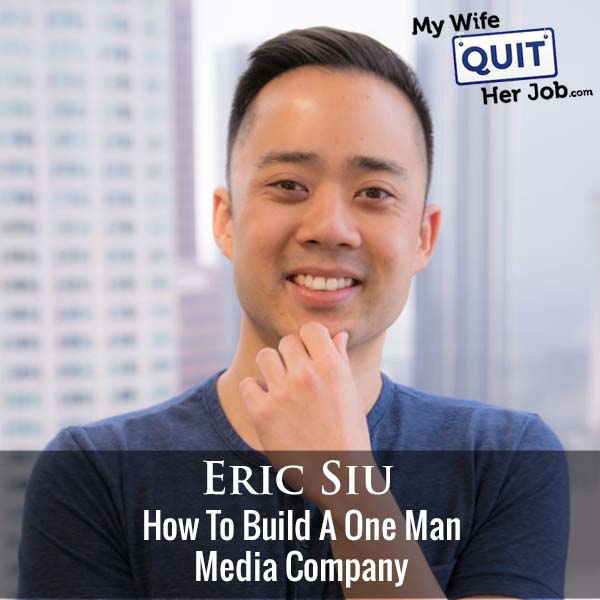
In this episode I spoke with Eric Siu, who bought Single Grain for $2 and turned it into a multi-million dollar agency, co-hosts Marketing School with Neil Patel across two podcasts with over 40 million downloads, and founded ClickFlow.
Below is how he thinks about it: how to choose your channel, how to launch a podcast with no audience, how content converts into revenue, and when blogging still beats everything else.
Get My Free Mini Course On How To Start A Successful Ecommerce Store
If you are interested in starting an ecommerce business, I put together a comprehensive package of resources that will help you launch your own online store from complete scratch. Be sure to grab it before you leave!
Table of Contents
Key takeaways
- Expect 18 to 24 months before results. Eric’s podcast did nine downloads a day after year one.
- Pick by competitiveness and skill. Roughly 700,000 podcasts against over a billion blogs at the time.
- Attack one channel first. Splitting attention extends your timeline to success.
- Optimize for learning early, and watch for unsolicited responses as your real signal.
- Content produced agency clients with shorter sales cycles and higher lifetime value.
- Consistency compounds like SEO. Marketing School publishes 5 to 10 minutes daily without exception.
- Blogging still wins in blue ocean niches. A survival blog hit millions of monthly visitors in under two years.
- Spend 40 to 50% of content effort upgrading existing posts rather than only publishing new ones.
Why creating content is the highest leverage activity
Content is leverage because the effort is fixed and the audience is not.
Eric’s framing came from a conversation with Anthony Pompliano, who went hard on content starting in 2017 and built roughly 300,000 to 400,000 Twitter followers, a podcast with about 2.5 million monthly listeners, and an 80,000 person email list in three years.
The logic is about ratio. You might spend 45 minutes on a piece of content, and 3,000 or 5,000 people see it.
That is why Eric installed operators to run his agency and ClickFlow while he focuses on conversations, YouTube, and his book.
How long content takes before it works
Plan for 18 to 24 months before content starts producing results, because compounding takes time.
Eric’s own numbers are the reference. Six hours a week on his podcast during year one produced nine downloads a day, and year two averaged 30 a day despite excellent guests.
The pattern matches business generally. He and Neil Patel observe that most businesses they start take around three years to get going.
The comparison he draws is to MrBeast, who spent the first several years producing content that went nowhere before reaching tens of millions of subscribers.
How to choose between blogging, YouTube, and podcasting
Choose based on two variables: what you are actually good at, and how competitive the channel is.
The competitive math is stark. At the time of our conversation there were roughly 700,000 podcasts against over a billion blogs, which puts you in a far better position on the podcast side.
Skills overlap in useful ways. If you are good on video you are probably good on audio, so podcasting can be the blue ocean version of the same talent.
Eric started with blogging because he enjoyed writing in high school and college, and now considers SEO a red ocean where you compete against companies spending hundreds of thousands monthly on content and links.
The rule that matters most is focus. Attack one channel and get it working before adding another, since splitting attention extends your timeline.
Which channel is best for discovery versus relationships
YouTube and blogs bring new people in, and podcasts build much deeper relationships with the people already there.
The reason is discovery infrastructure. Google indexes blog content aggressively and YouTube’s algorithm is genuinely good at surfacing videos, while podcast discovery on Apple and Spotify remains weak.
Eric’s pick starting from scratch today is YouTube, specifically because the algorithm does the distribution work for you.
What matters most on YouTube is the idea itself, which shows up as the title and thumbnail. One creator with roughly 800,000 subscribers told him those matter more than the video.
My own view is that the video still has to be good, since clicks without retention do not build mindshare. Eric’s compromise is that a 10 out of 10 title with a 7.5 or 8 video is passable.
How to launch a podcast with no audience
Borrow an audience through collaboration, or optimize for learning until the compounding starts.
The collaboration route is arbitrage. Pompliano partnered with a YouTube creator who knew nothing about finance and wanted to learn, which is the same structure that makes Marketing School work.
If you have no relationships, Eric’s approach was to make learning the KPI. He was coming out of a position of not knowing much, so genuine curiosity carried the interviews.
The metric he watched was unsolicited responses. Roughly monthly, someone would comment that an episode had been impactful or changed something for them, which signals you are onto something well before download counts do.
Paid jumpstarts work too. Buying newsletter sponsorships or running email blasts gets initial volume, and getting booked on other podcasts is how book launches build audiences.
Asking guests to share is worth doing directly. Eric asked in the early days, and says he would be more aggressive about asking sooner.
How a podcast turns into revenue
Eric did not monetize his podcast for the first three years, and the first revenue came from agency clients rather than ads.
The path is indirect. Listeners get to know you, look into what you do, and reach out about working together.
The client quality is what makes it worthwhile. Those deals ran multiple six figures annually, with shorter sales cycles, higher lifetime value, and a friendlier working relationship because they already know you.
Ad revenue came much later. Once the show reached roughly 150,000 downloads a month at its peak, advertisers became viable on a CPM basis, or you can route that audience to a membership offer instead.
How Marketing School grew to hundreds of thousands of downloads
Batching daily five-minute episodes and pushing the launch through two existing audiences produced 100,000 downloads in month one.
The origin was accidental. Eric mentioned to Neil Patel how well his own podcast was doing, Neil interpreted it as a proposal, and they settled on the name within that conversation.
Production is batched. They record 10 to 15 episodes in a session, each five to ten minutes long.
The launch push used everything they had. Both email lists plus push notifications through Neil’s subscribers.com product drove 100,000 downloads in the first month, 300,000 in the second, and roughly 500,000 at the peak.
After about three months of pushing, they stopped. Growth since then has been organic, driven by daily consistency compounding the way SEO does as people work through the back catalog.
The consistency is absolute. Eric recorded through having COVID and Bell’s palsy, and they publish regardless of circumstances.
Why daily short episodes work
Five to ten minutes daily produces better user experience than the same total time in one weekly episode.
The format reflects a preference for getting to the point. They started at ten minutes, found five was enough, and use each episode for one trend or tool before the listener returns to their day.
Bingeing is the behavior that makes it pay off. Listeners work through multiple episodes at once, which a weekly show does not enable in the same way.
How to keep in touch with an audience across channels
Match the channel to the behavior, because content that works over email fails over SMS.
Eric does not blast content over text. Broadcasting posts to a phone gets ignored, and his own experience with a creator doing that is that he never opens them.
Questions work instead. Asking about someone’s biggest challenge or what topics they want prompts genuine replies, and he and Neil respond personally inside the SMS platform.
Email push stopped entirely after the launch phase. Marketing School no longer emails about new episodes.
The rest of the retention stack is a free monthly virtual event with guest speakers and live Q&A, plus a paid membership community on Discord.
When blogging still beats podcasting and YouTube
In a genuinely uncompetitive niche, blogging produces faster and larger results than either alternative.
Eric part-owns a survival blog that went from zero to a couple million monthly visitors in about 18 months to two years, on track for seven figures in revenue.
The difference is the keyword landscape. Marketing keywords are a red ocean because marketing dollars attract competitors, and survival keywords are not.
Google’s own incentives help. The company wants more indexable content in more markets and languages, which leaves genuine room in overlooked niches.
His channel order for a blue ocean niche is blog first, YouTube second, podcast last, with social ranking above podcast when the topic drives heated engagement.
How to grow a blog in an uncompetitive niche
When links do not matter much, the strategy is simply volume of content.
Two things drive SEO: content and links. In a low-competition niche you can largely skip the link side and blitz with content.
Their writer sourcing was an arbitrage. They recruited from ProBlogger and poached writers from competitors, since pay rates in that industry were low relative to the value.
Volume settled at four to eight pieces a week. They tried scaling to 20 and found that was past the useful point.
The site itself did not need to be impressive. A WordPress install and the founder’s genuine passion, writing everything and shooting the photos himself, is what started it.
Why you should spend half your content effort on updates
Existing content that already ranks produces more traffic per hour of work than new content does.
Eric’s recommended split is 40 to 50% upgrading against 50 to 60% new, and he notes most people run closer to 99% new.
Neil Patel staffs it deliberately, with three full-time people dedicated to upgrading content.
The mechanism is decay. Rankings erode over time without maintenance, which is why ClickFlow built a free content decay tool that alerts you when a post loses a meaningful share of its traffic.
Timing depends on the site type. A news-driven site prioritizes newsjacking a fresh development, and an evergreen site leans further toward improving what already works.
How to find pages worth optimizing in Search Console
Sort your pages by high impressions and low click-through rate, which is available free in Google Search Console.
Those pages are already being served by Google and failing to earn the click, which makes the title and meta description the cheapest available win.
What counts as low varies by site. Eric’s threshold is around 0.5%, and yours will differ.
Position is a confounder worth watching. Click-through rate correlates with ranking position, so evaluate within a position band rather than across all pages.
Title split testing has real limits. Google decides whether to display your title at all, seasonality interferes, and a meaningful test needs roughly 30 days and sufficient traffic.
Frequently asked questions
How long before content marketing produces results?
Plan for 18 to 24 months. Eric Siu’s podcast averaged nine downloads a day after a full year of six hours weekly, and 30 a day after two years, before eventually reaching six figures in monthly downloads.
Should you start with a blog, a podcast, or YouTube?
Pick based on your actual skill and how competitive the channel is. In a competitive space like marketing, Eric would choose YouTube or podcasting over blogging. In an uncompetitive niche like survival, blogging still wins.
Can you run multiple content channels at once?
Not at the start. Attack one channel and get it working first, because splitting attention extends the time before any of them succeed. Repurposing across channels becomes viable later.
How do you launch a podcast with no audience?
Collaborate with someone larger than you, buy newsletter sponsorships, or push through any existing list you have. If none of that is available, optimize for learning and watch for unsolicited responses rather than downloads.
How does a podcast make money?
Usually indirectly first. Eric’s produced multiple six figure agency clients with shorter sales cycles and higher lifetime value before he ever ran ads. Advertising becomes viable around six figures in monthly downloads.
Is it better to publish daily or weekly?
Daily short episodes suit some formats well. Marketing School runs five to ten minutes every day, which enables binge listening and compounds like SEO as new listeners work through the back catalog.
Should you send content over SMS?
No. Broadcasting posts to a phone gets ignored. Asking a question instead, like what someone’s biggest challenge is, produces genuine replies and gives you something worth responding to personally.
How much time should you spend updating old content?
Roughly 40 to 50% of your content effort. Most people spend close to 99% on new posts, and existing pages that already rank produce more traffic per hour of work once you refresh them.