
Podcast: Download (Duration: 51:03 — 58.7MB)
Building an audience online starts with picking the format you can produce without friction, then choosing a platform with genuine discoverability. Blogging and YouTube win on discoverability because both are search-driven, while podcasting requires bringing an existing audience with you.
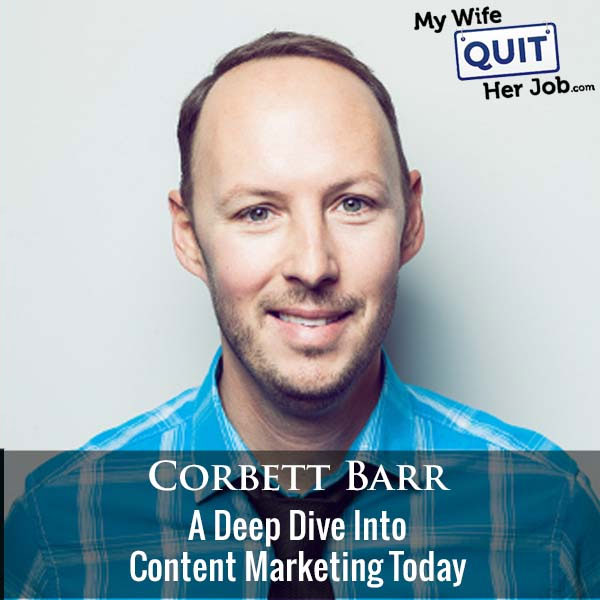
In this episode I sat down with Corbett Barr, founder of Fizzle, who has been a full-time content creator for over a decade and recently deleted most of his back catalog to start fresh.
Below is the full picture: how the platforms compare, why friction decides everything, how to get your first readers, and what actually cuts through in a saturated market.
Get My Free Mini Course On How To Start A Successful Ecommerce Store
If you are interested in starting an ecommerce business, I put together a comprehensive package of resources that will help you launch your own online store from complete scratch. Be sure to grab it before you leave!
Table of Contents
Key takeaways
- Blogging and YouTube win on discoverability because both are search engines.
- Blogging takes 6 to 12 months to rank. YouTube can produce thousands of views in 3 to 6 months.
- Podcasting has a discovery problem. Most successful shows bring an existing audience.
- Friction determines everything. Corbett skipped video for years over setup time.
- Publish natively, not links. Break a post into tweets rather than posting a URL.
- Write for discovery or for connection. They are different jobs requiring different content.
- Twitter is research and relationships, rarely a traffic play.
- Easy means saturated. The only durable answer is being genuinely better.
Why Corbett deleted his content archive
He deleted his social media posts, closed several accounts, and wiped hundreds of blog posts to remove what he calls digital baggage.
The motivation was mental rather than strategic. Twelve years of content accumulated things created for one purpose or another, much of it no longer relevant, and it felt like clutter blocking clarity about what to do next.
His framing of the underlying oddity: we all now have digital selves representing us online, and having every passing thought publicly accessible forever is not a natural condition. Society has only had 15 to 20 years to adjust.
He was selective rather than indiscriminate. Posts driving thousands of monthly visitors that he still agrees with stayed. The Fizzle Show, at roughly 380 episodes, he considers a complete body of work and left entirely intact.
What went was the peripheral material: random videos, one-off posts, things created without a lasting purpose.
How to decide what work you should be doing
Audit your calendar for the past year and sort every entry into energizing or draining.
Corbett took this approach from Tim Ferriss as an alternative to a conventional annual review. For each meeting or block of time, ask whether you enjoyed it, looked forward to it, and whether it produced a positive outcome.
His own result: writing, coding, and being on podcasts energize him, so he restructured his year around doing more of each.
The productivity argument is the interesting part. Working against your grain does not just feel bad, it stretches tasks out indefinitely and produces avoidance, which costs more than doing the enjoyable work would have.
The underlying pattern is common. Corbett got into independent creation because he loved writing, then built a team at Fizzle and became an operator disconnected from the work he started for.
I went through the same thing as an engineering manager, delegating the coding I enjoyed until my days were meetings.
The creator economy is real now
Independent publishers now reach audiences larger than the gatekeepers who used to control access.
The relationship inverted. Publishing houses and TV networks were the gatekeepers you climbed toward, and now they court creators who built audiences without them.
Joe Rogan is the extreme case. Spotify paid roughly $100 million for a show that is fundamentally a microphone and conversations, which is sports-contract money that no television personality has matched.
The scale is easy to underestimate at smaller levels too. A YouTube video reaching 40,000 people is a stadium full of viewers for something you made yourself.
None of this is as new as it looks. Corbett started blogging in 2009 when Copyblogger and Zen Habits were already demonstrating it worked, and what has changed is the tooling that makes it accessible.
How the platforms compare for discoverability
| Platform | Discoverability | Time to traction | Depth of connection |
|---|---|---|---|
| Blogging | High (search) | 6 to 12 months | Moderate |
| YouTube | High (search) | 3 to 6 months | Moderate to high |
| Podcasting | Low | Very slow without an audience | Very high |
| Social media | Variable | Fast, platform-dependent | Low |
Why blogging and YouTube win on discovery
Both are search engines, and YouTube is the second largest in the world.
People arrive at both looking for answers, and the platform’s job is to supply good ones. New subjects frequently have thin coverage, which creates openings.
You do not need to go deep on keyword research to benefit. Ask what people are searching for, do some searching yourself, and look for gaps you can fill.
The timelines differ substantially. Blogging typically takes six months to a year before a domain starts ranking, because search engines need time to assess a new domain through incoming links.
YouTube moves faster. After two or three months of consistent publishing, Corbett has watched people reach thousands of views within three to six months even in competitive spaces.
My own experience is that YouTube keyword competition is orders of magnitude lower than blog competition for the same terms.
Why podcasting is hard to start cold
Podcasts are discovered through recommendation rather than search, and recommendations flow to shows that are already popular.
That produces a chicken-and-egg problem. Fizzle’s podcast has been enormously valuable and they brought their own audience to it.
The scale gap is real. A 40,000-view YouTube video is unremarkable among millions of similar videos, and 40,000 downloads would place a podcast in roughly the top 2.5% of all shows. Many nominally successful podcasts run in the low thousands.
What podcasting buys instead is depth. Someone listening to 20, 30, or 60 minutes of your voice knows you in a way no other format produces.
Corbett’s recommendation is not to start with podcasting unless you are in a new or underserved space, or you already have an audience to bring.
We both find it strange that podcast search has not been solved, since transcribing and indexing audio should be more tractable than what YouTube already does with recommendations.
Why friction decides which platform you choose
The best format is the one you can produce without resistance, because friction reliably kills consistency.
Corbett’s own example is his winter setup in Mexico. For eleven years he moved between rooms and took calls in the bedroom because that is where the internet worked, and it was a persistent annoyance.
This year he bought a cheap desk, clamped a microphone and light to it, and added an internet booster. Now recording is trivial and he can do several sessions a day.
His honest observation is that the friction had been quietly shaping what he created and published for over a decade, despite knowing better.
My version was YouTube. I skipped it for years because setting up lights and cameras took twenty minutes, and by the time I was ready I no longer wanted to record. Now I sit down and press a button.
The corollary is that production value matters less than people assume. Screencasts perform well in programming, and audio clips repurposed into videos with no host on camera get real traction when the topic is something people are searching for.
The barrier to entry on YouTube is higher, which is an advantage. Fewer people can carry ten minutes on camera, which means less competition.
How to get your first readers with no audience
Find where your topic is already being discussed, participate genuinely, and publish your content natively on those platforms.
The mistake Corbett sees constantly is posting a link and asking people to visit your site, which violates the norms of every platform and works nowhere.
The alternative is publishing the substance directly. When he writes a post, he extracts the main five points and publishes them as individual tweets, letting the conversation happen on Twitter.
The reasoning is that what matters is whether your ideas reach people and resonate, not where they are consumed. Interested people will find your profile and click through eventually.
Reddit, topic-specific communities, and places like Indie Hackers all work the same way.
The goal at this stage is not volume. It is getting anyone to read the thing and tell you whether the idea is valuable, unique, or interesting.
How to write when nobody is reading yet
Write it as an email to one person, then adapt it everywhere else.
Corbett composes content as an email to his list first. Without a list, write it to a friend who might care about the topic.
That single piece then becomes a blog post, a Twitter thread, a Reddit post, or a podcast episode.
The insight underneath is that people who appear to be everywhere are not producing unique material for each platform. They are taking one idea and reshaping it into what each platform expects.
Write for discovery or write for connection
Content has two distinct jobs, and the content that does each one looks different.
Discovery content answers a specific question someone typed into a search engine. Connection content convinces someone you are worth following and eventually buying from.
Corbett separates them deliberately in his head, and mixes both on the same publication. Search-optimized pieces answer the question, then point toward something else on the site that builds a deeper relationship.
My own split routes them differently. The blog is written primarily for search discoverability, and the more engaging material goes out by email.
Either structure works. What matters is knowing which job a given piece is doing.
How to use Twitter
Twitter works for relationships and idea testing rather than as a traffic source.
Corbett uses it to connect with people he knows and to meet people he does not, which produces real opportunities. Announcing a goal of appearing on 50 podcasts in 2021 brought direct responses.
The second use is testing ideas before investing in them. He floats a half-formed thought, watches reactions, and uses that to decide whether to develop it into a full piece.
Traffic is possible and depends heavily on genre. His own traffic comes from email and search rather than Twitter.
He closed his Facebook, Instagram, WhatsApp, and Messenger accounts entirely, largely because participating there produced friction and left him feeling worse. His traffic did not depend on being there, since readers share content on platforms whether or not you are present.
How to succeed when every channel is saturated
Every channel is noisy, and the answer everywhere is producing something genuinely better.
The concern is not new. Corbett wrote about it a decade ago when people worried there were too many blogs, and his answer then was to write epic content.
The goal is being the thing someone opens deliberately. He now gets replies saying his is the only email people actually read, which is the standard worth aiming at.
The same logic explains YouTube. Someone who loves a particular creator will open their videos and ignore everything else in the feed.
The uncomfortable version of this: if something is easy, everyone can do it, and returns collapse. Nobody expects to make a living as a marathoner without training, and online work is not different.
Corbett is skeptical that 10,000 hours is required, since genuinely new topics let early voices succeed with less experience. What he is certain about is that the people doing this seriously treat it as a full-time job and work at getting better.
Why you should own your audience
Build toward a direct connection, because platforms change their rules overnight.
Email is Corbett’s preferred version, since there is no intermediary between you and the reader.
Using a platform’s existing audience is entirely reasonable as a starting point. The goal is pulling those people toward something you control before the rules change and your reach or revenue is halved.
Frequently asked questions
What is the best platform to build an audience?
The one you can produce for without friction, since resistance kills consistency. For discoverability specifically, blogging and YouTube lead because both are search-driven. Podcasting builds the deepest connection and is hardest to start without an existing audience.
How long does it take to get traffic from blogging?
Typically six months to a year before a new domain starts ranking meaningfully, because search engines need time to assess it through incoming links. YouTube moves faster, with thousands of views achievable within three to six months of consistent publishing.
Should you start a podcast with no audience?
Usually not. Podcasts are discovered through recommendation rather than search, and recommendations flow toward already-popular shows. Consider it if your space is new or underserved, or once you have an audience elsewhere to bring with you.
How do you get your first readers?
Find communities where your topic is already discussed, participate genuinely, and publish your content natively there rather than posting links. Break a post into individual tweets or write it directly as a Reddit post so people can read it in place.
Is Twitter good for driving traffic?
Rarely, and it depends heavily on your genre. Its stronger uses are building relationships that lead to opportunities and testing half-formed ideas to gauge reaction before investing in a full piece of content.
Should content be written for search or for engagement?
Both, as separate jobs. Search content answers a specific question someone typed in. Connection content convinces someone you are worth following. Mixing them on one page works if you know which job each piece is doing.
How do you stand out when everything is saturated?
By being genuinely better rather than by finding an easier channel. Every channel is noisy now. The target is being the thing someone opens deliberately while ignoring everything else competing for the same attention.