
Podcast: Download (Duration: 46:29 — 53.5MB)
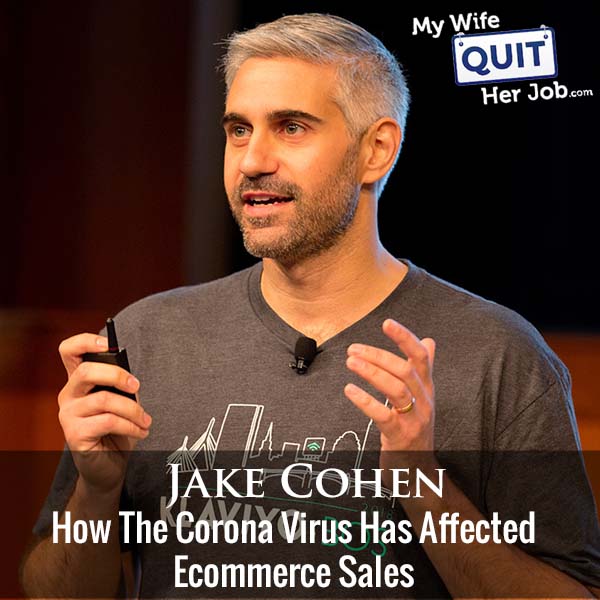
Ecommerce sales rose roughly 80% between January and April 2020, and the categories that grew were the ones people needed for a new life at home. Jake Cohen calls them new essentials: activewear, electronics, home improvement, health and beauty, housewares, office supplies, sporting goods, toys and hobbies, education, and telecommunications.
Jake is the product marketing lead at Klaviyo, and he ran a task force analyzing sales data across 32,600 stores plus thousands of brand and consumer survey responses through the early pandemic.
This episode covers which categories exploded and which collapsed, why advertising got cheap, the specific pivots that worked, and what a sudden shift to online buying does to consumer behavior long term.
Get My Free Mini Course On How To Start A Successful Ecommerce Store
If you are interested in starting an ecommerce business, I put together a comprehensive package of resources that will help you launch your own online store from complete scratch. Be sure to grab it before you leave!
Table of Contents
Key takeaways
- Ecommerce sales rose about 80% from January to April 2020 across Klaviyo’s customer base.
- Apparel went from below 2019 levels on March 15 to up over 100% within weeks.
- Maslow’s hierarchy predicted the category shifts. Food first, then belonging, esteem, and self-actualization.
- Over 50% of brands reported no supply chain problems, with only about 10% lacking inventory access.
- Ad costs collapsed as large brands pulled out, with some stores reporting 5%+ onsite conversion.
- Jewelry, automotive, and travel accessories were hit hardest.
- Recently unemployed consumers spent more on electronics than employed ones.
- Partnerships beat ad spend for struggling brands, with closed gyms rev-sharing with apparel companies.
How Klaviyo gathered the ecommerce data
The project started overnight with a Google form Jake posted on Twitter around March 17, asking brands what was happening with sales, supply chain, ad spend, and web traffic.
He got 150 responses overnight, which told him there was something worth building.
Brands responding asked for consumer sentiment data so they could plan, which spawned a parallel consumer survey.
That first batch also surfaced something surprising. A small number of brands were already exploding rather than contracting.
The effort expanded to include a senior data scientist analyzing sales data across 32,600 customers globally, alongside daily brand and consumer insights.
Why Maslow’s hierarchy predicted the category shifts
Abraham Maslow’s hierarchy of needs describes what people prioritize buying and in what order.
The base is food and water, then shelter and security, then belonging, then self-esteem, and only at the top self-actualization through creative pursuits and new experiences.
Categories beyond food started trending up in ways that initially looked strange. Office supplies, health and beauty, sporting goods.
The explanation is that a new environment created a new set of essentials. People confined to home for an extended period needed different things to satisfy the same hierarchy.
Which ecommerce categories grew during the shift
The new essentials list ran across ten categories.
Apparel and accessories, specifically activewear, because people were exercising at home. Electronics, because people needed home office equipment and entertainment.
Hardware and home improvement, health and beauty, housewares, home furnishings and garden.
Office supplies, specialty sporting goods, toys and hobbies, education, and telecommunications all trended above average.
Apparel is the clearest example of the shift over time. On March 15 apparel sales across all Klaviyo customers sat below their 2019 baseline, and within weeks they were up more than 100%.
Two forces drove that. People bought fitness apparel because they were working out more, and people bought clothing in anticipation of spring and summer outings they hoped to have.
Which ecommerce categories were hit hardest
Jewelry struggled, with more brands down than up.
The exception inside jewelry was bullion. Companies selling gold coins and bars spiked, which tracks with the monetary response at the time.
Automotive was clearly down, and travel accessories including luggage were down severely.
Jake’s framing matters here. Every category contained brands that were up and brands that were down, and a category being up means more of its companies were doing well rather than all of them.
Why supply chains held up better than expected
More than 50% of brands reported completely fine supply chains.
Only about 10% of respondents said they lacked access to their inventory.
China coming back online mattered for brands sourcing there, where the effect was delay rather than absence.
Domestic production also continued, since warehouses and fulfillment centers were classified essential in most states.
The consequence for brands that did sell out was customer loss. Consumers reported exploring more new brands, plausibly because their usual ones were unavailable.
Why advertising got cheaper during the demand spike
The counterintuitive trend was that customer acquisition became more cost-effective than ever.
Return on ad spend rose while CPMs and CPCs fell, because most large brands pulled out of the auction entirely.
Some brands reported onsite conversion rates above 5%, and April 16 was the single biggest day of that year for several of them.
The mechanism is attention. People unable to visit stores spent more time online, on social, and in email, either shopping for what they wanted or browsing for ideas.
Pre-sales performed unusually well in email, which suggests combining pre-sold items with cheap acquisition works when you are transparent about fulfillment timing.
How brands split on ad spend during the downturn
Roughly 25% of brands increased ad spend, about 25% kept it the same, and 15% to 20% stopped advertising entirely.
That split tracks the sales split, with one important asymmetry. Brands whose sales rose were not up modestly, they were up 300% to 1,000%.
Brands with falling sales mostly reduced ad spend out of cash flow concern rather than spending into the discount.
Their alternative was organic. Pushing traffic to their site directly, and trading lists or cross-promoting with other brands rather than burning cash on an uncertain timeline.
What pivots actually worked for struggling brands
Pistol Lake, a minimalist men’s apparel brand in LA, got hammered on March 15.
They wrote a plea to their customers asking anyone considering a purchase to make it now, which generated enough cash flow to avoid laying anyone off.
They then converted their factory entirely to masks and sold 3,000 units in a day.
Our own store took a similar route. We sell wedding handkerchiefs, and with weddings cancelled, my wife created a craft tutorial for turning a handkerchief into a mask.
We emailed customers offering a free handkerchief with any purchase alongside the instructions, and that campaign performed well for weeks. We then started sourcing contract sewers to make masks from our own intricate designs.
How brand partnerships replaced ad spend
The most effective pattern was a closed business monetizing its customer list.
A gym that had shut down approached a fitness apparel company, offering to promote their products to gym members in exchange for revenue share.
It functions as an ad hoc affiliate program, and it worked well for both sides.
The general principle is that many closed businesses have active customer bases still spending money, and many brands are trying to reach exactly those people. Local partnerships are where those two needs meet.
What consumers bought after losing their jobs
The counterintuitive finding from the consumer survey was that recently unemployed people spent more on electronics than employed people.
Part of that is practical. White collar workers who lose a job lose their work equipment, and need their own gear to interview.
Part of it is duration. People expecting to be home for months while companies froze hiring bought iPads, gaming consoles, and drones.
That seems to contradict Maslow until you account for sequence. The base needs were already stocked, so spending moved up the hierarchy toward entertainment and creative pursuits, which is why toys and hobbies rose.
How brands felt about their own futures
Sentiment tracked sales almost perfectly.
Brands with rising sales were optimistic. They did not expect the conditions to last forever, and they expected to come out with more customers than they started with.
Brands with falling sales reported nervousness, centered on duration, survival, paying staff, and keeping going.
Flat brands were mixed and mostly planned to stick it out without material cuts, trimming planned spending rather than cutting people.
What people wanted to avoid was consistent across all three groups. Jake had spent a quarter interviewing about 50 businesses asking how they would know they had made it, and the recurring answer was hiring great people, supporting them, and working creatively with them.
Seventy-one percent of survey respondents said they would consider themselves successful when sales rose again, and 17% named rehiring laid-off or furloughed workers.
What Wuhan’s reopening predicted about the recovery
Jake looked at China’s reopening for signal about how a return would actually unfold.
Wuhan relaxed restrictions around March 27, and within a week or two 92% of businesses were open while only 60% of employees returned to work.
That gap is the first clue. Permission to reopen does not produce everyone rushing back.
The surprising part was ecommerce. Sales across March into April rose well above February even as people were allowed out.
His explanation is new needs. Going out means seeing people, driving somewhere, visiting a beach, and each of those creates purchases, whether a gift, new clothing, or lodging.
Stores meanwhile do not welcome everyone back at once. Capacity limits like those in grocery stores meant demand kept routing to ecommerce even after restrictions eased.
Why the shift to ecommerce looked permanent
A deep dive on New York showed more people shopping online week over week, and spending more than before.
The question that raised was whether this functioned as an acceleration rather than a spike. More people learning to buy online, trying new categories, expanding what they purchase, and changing expectations about delivery times.
Jake’s projection was ecommerce reaching 22% to 24% of total retail sales, up from the mid teens.
The mechanism is habit formation. Once someone learns a new way to buy and finds it comfortable, the rainy-day decision shifts toward the computer rather than the store.
Jake Cohen’s three recommendations for ecommerce brands
First, ecommerce sales are up across nearly every category and will keep rising, so brands selling online are positioned well and should keep going.
Second, it is a good moment to spend on acquisition. As the economy opens, a flood of advertisers will return trying to drive people back to stores, and advertising will get expensive again.
The brands that succeed then are the ones with a large customer base they can reach through owned channels.
Third, brands with falling sales still have opportunities to connect with customers even without immediate sales.
Growing that base now pays dividends later, because you avoid competing for that attention when it costs far more.
The practical implication is spending to acquire at break-even or worse, on the expectation that those customers become profitable once conditions normalize.
Frequently asked questions
How much did ecommerce grow during the 2020 pandemic?
Roughly 80% between January and April 2020 across Klaviyo’s 32,600 customer stores, with apparel alone going from below 2019 levels to up over 100% within weeks.
What are new essentials in ecommerce?
Jake Cohen’s term for the categories people needed in a new home-bound life: activewear, electronics, home improvement, health and beauty, housewares, office supplies, sporting goods, toys and hobbies, education, and telecommunications.
Which ecommerce categories declined during covid?
Jewelry, automotive, and travel accessories including luggage. Bullion was the exception inside jewelry, spiking sharply as monetary policy loosened.
Why did Facebook ads get cheaper during the pandemic?
Large brands pulled out of the auction, which dropped CPMs and CPCs while consumer attention online increased. Some brands reported onsite conversion rates above 5%.
Should you keep advertising when sales are down?
Jake Cohen’s position is yes, even at break-even, because acquisition costs rise sharply once other advertisers return. The customer base you build now is what you sell to later.
How do struggling brands grow without ad spend?
Partnerships. A closed gym rev-sharing with a fitness apparel brand monetized its customer list, and that pattern works wherever a shut business has an active audience another brand wants.
Did supply chains break during the pandemic?
Less than expected. Over 50% of brands reported no problems, with roughly 10% lacking inventory access, since China recovered and warehouses were classified essential in most states.
Is the shift to online shopping permanent?
Largely. Jake Cohen projected ecommerce reaching 22% to 24% of total retail from the mid teens, because people who learn to buy online and find it comfortable keep doing it.