

Podcast: Download (Duration: 59:44 — 68.6MB)
The right place to start with paid advertising is retargeting, because if you cannot convert people who already visited your site, buying more traffic will not fix anything. Ilana Wechsler’s rule is that retargeting must be profitable before you spend meaningfully on cold traffic, and failure there means your offer, creative, or landing page is the problem.
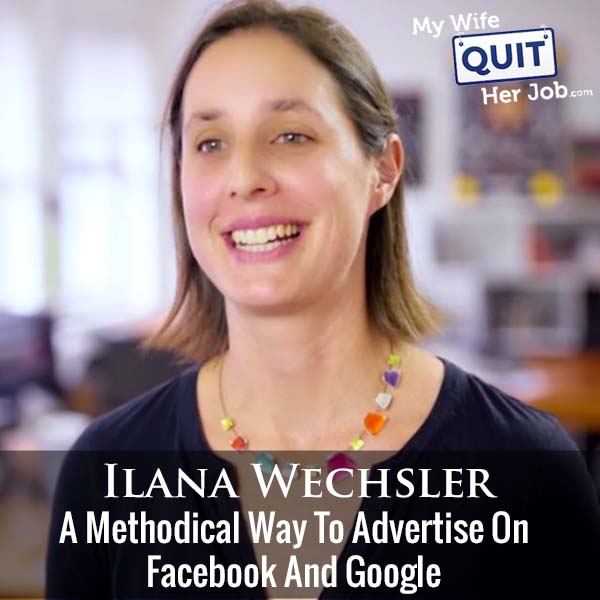
In this episode I spoke with Ilana Wechsler, who runs Green Arrow Digital and teaches business owners to run their own campaigns at Teach Traffic. She has audited hundreds of ad accounts and specializes in Google Ads.
Below is her full sequence: which corner to start in, how each campaign reveals the next one, the Google default settings that quietly waste money, and how to diagnose search campaigns that will not convert.
Get My Free Mini Course On How To Start A Successful Ecommerce Store
If you are interested in starting an ecommerce business, I put together a comprehensive package of resources that will help you launch your own online store from complete scratch. Be sure to grab it before you leave!
Table of Contents
Key takeaways
- Start with retargeting on every platform. If it will not convert, more traffic will not help.
- Search comes next, because intent removes the question of whether people want what you sell.
- Bid on broad keywords for retargeting audiences only to expand reach without wasting spend.
- Display placement reports show where your visitors go, which becomes your cold traffic targeting.
- Those same publications have social channels, which becomes your Facebook interest targeting.
- Google’s default settings actively waste money, including combining search with display.
- Automated bidding needs roughly 30 to 50 conversions in 30 days before it works.
- Google is far more stable than Facebook, which requires constant creative rotation.
Why retargeting is where you start
Ilana’s framework treats paid advertising like a jigsaw puzzle where you start with the corners.
The corners are retargeting on Google search, Google display, YouTube, and social.
The reason those are the corners is that each one reveals what the next piece should be, the same way corner pieces make the adjacent pieces findable.
The diagnostic value is what makes this the right starting point. If retargeting will not convert, the answer is never to buy more traffic.
Something else is broken. The offer, the creative, or the website’s ability to convert visitors.
Why to retarget on every platform rather than just social
Most business owners retarget only on Facebook and Instagram, which leaves most of the opportunity unused.
Ilana’s own example is shopping for a low-toxin cleaning product and being followed only by newsfeed and story ads afterward.
The missed placements were search, YouTube, and display advertising on the news sites she reads.
Reach is the practical argument. Google states its network reaches roughly 90% of US internet users.
There is also a behavioral case. Ilana periodically takes social media breaks for productivity reasons, and a brand retargeting only on social loses the conversation entirely during those periods.
Social does have one genuine advantage. People comment on and share ads, and will tag friends, which the Google network does not enable.
How to make YouTube retargeting work
Video retargeting should address the specific objection standing between the viewer and the purchase.
Ilana’s cleaning product example illustrates it. The objection in her head was whether a low-toxin product would actually clean a house with three young children in it.
The video that answers that shows a demonstration cutting through grease and grime.
Testimonials work as the other primary format, and video testimonials are the strongest available proof.
Her view on the production barrier is contrarian and correct. Barriers are good, because they keep competitors off the platform, and YouTube has effectively unlimited ad inventory.
When your retargeting is ready to scale
Retargeting campaigns should be profitable in aggregate before you move on.
Ilana’s experience is that retargeting can be made profitable for most businesses roughly nine times out of ten.
If it is not, the fixes are testing a different offer, segmenting audiences more tightly, and testing different creative.
For an unprofitable YouTube retargeting campaign specifically, the levers are lowering bids, delaying when retargeting starts, frequency capping so you stop bombarding the same people, and restricting to the device that actually converts.
View-through conversions matter here too. In-stream video interrupts someone watching something else, so immediate purchases are less likely than assisted ones.
Why search comes after retargeting
Search intent removes one variable from the diagnosis.
Someone typing a specific product name into Google has already told you they want it, which means a failure to convert is not a targeting problem.
That isolates the actual question. Can your product page do the work of converting cold traffic?
Ilana’s default is long-tail search terms, because they cost substantially less than broad category keywords.
The expectation is that these campaigns should also be profitable, and unprofitable early results are the cost of buying data rather than a reason to stop.
How to expand search reach using retargeting audiences
Bid on broad keywords you would never normally afford, restricted to people who have already visited your site.
The mechanism solves a real ceiling. Profitable long-tail keywords run out quickly, because you cannot make more people search a specific product name.
The setup is a search campaign targeting a broad category keyword with an audience restriction limiting it to your retargeting list.
Those people have already looked at your product and are still searching, which makes the broad keyword worth paying for in a way it is not for genuinely cold traffic.
How Google’s automated bidding actually works
Automated bidding adjusts your bid per person based on how likely Google thinks they are to convert.
Ilana’s illustration uses a kitchen product. A manual bid of one dollar applies equally to everyone, and Google knows which of two searchers actually does the cooking and makes the purchasing decisions.
So it bids fifty cents for the unlikely buyer and two dollars for the likely one, using browsing behavior you cannot see.
The prerequisite is data. Google states roughly 30 conversions in 30 days, and Ilana’s practical threshold is closer to 50.
That is why manual bidding comes first even when it is unprofitable. You are buying the data that makes automated bidding work.
The learning period varies. Some accounts turn around immediately, and two weeks is a reasonable expectation with fluctuation along the way.
Her broader recommendation on timelines is to run manual bidding for at least a month before switching, then give the automated version two to three weeks.
Why Google is more stable than Facebook
The maintenance burden differs substantially between the platforms.
Facebook produces days where results look excellent followed by days where the same campaign collapses with nothing changed.
Creative fatigue is constant. An ad performing well will simply die for no discernible reason and need replacing.
Google behaves differently. Once a campaign works it tends to stay working, across search, display, and YouTube.
Ilana describes accounts running on automated bidding that she does not touch, which is not a state Facebook campaigns reach.
The Google default settings that waste your money
Several defaults are set in ways that benefit Google rather than the advertiser.
Search and display combined is the most damaging. Those networks behave completely differently, with display click-through rates around 1% against roughly 5% for search, and combining them makes the averages meaningless.
Audience expansion on retargeting campaigns is newer and defaults to on, which means your retargeting campaign is not actually retargeting.
Mobile apps on display retargeting need turning off, because there are millions of apps and managing placements across them is unwinnable.
Location targeting defaults to people located in or interested in your target country, so targeting the US also reaches anyone abroad who is interested in it.
Match types are counterintuitive. Exact match is not genuinely exact, and phrase match behaves closer to what most people expect exact to mean.
Ilana’s read is that these are short-term revenue decisions, and the practical consequence is that advertisers who take the time to learn the platform gain an advantage.
How to diagnose search campaigns that will not convert
Ilana works through a specific sequence before concluding cold search is unprofitable.
Check search impression share first. At 100% you may be overpaying, and dropping bids by 5% increments can maintain that share at a lower cost per click.
Separate desktop from mobile into different campaigns, since they convert differently and warrant different targets.
Try automated bidding once you have enough conversion data.
Watch actual visitor behavior with heat mapping and screen recordings. One of her clients was losing sales because visitors kept clicking product images that were not clickable, and making them add to cart substantially increased revenue.
Read the search term report to confirm you are buying genuinely bottom-of-funnel traffic rather than assuming it.
Test different ads and offers throughout.
How display retargeting reveals your cold traffic targeting
The placement report tells you where your visitors go after they leave your site.
Ilana calls these digital footprints. Google reports every site where your banners appeared, which maps your audience’s browsing behavior.
Her home building client is the clearest example. Customers buying bricks, flooring, and roof tiles were also reading home decorating publications, because anyone buying those products is mid-renovation.
That insight becomes a placement campaign targeting those specific publications, reaching all their readers rather than only your retargeting list.
The logic holds because a large share of a decorating publication’s readership will eventually want the same products.
It is also a safe way to test display, since you are restricting Google to a handful of sites you chose deliberately.
Where to send display traffic
Display traffic should go to a pre-sell page rather than a product page.
Ilana’s benchmarks are around 1% click-through rate for display, and roughly 4% to 5% conversion on a lead generation offer.
Her home building client sent traffic to a style guide with nine color schemes, converting at about 8% on cold display traffic, followed by email marketing.
The measurement complication is real. Attribution has to account for the email revenue rather than the immediate conversion.
Display’s advantages are cost and branding. Cost per click is a fraction of search, you pay only for clicks rather than impressions, and the unclicked impressions produce free brand exposure.
That last part shows up as view-through conversions, where someone saw the ad, did not click, and converted through another channel.
Her position on counting those is that it depends on price point. Higher-priced products genuinely need multiple touch points, so the view-through deserves some credit.
How display insight feeds your social targeting
The publications you identified in the placement report have social media presences.
Once a placement campaign on those sites converts, you know their readership is your audience.
That means you can target the same publications’ followers on Facebook and Instagram, reaching those people while they scroll rather than waiting for them to read an article.
The same applies to YouTube, since those publications typically run channels too.
That connection is why Ilana frames this as a puzzle. Each campaign reveals the targeting for the next one, rather than each being an independent experiment.
Why this order lets you start small
The sequence lets you scale spend as you validate rather than committing budget upfront.
Retargeting costs perhaps five or ten dollars a day, because the audience is small by definition.
Ilana’s alternative description is layers of an onion, with retargeting at the core and each validated layer added on top.
The failure mode this avoids is spending several thousand dollars across many untested approaches simultaneously, then having no way to identify what worked.
One prerequisite before any of it: have your email, SMS, or messaging capture working, so traffic you pay for is recoverable.
Frequently asked questions
Where should you start with paid advertising?
Retargeting, on every platform rather than only social. If you cannot profitably convert people who already visited your site, buying more traffic will not fix it, and the problem is your offer, creative, or landing page.
How do you know when retargeting is working?
It should be profitable in aggregate. Ilana Wechsler’s experience is that retargeting can be made profitable for most businesses roughly nine times out of ten, so persistent losses indicate something else is wrong.
What comes after retargeting?
Search or shopping, because intent removes a variable. Someone typing your product into Google has confirmed they want it, so a failure to convert isolates whether your product page can do the work.
How do you expand reach on search campaigns?
Bid on broad category keywords restricted to your retargeting audience only. Profitable long-tail keywords run out quickly, and people who already viewed your product are worth the broad keyword price.
When can you use Google’s automated bidding?
After roughly 30 to 50 conversions in a 30 day window. Manual bidding first is how you buy the data, and the learning period after switching typically runs two to three weeks with fluctuation.
What Google settings waste money by default?
Search combined with display is the worst, since the networks behave completely differently. Audience expansion breaks retargeting, mobile apps should be off for display, and location targeting includes people merely interested in your country.
How do you find cold traffic targeting on the display network?
Read your display retargeting placement report. It shows every site where your banners appeared, which maps where your visitors go after leaving, and those publications become your placement targeting.
Where should display traffic go?
A pre-sell page rather than a product page. One of Ilana’s clients converted cold display traffic at roughly 8% to a style guide, with email marketing handling the sale afterward.