
Podcast: Download (Duration: 44:36 — 51.3MB)
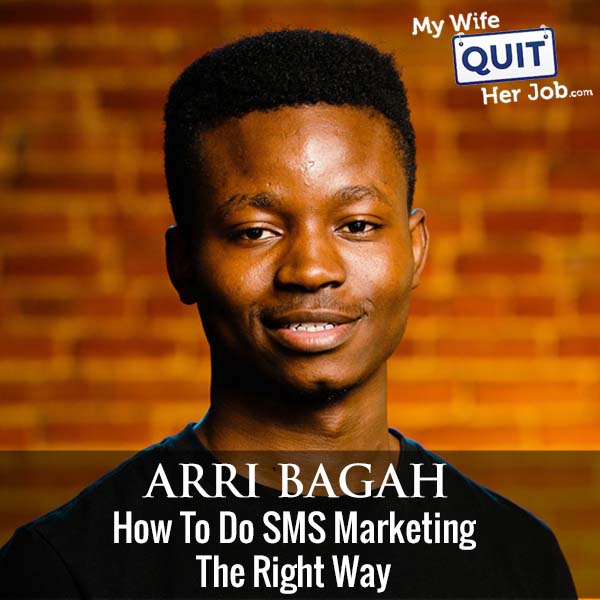
SMS marketing works for ecommerce when subscribers explicitly opt in and the messages deliver value rather than constant promotions. Arri Bagah took one brand’s unsubscribe rate from seven or eight percent down to one and a half percent by shifting from pure sales blasts to nurturing content with creative.
Arri founded Conversmart, which helps direct-to-consumer brands generate six figures per month with SMS, and was named top performing agency of the year by ManyChat.
This episode covers compliant opt-in mechanics, what content actually works over text, why short codes matter for deliverability, and how SMS fits alongside email and Messenger.
Get My Free Mini Course On How To Start A Successful Ecommerce Store
If you are interested in starting an ecommerce business, I put together a comprehensive package of resources that will help you launch your own online store from complete scratch. Be sure to grab it before you leave!
Table of Contents
Key takeaways
- Roughly 79% of consumers are open to receiving texts, and millennials open them within 90 seconds.
- Two-tap opt-in eliminates wrong numbers by having the customer send the confirming message themselves.
- Unsubscribe rates dropped from 7-8% to 1.5% by nurturing rather than only promoting.
- Short codes deliver far better than 10-digit long codes, which are not built for mass messaging.
- SMS on mobile, email on desktop. Roughly 63% of US ecommerce traffic is mobile.
- A 4,922-number list generated $89,401 over a five-day campaign.
- You cannot track opens on SMS, only clicks, conversions, and revenue.
- SMS is already pay-to-play at roughly a cent per message, with predictable costs.
Why SMS marketing has a bad reputation
The complaint most people have is receiving texts they never agreed to.
Arri’s diagnosis is that this is what the channel looked like when telemarketers bought phone numbers in bulk and texted strangers, which is exactly what the TCPA and CTIA regulations were written to stop.
The other bad pattern is quieter. A brand collects a phone number at checkout for shipping purposes, then starts marketing to it, or exports numbers from a form fill.
Companies do get into genuine legal trouble for that.
Who polices SMS spam
Telecom companies monitor messages sent through short codes.
Replying STOP should unsubscribe you automatically. If the messages continue, replying REPORT flags the sender to the carriers.
At volume, that produces enforcement. Carriers alert the sending platform when reports accumulate, and a brand generating enough of them gets shut down.
The individual remedy also exists. Recipients can sue for unwanted messages after attempting to unsubscribe, with statutory damages around $500 per message.
The FCC oversees this through the Telephone Consumer Protection Act, and the CTIA publishes the best practices implementing it.
How to collect SMS opt-ins compliantly
The principle is that the customer knows a text is coming before it arrives.
At checkout, that means a checkbox to receive offers by text rather than assuming the shipping number is fair game.
On site, a pop-up offering a discount works, since a customer entering their number for a coupon expects the coupon to arrive by text.
The pop-up needs legal language, and the first message must repeat it: the subscriber has opted into recurring messages and can reply STOP at any time.
Why two-tap opt-in beats typing a phone number
Arri uses two-tap nearly 100% of the time.
The customer taps a button on the pop-up, which opens their messaging app with a pre-filled text saying to send this message to receive the offer, and they hit send.
That solves two problems at once. The customer never types their number, so wrong numbers disappear, and the customer personally sent the confirming message, which is clean consent.
Desktop requires the typed alternative, where the customer enters a number and must reply to confirm before receiving anything. That confirmation step prevents texting a mistyped number belonging to someone else.
How SMS compares to Facebook Messenger
Facebook’s changes push brands toward paying through ads manager to reach subscribers outside the 24-hour window.
Arri’s agency was largely unaffected because they always used the paid route.
Their split is by funnel stage. Messenger is top of funnel for engaging cold audiences, running quiz experiences that recommend a product to people who have never heard of the brand.
SMS sits at middle and bottom of funnel, collecting subscribers who are already on the site and therefore already interested, then nurturing them or notifying them based on their behavior.
The ownership argument favors SMS. A Messenger list lives on Facebook, and an SMS list is yours.
Whether to ask for email or SMS first
Asking for all three channels at once produces low opt-in rates across the board.
Messenger comes off the website entirely in Arri’s approach, used only through Facebook ads connecting to a Messenger experience.
That leaves a device-based split. SMS on mobile traffic and email on desktop.
The mobile logic is proximity. The customer is already holding their phone, so texting the coupon is easier than making them open Gmail.
The traffic weighting makes that meaningful. About 63% of US ecommerce traffic is mobile, and many of the brands Arri works with see 80% or more.
Who actually responds to SMS marketing
Around 79% of consumers are open to receiving marketing texts.
Millennials open texts within about 90 seconds of receiving them.
Usage runs heavy across the full 18 to 55 range, and one brand serving a 45-plus demographic sees SMS perform particularly well.
Arri’s theory for the older demographic is prior exposure. Political campaigns from 2008 through 2016 used text messaging extensively, so those consumers already have a frame for receiving texts from an organization.
What to send in an ecommerce text message
The format constraint is roughly 160 to 200 characters, which is closer to a Messenger message than an email.
The content that works is value propositions in short bites. This product does this, so you get this result.
Creative changes the experience substantially. Adding GIFs and images that illustrate the product holds attention longer than plain text.
User-generated content performs well in that slot. Photos of real customers using the product, assembled into a GIF.
The mix leans toward content over offers, without an offer attached to every message.
How nurturing lowered the unsubscribe rate
The brand Arri inherited had been running SMS for a year with unsubscribe rates of seven to eight percent.
That is extremely high, and the cause was focusing every message on sales and promotions.
Shifting to nurturing content plus more creative brought it to one and a half percent, roughly comparable to a Messenger broadcast.
The rate moves with aggression. Heavier promotional calendars push it up, and Arri targets one and a half percent or less.
What a five-day SMS campaign produced
For 4Patriots, a large US survival food company, the content shows why customers should own the products rather than telling them to buy now.
The framing is readiness for whatever comes their way, demonstrated across products like flashlights with different use cases.
One campaign built a waitlist through a giveaway, reaching 4,922 phone numbers, which Arri describes as a small list.
Run over five days, that campaign generated $89,401.
The structure was value demonstration plus a call to action, with scarcity applied at the end rather than a hard sell throughout.
Which SMS flows to build first
Every pre-purchase and post-purchase flow you run over email translates to text within a conversational format.
Abandoned cart is the standout. Someone opted in, added to cart, and did not buy, and text reaches them directly to complete the purchase.
A welcome series works well spread across roughly two weeks, modeled on your email welcome sequence with much shorter content.
The underlying principle is the same as email. Work out where the customer is in their journey and send the right message at the right time.
Why you should not chase emails from SMS subscribers
Arri has not found a reliable way to automate collecting email addresses through text, and does not see the need.
The reason is open rate. SMS runs 98% to 99%, which is as high as any channel gets.
Ownership removes the usual fear. Unlike a Messenger list living on Facebook, an SMS list is yours, so there is no platform risk to hedge against.
The reverse migration is worth doing. Moving email subscribers onto text reaches them directly, rather than through a channel they open perhaps 20% of the time.
Why short codes matter for SMS deliverability
A long code is a standard 10-digit phone number, and a short code is a five or six digit number.
Long codes have poor deliverability because they were never built for mass messaging.
Short codes exist specifically for it. Sending to a hundred thousand people gives you a far higher chance of actually reaching them through a short code.
The hidden failure mode is worse than the volume issue. Some platforms have poor deliverability and report messages as bounced numbers rather than as their own delivery failure, so you never learn the texts did not arrive.
What you can and cannot track in SMS
Open rates are not trackable on SMS.
Click-through rate is, provided your platform supplies URL tracking.
From there you can attribute conversion rate and revenue for people who clicked through to the site.
Which SMS platform to use for ecommerce
For Shopify stores, Arri recommends Postscript as a purpose-built standalone SMS platform.
For Magento, BigCommerce, or WooCommerce, Attentive is the equivalent option.
Both handle the full set: pre-purchase and post-purchase flows, welcome series, abandoned cart, and pop-ups.
Installing on Shopify syncs product data automatically, which powers product-specific segmentation and segmentation by how subscribers have previously engaged with your texts.
Whether to use Klaviyo’s built-in SMS
Klaviyo added SMS, and managing email and text in one platform is genuinely appealing.
Arri’s reservation is feature depth. Adding a text step inside an existing flow is limited compared to a dedicated platform’s campaign tools, segmentation, list management, and tracking.
Integrations are the other gap, including connecting to alternative checkouts or other apps you want driving text.
His analogy is Shopify launching its own email tool. It will be simpler than Klaviyo, so marketers who want advanced capability go to the specialist.
He is not opposed to consolidation. If Klaviyo builds something equivalent to a full standalone SMS platform, that becomes the right choice.
Why SMS costs are more predictable than Messenger
SMS is already pay-to-play in a straightforward way.
Texting a thousand people costs roughly $30 to $60 depending on the platform, at approximately a cent per message.
The advantage is knowing that cost upfront. You know exactly what reaching a thousand people costs before you send.
Messenger offers less certainty. You do not know how many people you will reach, when they will receive it, or whether they will receive it at all.
Frequently asked questions
Is SMS marketing legal for ecommerce?
Yes, with explicit opt-in. The TCPA and CTIA rules require subscribers to knowingly consent, and the first message must state that they opted into recurring messages and can reply STOP.
How do you get SMS subscribers?
A pop-up offering a discount, using two-tap opt-in on mobile so the customer’s own messaging app sends the confirming text. On desktop, they type a number and must reply to confirm.
What should you send in marketing texts?
Value propositions in short bites explaining what the product does and what result it produces, paired with GIFs, images, or user-generated content. Mix nurturing content with occasional offers.
What is a good SMS unsubscribe rate?
One and a half percent or less. Arri Bagah reduced one brand from seven or eight percent to that level by shifting from constant promotions to nurturing content plus creative.
What is the difference between a short code and a long code?
A short code is a five or six digit sending number built for mass messaging, and a long code is a standard 10-digit number with substantially worse deliverability at volume.
Should you use SMS or email?
Both, split by device. SMS on mobile traffic since the customer is already on their phone, and email on desktop, given that roughly 63% of US ecommerce traffic is mobile.
Can you track opens on SMS?
No. Open rates are not available, though click-through rate, conversion rate, and attributed revenue are trackable when your platform provides URL tracking.
How much does SMS marketing cost?
Roughly a cent per message, so about $30 to $60 to reach a thousand subscribers depending on platform, which makes the cost of any send predictable in advance.