
Podcast: Download (Duration: 53:55 — 62.0MB)
To get your product featured in magazines for free, find the editor who wrote a similar gift guide last year, email them a four-paragraph pitch with an embedded lifestyle photo, and follow up once a week later. Expect a 1-5% response rate on the first email and 5-10% on the follow-up, which means 100 pitches produces roughly five to ten features.
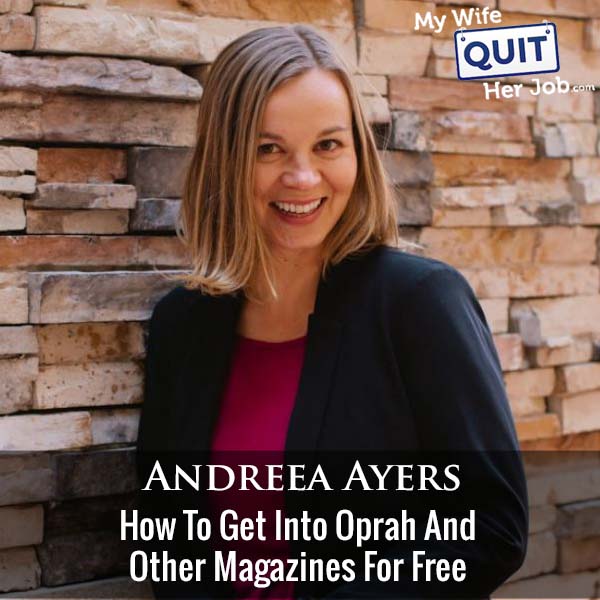
In this episode I sat down with Andreea Ayers of Launch Grow Joy, who got her own t-shirt and soap businesses into more than 200 magazines, newspapers, and TV shows before selling them. We used her service years ago to get Bumblebee Linens into Brides, Martha Stewart Weddings, and Real Simple.
Below is the complete system: how to categorize your product into eight different gift guide themes, how to find editor contact information for free, the exact four-paragraph pitch structure, subject lines that get opened, the annual pitching calendar, and honest numbers on what different publications actually produce in sales.
Get My Free Mini Course On How To Start A Successful Ecommerce Store
If you are interested in starting an ecommerce business, I put together a comprehensive package of resources that will help you launch your own online store from complete scratch. Be sure to grab it before you leave!
Table of Contents
Key takeaways
- Response rates are 1-5% on first contact, 5-10% on follow-up. Most features come from the follow-up email, not the original pitch.
- Editors publish their own contact info. Check the byline on last year’s gift guide, then their bio page.
- One Oprah feature produced $2 million in sales for a client. Results vary enormously by publication size.
- Categorize your product into 8+ gift guide themes. Gifts under $50, eco-friendly gifts, gifts for men, gifts that give back, and so on.
- Embed a lifestyle photo, never attach it. Colorful and bright outperforms clean product shots.
- National magazines pitch June-August for holiday. Online media pitches October-November for the same season.
- Have 4-5x your normal inventory before pitching big publications. Selling out makes you look bad and kills future features.
- Start with assistant and associate editors. They receive fewer pitches than senior editors.
Is getting into print magazines still worth it?
Getting into print magazines is still worth it, and the bigger opportunity has shifted online. Many print magazines have shut down or reduced frequency, and the survivors publish new stories on their websites daily, which means far more slots available.
Print retains one real advantage: scarcity. An editor’s-picks section in a print magazine might feature five or six products total, so your product genuinely stands out. The equivalent online article might list a hundred products.
Almost all print articles get republished on the magazine’s website, so a print placement typically gets you both. The reverse is not true, which is why pitching both channels makes sense.
What magazine features actually produce in sales
Magazine feature results range from $2 million down to zero, and the variance is driven mostly by circulation. One client with a product in Oprah magazine did over $2 million in sales from that single feature.
Mid-tier results: a client featured across Ladies’ Home Journal, Real Simple, and Martha Stewart saw about $20,000 in sales. Regional publications like Time Out New York produced a few hundred dollars for some clients and nothing at all for others.
For Bumblebee Linens, our Today Show appearance produced 7x our normal daily orders for three days, then a second wave when the segment got syndicated elsewhere.
Attribution works by watching for anomalies. When daily sales jump well outside your normal range, a magazine has just hit newsstands or mailboxes. Customers also tell you directly, often emailing with questions before buying and mentioning where they saw you.
Why online features matter even without direct sales
Online features matter even when they produce no direct sales because of the SEO value. Backlinks from magazine websites carry real authority, and the brand impressions compound.
Buyers typically need to encounter a brand seven or eight times before purchasing. Seeing your product in Organic Spa Magazine, then again on Refinery29, builds the familiarity that eventually converts, even though neither placement gets credited with the sale.
The practical implication: judge online placements on link quality and audience relevance rather than immediate revenue. If you want direct sales from an online feature, target sites with at least 10,000 to 20,000 monthly visitors.
What kinds of products get featured in magazines?
Products with mass consumer appeal get featured most easily. Water bottles, food products, baby and kids items, and anything a large general audience would plausibly use are the easiest sells to a national editor.
Niche products still get press, and the addressable publication list shrinks proportionally. A product designed specifically for children with allergies serves a subset of a mass market, so it works with a smaller pool of outlets. A goth-styled jewelry line has a handful of relevant publications, which means self-directed research rather than a broad database.
The test: would millions of people plausibly use this? If yes, mass-market publicity is viable. If no, you are looking for the specific outlets serving your subculture.
Even seemingly boring categories qualify with the right angle. Office supplies are not obviously press-worthy, and an office chair that alleviates back pain or a planning system that reduces stress absolutely is.
The 8 gift guide themes every product fits into
Every product fits into at least eight different gift guide themes, and identifying them all is the first step of any holiday pitching campaign. Magazines organize gift guides by theme, so each theme is a separate pitching opportunity to the same publication.
Andreea’s t-shirt business mapped to eight themes from a single product line:
- Gifts that give back (they donated per shirt sold)
- Eco-friendly gifts (bamboo fabric)
- Gifts for everybody on your list (universal applicability)
- Gifts for men (men’s line)
- Gifts for babies and kids (kids’ line)
- Gifts for women (women’s line)
- Affordable gifts
- Gifts under $50
Most business owners assume they have one angle. Working through the theme list systematically usually produces eight or more.
How to find magazine editor contact information for free
Find magazine editor contact information for free by locating a similar article the publication ran previously, checking the byline, and following the link to the writer’s bio page. Business Insider, Mashable, and many others publish editor email addresses directly on those bio pages.
When the email is not listed, the byline still gives you a name, which you can then find on LinkedIn or through a media database.
To find the relevant articles in the first place, Google the exact gift guide format you want to be in (“gifts for women under $50”) and see which publications ran that guide previously. If they ran it last year, they will almost certainly run a version of it again.
For discovering publications in your niche, Magzter and Amazon’s magazine category listings both give you comprehensive lists by topic.
The 4-paragraph pitch structure that works
The pitch that works is four paragraphs of two to three sentences each, framed entirely around what the editor needs rather than how good your product is.
- Why you are writing. “I know you’re working on a holiday gift guide for XYZ Magazine, and I’d love to introduce my product.” State the specific placement you want. Do not open with “we just launched a new collection.”
- Why it fits their readers. “I know your readers are busy moms. Here are two reasons this would work for them.” Keep the focus on their audience, not your features.
- Price and where to buy. “Our baby blankets range from $20 to $60 and are available at [website].” Include your Amazon store link if relevant.
- Offer a sample and connect. “If you’d like a sample, let me know which color and I’ll send it right out.”
Only the first paragraph needs personalizing. The rest can be reused across pitches within the same category, adjusted when the audience genuinely differs (do not pitch a men’s watch to a parenting magazine using the same benefits copy).
Embed a photo in the email body rather than attaching it. Attachments do not get opened. Lifestyle shots outperform plain product shots, especially for products that photograph flat, and bright colorful images outperform muted ones.
Subject lines that get magazine pitches opened
The subject line determines whether your pitch gets opened, and the most effective ones are short, specific to their publication, and hint at the placement without over-explaining.
Formats that work:
- “For your holiday gift guide in Oprah Magazine”
- “Product for your Valentine’s Day gift guide in Glamour”
- “The best face wash after the beach” (when you know their topic)
- “Quick question” (genuinely effective, use sparingly)
For follow-ups, signal that you have written before: “Following up regarding your gift guide” or “Checking in about your Mother’s Day gift guide.” That framing creates appropriate urgency.
Leave your brand name out of the subject line. Editors do not know your brand yet, so it gives them no reason to open. The placement and the benefit are what earn the click.
The magazine pitching calendar: when to pitch what
National print magazines work three to six months ahead, so holiday gift guides are pitched June through August. Online media works on much shorter lead times, pitching the same holiday content in October and November.
That gap is the single most common reason a good pitch fails. Andreea’s framing: publicity is pitching the right person with the right product at the right time. A perfect product pitched two days after a gift guide closed simply does not make it.
The practical approach is a standing annual schedule. January for Valentine’s Day online media, February for summer features in national magazines, and so on. Knowing your theme before you sit down removes most of the friction.
What response rate to expect from magazine pitches
Expect a 1-5% response rate on your initial pitch and 5-10% on your follow-up. One hundred pitches produces roughly five to ten features, and most of those come from the follow-up rather than the original email.
This is where most people quit. Sending 20 emails and hearing nothing is a normal outcome, not evidence that the approach fails. The volume has to be higher.
Follow up about a week after the initial pitch. Andreea’s practice is two attempts per campaign, then waiting a month or two before pitching the same publication with a different angle, often to a different editor.
Which editor should you pitch at a large magazine?
Start with the assistant or associate editor rather than the senior editor, because junior editors receive substantially fewer pitches and pitch less often themselves.
At a large publication you can work through several people over time: assistant editor, associate editor, lifestyle editor, senior editor. Each is a legitimate separate contact, and rotating targets across months is normal practice rather than spam.
Persistence pays on your top-priority publications. Andreea pitched Shape Magazine roughly monthly for nine months, rotating editors and angles, before getting in.
How much inventory you need before pitching big publications
Have four to five times your normal inventory on hand before a large publication runs your feature. If you typically carry $2,000 in stock, you want $10,000 to $20,000 before an Oprah-scale placement goes live.
Selling out is genuinely damaging. Readers who arrive to find no stock get frustrated, and the publication will not feature you again. The largest outlets know this and will often tell you directly, sometimes requiring 5,000 units on hand as a condition of the feature.
You do not need that inventory at the pitching stage, only once a feature is confirmed. That gap gives you time to order.
Is HARO worth using for product PR?
HARO works and it is a poor use of a founder’s time. The leads are real, and each request generates hundreds of responses, so competition is extreme and editors often do not read past the first twenty replies.
The volume problem cuts both ways. Sifting HARO daily for the few requests relevant to your product consumes substantial time for a low hit rate.
If you have an assistant, HARO is a reasonable delegated task: check daily, pitch anything relevant. As a founder doing your own PR, the fixed-editor approach (same list, repeated over time, with a pitching calendar) generally produces better returns per hour.
Frequently asked questions
How do you get your product featured in a magazine?
Find the editor who wrote a similar gift guide previously via the article byline, get their email from their bio page or LinkedIn, and send a four-paragraph pitch with an embedded lifestyle photo. Follow up once about a week later. Expect roughly five to ten features per hundred pitches sent.
What response rate should you expect from magazine pitches?
One to five percent on the initial email and five to ten percent on the follow-up. Most features come from the follow-up rather than the original pitch, so following up is essential. Sending 20 emails and hearing nothing is normal, not a sign the approach failed.
How much do magazine features actually generate in sales?
It varies enormously by circulation. One Oprah feature produced over $2 million for a client. A combination of Ladies’ Home Journal, Real Simple, and Martha Stewart produced about $20,000 for another. Regional publications often produce a few hundred dollars or nothing.
When should you pitch magazines for holiday gift guides?
National print magazines pitch June through August for holiday gift guides. Online media works on shorter lead times and pitches the same content in October and November. Pitching at the wrong time is the most common reason a good pitch fails.
How much inventory do you need before a big magazine feature?
Four to five times your normal inventory. If you carry $2,000 in stock, aim for $10,000 to $20,000 before a large feature runs. Selling out frustrates readers and means the publication will not feature you again. Major outlets sometimes require 5,000 units on hand as a condition.
Should you pitch senior editors or junior editors?
Start with assistant and associate editors. They receive far fewer pitches than senior editors and are more likely to respond. At a large publication you can work through several editors over months, rotating angles and contacts, which is normal practice.
Is HARO good for getting press for a product?
HARO generates real leads and is a poor use of a founder’s time. Each request receives hundreds of responses and editors often stop reading after the first twenty. It works better as a delegated daily task for an assistant than as a primary founder-led PR channel.