

Podcast: Download (Duration: 47:37 — 54.8MB)
Scaling Facebook ads comes down to finding the angle that connects a product to something the customer already cares about. David Herrmann took a children’s book brand whose ads described what the book was, replaced the copy with a question about Disney princesses, and scaled the brand to selling out its bundle repeatedly.
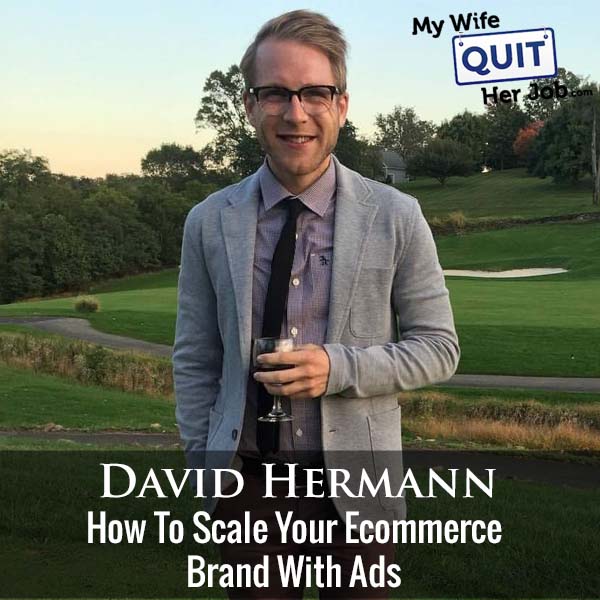
In this episode I spoke with David Herrmann of Herrmann Digital, who has personally managed over $100 million in ad spend across Facebook, Instagram, Snapchat, Pinterest, and YouTube.
Below is everything: how he finds ad angles, the ROAS targets that hold at scale, why he films creative on a phone, which products he refuses to work with, and where he disagrees with Facebook’s automation guidance.
Get My Free Mini Course On How To Start A Successful Ecommerce Store
If you are interested in starting an ecommerce business, I put together a comprehensive package of resources that will help you launch your own online store from complete scratch. Be sure to grab it before you leave!
Table of Contents
Key takeaways
- The angle matters more than the product description. One question outperformed a feature list entirely.
- Target 1.4x to 1.8x on cold traffic and 3x to 4x on retargeting, split roughly 70/30.
- Two or three creatives per test, because more options dilute what the algorithm can learn.
- Film on a phone. Almost none of his creative is professionally produced.
- Under $49 average order value is very difficult without strong retention behind it.
- Skip saturated categories like wallets and sunglasses where established brands own the space.
- Know your actual breakeven ROAS. Plenty of sellers think it is 1x when it is 1.5x.
- Automation works with a caveat. Knowing your customer beats letting the platform decide.
How to find the angle that makes an ad work
The children’s book brand is the clearest example of an angle transforming a campaign.
The product is a five-part hardcover series about women from the Old Testament, aimed at girls aged roughly four to ten, illustrated by former Disney animators.
The previous agency was a television commercial company. Their ads used long horizontal formats with catalog-style product photos on white backgrounds.
The copy described the product. Three sentences explaining what the book was and what it contained.
David’s diagnosis was that nobody connects with that, because they do not know the story yet.
The replacement copy asked a question instead: how many Disney princesses can your daughter name, and how many women of the Bible can she name?
The angle came from a real connection. The books were illustrated by Disney animators, and Disney kept surfacing in conversations with the author about what she was trying to accomplish.
How to develop ad angles with a client
The angle comes out of genuinely understanding what the founder is trying to accomplish.
David’s process is relationship-driven rather than formulaic. The author was open about her goals, and Disney emerged from those conversations.
His current examples show the same pattern applied to circumstances. Ads about being stuck indoors performed well across many brands during that period, because it was what people were actually thinking about.
A shoe brand ad he shot illustrates the mechanics. His fiancée putting on shoes on the couch, walking around the house and down the stairs, frozen right before stepping onto the welcome mat, with the line that you can still look cute indoors.
The hook is what carries it, and the product is what the hook happens to be about.
What top of funnel creative should contain
David’s top of funnel mix is user-generated content, testimonials, and some product education.
The reason for that mix is that it should feel native to a Facebook feed or Instagram story rather than like an ad.
His framing is that it should feel like someone down the street shot the video and is telling you about it.
Every ad also needs an angle or hook, whether that is a cultural connection like the Disney comparison or a problem people are currently experiencing.
Production value is deliberately low. He films on a phone, and almost nothing he runs is professionally produced.
The ROAS targets that hold at scale
David splits budget roughly 70/30 between prospecting and retargeting.
His cold traffic target is at least 1.5x return on ad spend, with the book brand running between 1.4x and 1.8x.
Retargeting is where the margin sits. He expects 3x to 4x there, which is what makes the cold traffic economics work.
His honest note on the historical comparison is that 3x or 4x on cold traffic simply does not happen anymore without substantial other traffic reaching the site.
The critical prerequisite is knowing your genuine breakeven. Plenty of sellers assume 1x on Facebook makes them profitable, and running the actual cost of goods often reveals the real number is closer to 1.5x.
How many creatives to test at once
Two or three creatives per test, not five or ten.
The reasoning is about the algorithm rather than about workload. Giving the system too many options prevents it from making a clear decision.
The three variables to test are the video or photo, the headline, and the copy above the ad.
David pays most attention to the headline, since it displays in bold and carries the hook.
How long to run an ad before killing it
The answer depends on average order value rather than on a fixed schedule.
Some brands he can judge within a couple of days, and others need three to four days minimum.
Higher AOV extends the window substantially. A brand with a $350 average order value gets fourteen days or more before he makes decisions, because the purchase cycle is genuinely longer.
Why under $49 is difficult on Facebook
Acquisition costs make low-priced products hard to run profitably on paid social.
David’s rough threshold is that products under $49 face a real struggle, since achieving $10 to $15 customer acquisition costs on Facebook is difficult.
The exception is retention. Strong email flows, genuine repeat purchase, and a well-honed product line change the calculation entirely.
The book brand handled this by never promoting individual $14.99 books. Only the $59.99 bundle was ever advertised, because the single-book economics did not work.
Which products David Herrmann refuses to work with
He avoids categories where established brands already own the space.
His examples are wallets, sunglasses, and phone cases. Not because the products are bad, but because the incumbents in those categories are genuinely good at what they do.
His reasoning is practical rather than defeatist. Competing against a company that has spent years building a category-defining product is a losing position to take on.
What he looks for instead is shifted demand. During the period we spoke, that meant household essentials people suddenly needed and could not get from a professional.
His example was unclogging a sink, on the reasoning that people cannot call a plumber right now and will be looking for the products themselves.
Why the client relationship matters as much as the product
David selects projects on the people as much as on the opportunity.
His stated reason is that this is a relationship, and difficult periods require someone willing to work with you rather than someone who leaves after one unprofitable week.
He also gravitates toward hard problems, on the honest admission that easy projects bore him.
His pricing model reflects the same thinking. He moved to retainers with bonuses tied to revenue goals, rather than percentage of ad spend.
The reason is incentive alignment. Percentage-of-spend billing produces large invoices during periods when the client most needs certainty about the return.
He also has no website and takes clients entirely through referral, on the view that anyone who cannot find him through his existing presence is not a fit.
What to do when you exhaust the obvious audience
The book brand scaled hard enough to sell out repeatedly and then hit a ceiling.
The audience is narrow by construction. Faith-based households, across several specific religious groups, who also have girls aged four to ten.
Rising acquisition costs are the expected consequence of exhausting the lowest hanging fruit in an audience that size.
Their response was branded content with relevant creators. One partnership with a family-friendly variety show reaching over a million followers ran roughly $25,000 to $30,000 in spend against their video with strong results.
The other lever is shifting focus seasonally. During slower months they pull back on prospecting, run retargeting, and use branded content to pick up new audience.
Product expansion carries the rest. A homeschooling series and other digital products create margin that physical books at that price point cannot.
Why wholesale is an overlooked channel for niche products
A niche product that works on Facebook often has wholesale demand nobody is pursuing.
David’s observation is that wholesalers actively want to stock niche products for their stores, and reach out once they discover a brand.
The advertising implication is that you can target them directly. Running LinkedIn ads at small gift shop owners is a channel some jewelry companies build entire businesses around.
The general point is that Facebook ads are one channel rather than the whole strategy, and a niche product frequently has options beyond direct to consumer.
Where David Herrmann disagrees with Facebook’s automation guidance
Facebook pushes advertisers toward automation across campaign structure, placements, creative testing, and bidding.
David uses elements of it and declines to adopt it fully.
His objection is specific and data-driven. For the book brand, Facebook consistently serves ads into video feeds, and he can demonstrate that placement loses money every time.
His explanation is about the customer. The typical buyer is a grandparent over fifty buying for a granddaughter, watching news videos on Facebook, and not clicking away from a video into a purchase.
The audience side shows the same pattern. Facebook’s guidance is to go broad, and his best performing audience on one account is a 2% lookalike.
His balanced position is that automation works well when paired with genuinely knowing your customer, and that advertisers without that knowledge are probably better served by letting the platform decide while they focus on improving creative.
How the other ad platforms compare
David runs ads across several platforms beyond Facebook.
On Snapchat, the distinction that matters is placement. Snap ads sit between stories and behave like Instagram stories, so anything performing there is worth testing. Discover placements function more like an editorial feed and allow a longer story.
His recommendation is direct: if an ad is working on Instagram stories, test it on Snapchat.
On Pinterest, the platform requires playing long. You should be running ads now for things happening months from now, because that is when people are planning.
Pinterest is also far more image-driven than the other platforms.
My own experience in the wedding industry matches that. People pin things they intend to buy eventually, which produces a genuinely long gap between the pin and the purchase.
Frequently asked questions
What ROAS should you target on Facebook?
David Herrmann targets 1.4x to 1.8x on cold traffic and 3x to 4x on retargeting, splitting budget roughly 70/30. Achieving 3x or 4x on cold traffic no longer happens without substantial other traffic reaching the site.
How many creatives should you test at once?
Two or three. More options dilute what the algorithm can learn, which prevents it from making a clear decision. The three variables to vary are the image or video, the headline, and the copy above the ad.
Does Facebook ad creative need to look professional?
No. David films almost everything on a phone, because top of funnel creative should feel native to a feed rather than like an advertisement. The goal is looking like someone down the street shot it.
What is the minimum product price for Facebook ads?
Roughly $49 is where it gets difficult, since $10 to $15 acquisition costs are hard to achieve on Facebook. Strong retention and repeat purchase change the calculation, and a single low-priced item generally will not work.
How do you find a good ad angle?
Connect the product to something the customer already cares about. A children’s book brand replaced feature descriptions with a question comparing how many Disney princesses a daughter can name versus women of the Bible.
How long should you run an ad before deciding?
It depends on average order value. Some brands can be judged in a couple of days, and a $350 AOV brand gets fourteen days or more because the purchase cycle is genuinely longer.
Should you use Facebook’s automation features?
Partially. David uses elements and declines full adoption, because he can demonstrate specific placements lose money for specific brands. Automation suits advertisers who do not know their customer well enough to override it.
Which product categories should you avoid?
Saturated ones where established brands already own the space, like wallets, sunglasses, and phone cases. The incumbents in those categories are genuinely good, which makes competing on advertising alone a losing position.

