
Podcast: Download (Duration: 1:02:41 — 72.0MB)
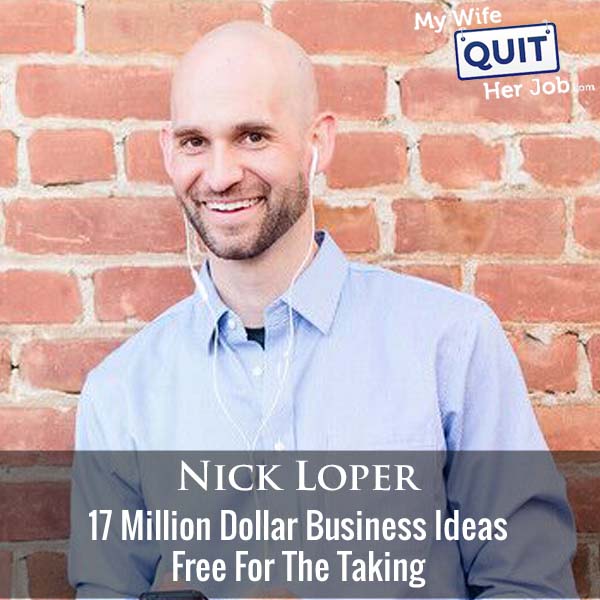
Every founder who has ever asked “what business should I start?” is really asking the wrong question. The right question is “what everyday problem in my life would people pay me to solve?” and the honest answer is usually sitting in your kitchen, garage, or browser history right now. In this episode I brainstorm 17 million dollar business ideas with my friend Nick Loper, host of the Side Hustle Nation podcast, and every idea on the list came out of a real irritation one of us had this year.
Nick and I both spend our workweeks talking to founders who are stuck at the “what should I start?” stage. So we cracked open our own pain-point lists and traded ideas across e-commerce, affiliate, SaaS, marketplaces, services, and prep-for-a-worst-case scenarios.
Steal any of them. We do not want royalties, we want to see one of these built.
Below are all 17 ideas with the pain point behind each one, plus how you would validate and price the first version.
Get My Free Mini Course On How To Start A Successful Ecommerce Store
If you are interested in starting an ecommerce business, I put together a comprehensive package of resources that will help you launch your own online store from complete scratch. Be sure to grab it before you leave!
Table of Contents
Key takeaways
- The best business ideas come from your own everyday frustrations, not from brainstorming in the abstract.
- Two-sided marketplaces are the hardest to launch; niche and geo-focused productized services are the easiest.
- You can validate almost every idea on this list with a one-page pitch and a paying customer before writing a line of code.
- Affiliate content sites remain highly viable in furniture, home, and comparison niches with real search intent.
- Home maintenance, kid coaching, wellness, and preparedness are underserved consumer verticals with real willingness to pay.
- The best filter for any idea: would you personally pay for the first version at the price you plan to charge?
Idea 1: A verified working coupon codes site for online shoppers
A verified coupon codes site would rank for “[store name] promo code” searches and only publish codes that actually work at checkout. Every existing coupon site (RetailMeNot, Coupon Cabin, Honey) is optimized to fire an affiliate cookie on the last click, not to hand you a code that works. Shoppers get 20 pages of expired garbage.
The winning angle is niche-first. Pick a single vertical (web hosting, beauty, apparel) and dominate real coupon coverage there. Google increasingly rewards sites that actually deliver on the headline.
My own workaround at Bumblebee Linens is a dedicated coupon page for our store that ranks number one for our brand’s coupon queries and lists only real, current codes. It solves the frustration and captures the traffic that would otherwise leak.
Idea 2: A WordPress and Shopify plugin cleanup service
Uninstalling a WordPress or Shopify plugin often leaves behind code, database entries, and tracking snippets that can quietly send data to third parties long after the plugin is gone. A cleanup service that audits your site for orphaned plugin data would be an easy sell to any founder who has ever tried a “free” plugin and gotten burned.
Two recent students in my e-commerce class hit exactly this issue. Some plugins are deliberately malicious about leaving hooks in place because that data is monetizable. A trusted cleanup service, sold as a monthly retainer or a one-time audit, would compete with almost nothing today.
Idea 3: A furniture affiliate site comparing high-end brands to affordable dupes
An affiliate site that pairs Pottery Barn, Crate & Barrel, and West Elm items with visually similar, cheaper alternatives at IKEA, Wayfair, and Target would rake in Pinterest and long-tail SEO traffic. Nick came up with this after his wife started shopping for higher-end furniture and he wanted the same look without the “we have young kids and everything gets destroyed” risk.
Affiliate commissions on premium home brands are typically 1 to 5 percent, but ticket sizes ($800 to $2,000 items) make the model work. A $1,500 couch at 3 percent is $45 per sale, and Pinterest can drive volume for evergreen home content.
Bonus insider tip: the actual manufacturers that make furniture for the big premium brands (many in North Carolina) sometimes sell the same pieces unbranded direct to consumers at a fraction of the price. Lead time can run six to eight weeks, but the products are identical. An affiliate site could rank for exactly that intent.
Idea 4: A college admissions planning app to replace $12,000 consultants
A self-serve web app that tells high schoolers which classes and extracurriculars to take based on their target college and intended major would replace consultants who charge $12,000 a year across freshman, sophomore, and junior year. That is $36,000 to $48,000 per kid, and in Bay Area school districts almost every family in my daughter’s peer group has hired one.
The MVP is a database of college programs, admissions patterns, and recommended coursework paths. A student enters their high school, their target school (say University of Washington), and their major (biology). The app spits out the class-by-class plan and the extracurricular focus that historically aligns with getting in.
Our friend Dr. Ryan Gray already runs an equivalent app for medical school prerequisites at medicalschoolhq.net. There is clearly demand and clearly a working model there.
Nobody has built the general undergrad version yet.
Idea 5: A “SimilarWeb for podcasts” analytics platform
The podcast industry is starved for the third-party analytics data that every website owner takes for granted. Anyone can pull a SimilarWeb or Ahrefs estimate for a website. Nobody can pull an estimated download count, listener demographic, or engagement score for a podcast without asking the host directly.
Nick’s pain point is guest vetting. Before he agrees to appear on a show, he wants to know whether it has published 25 or 50 episodes, whether the reviews are engaged, whether it has a real website, and whether the audience overlaps with his. A centralized analytics service would solve this instantly for guests, sponsors, and podcasters trying to arrange promo swaps.
I have been podcasting for eight years and this data is still opaque. The addressable market includes every advertiser, every guest, every host, and every network.
Someone will build it eventually. The technical hurdle is aggregating listener data across a fragmented ecosystem of hosting and playback apps.
Idea 6: An automated podcast promo swap marketplace
An automated marketplace where podcasters can barter host-read promos with shows of similar size would remove the friction from the current process. You upload your promo audio, set your download count, and match with a peer host who reads yours in exchange for you reading theirs. Payment optional.
Audrey.io (spelled AUDRY) is attempting something adjacent already, verifying show sizes and letting you buy promo placements. Coverage is limited to a small fraction of the podcast universe, so a broader implementation still has room. Chicken-and-egg matters (you need enough quality shows on both sides to make matches work), but the pain is real.
Idea 7: A “Cameo for kids” pep-talk booking service
A pep-talk booking service that connects kids with credentialed experts or minor celebrities for a short Zoom pep talk would let parents outsource the “listen to me for once” battle. My kids hear the same message better from anyone who is not me. A basketball coach telling my daughter to fix her shooting form lands where my identical advice does not.
The vetted expert side is where this earns its price. Real credentials, real domain expertise, quick 15-minute Zoom calls, curated by category (academics, sports, arts). Two-sided marketplace, so it is not trivial to bootstrap, but the willingness to pay from parents is high.
Idea 8: Custom fitted hats for uncommon head sizes
A truly custom fitted hat service, where you enter head measurements and get a hat that actually fits, would sell to every adult with a smaller or larger than average head. Nick’s Kelly Moore painter’s hat lasted through college and a decade of travel before finally shredding in the wash, and he has been unable to find anything else that fits the same way since.
Custom denim and custom dress shirts already work at scale. The technology to measure and fabricate exists.
Search results for “custom fitted hats” currently return “customized” hats (design overlays), so the intent-to-product mismatch itself signals a gap. A double or triple markup over off-the-shelf hats would be a fair price for a real fit.
Idea 9: A volleyball setting machine for at-home practice
Tennis has ball machines. Basketball has automatic return systems. Volleyball has, as far as we can find, no setting machine at all.
My daughter plays and I act as her setter, which leaves me unable to walk for two days every weekend.
An automated volleyball setting machine, sold to serious junior players and hitters, is a physical product with real demand and no established competitor. The engineering is nontrivial (spin, height, timing consistency), but so is the price these families already pay for club fees and private coaches. This looks like a Kickstarter-ready play.
Idea 10: A personalized preventative wellness service
A personalized preventative wellness service that combines regular blood testing with real, actionable recommendations for diet, supplements, and exercise (down to what time of day to take each supplement) would go far beyond what Wellness FX and similar services offer today. Nick has done wellness testing for years and wants the layer of “so what do I do about it?” that is currently missing.
The layer above testing is the opportunity. Modern medicine is reactive; almost nothing exists for the optimization mindset most founders and higher-income professionals now have. Continuous glucose monitors and wearable data hint at what is possible.
The build is capital-intensive because it touches labs, physicians, and regulated advice. But the willingness to pay from people at a certain income level is real, and the wellness market has been growing double digits year over year.
Idea 11: A neighborhood recycling pickup with profit sharing
A neighborhood recycling pickup service that collects your redeemable cans and bottles and shares the California CRV refund with you is a business a kid can start with a wagon. Most people are too lazy to redeem the five cents per can themselves, so a pickup that takes 50 percent and hands you the other half is pure found money.
This is a rerun of the Coinstar model. Coinstar charges you 10 percent to convert coins to bills because standing in line at the bank is more expensive than the fee.
The same logic applies here. Neighborhood residents get 50 cents on the dollar of recycling refunds they were never going to claim; the operator handles the drive to the recycling center.
A great starter business for a kid interested in entrepreneurship, and easily expandable to small offices and businesses that generate can volume.
Idea 12: A plant kennel for houseplants while owners are on vacation
A plant kennel that picks up your houseplants before a vacation, keeps them alive with the right water and light schedule, and drops them back off when you return would sell to any homeowner who has come back from a trip to find their plants dead. I would pay $100 per week for it.
Nick and I both like this one because the startup cost is near zero. Sign up a handful of neighbors, dedicate a corner of your garage or a spare room with grow lights, and validate the demand before scaling. Studies show houseplants improve air quality and mental health, so the emotional attachment (and willingness to pay) is real.
Idea 13: A property management subscription for homeowners
A monthly subscription that packages home maintenance (pest control, gutter cleaning, HVAC filter swaps, dryer vent cleaning, gutter and roof inspections, touch-up painting, seasonal to-dos) into one calendar and one phone number would sell to every new homeowner overwhelmed by how much upkeep a house actually needs. Nick calls it “property management for homeowners.”
Sell it as monthly credits so customers do not abuse the service, and price it at $2,000 to $5,000 per year depending on the scope. The value prop is a single point of contact plus a proactive maintenance calendar, so nothing gets neglected until it is a crisis.
I would sign my mom up immediately, and I would sign up for it myself. Right now I have three palm trees growing wild in my backyard from a neglected palm frond drop, and I do not even know who to call to fix it.
Idea 14: A social share reciprocity tracker for creators
A social share reciprocity tracker would enforce fairness in creator promo groups by requiring you to give a share before you can ask for one. Facebook groups and share threads devolve into people asking for eyeballs and never returning the favor. A points-based system where you earn credits by sharing others’ content and spend them when you need a boost would fix that.
The model is simple: you share three of my posts, you earn credits, you can spend those credits to request three shares of your own. The value is a self-enforcing rule of reciprocity, applied to social posts, blog articles, YouTube videos, or product launches.
Idea 15: A reverse job board for candidates to post their ideal role
A reverse job board (Nick found the idea on kern.al) would flip the hiring flow: instead of candidates responding to postings, candidates post profiles of their ideal role, and companies come to them. Employers filter by skills, availability, and target role type, then reach out to a shortlist.
The closest existing version is what Upwork does for freelance work. LinkedIn Recruiter and ZipRecruiter both have algorithmic recommendation layers, but candidate-driven discovery for full-time roles is still weak.
The last time I hired using Indeed and ZipRecruiter, none of the algorithmic recommendations closed. There is room for a better model.
Idea 16: A prepper consultant service for household emergency planning
A prepper consultant service (“apocalypse consultant” if you want the darker branding) would sell a personalized emergency preparedness plan: what food and water to stockpile, what generator or power backup makes sense for your house, what a two-week home lockdown actually requires. Sold as a one-time consultation plus a curated shopping list.
The early COVID lockdowns proved the demand is real. Supermarkets ran out of basics for weeks in some regions; we bought emergency supplies during that period without any real plan and it showed. A structured expert who tells you exactly what to buy, in what quantities, and how to store it would be worth several hundred dollars easily.
Idea 17: Fractional ownership of cash-flowing local businesses
Fractional ownership of cash-flowing local businesses (a laundromat, a locksmith, a landscaping company) is the model kern.al described that struck both of us. Local service businesses typically sell at a 3X annual earnings multiple, versus roughly 20X for S&P 500 stocks. That earnings gap is a real market inefficiency.
The real estate world has already solved fractional ownership through platforms like Fundrise and single-family rental crowdfunders. Nothing equivalent exists at scale for boring local cash-flow businesses. A roll-up in one niche (three cleaning companies in one metro, for example), with a professional operator installed and profits distributed to investors, would work if the SEC and state-by-state regulatory hurdles can be navigated.
It is essentially a private equity firm for non-sexy small businesses. Those businesses are not going anywhere: laundromats, cleaners, and landscapers will keep printing cash for decades.
How to pick which million dollar business idea to actually build
Pick the idea that scratches an itch you personally feel, in a niche you can talk to buyers about tomorrow morning. Every idea on this list came from a real pain one of us has hit. That is the same test you should run on your own list.
Second filter: which idea can you validate with a one-page pitch and a pre-sale before writing any code? Our friend Noah Kagan’s rule is to sell first, build second. If you cannot get a real customer to pay before the product exists, it will not get easier to sell after.
Third filter: how far can you get with an MVP for under $1,000? The plant kennel, the recycling pickup, the property management subscription, and the verified coupon site can all be tested with almost no capital.
The wellness service and the volleyball machine cannot. Start where the risk is smallest.
Frequently asked questions
What is the fastest million dollar business idea to validate from this list?
The verified coupon codes site, the neighborhood recycling pickup, the plant kennel, and the home maintenance subscription can all be validated for under a hundred dollars. Talk to five potential customers, close one, deliver the first version, and iterate. None require a technical build to prove demand.
How do you find million dollar business ideas as an entrepreneur?
Watch your own week for the things that irritate you and other people. Every idea on this list started as a pain point one of us hit personally. Your inbox, your grocery run, your kid’s schedule, and your house are the best idea generators you own.
Do you need funding to start a million dollar business?
No. Most of the ideas on this list require under $5,000 to launch and can be pre-sold before you build. Funding accelerates capital-intensive plays like the wellness service or the fractional ownership platform, but the plant kennel, coupon site, and home maintenance business can be bootstrapped indefinitely.
Which of these ideas already have real competition?
The coupon codes space has RetailMeNot and Honey, but none deliver on the “actually works” promise. The wellness testing space has Wellness FX and InsideTracker, but neither closes the loop with actionable recommendations. Reverse job boards and prep consultants exist in fragmented form. In every case there is room for a better executed version, not a first-mover advantage question.
How do you know if your business idea is worth pursuing?
Charge for it before you build it. Draft a one-page pitch. Have real conversations. If you cannot get one paying customer before the product exists, the idea is either wrong, mis-priced, or targeted at the wrong buyer. That test is faster and cheaper than any market research.
Where can I find Nick Loper and the Side Hustle Nation podcast?
Nick’s podcast is Side Hustle Nation, one of the top shows on side hustles and small business ideas. His site is sidehustlenation.com. Kern.al, the site Nick cited for several of the ideas in this episode, is a great source of additional startup pitches if you want more.