
Podcast: Download (Duration: 49:30 — 68.3MB)
The single ecommerce strategy that dominated Sellers Summit 2018 was building a brand you own rather than renting attention on Amazon. Roughly 25% of sellers on Amazon were China-based by that point, and they hold structural advantages on price that make competing on a commodity listing a losing position.
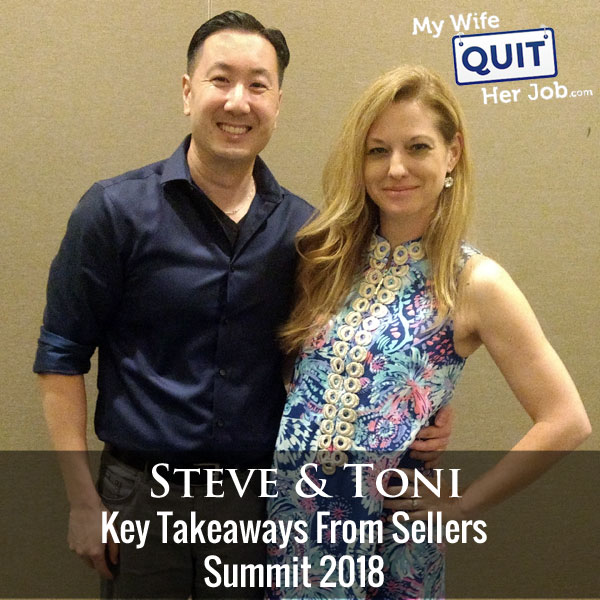
Toni Anderson and I run the [Sellers Summit](https://sellerssummit.com/) together, and in this episode we recap what each speaker covered and which takeaways changed how we run our own businesses. Toni sells physical products and has spent the past year deliberately shifting revenue off Amazon.
This post collects the specific tactics from each session: the repeat customer math from my own store, the Messenger open rates that made everyone in the room take notes, one attendee cutting her ACOS from 65% to 15% in a week, and the Walmart talk that told most of the audience not to bother.
Get My Free Mini Course On How To Start A Successful Ecommerce Store
If you are interested in starting an ecommerce business, I put together a comprehensive package of resources that will help you launch your own online store from complete scratch. Be sure to grab it before you leave!
Table of Contents
Key takeaways
- At Bumblebee Linens, 12% of customers are repeat buyers and they generate 36% of revenue, which gives every new year a solid revenue base.
- Facebook Messenger was producing 90% open rates and 30% click-through rates versus 20% and 2% on email at the time.
- One attendee cut her Amazon advertising cost of sale from 60% to 70% down to 15% within a week of applying Edward Ruffin’s PPC strategies.
- Shipping flat pack containers directly from the manufacturer to Amazon, without inspecting the goods yourself, saves thousands in freight.
- Google Shopping remains underused compared to Facebook, with far less competition in many categories.
- Kickstarter is underutilized in ecommerce because it funds your first production run and removes inventory risk.
- Sequential dynamic retargeting that tells a brand story outperforms retargeting that goes straight for the sale.
- Walmart’s marketplace suits specific seller profiles and is a waste of time for everyone else.
Why repeat customers matter more than launching new products
Growing revenue by targeting repeat customers beats growing it by launching more products, because product launches are the most complicated and labor-intensive path available. That was the core of my own session.
The numbers from my store make the case. Only 12% of Bumblebee Linens customers are repeat buyers, which is expected in the wedding industry, and those customers produce 36% of our revenue.
That means every new year starts with a 36% revenue foundation already in place. Chasing only new customers means starting from zero each January while paying full acquisition cost every time.
This came up independently in the masterminds. Repeat customer strategy was the dominant thread of conversation among the $250,000-plus sellers, which suggests everyone hits the same wall around the same revenue level.
Why brand building is now mandatory on Amazon
A brand is a connection with a customer that lets you bring them back repeatedly, and logos and packaging are the table stakes rather than the substance. With roughly a quarter of Amazon sellers based in China and competing hard on price, differentiation has to come from somewhere else.
Selling a handful of products exclusively on Amazon is a risk position rather than a business. A coordinated attack from competing sellers or an account suspension can end it, which is why diversifying marketplaces matters.
The entire 2018 program was curated along those lines. Every session targeted either building the brand or building the channels you own.
How Facebook Messenger open rates compared to email
Messenger was producing roughly 90% open rates and 30% click-through rates against 20% open rates and 2% click-through on email. Mike Jackness built his session around Messenger strategy and it drew the most consistent praise of the event.
I had been running Messenger marketing for about four months at that point and my numbers matched. Very few sellers were using the channel, which is precisely why it performed.
Messenger has changed considerably since, as Facebook tightened messaging policies and moved toward paid sends. The transferable principle is that an uncrowded channel produces outsized engagement, which is an argument for testing new channels early rather than after everyone arrives.
How to track ecommerce metrics in 15 minutes a day
Dana’s session laid out a daily protocol for gathering key business metrics in about 15 minutes, which gives you a high-level read on business health and where to improve. The discipline is what makes it work rather than the specific numbers.
What made her talk useful was the question underneath it. Knowing your key objectives and why you run the business at all determines which metrics are worth tracking.
Most sellers operate without that clarity. Money comes in, money goes out, and they have no firm grasp of which products or channels are actually profitable.
Her approach also builds in a happiness factor alongside the financials. She runs simple businesses without a large team and makes decisions on numbers rather than instinct.
Why patents belong in a long-term ecommerce strategy
Daniel Solid’s session covered patenting and exit strategy, specifically how to design new products so they become patentable in the first place. That reframing is what made the room start photographing slides.
Most sellers never think about this. They source an existing product, differentiate it cosmetically, and end up with nothing defensible.
What distinguishes Daniel’s approach is time horizon. Every move he makes targets a durable business years out rather than maximizing the next twelve months.
How supply chain optimization improves ecommerce margins
Nathan’s supply chain session walked step by step through sourcing and importing, and the value was in surfacing inefficiencies in systems that already seem fine. Toni went in confident her margins were decent and left with specific adjustments to make.
Greg Mercer’s session on oversized items paired directly with it. Selling oversized products on Amazon requires extracting every dollar from the supply chain because the fee structure punishes inefficiency.
His most concrete tactic was shipping flat pack containers straight from the manufacturer to Amazon without ever seeing the merchandise. Cutting out those intermediate handling steps saves thousands in freight.
One attendee reported that single session would save her thousands of dollars a year, which covered her conference cost by itself.
Why Google Shopping is underused compared to Facebook
Google Shopping carries far less competition than Facebook in many categories, which makes it a genuine opportunity for brands already running Facebook ads. Brett Curry’s session walked through why to use it and how to set up campaigns from scratch.
Setup is straightforward on most platforms since the product feed integrates directly. That low barrier is part of why the missed opportunity is so common.
Google has added substantial targeting capability to Shopping over the years. I had Brett run my own Shopping campaigns that year and the new features increased revenue over what I had been running myself.
What makes a Kickstarter campaign succeed?
Zach Smith’s session covered the qualities a product needs before a Kickstarter is worth attempting, and missing any one of them significantly reduces your odds. Product selection comes before campaign mechanics.
The strategic argument for Kickstarter in ecommerce is cash flow. Inventory normally requires paying for a production run before any revenue exists, and a funded campaign reverses that order.
That makes it materially less risky than the standard approach. You raise the money to fund production rather than betting your own capital on demand you have not verified.
His case studies included campaigns that recovered after slow starts, which is worth knowing since early momentum is usually treated as decisive.
How sequential dynamic retargeting differs from standard retargeting
Sequential dynamic retargeting arranges your ads to tell a brand story across multiple exposures rather than pushing for the sale on every impression. Reza’s session on this changed how I run my own retargeting.
The mechanism is mindshare. A sequence that builds understanding of the brand produces repeat purchases and higher lifetime value, while a sequence that only discounts produces one transaction.
He laid out the manual implementation step by step alongside his software, which is the route I took. I implemented it as soon as I got home.
How to launch a brand with no existing audience
Scott Voelker’s session mapped the launch process for someone with no email list, no Facebook following, and no audience of any kind. His position is that launching is harder now and still entirely possible.
The roadmap covers what happens after product selection. Most launch advice stops at finding the product and leaves the actual launch mechanics vague.
That gap is why so many people conclude they are too late. Having a concrete sequence to follow is what makes the difference between hesitating and launching.
Can you get repeat customers on Amazon?
Brad Moss, formerly head of Seller Central, built his session around accessing hidden analytics on Amazon to generate repeat customers. Many sellers assume this is impossible because Amazon owns the customer relationship.
His insider perspective on what data is actually available is what makes that session valuable. There is more accessible than most sellers realize.
Should you sell on Walmart Marketplace?
Walmart Marketplace works for a specific seller profile and wastes time for everyone else. Bernie’s session functioned as a case study for why most attendees should not pursue it.
He laid out explicit criteria. Meet these conditions and Walmart is worth pursuing, fall outside them and your time goes further elsewhere.
Toni had been approached by Walmart repeatedly over six months and concluded from that session that she should not sell there yet. A talk that tells you not to do something is more valuable than one that makes everything sound universally applicable.
What makes a small conference better for networking?
Deliberately capping attendance is what preserves the networking quality, which is why we sell out and do not expand. Small events keep everyone in close proximity so you keep running into the same people.
A private Facebook group before the event does most of the work. Attendees introduce themselves through posts and Facebook Live videos, so nobody arrives knowing nobody.
That video element matters more than it sounds. Seeing someone give a short introduction makes them recognizable in person in a way a text post does not.
Roundtable sessions solve a different problem. Speakers each host a table of around nine people, which lets attendees ask the questions they would never raise on a microphone in front of a hundred people.
Splitting masterminds by revenue tier addressed another gap. Sellers at $250,000 are asking how to scale, and sellers past $1 million are asking about personnel and organizational problems, which are genuinely different conversations.
Frequently asked questions
What percentage of Amazon sellers are based in China?
Roughly 25% at the time of this 2018 conference. That concentration is what makes price competition on undifferentiated products a losing strategy for US sellers.
How much revenue comes from repeat customers?
At Bumblebee Linens, 12% of customers are repeat buyers and they account for 36% of revenue. That ratio varies by industry, and wedding products have unusually low repeat rates.
Are Facebook Messenger open rates really higher than email?
They were dramatically higher in 2018, around 90% versus 20% for email. Facebook has since restricted messaging policies significantly, so current performance differs.
Should you ship inventory directly from your manufacturer to Amazon?
It saves substantial freight cost by removing intermediate handling, and it means you never inspect the goods yourself. That tradeoff works when you have an established supplier relationship and third-party inspection in place.
Is Google Shopping better than Facebook ads for ecommerce?
Google Shopping faces less competition in many categories and captures existing purchase intent. The two serve different purposes and most stores should run both rather than choosing.
Why use Kickstarter instead of buying inventory upfront?
Kickstarter funds your first production run before you commit capital, which removes the inventory risk that constrains most new ecommerce products.
Should you sell on Walmart Marketplace?
Only if you fit specific criteria around scale and category. For most small sellers, the effort produces a better return invested in Amazon or their own site.
What is sequential dynamic retargeting?
Retargeting ads arranged to tell a brand story across multiple exposures instead of pushing a discount on every impression. It builds mindshare that produces repeat purchases and higher lifetime value.