
Podcast: Download (Duration: 51:58 — 59.8MB)
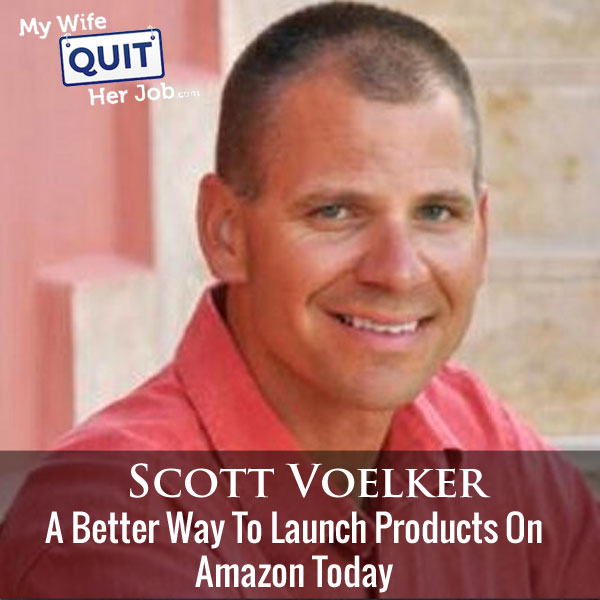
Building your own email list before a product launch beats renting someone else’s, and Scott Voelker does it with 30-day giveaways that cost him about 15 cents per subscriber.
That list becomes an asset he can email repeatedly, upload to Facebook for lookalike audiences, and use on every new product he releases.
Scott runs The Amazing Seller and has been on this show before, back in episode 89. In the two years since, he has shifted from chasing individual products toward building actual brands, and his launch method changed with it.
This episode covers how he structures a giveaway, what prize actually attracts buyers rather than freebie hunters, the email sequence that follows, why he deliberately targets products selling ten units a day instead of a hundred, and how he finds a brand spokesperson when he does not want to be the face himself.
A note on timing: this conversation is from 2018 and describes an Amazon landscape that has changed. Incentivized review groups and giveaway campaigns run to manipulate keyword ranking now violate Amazon’s terms of service.
The list-building mechanics below remain sound. Treat the ranking effect as historical context rather than a current tactic.
Get My Free Mini Course On How To Start A Successful Ecommerce Store
If you are interested in starting an ecommerce business, I put together a comprehensive package of resources that will help you launch your own online store from complete scratch. Be sure to grab it before you leave!
Table of Contents
Key takeaways
- Run a 30-day giveaway rather than a short one, and expect roughly 50% to 60% open rates on a fresh list.
- Cost per email dropped from $1 to about 15 cents through testing, with animated images outperforming static ones.
- The prize must be specific to your niche. Giving away an iPad attracts freebie hunters rather than buyers.
- Target products selling around ten units a day at $10 profit rather than competing for hundred-unit-a-day listings.
- Test with 300 to 500 unit orders. Suppliers will negotiate below their stated 1,000 unit minimum.
- Validate on Amazon first, then build the brand around what already sells.
- Every giveaway also adds around 2,000 Facebook page likes, which makes later retargeting cheaper.
- Content should be roughly eight parts useful to two parts product.
Why validate a product on Amazon before building a brand?
Amazon tells you whether a market will buy before you invest in the brand infrastructure around it. Scott inverted the order he used years ago, when the sequence was building a website first and doing product research second.
His comparison is to Shark Tank. The investors always ask about sales first, because until there are sales the concept is unproven regardless of how good it looks.
The practical version is a small test order, placed to confirm demand exists. Everything else, the site, the content, the brand, follows validation rather than preceding it.
Starting on Amazon also removes a lot of early friction. You skip building a website, setting up a merchant account, handling refunds, and arranging fulfillment.
How large should a first product order be?
Order 300 to 500 units to test, and negotiate the supplier down from their stated minimum. Suppliers routinely quote 1,000 units and will accept less if you ask or move on to another factory.
You pay more per unit at that volume. That premium is the cost of reducing risk on a product you have not yet proven.
What product criteria should you target?
Look for products selling around ten units a day at roughly $10 profit, which is about $100 a day, with fewer than 200 reviews. That is a deliberately modest target and it is the point.
The reasoning is competitive. Ranking for a product that sells a hundred units a day requires selling a hundred units a day yourself, which is an entirely different scale of investment.
Scott has heard of sellers committing $100,000 purely to giving product away in order to dominate a category. That approach secures the position and is not how he operates.
Low-competition products let a modest promotional push move the needle. The same effort against a saturated listing accomplishes nothing.
How do you build a launch email list with a giveaway?
Run a 30-day giveaway with a prize worth $200 to $250, promoted through Facebook ads to a landing page. Scott prefers the longer window over the short campaigns many sellers run.
You do not need your own product first. Scott ran his before inventory arrived, because the list is the point rather than the promotion of any specific item.
Once you have your own catalog you can build the prize from it. With eight or nine SKUs, bundling several into the giveaway introduces entrants to the brand while the contest runs.
Wrap the bundle around something substantial. His fishing analogy is assembling the best lures, a tackle box, and a vest, with your own product included among them.
Why the giveaway prize must match your niche exactly
Giving away something generic like an iPad attracts people who want free things rather than people who want your product. That is the mistake Scott sees most often.
The prize has to be narrow enough to filter. A bass fishing bundle attracts bass fishermen, and that specificity is what makes the resulting list worth emailing.
The contrast is with lists assembled purely from deal seekers. Those people raised their hand for a discount rather than for your category, which is the same structural problem that made Amazon review groups useless as an audience.
What does a giveaway email list actually cost?
Scott’s cost per email fell from $1 to 50 cents to 30 cents and eventually to about 15 cents, entirely through iterative testing. That figure is per email captured rather than per click.
The testing budget was $20 to $30 a day across roughly four ad sets. He deliberately stopped short of more granular optimization because the returns did not justify the time.
The single change that moved the number most was creative format. Taking five contest photos and animating them into a moving image beat a static image on click-through rate, conversion, and cost per email.
Sharing drives the cost down further. Entrants get a personal tracking link and earn extra entries for referrals, which is built into the giveaway software.
What open rates does a giveaway list produce?
A fresh giveaway list opens at roughly 50% to 60%, settling to around 25% as it ages, which is still above typical benchmarks. Those are people who actively chose to enter for something in your category.
Attribution on sales is genuinely difficult. Affiliate links are not permitted in these emails, so tracking runs through coupon codes, and Amazon reports that data on a delay.
Scott estimates conversion around half a percent to one percent and treats the figure as unreliable. One email produced over 190 units because a single recipient shared the promotion into a Facebook group.
How should you value a launch email list?
Judge the list by everything it enables rather than by the conversion rate on a single send. Scott’s framing is that spending $1,000 to acquire a list that then sells 250 units in three days and establishes organic ranking is worth it before you count anything else.
The compounding uses matter more than the first campaign. The same list can receive future offers, be uploaded to Facebook for retargeting, and seed a lookalike audience.
Each giveaway also adds roughly 2,000 Facebook page likes as a byproduct, since the ads run through the brand page. That makes subsequent ads to that audience cheaper and gives Facebook Lives an existing audience to reach.
What email sequence follows a giveaway?
The first email confirms entry and delivers the personal sharing link that earns extra entries. That is transactional and expected.
About three days later comes pure content with no pitch. Scott’s example is a few fishing tips framed as helping them catch more this weekend, with the sharing link mentioned again at the end.
The winner announcement generates the highest open rate of the sequence. He announces publicly, with a photo of the winner where possible, which demonstrates the prize was genuinely awarded.
That same email carries the offer. Everyone who did not win receives a discount, framed as a thank you for entering.
Deadlines are what make the offer work. A coupon live Friday afternoon and expiring Sunday night justifies three emails, and the final day consistently produces the most sales.
The full sequence runs to about 20 emails with roughly one drip per week, plus a live session.
How do you clean a giveaway email list?
Give inactive subscribers a chance to re-engage roughly every 30 days, then remove those who neither open nor click. Unsubscribes handle part of the job for you.
The alternative to removal is a wake-up campaign aimed at reactivation. Anyone still unresponsive after that comes off the list.
The economics require it. You pay per subscriber, so carrying people who never open is a recurring cost against no return.
What content should an ecommerce brand publish?
Run roughly eight informational posts for every two that mention a product, and even the product mentions should sit inside something useful. Scott’s rule is that nobody wants to be sold and everybody responds to something that visibly works.
The distinction is between technique and promotion. A post about how a new rod helped catch three fish works; a post about the features of the rod does not.
The product enters as an aside. Mentioning that you had it custom made because something frustrated you, with an offer to look at it, lets interested people follow without the piece becoming an ad.
Facebook Lives perform well and are demanding, since you have to be present. Scott moved from weekly to roughly every two weeks and supplemented with short tutorial videos twice a week.
Everything gets republished to the blog as home base. That blog reached 25,000 to 30,000 monthly uniques essentially as a byproduct, with no deliberate SEO or traffic strategy behind it.
Where do content ideas come from?
From the conversations already happening in your market. Scott’s partner belongs to other groups and pages in the niche and knows what people are excited about and frustrated by.
Customer emails become the second source. Once people start asking how to do things, each question is a piece of content.
Answering them by name adds social proof. Crediting the person who asked makes the content feel like a response rather than a broadcast.
How do you find a face for your brand if you do not want to be it?
Find someone already passionate about your niche who has not realized it could be a business. Scott’s advice is to stay open and notice these people, because they are more common than sellers assume.
His examples are ordinary encounters. A couple making their own honey and cider vinegar, or a former Division I volleyball player at his daughter’s game looking to earn on the side.
Neither person knew this was possible. The gap you bridge is the ecommerce knowledge, and what they supply is the personality and the subject expertise.
The arrangement can be a weekly payment for an hour or two of filming, or a small equity stake. Their only job is being the face.
Personality is the differentiator that product alone cannot provide. Buyers respond to a person more readily than to a company.
Where is Amazon heading for third-party sellers?
Amazon is not going anywhere, so the question is whether you treat it as your business or as a channel. Scott’s position is that it works well as a starting point and poorly as a foundation.
Retail and online arbitrage will get harder as brands lock down who may sell their products. That capability already exists and enforcement is tightening.
Arbitrage remains a legitimate stepping stone. It gets you into the game and builds capital, and Scott would not build a long-term business on it.
Private label and brand building are the durable path. Owning your own platform, email list, and sales channel is what protects you if Amazon changes the rules, and it is what makes the business sellable later.
His warning on shortcuts is direct. Gray hat and black hat tactics are temporary by nature, and the downside is a ban that leaves you holding inventory you cannot move.
Frequently asked questions
How do you build an email list for an Amazon product launch?
Run a 30-day giveaway with a $200 to $250 prize specific to your niche, promoted through Facebook ads to a landing page. Offer extra contest entries for referrals so entrants share it for you.
What should you give away in an ecommerce contest?
Something narrow enough to filter for real buyers in your category. A generic prize like an iPad attracts people who collect free things rather than people who want what you sell.
How much does a giveaway email subscriber cost?
Scott brought his cost down from $1 to roughly 15 cents per email through testing. Animated images outperformed static ones on cost, click-through, and conversion.
How long should an ecommerce giveaway run?
Thirty days. Shorter contests are common and Scott prefers the longer window for building list size and momentum.
How many units should you order to test a product?
Three hundred to 500. Suppliers typically quote a 1,000 unit minimum and will often negotiate down, which reduces your risk on an unvalidated product.
Should you validate a product on Amazon before building a brand?
Yes. Amazon tells you whether the market will buy before you invest in a website, content, and brand infrastructure around an unproven product.
How often should you email a giveaway list?
Roughly weekly, in a sequence of about 20 emails mixing content with occasional offers. Clean the list every 30 days by removing subscribers who neither open nor click.
How do you find someone to be the face of your brand?
Look for people already passionate about your niche who have not considered monetizing it. Pay them hourly or offer a small equity stake in exchange for appearing in content.