
Podcast: Download (Duration: 56:46 — 65.3MB)
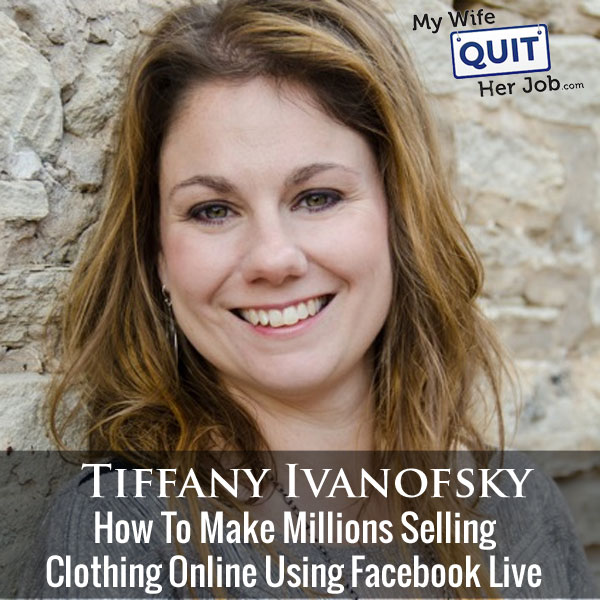
Live selling works because viewers come to be entertained and stay because someone recognizes them by name. Tiffany Ivanofsky and her husband Paul sell clothing on Facebook Live to an audience of a few hundred at a time, targeting 100 items sold per broadcast.
The whole thing started by accident. Tiffany was traveling for work when her first inventory shipment arrived, and she asked Paul to unbox it on video so she could see what came.
She opened her laptop at 10:30 that night to find he had been live for nearly six hours with her son’s girlfriend and had sold almost the entire opening order. Neither of them knew the product names or the prices.
This episode covers the mechanics of running a live sale, how claim numbers and radio-style drops work, why a Facebook group outperforms a page, and how to build a buying community without spending anything on ads.
A note on timing: this is a 2017 conversation about selling LulaRoe, a multi-level marketing company that has since faced significant legal action and public scrutiny. The live selling method is the transferable part, and this is not a recommendation of that business opportunity.
Get My Free Mini Course On How To Start A Successful Ecommerce Store
If you are interested in starting an ecommerce business, I put together a comprehensive package of resources that will help you launch your own online store from complete scratch. Be sure to grab it before you leave!
Table of Contents
Key takeaways
- Recognition drives live selling. Using names, remembering sizes, and asking about a job interview is the mechanism.
- Viewers claim items by commenting a number, with orders tracked in a shared Google doc during the broadcast.
- Radio-style drops award the item to the fifth commenter rather than the first, which neutralizes fast internet connections.
- The group started at zero members and reached about 1,200 before the first sale, entirely organically with no ad spend.
- A closed Facebook group beats a page, since members share sizes more comfortably and non-payment runs 3% to 5% versus 10% to 15%.
- Read the room mid-broadcast and switch to whatever sizes are selling that night.
- Posting yourself using the product beats posting the product, and Tiffany posted two to three times daily.
- In-person open houses teach you how items actually fit, which is what makes the online recommendations accurate.
Why does selling on Facebook Live work?
People arrive to be entertained and stay for the recognition. Tiffany describes viewers who have gone days without anyone saying their name, and hearing it on a broadcast is what brings them back.
Some of the audience is not primarily shopping at all. Military spouses watch alone at night because it is hard to fall asleep in silence and they want to hear a voice.
Novelty carried the first broadcast entirely. Paul did not know the product names or prices, and viewers asked to buy anyway.
The endearing incompetence was part of it. Viewers watched a man with no idea what he was doing genuinely trying to help women find their size.
Video creates a connection a product page cannot. When someone likes you and your family, they buy from you rather than from a cheaper anonymous seller.
How do you take orders during a live sale?
Assign each item a number, have viewers comment that number to claim it, and record everything in a live shared document. The claim goes into a box with the number on it as the broadcast continues.
Invoicing happens after the show by email. Payment runs through the supplier’s system rather than a separate checkout.
First-to-comment is the default rule and it has a flaw. Someone with an unusually fast connection can claim nearly everything in a night.
Radio-style drops solve that. Announce that the fifth person to comment the number wins it, then count off and call the name.
The suspense is a feature. Viewers describe real anxiety waiting to see where their comment landed.
How do you recommend sizes to people you cannot see?
Read what viewers type about their bodies and match it against how the garments actually fit. Someone says they are 5’1″ with broad shoulders, and that rules out a long-waisted dress.
Viewers volunteer a surprising amount of detail. Paul jokes about how many women tell him their bra size, which is exactly the information needed to steer them away from something too tight across the chest.
The knowledge comes from in-person events. Open houses where customers try things on are what taught them how each style fits different bodies.
That physical experience is what makes the online advice credible. Getting it right the first time matters, since returns and exchanges cost both sides.
How do you build a Facebook buying group from zero?
Post yourself using the product rather than posting the product. Tiffany started with her mother, sisters, and a few close friends, and posted a picture of herself wearing something every day.
Selling was not the objective early on. She asked which shoes went with a skirt, shared recipes, talked about her family, and mentioned what she was wearing only when someone asked.
Members recruited members. Friends invited friends, who invited more, with no advertising spend at any point.
The cadence was two to three posts a day, all written by hand. She had scheduled content on other properties and kept this one deliberately organic.
Her audience mirrors her exactly. Similar age, stay-at-home and working mothers, teachers, nurses.
The group had roughly 1,200 members when the first live sale happened. Volume was never the point.
Should you run giveaways to grow a Facebook group?
Sparingly, and expect the members you gain to be low quality. Tiffany ran one leggings giveaway early and would not repeat it.
Giveaway entrants join for the prize rather than the product. Inactive members drag down how often the group surfaces in feeds.
A targeted version works better. Ask people to add only a best friend, or only someone who genuinely loves the product category.
Interaction beats headcount. Tiffany knows sellers doing over $60,000 a month from groups of about 3,000 members.
Facebook group vs page for selling: which is better?
The group is where selling happens and the page is a business card. Tiffany’s framing is that a group feels like having everyone in your living room.
Members behave differently in a closed group. Sharing sizes and posting photos of themselves feels safe in a way it does not on a public page.
The payment data settles it. Non-payment runs 3% to 5% in the group and 10% to 15% when they go live on the page.
New viewers on the page do not understand the process. That means constant re-explaining and far more unpaid claims.
Enforcement only works in a group. Non-payers get two chances and are then removed, which is impossible on a page.
The page still earns its place. It handles ads, boosted posts, Instagram cross-posting, and events pointing back to the group.
What should you do during a live sale?
Open by greeting people individually and let the room fill before selling anything. Music plays while they arrange inventory and chat.
Do not announce the lineup in advance. Tiffany’s shows run as a free-for-all, partly because Paul genuinely does not plan.
Personality has to be authentic. Tiffany has watched other men imitate Paul’s style and it reads as insincere immediately.
Read the room and pivot. If small sizes are moving that night, switch to pulling smalls.
Avoid individual requests entirely. With 400 viewers, taking requests means satisfying one person and disappointing 399.
Rituals give people something to belong to. Paul has songs that signal a dance break, wears a different unicorn shirt each night, and rings a cowbell for the night’s first purchase.
Viewers police the rituals themselves. They will call out when he forgets someone’s cowbell.
What do you do with inventory that will not sell?
Restyle it and show it worn differently before concluding it is dead. Pair it with another piece to demonstrate how it works.
Regional taste explains some of it. A pattern that stalls in Texas may move elsewhere, which is why sellers swap inventory with each other.
Prejudging inventory is the bigger mistake. Items Tiffany assumed would never sell were frequently the first gone.
Can live selling work for other products?
Yes, and Tiffany was already seeing baby blankets, makeup, and jewelry sold live in 2017. Her view is that showing products live is where retail is heading.
The requirements are modest. Good lighting, a decent set, real product knowledge, plenty of samples, and a simple way to pay.
Expertise reads on camera. A seller using the right terminology builds confidence that a product page cannot.
Expect to sell things you did not intend to sell. Viewers will ask to buy whatever you happen to be holding.
Why a male host can work well selling to women
Compliments from men land differently for many women in this audience. Tiffany’s observation is that women often doubt the sincerity of other women’s compliments and assume a man had no reason to say it.
She saw the same pattern as a hairstylist. Women in her salon preferred male stylists regardless of skill.
Tone tolerance also differs. Paul can say invoices must be paid within twelve hours, and the identical sentence from Tiffany reads as harsh.
She sells the segments where her own credibility is strongest. Children’s clothing during the day, where being a mother of seven is the qualification.
Frequently asked questions
How do you take orders on Facebook Live?
Number each item, have viewers comment the number to claim it, and log claims in a shared document during the broadcast. Invoice by email afterward.
How do you stop one person from claiming everything?
Use radio-style drops, awarding the item to the fifth commenter rather than the first. That removes the advantage of a fast connection.
Is a Facebook group or page better for selling?
A closed group. Members share sizes more comfortably, you can remove non-payers, and non-payment runs 3% to 5% versus 10% to 15% on a page.
How many members do you need to sell on Facebook Live?
Fewer than you would guess. Tiffany’s first sale happened with about 1,200 members, and sellers with 3,000 engaged members do over $60,000 monthly.
How do you grow a Facebook group without ads?
Post yourself using the product two to three times daily, reply to every comment, and let members invite their friends. Tiffany never spent anything on advertising.
Do giveaways help grow a selling group?
Rarely. They attract people who want the prize rather than the product, and inactive members reduce how often your group appears in feeds.
How long should a Facebook Live sale run?
Until you hit your sales target. Tiffany and Paul aim for 100 items and extend the broadcast on slower nights.
Can you sell products other than clothing on Facebook Live?
Yes. Baby blankets, makeup, and jewelry were already being sold live, and the requirements are good lighting, product knowledge, samples, and an easy way to pay.