

Podcast: Download (Duration: 49:30 — 56.9MB)
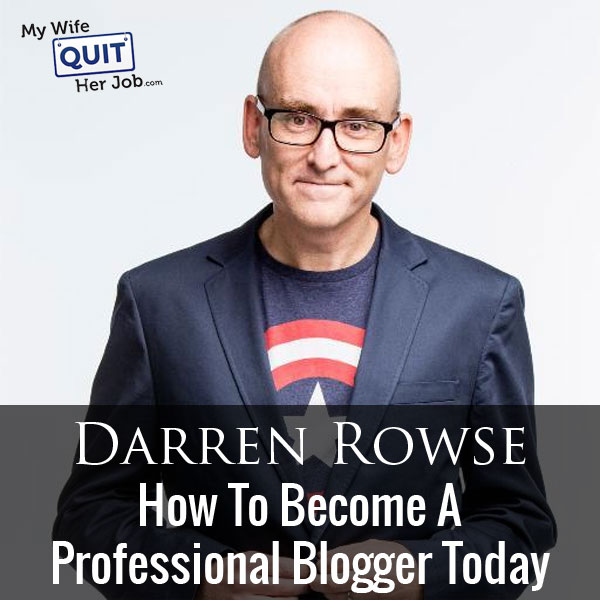
Darren Rowse deleted 200,000 email subscribers on purpose. They were not opening anything, and cutting them improved deliverability for everyone who remained.
His larger site is the one nobody associates with him. Digital Photography School does around four million visitors a month, roughly ten times ProBlogger, and his name barely appears on it.
Darren has been blogging since 2002 and founded ProBlogger in 2004. He also runs a podcast, an annual event, and has published around 40 ebooks.
This episode covers how he would start a blog today, the two distinct content types every blog needs, his monetization sequence from affiliate to product, and the actual revenue numbers behind both sites.
A note on timing: this is a 2016 conversation. Platform mechanics and ad rates have shifted since.
Get My Free Mini Course On How To Start A Successful Ecommerce Store
If you are interested in starting an ecommerce business, I put together a comprehensive package of resources that will help you launch your own online store from complete scratch. Be sure to grab it before you leave!
Table of Contents
Key takeaways
- Write two content types: searchable how-to posts and shareable posts built for social.
- Start monetizing with affiliate products similar to what you eventually want to build.
- Promoting varied affiliate products teaches you what price points and formats your audience buys.
- Google search remains the largest traffic source, ahead of Facebook and email.
- Keep your brand off a site you might eventually sell.
- Amazon bestseller lists compiled from your own sales data convert unusually well.
- Delete unresponsive subscribers, since a smaller engaged list improves deliverability.
- Build relationships with other bloggers, which is how most people break into a saturated niche.
How do you start a blog with no audience?
Build relationships with other bloggers while simultaneously producing content worth finding. Darren broke into his niches by commenting, emailing other bloggers, and suggesting topics.
Brilliance is the alternative. Few people write well enough to break through on quality alone.
Guest posting still works. So does appearing on other people’s podcasts.
Smaller influencers are reachable. The biggest names are hard to reach, and the tier below them will talk to you.
Consistent usefulness gets noticed. Darren has hired writers who started by leaving genuinely helpful comments on his Facebook page.
Your own site has to deliver. Relationship-building brings people over, and what they find determines whether they stay.
What should you write about in a saturated niche?
Find an angle or audience that existing blogs ignore. Darren points to Nerd Fitness, which addresses a crowded topic through a lens nobody else used.
Niching is not mandatory. Writing for a demographic across multiple topics works too.
Differentiation is mandatory. Saturation means the same topic through the same lens will not stand out.
Ignored audiences are the opening. Speaking a group’s language when nobody else does creates the space.
What two types of content does a blog need?
Search-optimized how-to content and shareable content built to travel on social. They serve different purposes and rarely overlap.
How-to posts rank. Problem-solving searches are what bring Google traffic.
Shareable posts get distributed. Darren knows “mistakes” headlines perform reliably on his photography site.
Shareable posts rank poorly. That is expected, since they serve a different channel.
Alternate them deliberately. A mistakes-style post about once a month, rotating sub-niches.
Reshare on a schedule. Darren reposts every article twice a year, giving shareable content a second life.
Where should you focus your blog traffic efforts?
Search, which most bloggers now neglect in favor of social. Google is the largest traffic source for both of Darren’s sites.
Basic SEO is a solved problem. Yoast and correct setup cover most of what matters.
Then write content people search for. Problem-solving posts are what earn that traffic.
Facebook is second. Organic reach there has become significantly harder.
Email is third and the one you own. Darren credits list building from 2006 as his best decision.
Find where your audience already is. Which social networks, which blogs, which podcasts, which events.
How should you monetize a new blog?
Start with affiliate products resembling what you eventually want to create. You earn while learning what your audience actually buys.
Your own product takes time. It also converts poorly without traffic.
Affiliate testing is market research. Ebooks versus courses, $10 versus $30 versus $200, all become measurable.
That data shapes your product. You build knowing what format and price your audience accepts.
Darren is moving away from brand deals. Advertising and sponsorship play a smaller role than they once did.
How much can a blog earn from AdSense?
Darren’s photography site runs a $1.25 page RPM, which produces $20,000 to $30,000 a month at four million page views. He kept AdSense when many bloggers abandoned it.
Direct sales replace it selectively. When an advertiser pays more than AdSense for a slot, the direct ad runs.
Testing showed removal costs money. Taking the ads down did not lift any other revenue source.
Amazon adds $7,000 to $8,000 monthly. Camera and lens recommendations drive that.
Bestseller lists convert best. Darren compiles quarterly lists from his own affiliate reports and shares what readers actually bought.
Should you sell your own products or promote affiliates?
Both, and the profit picture differs from the revenue picture. Darren’s ebooks and courses generate more revenue while affiliates often generate more profit.
Revenue sharing explains the gap. Authors and course creators take a cut of product sales.
Affiliate commission is all margin. No production cost and no revenue share.
Products build the brand. They also give you something nobody else can promote.
His biggest sales period is a 12-day campaign. Twelve deals over twelve days mixing his own products with affiliate offers, each live for 24 hours.
How do you price digital products?
Darren’s ebooks run $20 to $30 and his courses about $50. He sells them as PDFs directly rather than through Amazon.
Production quality justifies the price. He invests heavily in design rather than competing on volume.
Amazon proved a poor fit. A $20 ebook looked wrong beside $3 competitors in the same category.
Owning the audience removes the need. Enough traffic to your own site makes marketplace distribution optional.
His first ebooks were repurposed. The photography one collected his best existing posts and made $72,000 in 11 days.
How do you grow and maintain an email list?
Test opt-in formats continuously and prune aggressively. Welcome mats doubled Darren’s subscriber rate over popups, which had already multiplied it tenfold.
Format preferences differ by audience. ProBlogger converts on plain text, and the photography site responds to images of people holding cameras.
Multi-email courses keep people subscribed. A single free download often leads to immediate unsubscribes.
Delivery problems can force simplification. His six-email sequence became one download after providers failed to deliver reliably.
Pruning improved deliverability. Cutting 200,000 unresponsive subscribers made the list healthier.
Give them a last chance first. Darren offered a couple of re-engagement attempts before removing them.
Should you keep your name on your blog?
Only if you intend to keep it. Darren deliberately kept his name off Digital Photography School so he could sell it someday.
Personal branding limits your exit. ProBlogger carries his name and would be much harder to sell.
The site became its own brand. Readers know Digital Photography School without knowing who runs it.
Why should a blogger run an event?
Because the impact on attendees exceeds anything content achieves, and it feeds a year of ideas. Darren has watched attendees go full time from something they learned or someone they met.
Events can be profitable. Darren keeps prices low deliberately to stay accessible.
The conversations become content. Two days of talking to hundreds of people surfaces themes invisible from behind a keyboard.
Product ideas come out of it. Several of Darren’s products originated in event conversations.
Frequently asked questions
Is it too late to start a blog?
No, though differentiation matters more than it once did. Find an audience or angle that established blogs in your topic ignore.
What kind of content should a blog publish?
Two types: search-optimized how-to posts that rank, and shareable posts built to travel on social media. They serve different channels and rarely overlap.
Where does most blog traffic come from?
Google search, ahead of Facebook and email. Many bloggers neglect basic SEO in favor of social and lose a large traffic source.
How should a new blog make money?
Start with affiliate products similar to what you eventually want to sell. You earn income while learning which formats and price points your audience buys.
Does AdSense still work for blogs?
It does at scale. Darren’s photography site runs a $1.25 page RPM, producing $20,000 to $30,000 monthly across four million page views.
How do you increase Amazon affiliate revenue?
Publish bestseller lists compiled from your own quarterly affiliate reports. Readers respond strongly to knowing what other people in their situation bought.
Should you delete inactive email subscribers?
Yes. Darren removed 200,000 unresponsive subscribers after giving them re-engagement chances, which improved deliverability for the rest.
Should your blog carry your personal name?
Only if you never plan to sell it. A personally branded site is far harder to transfer than one that stands as its own brand.

