
Podcast: Download (Duration: 49:01 — 56.4MB)
Average organic Facebook reach sits between one and six percent of the people who like your page. Mari Smith gets that up toward 65% by shifting the content mix heavily toward video, spending a small amount on ads to feed the algorithm, and posting less often with more depth per post.
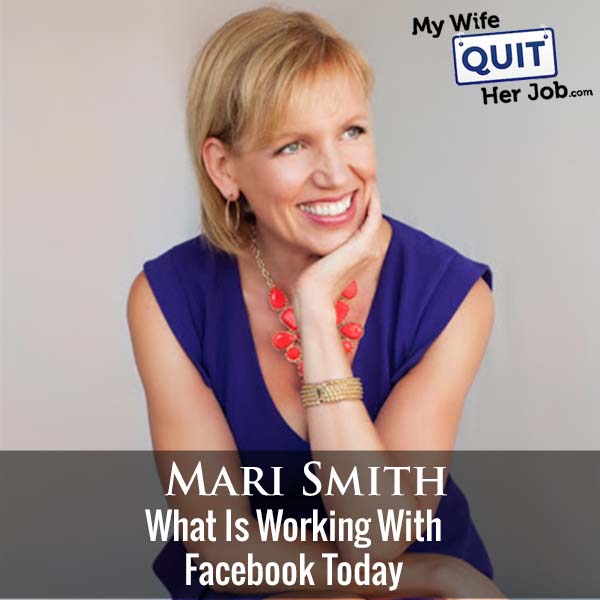
Mari is widely referred to as the queen of Facebook, a Forbes top social media power influencer, author of The New Relationship Marketing, and co-author of Facebook Marketing: An Hour A Day. She has been focused on the platform since 2007.
This episode covers the content ratio that works, why boosting differs from ads manager, how watch parties extend a video’s life, and the engagement bait words that suppress your reach.
Get My Free Mini Course On How To Start A Successful Ecommerce Store
If you are interested in starting an ecommerce business, I put together a comprehensive package of resources that will help you launch your own online store from complete scratch. Be sure to grab it before you leave!
Table of Contents
Key takeaways
- Post roughly 70% video, 20% images, 10% links. Link posts get the lowest reach and engagement.
- Organic reach fell as Facebook’s stock rose after the 2012 IPO, on nearly inverse curves.
- Use the Boost button for about 10% of your budget. It signals to Facebook that you are a novice advertiser.
- One dollar of boost permanently adds a call-to-action button to a video post.
- Posting more often makes reach worse. Facebook wants depth per post, not frequency.
- Watching video with others raises sentiment, which is why Facebook prioritizes watch parties and live.
- Avoid saying comment below, please share, or please like. Facebook’s AI flags them as engagement bait.
- A page with six fans and $350 filled an event and produced a $15,000 referral patient.
Why organic Facebook reach declined
When Facebook went public in 2012, the decline in organic reach tracked almost exactly against the rising stock price.
Jay Baer produced a mashup graph showing the two lines crossing, which Mari describes as evil genius depending on your perspective.
The reason is structural. Ads have always been Facebook’s primary revenue source.
Her shorthand when speaking to audiences is that organic reach is very 2012.
The current baseline is one to six percent, meaning between one and six of every hundred people who liked your page see a given post.
What content mix produces the most organic reach
The ratio Mari recommends is roughly 70% video, 20% photos and images, and 10% link posts.
Link posts get the lowest reach and lowest engagement, which is inconvenient because marketers want to drive traffic to offers and landing pages.
The workaround is putting links inside video and image posts rather than posting the link itself.
Video also builds retargeting audiences cheaply. A view counts at three seconds, and audiences of people who watched 10, 15, or 30 seconds can be segmented in ads manager for retargeting.
How to add a clickable button to a video post
The link goes in the caption, ideally above the fold given the More button truncation.
Beyond the caption link, video posts support a call-to-action button spanning the bottom of the post, which is clickable on desktop and tappable on mobile.
That button used to be free and now requires ad spend to unlock. Putting even one dollar behind the post enables it.
The button persists after the boost ends rather than disappearing with the spend.
Why boosting differs from using ads manager
Facebook’s news feed algorithm weighs something on the order of a hundred thousand signals, and the ad side runs its own algorithms reading the pixel, URL, and every component of the ad.
Using the Boost button tells Facebook you are a novice advertiser.
Mari’s allocation is about 10% of budget through boosting, reserved for on-the-fly moments when a post is performing and you want to extend it from your phone.
The other 90% goes through ads manager, with the pixel installed across your site, events like add to cart and checkout firing, custom audiences and lookalikes in use, and Business Manager managing the page.
Those signals identify you as a sophisticated advertiser, and the result is a measurably better return.
Why posting more often reduces your reach
The instinct when reach declines is to post more, moving from three times a day to six.
That makes it worse.
Facebook wants depth on individual posts rather than volume. HubSpot pulled back to more video, spaced further apart, and better thought through.
Mari’s own page sometimes posts three to five times a week, and skipping a full day is fine.
Her test is traction. Watch which posts earn genuine organic reach and produce more of that type.
What actually earned 65% organic reach
The 65% post was an image post rather than a video.
Its format was a public service announcement, taking a circulating rumor in her field and dispelling it.
The prerequisite is accumulated trust. Being the go-to person for a specific subject means your audience knows you have done the homework and treats what you share as fact.
The counterintuitive lever is small ad spend. Spending even a hundred dollars a week or a month feeds the algorithms in a way that lifts your organic reach above what you get spending nothing.
Timing matters too, and your Insights show when your followers are actually online.
How long Facebook videos should be
The right length depends entirely on the placement.
Ad breaks, which appear at the beginning or middle of a Facebook video, cap at 15 seconds, in square, four by five vertical, or landscape.
Stories ads can run up to two minutes despite organic stories being limited to 15 seconds. Producing natively at 9:16 vertical looks considerably better than letting Facebook fit a landscape video into the format.
Long form means three minutes or more, and Facebook actively wants creators making it, because ad breaks require longer content to insert into.
Live sessions work well at television episode length, roughly 18 to 25 minutes. An hour works if your retention supports it, and if people drop off after ten minutes, shorten it.
Why Facebook video is not dead
Mike Stelzner’s position is that YouTube is a lean-back experience where people watch a full video, while Facebook is more like driving past billboards.
Mari disagrees, and the distinction she draws is about how the video is consumed rather than how long it is.
Facebook has run extensive sentiment analysis on this. Someone watching a video alone while scrolling reports lower well-being afterward, about themselves and about Facebook.
Watching the same video with other people, through a live, a premiere, or a watch party, raises sentiment. They feel better and consume more.
Facebook’s stated mission for video is creating a sense of belonging, which is why the product pushes toward watching together rather than watching alone.
The counterexample she points to is Red Table Talk with Jada Pinkett Smith, which is never live and is very well produced, and succeeds as a show on Facebook.
How to use a Facebook watch party
A watch party is hosting movie night. You gather people to watch videos together at a set time.
You can host one on a business page, a personal profile, or a group, featuring your own videos or anyone’s public videos.
The sequencing extends a video’s life considerably. Publish a produced episode using Premiere, which schedules and notifies people and airs as though live, or New Release which goes immediately.
Let it run at least 24 hours and gather traction. Then announce a watch party in your group for a set time, going deeper on the topic with your most engaged audience.
As host you control fast forward, rewind, and pause while answering questions in the comments.
Initiating from mobile lets you hop on live during the party, talking over a section or pausing for commentary.
Whether to build a Facebook page or a group
You need a page regardless, because advertising requires one. You can even advertise on Instagram without an Instagram account if you have a Facebook page.
Facebook does give groups more priority in the feed, alongside video, live, and watch parties.
Mari cautions against going all in on the group anyway, since each takes real time and resources.
The deciding question is purpose. Some groups have a limited shelf life, like a pop-up group for a challenge that gets archived afterward, while others serve support or customer service.
The page remains the tool for reaching a broader audience and building the custom and lookalike audiences your ads depend on.
Why a page with six fans still worked
Dr. Pete, an expert on opioid addiction with patented technology, was new to Facebook and in his sixties.
He created a page with six fans and an event, promoting a talk at UC Irvine to licensed psychologists and therapists targeted down to zip code in Orange County.
The budget was $350.
The room held about 25 people and drew 120 registrations, forcing a move to a larger space.
That event produced a $15,000 referral patient, which is the point. Reaching the exact target audience matters more than accumulating fans.
What post formats drive engagement
A single-sentence question with no image, no graphic, and nothing else performs surprisingly well.
Mari’s example from her own niche is asking what one thing people would change about Facebook, which generated a flood of responses she could then repurpose into blog posts and videos.
Long-form Facebook posts written like miniature blog posts also work. The style uses a line break after nearly every sentence rather than dense paragraphs.
That format doubles as a testing ground. Write the post on Facebook first, judge the engagement, then decide whether to develop it into a blog post or video, or embed the post directly.
Which words to avoid in Facebook posts
Facebook classifies certain phrasing as engagement bait, and its AI reads video and live audio as well as text.
The flagged phrases are direct requests: comment below, please share, please like.
Natural alternatives work fine. What do you think, let me know your thoughts, or if you got value from this let your tribe know.
Words like free and buy are not a problem.
What the algorithm rewards is what Zuckerberg calls meaningful social interaction, which generally means comments of about five words or more. Getting full sentences rather than one-word keyword replies is the goal.
That is why a question like asking people whether they love handkerchiefs and what they use them for outperforms a one-word trigger, and it can still route commenters into Messenger for a coupon.
Why posting YouTube links to Facebook usually fails
Posting content from competing platforms, including YouTube, Snapchat, Pinterest, and Twitter, gets substantially less reach.
The exception proves the rule is soft. One community member with a page of about 25,000 fans posted a YouTube video and reached half a million people.
The mechanism behind the outlier is speed. Rapid engagement immediately after posting is one of the strongest news feed signals, and the relevant window is minutes.
Mari’s conclusion is to test on your own page rather than treating any rule as absolute.
Why you need an email list alongside Facebook
Every social platform is rented land.
Mari has a community member whose page of a couple hundred thousand followers was apparently hacked and lost, with no email list behind it.
The broader prerequisite is clarity before tactics. A clear message, defined audiences, and clear offers all have to exist before Facebook strategy matters.
The other failure she sees, especially among the women who make up about 80% of her audience, is reluctance to ask for the sale. Advice about posting eight value posts for every two marketing posts is not a rule worth following.
How to use Facebook and Instagram stories
Stories build top of mind awareness and top of feed position, since each new story bumps you back toward the front of the row for your followers.
Reach varies enormously by placement and account. Mari sees a few hundred views on Instagram with 30,000 followers, sometimes spiking to a thousand, while personal content on her profile can hit 8,000 views in a week.
Personal material outperforms. A selfie or something genuinely behind the scenes does better than polished marketing.
The interactivity is the mechanism. The average person touches their phone about 2,600 times a day, and heavy users over 5,000 times, so sliders, polls, quizzes, questions, and stickers give people a reason to tap.
Marketing content gets interspersed among that goodwill. Without 10,000 followers you lack the swipe-up, and anyone can swipe up to an IGTV video, which does support clickable links.
What is coming for ecommerce on Facebook
The development Mari expects to matter most is live shopping.
Facebook tested letting viewers tap the screen to order while a live video is still playing, which is effectively QVC or Home Shopping Network built into Facebook Live.
The hardware piece is the Portal television set-top device with a camera, enabling full-screen 4K streaming with picture-in-picture for friends, family, or clients.
That combination points toward a new format for webinars and for retail, with the big screen showing the content and the mobile device handling the order.
Selling directly on Facebook already works through Stripe, and Mari has sold books that way, though most sellers with an existing store simply route traffic to Shopify.
Frequently asked questions
What is average organic reach on Facebook?
Between one and six percent of the people who like your page. Mari Smith has reached about 65% on individual posts using video-heavy content, small ad spend, and accumulated audience trust.
What content gets the most reach on Facebook?
Video by a wide margin. The recommended mix is roughly 70% video, 20% photos and images, and only 10% link posts, since link posts get the lowest reach and engagement.
Should you use the Boost button or ads manager?
Ads manager for about 90% of your budget. Boosting signals to Facebook that you are a novice advertiser, so reserve it for on-the-fly extensions of posts already performing.
Does posting more often increase Facebook reach?
No, it usually reduces it. Facebook rewards depth on individual posts rather than frequency, so posting three to five times a week can outperform posting daily.
What is a Facebook watch party?
A scheduled session where you and your audience watch videos together, with the host controlling playback. Facebook prioritizes it because group viewing raises viewer sentiment compared to watching alone.
What words trigger engagement bait penalties?
Direct requests like comment below, please share, and please like. Natural phrasing such as what do you think or let me know your thoughts avoids the penalty.
Should you post YouTube links on Facebook?
Usually not, since content from competing platforms gets less reach. Exceptions exist when a post earns rapid engagement within minutes of publishing, which is a powerful feed signal.
Do you need a Facebook page if you have a group?
Yes. Advertising requires a page, including advertising on Instagram, and the page is where custom audiences and lookalike audiences are built.