
Podcast: Download (Duration: 56:23 — 64.8MB)
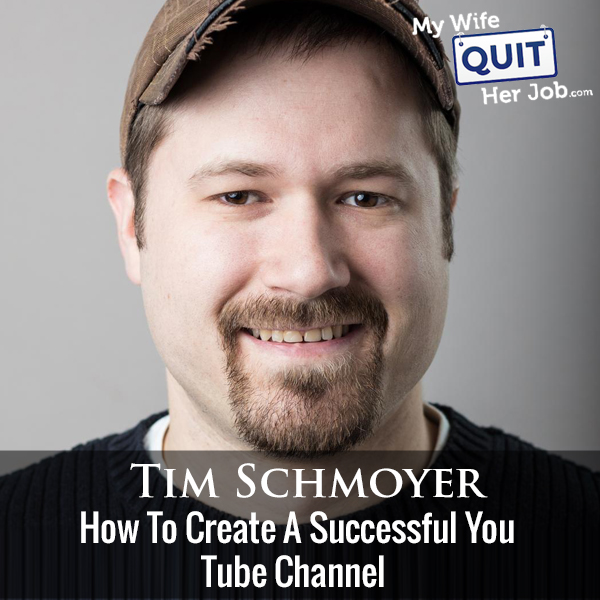
Most people approach YouTube the way they approach Google: pick keywords, outrank competitors, capture search traffic. Tim Schmoyer stopped targeting YouTube search years ago, because search viewers are worth the least of any traffic source on the platform.
Tim runs VideoCreators.com with a team of nine, and his clients have collectively gained 14 billion views and 61 million subscribers. His own channel has over 400,000 subscribers, and he has been reverse-engineering YouTube since 2006.
Below is why suggested videos beat search, the video structure that holds attention, how thumbnails actually work, and the four distinct goals a video can have.
Get My Free Mini Course On How To Start A Successful Ecommerce Store
If you are interested in starting an ecommerce business, I put together a comprehensive package of resources that will help you launch your own online store from complete scratch. Be sure to grab it before you leave!
Table of Contents
Key takeaways
- Search traffic produces the lowest average view duration of any YouTube traffic source, so Tim targets suggested videos instead.
- Tags barely matter. Google mainly uses them to catch misspellings in your title and description.
- Likes and comments do not affect ranking. The correlation exists because engaged viewers also watch longer.
- Write your title and thumbnail before you make the video, so the first 15 seconds can pay off what the thumbnail promised.
- Keep branded intros to three seconds, never more than five, and use them to state your channel’s value proposition.
- Every video should have exactly one goal, and the four types are discoverable, community, sales, and subscriber-focused.
- Sales videos that push people off YouTube will lose discoverability, so keep them separate from your discoverable content.
- Channel size does not correlate with revenue. Tim earned more than a client with 6 million subscribers.
Why Tim Schmoyer stopped targeting YouTube search
YouTube is the second largest search engine in the world, and search is only one of several discovery mechanisms. Videos also surface through suggested videos, the homepage, playlists, and recommendations.
The structural difference from Google matters. If Google does its job well, you leave Google within seconds. YouTube’s goal is the opposite: keep you on the platform as long as possible.
Search viewers work against that. They want information quickly, they scrub ahead, and they leave once they have what they came for.
Across essentially every analytics account Tim has seen, search traffic produces the lowest average view duration. Watch time is the currency, so the least valuable viewers come from the channel most people optimize for.
His approach is to target suggested videos, accumulate watch time there, and let Google work out who his videos are for. Once the platform understands the audience, it places his videos in front of those people regardless of whether they are searching, browsing the homepage, or watching a competitor.
Do titles and tags still matter?
Titles matter, and for a different reason than most people assume. You are optimizing for people rather than robots, because every ranking signal on YouTube derives from viewer behavior.
Two videos with identical titles, keywords, and tags will rank differently if one holds viewers 10 seconds and the other holds them three and a half minutes. Google concludes the second is more valuable and the first drops.
So the title matters because it sets an expectation that makes the right person click. Repeating a keyword 16 times accomplishes nothing if the content does not then hold attention.
Tags matter almost not at all. Google primarily uses them now to catch misspellings in your title and description.
Do likes and comments affect YouTube rankings?
No. Tim is direct that people routinely confuse correlation with causation here, including many YouTube experts.
Videos with more likes do perform better, and only because the people engaged enough to like a video are the same people watching it longer. The watch time is doing the work.
Google does not count likes as a ranking factor because they are too easy to game.
His illustration is a channel aimed at toddlers. Those viewers will never comment or click thumbs up, and they deliver enormous watch time.
How to get into YouTube suggested videos
Two things have to be true, and both are about consistency.
First, your content must regularly attract the same audience. Tim’s counterexample is a channel posting how to tie a tie, then how to make playdough, then what to do about a dirty diaper. Those are three different audiences, so Google never develops confidence about who your videos are for.
Once it does have that confidence, that this channel is for people climbing out of debt or people growing a YouTube audience, it can start placing new videos in front of the right people.
Second, that audience must consistently get the value they came for. Tim’s framing is training viewers that every time they watch, they get exactly what they need.
That thread running through all your content is what lets Google recognize a new viewer’s pattern and conclude they would probably like your channel too.
The tradeoff is real. A scattered channel can produce individual videos that grow, and it will not build a returning community, which limits you to chasing AdSense revenue.
How to rank in YouTube search when you do target it
The title and thumbnail have to work together to tease a value your target audience wants. Tim’s distinction: people do not click on what they need, they click on what they want. His audience wants more views, more subscribers, and more money.
Then research the actual results. Run the search several times in an incognito window so your history does not skew results, and look for what the top four have in common.
Are they brand new, meaning YouTube is experimenting and they may not be there next week? Do all the thumbnails share a bright smiling face or a question mark? Is a title crafted with a stronger human element than the “perfectly optimized” version you had in mind?
Then watch how those videos open, because that is where the opportunity usually is.
Why your first 15 seconds decide everything
On television the video is already playing when you turn it on. On YouTube the viewer journey begins with the title and thumbnail, which set an expectation.
The first 15 seconds either confirm that what the viewer clicked for is coming, or they leave.
Tim frequently finds that top-ranking videos for a query do this badly, which is the gap to exploit.
Write the title and thumbnail first
Start with the title and thumbnail rather than the video. Draft 20, 30, or 50 titles and keep tweaking, then decide what image will make someone want to click.
That way you open the video already knowing exactly what the viewer saw, and you can pitch the content against it.
The common failure is making the content first, uploading it, then working out a title. The genuine value often arrives eight minutes in, and you cannot title it that way because nobody would click. The title has to make sense in the first 15 seconds.
The video structure Tim recommends
| Section | Length | Purpose |
|---|---|---|
| Hook | Opening seconds | Confirm the title and thumbnail’s promise is coming |
| Branded intro | 3 seconds, never over 5 | State what your channel does and why |
| Welcome | Very brief | Introduce yourself, ideally via lower third graphic |
| Content | As long as the idea deserves | Deliver on the promise |
| Call to action | End | One goal only |
Tim frames this as learning grammar so you can break the rules deliberately later.
The branded intro is where most people waste the opportunity. Putting up a logo that does a flip reinforces the brand and adds no value.
Instead it should pitch your channel’s value proposition to someone in your target audience, which sets the context for whether they should subscribe. Tim’s runs “Master YouTube” as the what, “spread your message” as the why, then the brand.
Anything longer than five seconds produces measurable audience abandonment. Three is ideal.
How long should a YouTube video be?
As long as you can hold attention. Tim rejects fixed answers like three minutes, because that number is only correct if three minutes is your limit.
A two-minute idea deserves two minutes. Do not inflate it to ten, and do not compress a ten-minute idea into two because someone told you shorter is better.
How YouTube thumbnails actually work
The thumbnail is the billboard. However good the video is, it does not matter if nobody clicks.
Most YouTube viewing is now mobile, so design for something rendered at roughly 72 by 100 pixels. Export at your video’s full resolution and check that everything essential survives at thumbnail size.
Is text still readable? If you are conveying an emotion the viewer needs to register, does it still land when tiny?
Beyond size, the principles are clarity, high contrast between foreground and background, and making the focal element pop. Smiling faces generally outperform, and human emotion of any kind, surprise, shock, or visible thinking, does well.
Should you put your face on the thumbnail?
Only if that is what viewers see when they press play, because the thumbnail sets an expectation.
Tutorial channels showing only hands do not need a face, because viewers are not clicking to connect with a person, they want to know how to build the table. Children’s channels aimed at toddlers do not need faces either.
Thumbnail style also dates. The heavy white stroke on text over a saturated background was the standard a few years ago, and the trend moved toward an Instagram feel: a striking, color-graded photograph with little text, suggesting there is a story worth seeing.
The four goals a YouTube video can have
A common mistake is wanting one video to do everything: rack up views, rank first in search, generate leads and sales, get picked up by a major publication, and build community. Tim’s comparison is a website, where the homepage, about page, and sales page each have distinct goals.
Pick one goal per video, and that determines the call to action.
Discoverable videos
The call to action is watching another video, not subscribing. Getting someone to watch multiple videos means YouTube will follow them with more of your content on their homepage and in suggestions, which is worth more than a subscriber who never returns.
Tim’s technique borrows from sales: talk as though the transaction has already happened. Rather than signing off with “hope you enjoyed this,” point at the next video and describe what it covers as though they are obviously about to watch it.
That increases session time across your videos, which produces good signals.
Community videos
The call to action is engagement, usually comments, and the content is typically less produced. The goal is growing know, like, and trust after discoverable content has brought people in.
Sales videos
The call to action is getting people off YouTube, via a link in the description or an on-screen link.
Keep these separate from discoverable content, because a video that consistently ends viewing sessions will lose discoverability. YouTube wants people staying on YouTube.
Tim’s model maps directly to an email sequence: discoverable videos are the lead magnet, community videos are the nurture emails building trust, and the sales video is the ask at the end.
A sales video is aimed at your existing subscribers rather than at views. It passes through their feed, and a week or two after publishing it should stop getting views entirely.
Why subscribers still matter
Subscribers deliver more watch time than non-subscribers, because they already know and like your content. A larger subscriber base means each new video launches with more viewership and watch time, which improves how it gets positioned everywhere.
Tim still asks, briefly and often visually rather than verbally, partly because social media is mature enough that people already understand what subscribing means.
On a discoverable video, the priority remains getting people into more content.
How to promote a new YouTube video
If you already have an audience, email it and post to Facebook and Twitter, purely to get initial watch time and traction.
Tim pushes back on a common goal, though. Converting your Facebook audience into YouTube subscribers does not necessarily help you, because those people are engaged on Facebook rather than YouTube.
Beyond the initial push, growth comes from consistently publishing for a specific audience with a specific value, doing collaborations, and making content adjacent to videos already performing well in your niche.
His own example: his family found a popular video about golf ball painting, had no golf balls, and had an oak tree. So they made “how to do golf ball painting with acorns,” which is clearly related without being the same video, positioning it to pick up suggested traffic from the original.
Should you put your podcast on YouTube?
Generally no. Podcast recordings perform worse than content designed natively for YouTube.
The real risk is what it teaches your subscribers. Publishing content that does not engage trains your audience that they do not need to watch everything you publish, and once they start filtering you, that is difficult to undo.
Tim’s recommendation is a second channel, or stopping entirely.
His own middle path is recording his podcast as a live stream on his channel. He presents the material as usual while his producer collects good questions from chat into a shared document, then he answers those at the end. The result works as a podcast recording and lives better on YouTube.
The three biggest mistakes new YouTubers make
The first is optimizing for robots rather than people. The algorithms are designed to surface what people respond to, so focusing on the viewer beats studying the system.
The second is quitting too early. Top creators make it look effortless, the same way an athlete or a musician does, and the backstory is invisible.
Tim’s team sees what viewers never see: the enormous number of channels struggling at a hundred, a few thousand, or ten thousand subscribers. Nobody compares themselves to creators at the bottom, so the comparison set is permanently distorted.
The third is believing the content itself is what people want. What actually wins on YouTube is human connection with the creator.
His example is a client with seven full-time production staff, all television backgrounds, shooting on $10,000 cameras, who could not break 24 views after ten months. Meanwhile a man with a webcam in his basement was getting millions.
After watching twenty of their videos, Tim still did not know the host’s name. It was a vegan channel and he had no idea why veganism mattered to the host or whether he should consider it. Just cold facts.
The basement creator had a story people connected to, a visible motivation, and a relationship with his audience.
Channel size does not equal revenue
Roughly half the English-speaking YouTube creator community sits around a million subscribers, so a channel at half a million already reaches a substantial share of the market.
Tim’s business earned more than a client who had 6 million subscribers at the time, and who came to him saying he would quit if Tim could not help. That client now has 10 million.
Audience size is not correlated with revenue in the way people assume.
You can find Tim at VideoCreators.com.
Frequently asked questions
Are YouTube suggested videos better than search?
For most channels, yes. Search viewers produce the lowest average view duration of any traffic source because they scrub for information and leave, while suggested-video viewers deliver more watch time, which is what YouTube actually rewards.
Do YouTube tags matter for ranking?
Barely. Google primarily uses tags now to catch misspellings in your title and description rather than as a ranking signal.
Do likes and comments help your video rank?
No. Videos with more likes perform better only because engaged viewers also watch longer, and Google excludes likes as a ranking factor because they are too easy to game.
How long should a branded intro be?
Three seconds, and never more than five, since anything longer produces measurable audience abandonment. Use it to state what your channel does and why rather than just showing a logo.
Should you write your title before or after making the video?
Before. Writing the title and thumbnail first lets you open the video by immediately confirming what the viewer clicked for, and titling after the fact often means the real value sits eight minutes in where no title can capture it.
How long should a YouTube video be?
As long as you can hold attention, which varies by creator. A two-minute idea should take two minutes rather than being inflated to ten, and a ten-minute idea should not be compressed.
Should you put podcast episodes on YouTube?
Generally no, because they underperform native YouTube content and train your subscribers that they do not need to watch everything you publish. A separate channel or a live-streamed format works better.
Does subscriber count determine how much you earn on YouTube?
No. Tim Schmoyer’s business earned more than a client who had 6 million subscribers, and audience size is not reliably correlated with revenue.