Audio

504: Creative And Practical Applications Of AI That No One Is Talking About With Toni Herrbach

504: Creative And Practical Applications Of AI That No One Is Talking About With Toni Herrbach

The AI tools for ecommerce and content creators that actually earn a permanent spot in our workflow are shockingly few, and this episode is my Profitable Audience co-host Toni Herrbach and I walking through exactly which ones survived a year of daily use across our businesses. Some of them cut hours out of our week. Others looked cool for a month and got kicked out.

I run an ecommerce store (Bumblebee Linens), a blog, a YouTube channel, and this podcast. Toni runs a design and content business plus her Happy Housewife brand.

We use AI daily and disagree on plenty. This is the real accounting.

Here is our tool-by-tool rundown, the workflows that stuck, and the traps we hit along the way.

Key takeaways

  • ChatGPT is the workhorse. Best uses that stuck: writing code for one-off admin tasks, turning existing blog posts into YouTube scripts, generating 10 candidate titles or subject lines to mash into one, and finding spreadsheet formulas faster than Google.
  • Paid ChatGPT ($20/month) is worth it for GPT-4 quality plus plugins. The web-browsing plugin and the Amazon-review-summary plugin are the two most useful in a content workflow.
  • Midjourney and other AI image generators are hit-or-miss. Toni skips them and pays a designer. I stopped using Midjourney after outsourcing images.
  • Adobe’s Podcast AI audio enhancer saves recordings shot outside, in echoey rooms, or on the wrong mic. Occasionally injects a garbled voice artifact on one channel; test before you rely on it.
  • Opus Clip is great at pulling interesting clips from long-form video, but its clips underperform on YouTube Shorts because they lack a hook. Fix: record a fresh 5-second hook to prepend to each clip.
  • Klaviyo’s subject line AI and Tailwind’s title AI both got benched. Too many iterations, not brand-nuanced enough. Just prompt ChatGPT instead.
  • The Google Search Generative Experience cites its sources inside the AI answer, which is a preview of where organic ranking is going.

Which AI tools for ecommerce and content creators earned a permanent spot in our workflow?

The AI tools that actually earned a permanent spot in our ecommerce and content workflow are ChatGPT (paid plan), Adobe Podcast for audio cleanup, and Opus Clip for extracting shorts from long-form video, and even those need heavy hand-holding to be useful. Every other tool we tested got dropped inside a few weeks.

The pattern that came through the entire conversation: AI is a leverage tool, not an autopilot. You have to know the domain well enough to prompt it and to catch its mistakes.

Toni’s summary of her own experience: for anything factual (recipes, correct code, hard business facts), she still trusts human sources. For anything fluid where iteration is expected (subject lines, titles, script outlines), ChatGPT is faster than Google.

How I use ChatGPT to write code for one-off ecommerce admin tasks

I use ChatGPT to write small pieces of code for one-off admin problems on Bumblebee Linens, and it works because I already know how to read code, debug it, and phrase prompts precisely. If you cannot do those three things, the code output will bite you when it does not work and you have no way to diagnose why.

The morning we recorded this episode, Bumblebee Linens got hit with 100,000 hits from a single IP inside a minute and went down. My ChatGPT workflow for the fix:

  • Prompt one: “What is the command line to figure out how many hits are coming from a specific IP address from these access logs?”
  • Prompt two: “What is the command line to add someone to the firewall banlist on this OS?”
  • Prompt three: assemble the pieces into a cron job that runs every five minutes and auto-bans abusive IPs.

Could I have asked ChatGPT to write the entire cron job in one prompt? Probably. But code has a thousand ways to do the same thing, and I want the specific way I know how to maintain.

That is the “know how to read code” prerequisite in action.

Where ChatGPT coding falls apart for non-coders

The failure mode is not that ChatGPT writes obvious garbage. It writes plausible-looking code that misses a corner case. When I point out the corner case, it responds “oh yes, you are correct, that case will not work” and rewrites the code, which is charming and also useless if you did not know to catch it in the first place.

For small, contained tasks (add a class to a Shopify theme, sort products by stock status, animate a hover state), a non-coder can copy the output and get lucky. When it does not work, you have to know how to debug. Otherwise you are stuck.

The safe non-coder use case is the one Toni mentioned: paste working example code you found on a tutorial site into ChatGPT and ask it to adapt it to your situation. Starting from something that already works is a lot lower risk than generating from scratch.

How to turn a blog post into a YouTube script with ChatGPT

Turning a blog post into a YouTube script with ChatGPT is Toni’s favorite use case because quality is high (the source content is yours), speed is dramatic (5 minutes vs. 30-45), and iterations are minimal. She feeds in the existing post, prompts for a script format, and then asks to extend the word count if needed.

Her example: a 1,000-word blog post extended to a 1,750-word YouTube script in a couple of prompts. The extra 750 words are more filler than her original, but the script hits YouTube’s length target and reads in her voice because the source content is hers.

My workflow is the reverse. My blog posts are typically 5,000 words, so I have to trim aggressively before ChatGPT even sees it. I edit down to the through-line first, then feed the shorter version and ask for a script.

The paid ChatGPT plugins worth using

The two ChatGPT plugins that earn their keep in a content workflow are the web-browsing plugin and the Amazon review-summary plugin.

Web browsing lets you paste a URL and ask ChatGPT to summarize the page, which skips the copy-paste step from the browser. The Amazon review plugin takes an ASIN and returns the top complaints from the reviews, which is gold if you write product reviews or run an Amazon influencer channel and need to make sure your video answers real buyer concerns.

The paid ChatGPT tier is $20 a month and unlocks GPT-4 plus the plugin library. If you use ChatGPT for content or code more than once or twice a week, it pays for itself.

What we tried, dropped, and would not recommend

Not every AI tool survived our workflow test, and the ones we dropped are worth naming so you do not waste weeks on them. Here are the tools we tried, kept using for a while, and eventually benched.

Klaviyo subject line AI and Tailwind title AI: benched

Klaviyo’s AI subject line generator does not respect brand nuance. My ecommerce brand has a specific voice, and Klaviyo’s output reads generic. It is easier to prompt ChatGPT with a few examples of my voice and get a shortlist that fits.

Same story for Tailwind’s title/description AI. Too many iterations to get something usable. If the underlying engine for these tools is the same (and it likely is), you are better off prompting the general-purpose model directly with your context loaded in.

Midjourney: fun to play with, hard to use in production

Midjourney can generate lifestyle backgrounds for product photos and stylized editorial images, but getting it to output exactly what you want takes 16 iterations. For anyone who values their time above $10 an hour, paying a designer or using stock photography is faster.

Toni pays a designer for blog images. I stopped using Midjourney after outsourcing to a VA. The exception is product-specific lifestyle backgrounds (our student Dale tried this on his spray bottles), and even there, the results were inconsistent enough that most sellers give up.

Real image AI generally has a giveaway “AI look.” Hands are still the tell. Full-bodied humans are still off. Backgrounds and objects are closer to production-ready than people.

Adobe Podcast AI: the audio-cleanup tool worth the risk

Adobe Podcast (specifically the Enhance Speech tool) is the audio-cleanup AI I use for three types of recordings the tool can save: bad-mic recordings, echoey rooms, and outdoor interviews. When it works, the difference is night and day.

Cases where it saved me:

  • An episode I accidentally recorded on my laptop webcam mic instead of my podcast mic. Adobe Podcast fixed the audio to broadcast-usable quality.
  • A guest who took the interview outside on a beach with boats and planes going by. Cleaned the ambient noise substantially.
  • A guest who moved to a phone-booth-sized “quiet room” with hard walls and heavy echo. Removed most of the echo.

The demonic-voice glitch to watch out for

Toni has hit a repeatable failure mode where Adobe Podcast injects a roughly 17-second garbled voice artifact into the middle of a processed track. It has happened to her three times, and she has stopped using the tool.

My hypothesis: it seems to happen when you feed the tool a track with multiple people talking on the same channel, versus a single isolated voice per track. If you always record each speaker to a separate track, the risk goes down significantly.

The workflow rule: process each speaker’s track separately, listen to the entire enhanced track before publishing, and keep the raw unprocessed track as a backup so you can bail if the tool corrupts a segment.

Why Opus Clip shorts underperform on YouTube (and the fix)

Opus Clip is genuinely good at identifying interesting clips from a long-form video, which is the hard part, but the shorts it produces underperform on YouTube because they lack a hook. I ran the tool for six to eight weeks on my long-form YouTube content and most of the shorts got fewer than 1,000 views.

The reason is structural. Opus can pull a compelling clip, but a YouTube Short lives or dies on the first 2 seconds. Without a hook engineered specifically for shorts distribution, even a great clip scrolls right past.

My new workflow: use Opus to identify the clip candidates (the hard part), then batch-record a 5-second hook for each and stitch them together. Extra work, but the hooks are the difference between 1K views and 50K.

The upstream fix: hook every section of your long-form video

A YouTube friend told me the real fix is upstream. If every section of your long-form video has a mini-hook at the start, Opus’s extracted clips will already open with a hook.

For a “5 ways to X” video, that means five hooks: one for each section. The video gets more retention on YouTube itself because sections stay compelling, and shorts extracted from it work out of the box.

I have not fully executed on this yet, but it is the direction I am moving. Plan your long-form video to be shorts-friendly from the outset.

The AI tools worth a mention but not central to our workflow

A few tools we discussed briefly, without heavy production use yet.

  • Canva AI (Magic): Toni is excited to test it because everyone she teaches already uses Canva; the AI features are the natural extension. Not yet in her workflow.
  • Descript: the eye-correction feature simulates you looking at the camera even when you are reading a script off to the side. Interesting for anyone who hates teleprompter rigs.
  • Google Pixel photo-face-swap: the camera phone can now combine faces from multiple group photos into one shot where everyone is smiling. A preview of consumer-grade face editing.
  • ManyChat + ChatGPT: ManyChat by itself is scripted, not AI. Wire ManyChat to send an external request to OpenAI and it becomes a real conversational bot. Low on my priority list, but the plumbing is there.
  • Google’s Search Generative Experience: Google’s AI answer with source citations, now on top of search results. This is the preview of what SEO looks like next.

The one thing I refuse to feed AI

The one thing I refuse to feed AI models is a full backup of my life’s content, and it is the reason I paused “SteveBot,” a chatbot idea I was building on top of my blog, podcast, and YouTube archives. To make it work well I would have to send every transcript, every post, and every video I have ever made to Microsoft or OpenAI.

That is not a technical objection. Everything you feed a public model becomes training data (or is treated as such by many practical measures). There is no “I trained my own bot on my content.” You trained their bot on your content.

For anyone with proprietary IP, first-hand research, or a body of work that competitors would love to have, this is a real decision. It is not paranoia to think twice about what you upload.

Frequently asked questions

What are the best AI tools for ecommerce sellers in 2024?

The AI tools most ecommerce sellers get durable value from are ChatGPT (paid tier, for prompts, code snippets, and content), Adobe Podcast for audio cleanup, and Opus Clip for extracting shorts from long-form video. Klaviyo’s subject line AI, Tailwind’s title AI, and Midjourney for product imagery are worth trying but tend to get dropped from production workflows because iteration cost is too high.

Is ChatGPT Plus worth the $20 per month for creators?

Yes, if you use ChatGPT more than a couple of times a week. GPT-4 produces noticeably better output than the free tier, and the plugin library (web browsing, Amazon review summary, and others) unlocks real workflow shortcuts. If ChatGPT is your first stop for titles, subject lines, or code snippets, the paid plan pays for itself in saved time.

Can you use ChatGPT to write code if you are not a programmer?

Only for small, contained tasks where you can safely test the output and back out if it breaks. ChatGPT writes plausible-looking code that often misses corner cases, and diagnosing why it does not work requires reading and debugging skills. A safer path for non-programmers is to paste working example code you found on a tutorial and ask ChatGPT to adapt it to your specific situation.

How do I use Opus Clip to actually get views on YouTube Shorts?

Opus Clip finds interesting clips reliably but its shorts underperform because they lack a hook. The fix is to prepend a fresh 5-second hook to each extracted clip before publishing. The upstream fix is to write every section of your long-form video with a built-in hook so Opus’s clips already open compellingly.

Which AI image generator is best for product photography?

None of the current image AI tools reliably produce production-ready product photography. Midjourney can generate lifestyle backgrounds you composite behind your product, but getting the exact output takes many iterations. Most sellers get better ROI by hiring a designer, buying stock, or shooting product photos themselves than by fighting an AI image generator.

Is Adobe Podcast Enhance Speech safe to use on published episodes?

It is usable but not fully safe. Adobe Podcast can inject garbled voice artifacts into a processed track, especially when multiple speakers are on the same channel. The safest workflow is to process each speaker’s isolated track separately, listen to the entire enhanced track before publishing, and keep the raw unprocessed audio as a backup.

Should I be worried about feeding my content into ChatGPT?

If your content is public and low-sensitivity (existing blog posts, YouTube transcripts, standard business copy), the exposure is low. If your content is proprietary research, unpublished IP, customer data, or a body of work competitors would like access to, treat every prompt as a potential training-data contribution. There is no way to build a genuinely private AI on top of a public model’s API.

I Need Your Help

If you enjoyed listening to this podcast, then please support me with a review on Apple Podcasts. It's easy and takes 1 minute! Just click here to head to Apple Podcasts and leave an honest rating and review of the podcast. Every review helps!

Ready To Get Serious About Starting An Online Business?


If you are really considering starting your own online business, then you have to check out my free mini course on How To Create A Niche Online Store In 5 Easy Steps.

In this 6 day mini course, I reveal the steps that my wife and I took to earn 100 thousand dollars in the span of just a year. Best of all, it's absolutely free!

503: A Fun And Profitable Side Hustle That No One’s Talking About (No Traffic Required) With Liz Saunders

503: A Fun And Profitable Side Hustle That No One's Talking About (No Traffic Required) With Liz Saunders

The Amazon Influencer Program is a side hustle where you record short shoppable videos of products, Amazon places those videos on real product listings, and you earn a commission whenever a shopper watches your video and then buys a related product. You do not drive any traffic yourself; Amazon does.

Top full-time creators are pulling $10,000 to $15,000 a month, and you can apply with as few as 100 engaged TikTok followers.

In this episode, my longtime friend Liz Saunders, founder of Fluencer Fruit and former chief of staff at Jungle Scout, walks through exactly how the program works, how to get approved, and how to pick product listings that actually convert.

Here is how the Amazon Influencer Program works, what it pays, how to get approved, and how to pick product listings that stand a real chance of earning.

Key takeaways

  • The Amazon Influencer Program is an offshoot of the Amazon Associates affiliate program. Your video content lives on Amazon (on product listings, in the Inspire feed, in Discover), so you do not need your own audience to earn.
  • Top creators focused on buying-to-review are earning $10,000 to $15,000 a month, per Liz Saunders. Casual creators making a handful of videos are earning a few hundred to a couple thousand a month.
  • You can apply with a TikTok, YouTube, Instagram business account, or Facebook business page. Liz has heard of approvals with as few as 100 engaged TikTok followers. Engagement matters more than raw follower count.
  • You get commissions on last-touch attribution for one related product. Unlike Amazon Associates, you do not get a 24-hour cart. You get the next-click purchase in a related category.
  • The top video carousel on a product listing has six shared spots for the brand and influencers. Videos in that top carousel do about eight times better than videos placed elsewhere.
  • Sweet-spot listings: a product-listing rating around 4.4 or higher, open carousel spots, and no more than two other influencers already on the listing.

What is the Amazon Influencer Program?

The Amazon Influencer Program is an on-Amazon content program that pays creators a commission when shoppers buy a related product after watching their shoppable video, photo, or vertical short on an Amazon product page. It is an extension of the Amazon Associates affiliate program, but the content lives on Amazon itself instead of your own blog or social feed.

Liz calls it a “reverse influencer” model. Traditional influencers push their own audience to a brand; Amazon influencers upload video reviews and shoppable content to Amazon, and Amazon feeds shoppers who are already on the site to those videos.

You are earning a small percentage of traffic that Amazon is already generating for you.

Approved creators can upload shoppable videos, shoppable photos, vertical shorts under 30 seconds, and Amazon Live streams. Those pieces of content can appear inside the top video carousel on a product listing, in the Inspire feed inside the Amazon shopping app, and in the Discover feed.

How much can you earn on the Amazon Influencer Program?

Realistic earnings on the Amazon Influencer Program range from a few hundred dollars a month for casual creators to $10,000 to $15,000 a month for full-time creators who are buying products with intent to review, according to Liz. Her own personal-testing account has crossed $1,500 in a single month while she experiments with the format.

The full-time earners share a specific profile. They review higher-price products in the $100 to $1,000 range, they publish consistently, and they hunt for listings with open carousel spots instead of chasing volume. Liz points out that the creators pulling $10K to $15K a month “don’t spend a lot of time reviewing $10 widgets.”

Money comes from the same referral fee sellers already pay Amazon on every sale, so nothing extra comes out of the seller’s pocket per view. You earn on the next related product a viewer buys, whether it is the exact product you reviewed or a competitor in the same category.

How do you get approved for the Amazon Influencer Program?

You get approved for the Amazon Influencer Program by applying on Amazon’s site with a linked TikTok account, YouTube channel, Instagram business account, or Facebook business page. The application takes about 10 minutes, and Amazon’s automated system approves or rejects you almost instantly based on your follower count and engagement.

Amazon has never published a follower minimum. Liz was approved with 2,700 Instagram followers on a niche wellness account with strong engagement.

She has also heard of TikTok accounts with as few as 100 followers getting in when engagement was high, and she has seen 100,000-follower Facebook pages get rejected when engagement was low. Engagement wins.

If you get rejected on one platform, you can retry with a different platform. If your first channel is inactive, spin up a more engaged one on a different network and apply again.

Best platform to apply on right now

TikTok is the easiest platform to get approved on today, per Liz. The algorithm can put a small account in front of a real audience quickly, so engagement rates on small TikTok accounts look strong even at low follower counts. Facebook pages and Instagram business accounts both work, but they need active posting and visible engagement.

Step 1: Get onsite placement with three shoppable videos

Once your influencer application is approved, the real money unlocks after Amazon approves you for “onsite placement” (the ability to appear on product listings, in Inspire, and in Discover). To unlock onsite placement, you upload exactly three shoppable videos and wait for Amazon to review them.

Liz’s rule: upload three, not five. Amazon reviews every video with a fine-tooth comb, so five videos means five chances to get flagged.

Three is the minimum, so submit only three and keep each one short, simple, and clean.

You get three attempts at onsite-placement approval. Blow all three, and you are done with that lever, so treat the first submission like it counts.

What kills first-time onsite-placement applications

The most common rejection reasons Liz sees are all avoidable:

  • Health or medical language. Anything that sounds like a health claim gets flagged. Words like “eco-friendly” or “bio-” also get caught even when they are not medical.
  • Personal information in the background. Amazon’s AI reads license plates, addresses, QR codes, and even barcodes from old Amazon boxes in the shot. Clear the background.
  • Mentioning price or discount. Videos have to be evergreen, and sellers can change prices at any time. No dollar amounts, no “on sale,” no coupons.
  • Videos that are too long or too produced. Aim for around 45 seconds. Amazon allows six seconds and up, but shorter is safer for the first three.

Current approval turnaround is roughly two to three days, per Liz. Earlier in the program the wait was four to eight weeks, so this is a good moment to apply.

Step 2: Pick product listings that actually convert

Not every Amazon product listing is worth a video. Liz uses a small set of signals to decide whether a listing will actually earn, and the biggest one is the top video carousel on the product page.

The top carousel holds six shared slots for the brand and influencer videos combined. If the brand has uploaded a product video, that carousel unlocks and becomes a popup on the listing. Videos placed in that top carousel do roughly eight times better than videos placed elsewhere on the page, per Liz’s own data.

Her ideal listing has a brand video (so the carousel is unlocked), no other influencers on it, open slots, a listing rating around 4.4 or higher, and ideally is a sponsored listing so the brand is actively driving traffic.

Shoppable-video listing scorecard

SignalWhat to look forWhy it matters
Top carousel statusUnlocked (brand has a video), with open slotsTop carousel spots convert roughly 8x better than other placements.
Number of other influencersTwo or fewer already on the listingFewer competitors means a better shot at holding a top-carousel spot.
Listing ratingAround 4.4 or higherHigher ratings correlate with better conversion on Liz’s own videos.
Sponsored listingYes, when possibleThe seller is paying to drive traffic to the listing, which lifts your video views.
Product priceHigher-ticket items ($100 to $1,000+)Full-time earners focus here. Commissions on $10 widgets do not add up.

Liz built Fluencer Fruit, a Chrome extension, to pull all of these signals onto the Amazon search results, best-seller pages, and even wishlists so you can score listings without clicking into each one.

How Amazon Influencer commissions and attribution work

Amazon Influencer commissions run on what Liz describes as last-touch attribution with a one-click, related-product window. If a shopper watches your shade-tent video and then buys a shade tent (yours or a competitor’s), you earn a commission. If they buy a picnic basket or a TV next, you do not.

That is a big difference from Amazon Associates, where a click gives you commission on the entire cart for 24 hours. On the influencer side, you get exactly one purchase, and it has to be related to the product in your video.

Category matches like a treadmill to a competing treadmill brand count. Cross-category purchases like a TV or a picnic basket typically do not.

Both programs draw from the same referral fee the seller pays Amazon, so the seller does not double-pay. Whether both an Associates commission and an Influencer commission can pay out on the same sale is officially unclear, per Liz. Amazon has never confirmed.

Creative ways to source products without buying everything

If you do not want to bankroll every product yourself, there are three sourcing paths creators are using right now, per Liz:

  1. Products already in your house. This is where every new creator should start. Walk your house and film 45-second videos on anything you bought that has an Amazon listing (it does not need to have been purchased on Amazon, only sold on Amazon).
  2. Agencies that match sellers and influencers. Once you have some content history, agencies will match you with sellers who ship free product plus an additional commission on your onsite content. Different from Vine, where you cannot talk to the brand.
  3. Airbnbs, playgrounds, neighbor gear. Some creators are renting Airbnbs specifically to review the appliances, decor, and outdoor equipment inside. The rental is a business expense, and one weekend produces dozens of videos. Others film equipment at their neighborhood playground or a neighbor’s higher-end gear that they already have hands-on experience with.

Filming a product in a department store you have never used is against Amazon’s terms of service. People are doing it. It is a suspension risk, per Liz.

Content style: what actually converts on shoppable videos

The content that converts on the Amazon Influencer Program answers the questions a shopper had right before they bought the product. Liz says the winning format is “be yourself, answer questions you had before you bought this thing, and add one piece of constructive feedback so the video does not feel like a sales pitch.”

Common angles that work:

  • Show the product to scale in your hand so shoppers can gauge real-world size.
  • Unbox it and show exactly what comes in the box.
  • Speak directly to the top FAQs on the product listing.
  • Compare it briefly to a similar product a shopper might also be considering.
  • Include one honest piece of constructive feedback (“I wish it did X differently”).

For format, Amazon now wants both horizontal and vertical content. Horizontal videos run one to five minutes and land on product listings; vertical shorts run under 30 seconds and feed the Inspire feed.

You can shoot horizontal in 4K and crop a shorter vertical from the same footage, as long as the vertical version is tighter and faster.

Why this matters for Amazon sellers, not just creators

Amazon sellers should care about the influencer program because influencers are the first legal, incentivized-review channel Amazon has offered since incentivized written reviews were banned in 2016. Influencers are FTC-compliant, Terms of Service-compliant, and (unlike Vine reviewers) you can actually talk to them and brief them.

If you sell on Amazon, the direct value of a tool like Fluencer Fruit is limited, but the underlying insight matters. Working with creators to produce shoppable videos for your listings is a way to fill your own top carousel with UGC content that converts better than brand video alone.

Frequently asked questions

What is the Amazon Influencer Program?

The Amazon Influencer Program is an extension of the Amazon Associates affiliate program that lets approved creators upload shoppable videos, photos, and vertical shorts directly to Amazon product listings. Creators earn a commission when a shopper watches their content and then buys a related product.

How much do Amazon influencers make?

Casual Amazon influencers typically earn a few hundred to a couple thousand dollars a month. Full-time creators who focus on reviewing higher-price products with open carousel slots are earning $10,000 to $15,000 a month, per Fluencer Fruit founder Liz Saunders.

How many followers do you need for the Amazon Influencer Program?

Amazon has never published a follower minimum. Approvals have gone through with as few as 100 engaged TikTok followers, and rejections have hit accounts with 100,000 low-engagement Facebook followers. Engagement matters more than raw follower count.

How does the Amazon Influencer Program work?

Approved creators upload shoppable videos to Amazon, and Amazon places that content on product listings, in the Inspire feed, and in the Discover feed. When a shopper watches a video and then makes a related-product purchase, Amazon pays the creator a commission out of the same referral fee the seller was already paying.

What is the difference between Amazon Associates and the Amazon Influencer Program?

Amazon Associates pays affiliates for driving off-Amazon traffic and gives credit on the entire cart for 24 hours. The Amazon Influencer Program pays creators for content that lives on Amazon itself, and credit is limited to one related-product purchase on the next click.

How do I get approved for onsite placement?

Once your influencer application is approved, upload exactly three short, clean shoppable videos and wait for Amazon to review. Keep videos around 45 seconds, avoid pricing, health claims, and personal information in the background. Approval is currently taking about two to three days.

Can Amazon sellers use the Amazon Influencer Program?

Sellers cannot upload their own content as influencers on their own listings, but they can partner with approved influencers to fill the top video carousel with shoppable UGC. Influencers are FTC and Amazon Terms of Service compliant and can be briefed directly, unlike Vine reviewers.

I Need Your Help

If you enjoyed listening to this podcast, then please support me with a review on Apple Podcasts. It's easy and takes 1 minute! Just click here to head to Apple Podcasts and leave an honest rating and review of the podcast. Every review helps!

Ready To Get Serious About Starting An Online Business?


If you are really considering starting your own online business, then you have to check out my free mini course on How To Create A Niche Online Store In 5 Easy Steps.

In this 6 day mini course, I reveal the steps that my wife and I took to earn 100 thousand dollars in the span of just a year. Best of all, it's absolutely free!

502: How To Make Your First $1000 Dollars On Shopify (The Easy Way) – Family First Friday

502: How To Make Your First $1000 Dollars On Shopify (The Easy Way) - Family First Friday

To make your first $1,000 on Shopify without paid ads, do two things in order. First, fix your website’s trust signals so shoppers actually check out (phone number, real address, free-shipping policy, testimonials, benefit-driven copy, PickFu-validated design). Then drive free targeted traffic from niche Facebook groups where your buyers already hang out, and run an evergreen Facebook Messenger giveaway to build an email list on autopilot.

This is a Family First Friday solo episode, drawn from what I have learned teaching Create a Profitable Online Store for 12 years. The number one problem new Shopify store owners have is not getting traffic; it is that the traffic they do get does not convert.

Here is the exact two-step playbook, the trust-signal checklist that has to come first, and the two free-traffic strategies that have gotten unknown stores to $1,000 a month.

Key takeaways

  • 99% of the time, a store with traffic and no sales has a trust problem, not a traffic problem. Fix the site first.
  • Minimum trust signals: a phone number, a real physical address, a free-shipping policy, testimonials with photos on every page, and benefit-driven product copy.
  • Validate the site with PickFu. About $25 gets you 50 real shoppers grading whether your store looks trustworthy enough to buy from.
  • Free traffic strategy one: join niche Facebook groups, help people for three to four weeks, then soft-pitch your product. My friend Vivian Kay of Kinky Curly Yaki built her hair-extension brand past $1 million this way.
  • Free traffic strategy two: an evergreen Facebook Messenger giveaway (built in ManyChat) collects email and Messenger subscribers for roughly $0.25 to $0.75 each and pays for itself with a post-giveaway offer.
  • These two strategies alone are enough to make $1,000 a month, if your website is trustworthy first.

Why “no sales” is almost always a website problem, not a traffic problem

If you have driven any real traffic to a Shopify store and gotten zero sales, the problem is almost certainly your website, not your traffic. In 12 years of teaching new store owners, I have heard “5,000 visitors and no sales” and “lots of add-to-carts but no purchases” over and over, and 99% of the time the store is losing shoppers on trust before it ever gets a chance to sell them.

New stores start from zero trust. Nobody has heard of you. The first thing a shopper does is scan for signs you are a real business, and if the signals are not there, they leave.

Before you drive a single visitor from an ad or a Facebook group, get your site over the trust bar. Everything below assumes that.

Shopify trust-signals checklist (do this before you drive traffic)

The bare-minimum trust signals every new Shopify store needs are a phone number, a real physical address, a free-shipping policy, testimonials with photos, and copy that sells benefits instead of features. Get all five in place before you send anyone to your site.

Phone number, physical address, and free shipping

Shoppers who have never heard of your brand look for a way to reach a real human. If they cannot find a phone number and address, most will bail. Free shipping removes the last piece of hesitation on checkout for a small unknown store.

If you do not want your cell phone ringing, use a Google Voice number with an outgoing message that asks callers to text or email the store and promises a fast response.

Testimonials with photos on every page

People are lemmings. They need to see that someone else has already shopped in your store before they will risk it themselves. Give four close friends free product in exchange for a written testimonial, ask if you can use their photo, and paste those testimonials on every page (bonus points if any of them have real credibility or authority in your niche).

Benefit-driven product copy

Product descriptions have to sell the benefit, not list the feature. Explain why your store or product is different, and make sure a shopper can tell in one read why they should buy from you instead of the competition.

Validate the site with PickFu before spending a dollar on traffic

Once you think the site is ready, run a PickFu poll. For about $25 (with a coupon), PickFu shows your URL to 50 random shoppers and asks whether the store looks trustworthy enough to buy from and, if not, why. Within minutes you get 50 paragraphs of real feedback.

If most of the panelists say the store looks legit, you are ready to drive traffic. If they do not, fix what they flag before moving on.

Free traffic strategy 1: niche Facebook groups where your buyers already hang out

The fastest free-traffic strategy for a new Shopify store is joining the niche Facebook groups where your ideal customers already talk to each other and becoming a genuinely useful member of the community before you ever mention your product. There is a Facebook group for virtually every product category on earth, and the group members are pre-qualified buyers.

If you sell fishing supplies, there is a Facebook group full of fishermen. If you sell wedding accessories the way my wife and I do, there are dozens of active bridal groups.

The rule that makes this work: spend three to four weeks answering other people’s questions and helping members before you post anything remotely promotional. If you show up and start pitching, you will get banned. If you show up and help, the admins usually give you more leeway over time.

How to soft-pitch without getting banned

Once you are established in the group, the soft pitch is casual, not salesy. My wife and I sold wedding handkerchiefs, and I would ask what people were using as their “something blue,” then mention that we happened to make personalized blue hankies. That framing works in almost any niche.

A friend’s 14-year-old daughter used the same pattern with opossum enamel pins. She posted her designs in opossum-lover Facebook groups, mentioned her Etsy shop when people asked, and started making over $1,000 a month as a high schooler. My friend Vivian Kay used it to build Kinky Curly Yaki past $1 million by selling her hair extensions to women in Facebook communities.

Do not underestimate the power of a niche community with a real member who cares.

Free traffic strategy 2: an evergreen Facebook Messenger giveaway

The second strategy is an evergreen Facebook Messenger giveaway that collects email and Messenger subscribers on autopilot and pays for itself with a post-giveaway offer. Unlike a one-off giveaway, an evergreen Messenger giveaway runs on its own after you set it up once, so you can leave it live for months.

You build it in a chatbot tool like ManyChat, which handles collecting emails, picking winners and losers, and delivering prizes and consolation offers automatically.

How the giveaway funnel works, step by step

  1. Run a Facebook Messenger ad that sends people to your ManyChat bot.
  2. The bot asks if they want to enter. One tap makes them a Messenger subscriber.
  3. The bot asks for their email. Facebook Messenger pre-populates the email field on mobile, which lifts conversion.
  4. The bot immediately presents a related post-giveaway offer (a coupon or a related bundle) that pays for the ad spend.
  5. For 23 hours the bot randomly decides winner or loser based on odds you set in ManyChat. Dial the odds down if you are giving too much product away.
  6. Winners get sent to a redemption page. Losers get a consolation coupon.
  7. Every subscriber goes into a five-email post-giveaway sequence.

Always give away a product you actually sell. A “free iPad” giveaway attracts freebie hunters; a giveaway for a personalized handkerchief attracts people who genuinely want handkerchiefs.

Typical cost per subscriber on this funnel is $0.25 to $0.75 for both a Messenger and email subscriber, and the post-giveaway offer plus the follow-up email sequence should cover the ad spend.

The five-email post-giveaway sequence

Every new subscriber should flow into a short email autoresponder that keeps selling after the giveaway ends. A workable five-email sequence:

  1. A consolation coupon and an invitation to shop.
  2. Your brand story and unique value proposition.
  3. Best-seller and product recommendations.
  4. Testimonials and social proof.
  5. An invite to follow your store on social media.

Even a modest conversion rate on this sequence gets the giveaway to break-even or slightly profitable, and you keep the email list forever.

Frequently asked questions

How do you make your first $1,000 on Shopify without paid ads?

Fix your website’s trust signals first (phone number, address, free-shipping policy, testimonials with photos, benefit-driven copy, PickFu validation), then drive free targeted traffic from niche Facebook groups and an evergreen ManyChat Messenger giveaway. Those two strategies together are enough to reach $1,000 a month once the site converts.

Why is my Shopify store getting traffic but no sales?

99% of the time it is a trust and conversion problem, not a traffic problem. New stores lose shoppers who cannot find a phone number, address, testimonials, or benefit-driven copy that explains why to buy from you instead of a competitor.

What trust signals does a new Shopify store need?

At minimum: a phone number, a real physical address, a free-shipping policy, testimonials with photos (on every page), and product copy that sells benefits instead of features. Adding a friend with any real credibility to your testimonials strengthens all of it.

How do I use Facebook groups to sell my Shopify products?

Join the niche Facebook groups where your ideal customers already hang out, spend three to four weeks genuinely helping members before you mention your store, and then soft-pitch by asking about a category your product fits. Never open with a pitch. Admins ban that instantly.

What is a Facebook Messenger giveaway and how does it work?

A Facebook Messenger giveaway is an evergreen sweepstakes built inside a ManyChat chatbot that collects Messenger and email subscribers on autopilot. Entrants get a chance to win a real product from your store, losers get a consolation coupon, and every subscriber drops into a follow-up email sequence that pays back the ad spend.

How much does it cost to build subscribers with a Messenger giveaway?

Typical cost is $0.25 to $0.75 per subscriber for both a Facebook Messenger and an email subscriber, depending on the offer and audience. The related post-giveaway offer and follow-up email sequence should generate enough sales to cover the ad spend.

Do I need paid ads to reach $1,000 a month on Shopify?

No. Niche Facebook groups plus an evergreen Messenger giveaway are enough to get most stores to $1,000 a month, provided the site is already trustworthy enough to convert. Paid ads are the accelerator, not the starting point.

I Need Your Help

If you enjoyed listening to this podcast, then please support me with a review on Apple Podcasts. It's easy and takes 1 minute! Just click here to head to Apple Podcasts and leave an honest rating and review of the podcast. Every review helps!

Ready To Get Serious About Starting An Online Business?


If you are really considering starting your own online business, then you have to check out my free mini course on How To Create A Niche Online Store In 5 Easy Steps.

In this 6 day mini course, I reveal the steps that my wife and I took to earn 100 thousand dollars in the span of just a year. Best of all, it's absolutely free!

501: Student Story – Making 7 Figures Selling Farmhouse Home Decor With JK Beaton

501: Student Story – Making 7 Figures Selling Farmhouse Home Decor With JK Beaton

JK Beaton built Saratoga Home from a single $8,000 order of oversized party ice buckets into a seven-figure kitchen-storage brand on Amazon, all while working a full-time student-recruitment job at a Montreal university that had him traveling three months out of the year. He picked products purely on the numbers, launched with an hour or two of work per day, and cut his first product two years in when the margins never got above 10%.

In this episode, JK, a longtime student in my Create a Profitable Online Store course, walks through his product-selection criteria, his China-direct sourcing setup, and the exact habits that let him build the business in the margins of a demanding day job.

Here is JK’s full playbook, from the first product order to a seven-figure brand today.

Key takeaways

  • JK’s first product, an oversized party ice bucket, took a $8,000 opening order (500 units) landed and kitted at a 3PL. First-year net margin was around 10%, and he eventually cut the product entirely.
  • He picked every product on the numbers: price point, keyword volume, and a competition set with weak reviews or archaic listings.
  • Cut rule: any product below a 15% net margin is on the chopping block. Anything from 15% to 20% is on watch.
  • The business only turned a real corner when he expanded from one product to three (three-tier storage baskets, a salt-and-pepper set with caddy, and a planter set) on a $20K to $25K PO.
  • 3PL setup evolved from “everything through an Ohio warehouse” to a blended model. Today about 80% of inventory ships from China direct to FBA, with a small buffer at 3PLs in Vancouver and near LA for Q4.
  • Since 2021, factories have been willing to hold inventory for free. JK pays a deposit up front and pays the balance only when goods leave the factory. Big cash-flow win.
  • The right daily habit beat inspiration. JK’s version: wake up before the family, put in an hour or two on the freshest brain of the day, “get in the taxi every day.”

How JK Beaton picked his first Amazon product

JK picked his first product on cold numbers rather than passion. He ran a discipline check against the criteria in my course (price point, keyword search volume, and a competition landscape with either lousy reviews or dated, archaic listings) and picked an oversized party ice bucket because the math said it worked.

“I’ve had ice buckets in the past, but I’m not an ice-bucket expert. I became a bit of one as time went on,” JK told me. He was disciplined about the criteria, not passionate about ice buckets.

His previous six business attempts had all failed because he had “thought too much about trivial details” (brand names, focus groups on the logo). This time he treated the brand name Saratoga Home as a placeholder based on where his family was vacationing when he decided to start, and moved straight to product research.

What his first product cost to launch

The first PO was 500 units of the ice bucket. Landed cost, plus kitting at a 3PL warehouse in Ohio, plus inbounding to Amazon FBA, came in around $8,000. First-year net margin was roughly 10%.

The kitting piece is worth calling out. The bucket shipped in multiple parts (the bucket itself plus a four- or five-piece stand), and JK was talked into paying an Ohio 3PL to kit them before forwarding to Amazon. In retrospect, he says, he was “grossly overspending just to get it to Amazon.”

How he got his first sale on July 9, 2017

JK’s first sale came through Amazon PPC on July 9, 2017, on the back of a listing he had built specifically to outconvert weak competitors. It was a unique product at the time (before it started getting copied a few months later), and the combination of PPC plus a stronger listing was enough.

How to source products from China as a small Amazon seller

JK’s sourcing model has evolved through three distinct phases: Alibaba plus an Ohio 3PL, direct relationships with a dedicated factory rep, and now a blended model with factory-held inventory shipping direct to FBA. The through-line is that leverage over factories has moved to the importer since 2021, and small sellers should press it.

Finding factories on Alibaba and then going deeper

Back in 2016 and 2017 he found his first factory on Alibaba, the same starting point most new sellers use. As the business grew, he built a real relationship with a factory rep who had decades of experience across Chinese, Western, and trade-company sides of the business.

When post-pandemic sales cooled in 2021 and his major factory started cutting staff, JK offered that rep a consulting contract to give him a behind-the-scenes view of quality, pricing, and time-to-market. Within a couple of months she was full time for Saratoga Home on the ground in China, and has been ever since.

Getting factories to hold inventory for you

Since 2021, JK has negotiated free inventory holding with his factories. Volume has dropped across many categories, factories want the orders, and holding inventory at low or no cost is one of several concessions importers can now push for beyond price.

The mechanic that makes this a cash-flow win: put down the deposit at PO, then only pay the balance when inventory actually leaves the factory warehouse. That is a materially different working-capital profile than paying in full and warehousing it on your dime.

Where he ships inventory now: direct to FBA plus a blended buffer

Today roughly 80% of Saratoga Home’s US and Canadian volume ships from China direct to FBA, skipping the 3PL to preserve margin. A smaller share buffers through 3PLs in Vancouver, Canada and near Los Angeles, which is especially useful in Q4 when Amazon triples the cost of holding inventory in FBA and third-party warehouses do not.

How to differentiate a home-goods brand on Amazon

Saratoga Home stands out on Amazon through relentless product-pipeline work, better packaging and unboxing, and defensive IP filings. It is a competitive category (the pandemic put a lot of eyes on home goods), so JK treats new-product launches and honest cuts as the core of the business, not a side activity.

Product pipeline: 10 in flight, expecting half to get cut

At any given time, Saratoga Home has around 10 products in various stages of development, three of them in production. JK expects a good half or more of the pipeline to get cut before it launches. Filtering hard early is cheaper than launching mediocre products and cutting them later.

The team validates aggressively before manufacturing runs. They use A/B testing on PickFu and Product Pinion for concept and packaging tests, and they iterate samples with the factory over multiple rounds before they commit.

Packaging and unboxing as a differentiator

Most competitors ship home-goods items in a plain brown box. Saratoga Home ships in a branded white box with a marketing insert that carries the brand story. On a category where Amazon SEO is mostly commodity, the unboxing moment is real differentiation.

Design patents and Amazon Brand Registry

JK has filed design patents (still pending) on select products, mainly to put “patent pending” on the listing to dissuade copycats. The trademark, in place since 2018, plus copyrights on product images, gives him a real Brand Registry lever. His experience: Brand Registry is better at getting a competitor’s copied image suppressed than at pulling a full copycat listing down.

When to cut an Amazon product

JK’s cut rule is simple: any product below 15% net margin is a strong candidate to cut, and anything between 15% and 20% is on watch. Loss-leaders work on Shopify, where you can cross-sell related products; they do not really work on an Amazon-first business where a shopper rarely stays in your catalog.

Before he cuts, he tries the standard rescues: raise price and accept lower volume but higher unit profit, tighten PPC spend, or reposition the listing. If none of that works, he cuts, ideally faster than he used to.

“I’ve waited in the past far too long to cut products and lost a lot of money because of it,” he told me. The reviews and repeat-purchase history make cutting emotionally hard, but the opportunity cost of tied-up inventory dollars is real.

How he liquidates dead inventory

Saratoga Home has liquidated a chunk of inventory over the last 18 months as pandemic-era orders unwound. The preferred channel is Amazon itself, using aggressive pricing, because it returns the most per unit.

Third-party liquidators are the fallback and pay the least. The alternative is paying month after month to warehouse inventory that is not moving.

How to build an Amazon business while working full time

The single hardest thing about starting an Amazon business alongside a full-time job is building the daily habit. JK’s answer was to move his work to the freshest part of his brain instead of the leftover part.

Early on, he would spend time with his family after work, sit down at his desk around 8 or 9 pm, and end up “an absolute zombie.” Two hours of tired evening work produced maybe ten minutes worth of real output. He shifted to waking up before the family, before his day job, and giving that fresh window to the business instead of to the university.

The concept he circles back on is “get in the taxi every day.” He heard it from an interview with a successful artist who attributed her career to physically getting into a New York taxi every morning and showing up at her studio. Some days you kill it; some days you barely produce. What matters is you showed up.

How he actually quit the day job

The quit was a stepping stone, not a leap. In August 2019, a friend JK met in a shared taxi during a student-recruitment trip in Uganda (a former eBay seller who had built and sold an auto-parts business) offered him a part-time work-from-home role that matched his salary. That freed up daytime hours for the business.

Six months later the pandemic hit and everyone at that flight school was furloughed. His business sales tanked in March 2020 and then took off.

When the callback came in late June 2020, JK could turn it down and go full time on Saratoga Home. Home goods exploded during the pandemic, and the timing worked in his favor.

Sourcing beyond China: Vietnam, India, and Mexico

JK has looked at Vietnam, India, and Mexico as sourcing alternatives to China and keeps coming back to China for a home-goods catalog. Each of the alternatives has real limits for his product mix.

CountryWhat workedWhat did not
MexicoUSMCA free trade, no time-zone difference, straight-shot flight from the East Coast for factory visitsFactories were not welcoming or flexible; color packaging support was minimal (“go figure it out yourself”); no partner network the way Chinese factories have
VietnamFriends have reported quality wins; lower tariff exposure than ChinaHarder to get in the door with factories; no equivalent of Alibaba for discovery
IndiaReal strength in certain categories (textiles is a common fit)Samples on JK’s metal-based products did not hit the uniformity needed across a run of 1,000 units; more handmade, less formalized production
ChinaDeep partner networks (packaging, kitting, materials), flexibility, easy discovery via Alibaba, fast samplingTariff exposure and rising labor costs, but still the default for JK’s category

If you can swing the trip, JK strongly recommends visiting your factories in person. Meeting the team, sharing dinner, getting on WeChat (email is largely a thing of the past with Chinese factories) upgrades the relationship in ways video calls cannot.

The Canton Fair, held twice a year, is worth it if you already have a few products and want to broaden your factory network. It is expensive during fair season, so it is probably not the first trip a brand-new seller should take.

How much money you need to start an Amazon business today

JK started Saratoga Home with about $8,000 in inventory and 3PL setup for his first product. His logic: worst case, if a quality product does not sell, you can liquidate and not lose your shirt. You lose some time, and you learn.

His advice for anyone considering the leap: keep your job, build the business on the side, and make risks that are uncomfortable but acceptable. If you are in your early 20s and can eat ramen on a friend’s couch, the calculus is different. If you have a family and a mortgage the way he did in his early 30s, keep the salary and build during the margins of the day.

Frequently asked questions

How much does it cost to start selling home goods on Amazon?

JK Beaton started Saratoga Home with about $8,000, which covered a 500-unit opening order of his first product plus 3PL kitting and inbound to Amazon FBA. First-year net margin on that product was around 10%. Higher-margin products can start meaningfully lower.

How long does it take to launch an Amazon product from scratch?

For JK’s first product, from “product idea hammered down” in February 2017 to first sale on July 9, 2017 was roughly five months. That included several weeks of sampling back and forth with the factory, the PO cycle, ocean freight, and 3PL kitting.

What net margin should an Amazon product have to keep it?

JK cuts products below 15% net margin and keeps a close eye on anything between 15% and 20%. Loss-leaders make sense on a Shopify store where you can cross-sell related products, but they usually do not pay off on an Amazon-first business.

Should you use a 3PL or ship China direct to FBA?

JK now ships roughly 80% of inventory China-direct to FBA to preserve margin, with a smaller buffer at 3PLs in Vancouver and near LA. He leans on the 3PL more in Q4 because Amazon roughly triples inventory-holding costs during the peak season while 3PLs do not.

Can Chinese factories hold inventory for you?

Since 2021, factories have been more willing to hold inventory for small importers, often at low or no cost, as volumes have softened. JK pays a deposit at PO and pays the balance only when goods leave the factory warehouse, which is a real cash-flow improvement.

Should you patent an Amazon product?

JK has filed design patents mainly to place “patent pending” on his listings and dissuade copycats, and to give Amazon Brand Registry a lever to enforce against direct copies. Brand Registry is generally better at getting a copycat’s images suppressed than at removing a full listing.

Is Vietnam or Mexico a better place to source than China?

For JK’s home-goods mix, no. Mexico’s factories were less welcoming and less flexible on color packaging, Vietnam is hard to get into without introductions and lacks an Alibaba-style directory, and India samples on metal products did not hit the uniformity needed across a 1,000-unit run. China’s deep partner networks and fast sampling still win for his category.

I Need Your Help

If you enjoyed listening to this podcast, then please support me with a review on Apple Podcasts. It's easy and takes 1 minute! Just click here to head to Apple Podcasts and leave an honest rating and review of the podcast. Every review helps!

Ready To Get Serious About Starting An Online Business?


If you are really considering starting your own online business, then you have to check out my free mini course on How To Create A Niche Online Store In 5 Easy Steps.

In this 6 day mini course, I reveal the steps that my wife and I took to earn 100 thousand dollars in the span of just a year. Best of all, it's absolutely free!

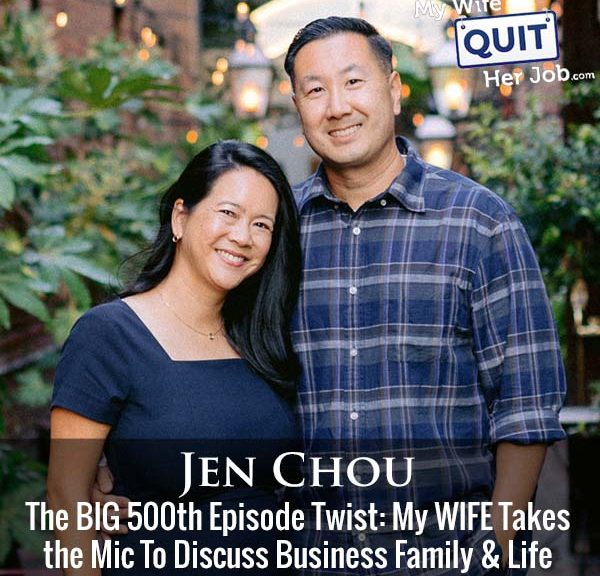
500: The BIG 500th Episode Twist: My WIFE Takes the Mic To Discuss Business Family And Life

500: The BIG 500th Episode Twist: My WIFE Takes the Mic To Discuss Business Family And Life

For the 500th episode of the podcast and our 20th wedding anniversary, I brought my wife Jen back on the show to talk about what has actually kept our marriage, our family, and our business working for two decades. Jen is the operational backbone of everything we run together, and her answers on marriage, business, and where she wants to be in five years surprised me on tape.

We built Bumblebee Linens out of our garage over four years, moved it into a warehouse, eventually bought that warehouse, and now run the store, the blog, and the podcast alongside raising two kids who are three to five years away from college.

Here is the full 20-year debrief: what made the marriage work, how Jen and I split the business, why we deliberately kept things smaller, and the specific decisions we would (and would not) change.

Key takeaways

  • The three things Jen credits for a 20-year marriage: aligned family values, matching spending habits (both frugal), and trust that the other person’s intent is good even in a fight.
  • We play to strengths. I run big-picture, marketing, and tech. Jen runs operations, financials, and the day-to-day of Bumblebee Linens. Neither of us tries to do the other’s job.
  • Jen works about 20 hours a week most of the year, and then goes full-time from early November through the December Christmas rush. Mondays are her busiest day (weekend orders backlog).
  • We deliberately kept Bumblebee Linens smaller than it could be so it stays manageable during the years our kids are still at home. There is a long list of growth moves we are not making on purpose.
  • The single biggest business inflection was moving the operation out of our garage after four years. Buying the warehouse this year removed the last recurring stressor: landlords jacking rent up around 30% at every renewal.
  • Jen’s #1 piece of advice for anyone who wants this lifestyle: take action. Small steps beat perfect planning, because most people never actually start.

What has kept our marriage working for 20 years

Three things have kept our marriage working for 20 years: aligned family values, matching frugal spending habits, and trust that the other person’s intent is good even when we fight. Jen’s answer surprised me on tape.

She said she never wonders whether I meant something maliciously, so a rude moment does not spiral. That trust is the load-bearing part.

Aligned values matter more than most couples give them credit for. If one of us were a spender and the other frugal, or if we disagreed on how to raise the kids, we would be having a much harder conversation.

We are both cheap in slightly different ways. Jen will spend more on a family vacation; I will spend more on an NBA ticket. Neither of us minds the other’s category because the total household spend stays disciplined.

We also play to strengths. I am the ideas and marketing person; Jen is the operations person.

On tape she said, “You know what will make growth or what will be overall good for our family. My strength would be more of implementing.” That division has been true for the business and for the household.

How Jen and I split running Bumblebee Linens

Jen runs the operations and the day-to-day at Bumblebee Linens; I run the marketing, the tech, and the content side of our businesses. Neither of us tries to swap. That split has kept both the marriage and the P&L healthy for 17 years.

Jen manages inventory, embroidery scheduling, invoice printing, packing supervision, and making sure Amazon stock levels stay right. She also manages household finances, plans family vacations, and is the point person on the kids’ school life.

I handle site design, blog and podcast content, product listings, ad strategy, and anything technical. The one place we overlap on purpose is grocery shopping. Everything else, we specialize.

Jen’s weekly work schedule

Jen works about 20 hours a week for most of the year and expands to full-time from early November through the end of December for the Christmas rush. Mondays are her busiest day because the weekend order backlog (Friday, Saturday, Sunday) hits at once and everything has to be printed, embroidered, and packed.

She typically drops our son at school, goes to the warehouse in the morning, has lunch, and heads home around 2 pm. She takes most Fridays off. During the holiday peak, Black Friday through Christmas, that shape goes away and she is at the warehouse most days.

Why we kept the business smaller on purpose

We deliberately kept Bumblebee Linens smaller than it could be because we chose to trade growth for time with the kids. There is a long list of things we could do to grow the store more aggressively that we are not doing right now, and that is by design.

Our kids are on the runway to college in the next three to five years. Volleyball tournaments run most weekends of the year and practice takes three to four evenings a week. If we scaled the business hard right now, one of us would end up absent from that window, and neither of us is willing to trade it.

Jen’s five-year plan surprised me on tape. She hopes to be less involved in Bumblebee Linens, not more. Her focus goes to whichever college the kids land at, and possibly volunteering or mentoring high schoolers after they leave.

Business milestones over 17 years running Bumblebee Linens

The milestones that stand out to us most are not the biggest revenue numbers. They are the moments the business felt like it had crossed a threshold. Some of them looked exciting from the start; others only felt significant in retrospect.

MilestoneWhy it mattered
First bulk wholesale order (~10 dozen items)Our first order that dwarfed anything else we had shipped. Jen took it on the phone from our house, told the customer everything, and (thankfully) the customer never complained about the packing.
Moving out of the garage into our first warehouseAfter four years in the garage, moving out let Jen stop constantly getting ahead of orders on nights and weekends. It also added rent as a permanent monthly obligation, which was stressful for me.
First bulk shipment arriving from overseasThe moment sourcing shifted from small quantities to real inventory scale.
Getting featured on the Today ShowValidation that the brand had reach beyond our own channels.
Hiring our first employeeThe end of “just the two of us in the garage.”
The blog hitting $46 in a single dayThe moment I realized content could cover a mortgage payment on its own. That trajectory turned into what became a real second business.
Buying our warehouse in 2024Removed the last major recurring stressor. Landlords had been raising rent by roughly 30% at each renewal, and now the cost is fixed.

What we would do differently if we started over

Jen would not change much about how we built the business, but she would have bought commercial real estate sooner. Watching rent get hiked roughly 30% at each renewal turned out to be the most stressful line in our P&L, and owning removed it entirely.

The other move she flagged was trusting people earlier. Both of us tend to hold operational tasks too long. If we had hired for warehouse and packing earlier, Jen would have gotten back nights and weekends sooner.

I would give one piece of career advice to my younger self: when I got the Nvidia offer around 2003 or 2004 at what turned out to be an all-time-low stock price, I turned it down out of loyalty to my then-employer. Jen wanted me to take it and never said so at the time because she did not want to influence me.

On paper we would be substantially wealthier. In reality, I would still be working nonstop at Nvidia and neither of us would have this lifestyle, so it worked out.

Advice for people who want to build a business around family life

Jen’s core advice for anyone who wants a business that gives them time with their family is simple: take action, even a small step, because delaying is what actually kills most attempts. She has watched too many of my course students get stuck in planning and detail work without ever launching.

The second piece is aligning with your partner on values before anything else. A shared view on money and on raising kids is what makes running a business together survivable in years three, seven, and twelve.

The third piece is being honest about your role. Not everyone should be the operations person; not everyone should be the marketing person. Trying to be both is where couples running businesses together burn out.

Frequently asked questions

How did Jen and Steve Chou build Bumblebee Linens together?

We built Bumblebee Linens out of our garage starting in 2007, ran it there for about four years with a racked indexing system, moved into our first warehouse, and eventually bought that warehouse in 2024. Jen runs operations and the day-to-day; Steve runs marketing, tech, and content. Every major decision has been driven by staying present for the kids while the business scales.

How many hours a week does Jen work in the business?

Jen works about 20 hours a week for most of the year. From early November through the end of December (the Christmas peak season), she is at the warehouse full-time. Mondays are her busiest day because the weekend order backlog needs to be printed, embroidered, and packed.

What kept your marriage working for 20 years?

Three things: aligned family values, matching frugal spending habits, and trust that your partner’s intent is good even during a fight. If one of you spends freely and the other saves, or if you disagree on how to raise kids, those become chronic fights. If both agree, and if neither doubts the other’s motives, the day-to-day gets much easier.

Should couples work together in the same business?

Only if you can honestly divide roles by strength and stop trying to do each other’s jobs. In our case Steve runs marketing, tech, and content, while Jen runs operations, financials, and household logistics. Blending or duplicating those roles is where most couple-run businesses break.

When did you move the business out of your house?

We ran Bumblebee Linens out of our garage for about four years before moving into our first warehouse. The move was operationally freeing for Jen (she stopped constantly working nights and weekends to get ahead of orders) and financially stressful for Steve (rent became a fixed monthly obligation). We bought our own warehouse in 2024 to remove landlord rent hikes for good.

What is your best advice for someone who wants to quit their job and build a family-first business?

Take action, even a small step this week. Most people who want this life never actually start because they get stuck on details that do not matter yet.

Pick a business model that can generate revenue relatively fast (e-commerce or a service business), match roles to strengths with your partner, and keep growth deliberately bounded to what your family season can absorb.

I Need Your Help

If you enjoyed listening to this podcast, then please support me with a review on Apple Podcasts. It's easy and takes 1 minute! Just click here to head to Apple Podcasts and leave an honest rating and review of the podcast. Every review helps!

Ready To Get Serious About Starting An Online Business?


If you are really considering starting your own online business, then you have to check out my free mini course on How To Create A Niche Online Store In 5 Easy Steps.

In this 6 day mini course, I reveal the steps that my wife and I took to earn 100 thousand dollars in the span of just a year. Best of all, it's absolutely free!

499: How the World’s Most Successful People Turn Adversity Into Advantage With Ezra Firestone

499: How the World's Most Successful People Turn Adversity into An Advantage With Ezra Firestone

On this episode of the podcast I sat down with my good friend Ezra Firestone, founder of Boom by Cindy Joseph, Zipify, and Smart Marketer, to talk about how he turned the worst year of his business career into his best. Ezra’s on-camera brand ambassador and business partner, Cindy Joseph, went from a clean bill of health to gone in about seven days, and Cindy was the face of every product page, every email, and every top-of-funnel Facebook ad Boom ran.

The company was mid-way through selling to a buyer when Cindy passed, the deal collapsed, the team of 30 thought the business was going under, and Ezra had to rebuild the entire customer-facing brand while grieving. Twelve months later Boom is having its best year ever. This post lays out the specific operational moves that turned that adversity into advantage.

Below is the full playbook Ezra shared: how he restructured the brand off a single person, how he raised prices without losing customers, how he doubled product-launch conversion with a two-week anticipation funnel, and the wealth-creation lens he uses to decide what businesses are worth building in the first place.

Key takeaways

  • The single most important skill for running an internet business is what Ezra calls “eternal vigilance”: setting real work-life boundaries the same way you show up to a diet or a workout, because the job is available to you 24/7.
  • Diversifying Boom’s brand ambassadors off a single spokesperson opened up new customer segments. Women in their 60s were experiencing reverse ageism and did not want a woman in her 40s or 50s selling to them.
  • Boom raised front-end product prices by split-testing three price points ($10 raise was too aggressive; a medium raise won). Back-end skincare prices were raised a flat 10% with no test and no measurable drop-off.
  • A single “prices are going up in a week” sale generated $500K in two days from Boom’s existing email list.
  • Adding a two-week anticipation funnel before every product launch doubled launch conversion. Excitement, built through email and ads, beats “hey, here is a new product.”
  • Boom sends three to four content emails a week (not sale emails) that generate ~$40K/week in revenue on their own. The company invests roughly $1M/year in non-branded content marketing.
  • Cash-flow businesses (like a personality-driven education brand) do not build sellable equity. SaaS multiples on revenue are higher than e-commerce multiples on profit, which is why Zipify exists inside Ezra’s portfolio.

What happened to Boom by Cindy Joseph in the last year

Boom’s on-camera face and 50% owner, Cindy Joseph, was diagnosed with a cancer recurrence and passed away within seven days, roughly a year before this recording. Cindy had beaten cancer three years earlier and made a full recovery, so the second diagnosis and the speed of the decline caught everyone off guard.

Cindy was not deeply involved in day-to-day operations. She was, however, the face of every product page, every email newsletter, and every front-end Facebook ad Boom ran. That is the more disruptive kind of loss for a direct-response brand.

At the moment Cindy passed, Boom was in due diligence with a buyer who was about to acquire the company. The deal fell through when the acquisition target lost its co-founder, and Ezra shifted from “sell the company” to “keep the company alive through the next six months.”

Why Ezra rebuilt Boom without a single spokesperson

Ezra rebuilt Boom around a rotating cast of women rather than replacing Cindy with one new face, and it opened the funnel to customer segments Cindy could never reach. The community was used to hearing from Cindy directly. Every email came from her. Every ad led with her doing product demos.

The rewrite was operationally huge. Every email sequence had to be rewritten. Every Facebook ad had to be re-shot. Every product page had to be modified. From July through January was pure triage.

The unexpected upside was reverse ageism. Boom discovered that women in their 60s did not particularly want a woman in her 40s or 50s telling them about aging. Rotating spokespeople across different age brackets pulled in prospects that never resonated with Cindy in the first place.

The “eternal vigilance” rule for staying sane running a business

Ezra’s core mental-health rule is what he calls eternal vigilance: setting hard work-life boundaries and showing up to them the same way you show up to a diet or a workout program. An internet business is available to you at all times, so the mental game of “what can I do to improve this today?” will fill every waking moment if you let it.

His practical version: wake up, move his body, meditate, have breakfast with his family until 10 a.m. Start work at 10 a.m. Stop at 5 p.m. and then engage the social life, hobbies, and family.

The rule is not that you never work a late night. Launch weeks happen. The rule is that in normal operating mode you must be able to pick the business up and set it down deliberately, or you will burn out over the long run.

I told Ezra on the show that setting aggressive growth targets was actually damaging my marriage a few years ago. My wife and I were fighting because we kept missing them. We agreed to grow Bumblebee Linens whatever pace it wanted to grow at, and the marriage got better immediately.

Why obsessing over growth kills good companies

Ezra thinks the fascination with growth is misguided because growth brings a whole set of new problems: more inventory to fund, more overhead, more stress, more pressure on the entrepreneur who is ultimately responsible for the whole operation. His stated priorities are enjoyment first, great products second, and profitability third.

His frame is that if you are having a good time, making things that genuinely serve people, and generating profit at any level, you have already won the game. Size is not the win.

A lot of founders get big and then find themselves shackled to operations that make them miserable, take them away from their families, and eventually push them into a sale they did not really want. That is losing the game while looking like you are winning.

How Boom raised prices without losing customers

Boom raised prices by split-testing three price points on the two front-end products and by applying a flat 10% raise across the 14 back-end skincare products with no test at all. The front-end test compared a low raise, a medium raise, and a $10 raise. The $10 raise generated the most profit per order but cut customer acquisition volume too much, so Boom went with the medium raise.

The back-end price raise required no testing because those customers are not price-sensitive. They already know Boom, engage with the content, and buy because they like the brand.

Before pushing the new prices live, Ezra ran a “prices are going up in a week” sale to the existing list. Customers could lock in current pricing at a 10% discount before the raise hit. Boom did $500K in revenue in two days from that sale alone.

The rule of thumb Ezra uses: split-test front-end acquisition prices carefully, because they directly affect how many new customers you can afford to buy. Back-end cross-sell prices can usually take a 5-10% raise with no measurable drop-off.

How adding a two-week anticipation funnel doubled product-launch conversion

Boom doubled its product-launch conversion by adding a two-week anticipation funnel in front of every launch instead of just announcing new products the day they went live. During the two weeks, Boom runs ads and emails saying “this product is coming, here is what it does, here is why we made it.”

Then the launch itself has a built-in audience of prospects who already know the product is coming and want it. Apple and Amazon run this playbook for a reason. Excitement converts.

The lift shows up in the numbers. Same product, same audience, same offer. The only thing that changed was the two weeks of anticipation content before the drop.

How Boom uses content marketing to drive $40K/week without selling anything

Boom sends three to four content emails a week (not sale emails) that generate roughly $40,000 in weekly revenue just from readers clicking through to product pages. The content is not SEO-driven. Ezra explicitly does not keyword-research before publishing.

The topics are experiences the community is actually having: eight skincare tips for aging skin, overcoming perfectionism, my battle with anorexia, dating after divorce, hair graying, menopause, hormone changes. Every four to six weeks Boom mixes in a product launch or a sale, and the content-primed audience buys at a much higher rate than a cold list would.

Ezra invests about $1 million a year in non-branded content marketing. The company amplifies its best-performing posts with paid ads, turns top posts into front-end pre-sell articles for new prospects, and reuses winners in email automation sequences.

How to run cheaper Facebook ads in a more expensive market

Facebook advertising costs have risen roughly 15% year over year for as long as Ezra has been buying ads, and the two biggest levers for keeping costs down are creative diversity and campaign-objective diversity. Most advertisers only run one type of creative (usually video) and only one objective (usually conversion), which caps the total audience Facebook is willing to serve.

Creative diversity means mixing short-form sub-15-second video ads (Instagram stories, Facebook mid-roll) with longer-form videos, image ads, GIF ads, and carousels. Facebook only shows any given user a limited number of a specific creative type, so more creative types equal more impressions to the same targeted audience.

Objective diversity means putting 10% of budget into brand awareness, dynamic product ads, catalog sales, and Messenger ads instead of running conversion-only campaigns. Non-conversion objectives have much lower CPMs, so a small slice of budget reaches many more people than the same budget in conversion mode.

Short-form video specifically is where the cheap Facebook inventory sits right now. If you are not running sub-15-second placements, you are leaving low-cost impressions on the table.

How to run Facebook ads with a small team and one designer

You do not need a big creative team to run Facebook ads well. Ezra runs five core Boom videos that have been in rotation for two years, mixed and edited into different variations. Boom has one full-time video editor and one designer, and that is enough because good creative outlasts a lot of new creative.

If you are spending less than $400-$500 a day on ads, you do not need to refresh creative constantly. The rule to refresh weekly kicks in at much higher spend.

For very small operations, freelance the two roles. One freelance video editor plus one freelance designer, hired on an as-needed basis, can support most seven-figure e-commerce brands. You can also shoot video on an iPhone; the platform does not care.

Why Ezra runs a SaaS company alongside his e-commerce brand

Ezra runs Zipify (a Shopify app suite) alongside Boom because SaaS creates a sellable asset in a way that a personality-driven cash-flow business cannot. Smart Marketer, his education brand, is built around Ezra himself and could never be sold. Boom could be sold, and would be valued as a multiple of profit. Zipify could be sold, and would be valued as a multiple of revenue, which is a much higher multiple.

His mental model is what he calls permaculture. Everything he learns building Boom becomes content on Smart Marketer, which becomes courses that fund back into Boom, and every conversion tool he wants inside Boom gets built and shipped as a Zipify app that other Shopify merchants pay for on a subscription.

SaaS is the hardest business he has ever run, by a factor of 15. Front-end engineers, back-end engineers, QAs, project managers, constant Shopify platform changes. A physical-product business is comparatively simple: more tubs, more goop, more labels, ship them.

The payoff is on exit. Even a small SaaS app doing $100K a year can be worth $500K to $1M in liquid cash on sale, which is capital you can deploy into other appreciating assets. Cash-flow businesses do not compound into that kind of wealth.

How Ezra decides which projects to work on across three companies

Ezra allocates his time reactively rather than on a fixed schedule, because each of his three companies has a project manager (essentially a COO) responsible for ongoing operations. He might spend two weeks working only on Boom, then two weeks only on Smart Marketer, then a day where he touches all three.

Each business is out of the startup phase. Ongoing operations, direction, and team leadership run without him. That is what freed him to become the navigator instead of the driver.

On the Smart Marketer side, Ezra transitioned out of being the lead educator when he no longer had time to keep courses updated. Molly Pittman now teaches the flagship advertising course. Colleen Taylor and Brett Curry teach others. Ezra generates awareness by speaking on stages, which is what he does better than anyone else on his team.

The wealth-creation game most entrepreneurs are not playing

Ezra frames the entire game as resource generation, and cash-flow alone will not get you to serious wealth. What gets you there is building or buying assets, growing them, liquidating them, then deploying that capital into more assets. Real estate has been the traditional vehicle. Businesses are the other one.

The math looks like this. A small SaaS doing $100K a year in revenue could sell for $500K-$1M. A million liquid dollars can put $100-$200K down on the acquisition of another asset with financing. That opens doors that cash-flow income never opens, no matter how much you make.

Ezra plans his own timeline at roughly 20 more years of working at his current pace before slowing down in his early 50s. Knowing the horizon changes the math on what businesses are worth starting. A project you will spend two years building and can sell for $2M is a fundamentally different bet than the same effort into a cash-flow operation that pays you $200K a year forever but has no exit.

Frequently asked questions

Who is Ezra Firestone?

Ezra Firestone is the founder of Boom by Cindy Joseph (an eight-figure cosmetics brand for women over 50), Zipify (a suite of Shopify apps including OneClickUpsell and Zipify Pages), and Smart Marketer (an e-commerce education company). He has been building online businesses since 2005 and speaks widely on paid advertising and Shopify direct-response strategy.

What happened to Cindy Joseph of Boom by Cindy Joseph?

Cindy Joseph, the co-founder and on-camera brand ambassador of Boom, passed away in July 2018 after her cancer returned. She had beaten cancer three years earlier and made a full recovery, but the recurrence progressed within about seven days from diagnosis to her passing. Boom continues to operate and is now larger than it was during her lifetime.

How did Boom raise prices without losing customers?

Boom split-tested three front-end price points ($10 raise, medium raise, small raise) and ran the winning medium raise. Back-end skincare prices were raised a flat 10% with no test. Before pushing the new prices live, Boom ran a “prices going up in a week” sale that let customers lock in the old pricing with a 10% discount, generating $500K in two days.

How much does a two-week anticipation funnel improve product launches?

Boom doubled product-launch conversion by adding a two-week anticipation funnel of ads and emails before every launch, instead of just announcing the product the day it went live. Same product, same audience, same offer, twice the conversion.

Should e-commerce brands optimize content for SEO or for the community?

Boom’s content strategy is community-first, not search-first. Ezra writes about experiences his customers are having (menopause, dating after divorce, skincare for aging skin) with no keyword research. The company amplifies its best posts with paid ads and email, generating ~$40K/week in revenue on content emails alone. Search rankings happen as a byproduct.

Is starting a SaaS business worth it as an add-on to an e-commerce brand?

Ezra thinks yes, if you already have the community and the domain expertise, because SaaS generates a sellable asset with a higher revenue multiple than an e-commerce business’s profit multiple. Even a small SaaS doing $100K/year can sell for $500K-$1M. The downside: SaaS is the hardest business model he has ever operated, by a factor of about 15.

How much should I spend on Facebook ads before I need to refresh creative?

At under $400-$500 in daily ad spend, you can typically run the same creative for months. Boom runs five core videos that have been in rotation for two years. Refresh cadence scales with spend, not with the calendar.

Where can I find Ezra Firestone online?

Ezra is most active on Instagram at @ezrafirestone. He also runs the education brand at smartmarketer.com and the Shopify app suite at zipify.com (search Zipify in the Shopify App Store).

I Need Your Help

If you enjoyed listening to this podcast, then please support me with a review on Apple Podcasts. It's easy and takes 1 minute! Just click here to head to Apple Podcasts and leave an honest rating and review of the podcast. Every review helps!

Ready To Get Serious About Starting An Online Business?


If you are really considering starting your own online business, then you have to check out my free mini course on How To Create A Niche Online Store In 5 Easy Steps.

In this 6 day mini course, I reveal the steps that my wife and I took to earn 100 thousand dollars in the span of just a year. Best of all, it's absolutely free!

498: Top 5 Most Profitable Side Hustles You Can Start Today (With No Money) – Family First Friday

498: Top 5 Most Profitable Side Hustles You Can Start Today (With No Money) - Family First Friday

The five most profitable side hustles you can start today with little or no money are affiliate marketing (100% margin), blogging (~90% margin), online courses (~99% margin), e-commerce (30-40% margin, fastest to real revenue), and service arbitrage (varies). I run all five of these businesses personally and this episode of Family First Friday ranks them by margin, upfront cost, and how quickly they generate real income.

For context on why margins matter so much: across all US small businesses, a 10% net profit margin is average, anything below 5% is a warning sign, and anything above 15% is excellent. The five business models below all sit well above 15%, and several sit above 90%, because online businesses do not carry the overhead of restaurants, brick-and-mortar retail, or physical services.

Here is the ranking, the exact margin math on each, the time-to-real-money for each, and how to pick the one that fits your situation.

Key takeaways

  • Affiliate marketing has the highest margin of any business model on this list: literally 100%, because there are no product costs, no inventory, and no fulfillment.
  • Blogging runs at roughly 90% profit margin, but it takes two to three years to make real money. My blog earns $80K-$160K/month with $50/month in hosting and about $3,500/month in writer and software costs.
  • Online courses run at 99%+ margin once you have expertise, because you create the product once and sell it to many. My two courses (Profitable Online Store and Profitable Audience) run on the same $50/month WordPress stack as my blog.
  • E-commerce has the lowest margin at 30-40%, but it is the fastest to real revenue. My store made $100K in profit its first year selling handkerchiefs.
  • Service arbitrage (selling services you outsource to freelancers) is a real business model that works for content creation, SEO, virtual assistant work, and web design.
  • You do not need world-class expertise to teach a course. You need to know more than the person you are teaching.

Why online side hustles beat average small-business margins

Online side hustles beat average small-business margins because they carry almost no overhead. The 10% average net margin across US small businesses is dragged down by restaurants, brick-and-mortar retail, and businesses with rent, staff, and physical inventory.

Strip out rent, employees, and physical goods and margins climb fast. A blog costs about $3/month to start on shared hosting. An affiliate site has no product costs at all. A course you already know how to teach costs pennies per delivery.

The five business models below all clear the 15% “excellent” benchmark by a wide margin, and three of them run at 90% or better. That is why online is where the profitability really lives.

1. Affiliate marketing (100% margin, start today with no money)

Affiliate marketing is the single most profitable side hustle on this list because it runs at literally 100% margin with zero overhead. You recommend other companies’ products, they give you a special link, you earn a commission every time someone buys through that link.

Amazon Associates is the biggest and best-known program, but there are hundreds. You do not need a large audience to make it work. Most of us have friends on Facebook and Instagram, and posting genuine reviews of things you already buy is enough to start.

The economics: no product to make, no inventory to stock, no fulfillment to handle, and no upfront money required. I have friends in the personal finance space who make millions of dollars a year recommending financial services to their audience.

2. Blogging (~90% margin, $3/month startup, 2-3 years to real money)

Blogging runs at roughly 90% profit margin but takes two to three years to reach meaningful revenue. My blog at mywifequitherjob.com gets roughly 250,000 visitors a month, where 80% of that traffic comes from Google and other search engines, and generates over $1M/year with about 90% profit.

The cost structure is why the margins are so high. Hosting costs $50/month today (I paid $7/month when I started in 2009, and you can now start for less than $3/month on Bluehost). My biggest expense is my email service provider at ~$500/month. Writers and editors run about $3,000/month, and SEO tools like Ahrefs add another few hundred.

Blogging is words on a page. Words do not cost anything to make, and once the content ranks in Google it keeps earning without additional labor.

Here is my actual revenue trajectory for context on how slow the first three years are and how fast it compounds after that:

  • 2009: started the blog
  • 2012: broke six figures for the first time (3 years in)
  • 2013: $171,000
  • 2014: $350,000
  • 2015: $712,000
  • 2016: over $1M
  • 2017: over $1.4M

Blogging is a cash cow once it gets going. The catch is that most people quit before the cash starts flowing. If you want the shortcut, my free six-day blogging mini-course lives at profitableaudience.com/free.

3. Online courses (99%+ margin, sell your expertise)

Online courses run at 99%+ margin because you create the product once and sell it to unlimited people with almost no marginal cost. I run Profitable Online Store (teaches e-commerce, ~$2,000 lifetime access) and Profitable Audience (teaches blog, podcast, and YouTube monetization, ~$1,000), and between them I have more than 5,000 students.

My hosting stack is embarrassingly cheap. Both courses run on the same WordPress install as my blog using a free plugin called s2Member, so the same $50/month covers everything. Course videos live on Amazon S3 for another $20/month.

You do not need to be world-class at what you teach. You need to know more than the person you are teaching. I am not the most successful e-commerce operator on the planet, but I do run a seven-figure store, and that is plenty of expertise to teach students launching their first store to seven or eight figures.

Named student results back this up. Amanda Wittenborn makes over seven figures selling party supplies at Amanda Creation. JK from my course makes over seven figures selling home supplies at SaratogaHomeOnline.com. Abby Walker makes millions selling high-heel inserts at VivianLou.com.

If you want the easiest cheap way to launch an online course today, Teachable is the platform to start on.

4. E-commerce (30-40% margin, fastest side hustle to real income)

E-commerce runs at 30-40% margin, which is the lowest on this list, but selling physical products online is the fastest way to make significant money. Where a blog takes two to three years to earn, an e-commerce store can generate meaningful revenue within a year or less.

My online store selling handkerchiefs made over $100K in profit in its first year. One of my students made over $100K/month within six months of launching her jewelry brand.

You do not have to store your own inventory or ship your own orders. Most stores today use a 3PL (third-party logistics company) that receives your goods, holds them, and ships to customers when orders come in. Amazon FBA is one of the largest 3PLs in the world.

Dropshipping is a further step: you take orders online and only pay your supplier when a customer buys. Zero upfront inventory cost, zero warehouse. Margins are thinner than holding inventory yourself, but the barrier to entry is close to zero.

If you want the fastest path from zero to meaningful side-hustle income, e-commerce is probably your best bet. My free six-day e-commerce mini-course is at mywifequitherjob.com/free.

5. Service arbitrage (drop servicing, sell what you don’t personally deliver)

Service arbitrage (also called drop servicing) is a business model where you sell services to clients and outsource the actual work to freelancers or agencies. Think of it as dropshipping for services.

The math is straightforward. Sell a website for $5,000, hire a freelancer to build it for $3,000, keep $2,000 in profit. Repeat with SEO consulting, content creation, graphic design, virtual assistant services, or copywriting.

The easiest lane right now is content creation. My colleague Katrina McKinnon runs a service-arbitrage business writing blog posts for e-commerce stores. She employs writers based in lower-cost-of-labor countries like Kenya and the Philippines, and she charges US prices to her clients.

Service arbitrage works if you can do two things: land clients, and manage the freelance production side. If either of those is a weak spot, one of the other four models on this list will fit you better.

Side hustle profitability comparison table

Side hustleProfit marginStartup costTime to real incomeBest for
Affiliate marketing100%$0Immediate to monthsAnyone with an audience or willingness to build one
Blogging~90%~$3/month2-3 yearsPatient writers who compound
Online courses99%+~$50/monthWeeks to monthsPeople with teachable expertise
E-commerce30-40%Product-dependentUnder 1 yearFastest path to real income
Service arbitrageVaries (often 40%+)~$0WeeksGood at sales and freelancer management

How to pick which side hustle to start today

Pick your side hustle based on three variables: how much money you have to start, how fast you need income, and what you are actually good at. Zero money and no urgency means blogging or affiliate marketing. Zero money and need income this quarter means service arbitrage or affiliate marketing.

Some money and need income within a year means e-commerce. Existing expertise you can teach means an online course, because it monetizes what you already know without a two-year runway.

You can also stack these. My own portfolio is all five: I blog, run affiliate links on the blog, sell two online courses off the blog audience, own an e-commerce store (Bumblebee Linens), and have historically done service work. The stacking is what turns a side hustle into a $1M+ business.

Frequently asked questions

What is the most profitable side hustle to start with no money?

Affiliate marketing is the most profitable side hustle to start with zero money because it runs at 100% margin and has no product costs, no inventory, and no fulfillment. Blogging is a close second at ~90% margin with about $3/month in hosting.

How long does it take to make money blogging?

Blogging typically takes two to three years to generate meaningful income. My blog broke six figures three years after I started it in 2009, then compounded from there ($171K in year 4, $350K in year 5, over $1M by year 7).

How much does it cost to start a blog?

You can start a blog today for less than $3/month on Bluehost shared hosting. I started my blog for $7/month in 2009 and currently pay $50/month at much larger traffic. My biggest ongoing costs are the email service provider (~$500/month) and content writers (~$3,000/month).

What is the fastest side hustle to make real income?

E-commerce is the fastest side hustle to real income. My store made over $100K in profit in its first year selling handkerchiefs, and one of my students made $100K/month within six months of launching her jewelry brand. Margins are lower than digital businesses (30-40%) but the revenue arrives much faster.

Do I need to hold inventory to run an e-commerce store?

You do not need to hold inventory. Most online stores today use a 3PL (third-party logistics company) that receives your goods, stores them, and ships to your customers when orders come in. Amazon FBA is one of the largest 3PLs. Dropshipping goes further: you take orders and only pay your supplier when a customer buys.

What is service arbitrage or drop servicing?

Service arbitrage (drop servicing) is a business model where you sell services to clients and outsource the actual work to freelancers or agencies. Common examples: web design, SEO consulting, content creation, graphic design, and virtual assistant services. The margin is the difference between what you charge and what you pay the freelancer.

Do I need to be an expert to sell an online course?

You do not need to be world-class. You need to know more than the person you are teaching. I teach students how to launch e-commerce stores to seven or eight figures because I run a seven-figure store myself, even though I am not the most successful operator in the industry.

Which side hustle should I start first?

Match the side hustle to your situation. No money and no urgency: start a blog or do affiliate marketing. No money but need income this quarter: service arbitrage or affiliate marketing. Some money and want real income within a year: e-commerce. Existing teachable expertise: launch an online course.

I Need Your Help

If you enjoyed listening to this podcast, then please support me with a review on Apple Podcasts. It's easy and takes 1 minute! Just click here to head to Apple Podcasts and leave an honest rating and review of the podcast. Every review helps!

Ready To Get Serious About Starting An Online Business?


If you are really considering starting your own online business, then you have to check out my free mini course on How To Create A Niche Online Store In 5 Easy Steps.

In this 6 day mini course, I reveal the steps that my wife and I took to earn 100 thousand dollars in the span of just a year. Best of all, it's absolutely free!

497: The 3 Step Plan To Ditch Regret And Tap Into Your Massive Potential With Jon Acuff

497: The 3 Step Plan To Ditch Regret And Tap Into Your Massive Potential With Jon Acuff

On this episode I sat down with New York Times bestselling author Jon Acuff, whose new book All It Takes Is a Goal came out September 12. Jon and I dug into what actually stops people from tapping into their full potential (spoiler: it is almost always mental, not tactical) and the specific techniques he uses with readers and I use with course students to get them unstuck. According to a 3,000-person survey Jon ran with a Nashville PhD, 96% of people said they were not living up to their potential and half said 50% of it was still untapped.

Jon has written nine books and speaks to hundreds of thousands of people a year for brands like Home Depot, Bose, and Staples. I have taught e-commerce for over a decade and every year I can predict within five minutes of a one-on-one call whether a student will succeed. The pattern behind both of those observations turns out to be the same one, and this post lays out the techniques that flip it.

Below: the interview-a-previous-win technique, the motivation portfolio, the ladder-with-more-rungs model, the three questions from Jon’s book Soundtracks, and Jon’s Venn diagram for deciding whether a new business or book idea is worth pursuing.

Key takeaways

  • 96% of people surveyed said they were not living up to their potential; 50% said half of it was still untapped. The gap is almost always mental, not skill-based.
  • Interview a previous win. When someone is stuck on a new goal, ask them about a past goal they achieved and translate the specific tools (community, accountability, tracker, mentor) into the current one.
  • Build a motivation portfolio, not a single “why.” Motivation dissipates on day two of any goal. Written-down reasons across 5-10 categories give you something to reach for on the bad days.
  • Turn a two-rung ladder into a ladder with a rung every six inches. Most people set only two goals (“start” and “make $1M”), then jump. Add tiny intermediate rungs.
  • Ask three questions about any recurring negative thought: Is it true? Is it helpful? Is it kind? If any answer is no, replace the thought with one that passes all three.
  • Excellence is boring. The high-leverage work looks like thank-you notes, adding contacts to a CRM, and unglamorous repetition. Social media hides all the “during” and only shows befores and afters.
  • Jon’s three-way Venn diagram for a new book or business: personal passion, real market need, and an available slot in the marketplace. Miss any one and it is a cake pop, a hobby, or a day job.

Who is Jon Acuff and why his advice matters here

Jon Acuff is a New York Times bestselling author of nine books, one of Inc’s Top 100 Leadership Speakers, and for the last 20 years has helped major brands like Home Depot, Bose, and Staples with copywriting and story. He got his start in corporate marketing at Auto Trader in Atlanta, then started a blog on a whim in the early 2000s, and eventually turned that into books, speaking, and the last decade of running his own business.

Jon’s writing focuses on how normal people actually turn potential into action. He has interviewed thousands of readers and clients about what works. That is the exact problem I see in my e-commerce course, so the conversation went deep into practical techniques rather than motivational abstractions.

His one regret from those early years: not building an email list. His advice to anyone starting now is to invest in email immediately and stop chasing the dopamine hits of social media likes and follows.

Why most people never live up to their potential (the 96% number)

96% of people are not living up to their potential, and half of them say 50% of it is still untapped. Jon and a PhD-holding Nashville professor surveyed 3,000 people and got that result, which is what motivated him to write All It Takes Is a Goal.

The gap is not information. Everyone has access to the same YouTube tutorials, courses, and books. The gap is mental: knowledge overload, not knowing which direction to move, and the discomfort of leaving what feels familiar.

I see the same pattern in my Create A Profitable Online Store course. The tactics are not rocket science. The people who succeed and the people who stall are separated almost entirely by mindset. That is why an interview-based book on potential written by a professional storyteller is worth the time to internalize.

How to interview a previous win to unstick a new goal

Interview a previous win by asking someone stuck on a new goal to describe a past goal they successfully achieved, then translate the specific tools they used into the new goal. Someone struggling to lose weight, for example, might have crushed a debt-payoff goal three years earlier.

Ask what actually worked in the past. Was it a small group that met weekly? An envelope system? A physical picture on the wall you cut into twelve pieces? A podcast? Then ask which of those tools they are currently using on the new goal. Usually the answer is none.

The move is to translate: if community and a visual tracker were the load-bearing pieces for debt payoff, the weight-loss version might be a personal trainer plus Orange Theory (community that works out at the same time) plus a habit-sticker system. The point is to start from a win you already own instead of starting from scratch.

Build a motivation portfolio, not a single “why”

Build a motivation portfolio, not a single “why,” because motivation is the flightiest resource you have and it leaves on day two of any real goal. Jon’s counter-example is the show Alone, where you can watch contestants prepare to quit by cycling through the same four or five stories (“my uncle back home needs me,” “I have to check on my kids”). The pattern is universal.

The move is to make a written list of the things that motivate you across many categories: family, health, curiosity, financial freedom, a specific purchase, a specific accountability partner, a specific song. On any given day, you might have to go 12 items deep on your list to find the one that works today.

Jon told a story about a woman whose big motivator for building her business was a Louis Vuitton purse. Every time she saw one on another woman’s arm in Paris, it was a reminder to keep pushing. That specific purse would do nothing for Jon or me. It did everything for her.

There is a Jocko Willink quote Jon likes: if you are going to procrastinate, procrastinate on quitting. Tell yourself you will quit tomorrow. By tomorrow you will have slept and eaten and you will keep going.

Turn a two-rung ladder into a ladder with a rung every six inches

Most people design their goals as a 12-foot ladder with only two rungs: “start my business” at the bottom and “make $1M” at the top. Then they wonder why they cannot jump 12 feet. The fix is to add a rung every six inches.

The rungs are the tiny actions that feel almost too small. Ramit Sethi once told me to just send one email a week when I was overwhelmed by his email marketing setup. That single rung is what unlocked my entire email operation, which now runs weekly and drives a large chunk of my blog revenue.

The people who tell you “just do the small thing” have condensed nine years into a 30-minute stage talk. Your job is to reverse that compression and put the intermediate steps back in. Do the tiny thing, get used to it, then add the next tiny thing.

The three questions to ask any recurring negative thought

Ask three questions about any negative thought that keeps looping in your head: Is it true? Is it helpful? Is it kind? Jon teaches these in his book Soundtracks and uses them on himself in real time.

His example: he caught himself saying he had plateaued on his speaking fee because he is not a celebrity, and Super Bowl-winning celebrities can charge 10x for a keynote. Is it true? Yes, celebrities do get paid more. Is it helpful to keep repeating it? No, because it functions as a permission slip to stop working hard.

The replacement thought he chose: “I am going to make my content and my customer service so great that I get around the celebrity obstacle.” Same reality, different soundtrack, different behavior.

There is a related idea from Gay Hendricks (The Big Leap): “I get to keep the limitations I fight for.” Every excuse you defend, you keep. I hear the same excuses in my student surveys: I am not tech-savvy, I am not good at video, I do not have a big network, I do not live in a big enough city. Fight for the excuse and it is yours to keep.

Excellence is boring (why social media hides the work)

Excellence is boring. The high-leverage work is writing thank-you notes, transferring business cards into a CRM after every flight, and the same five preparation steps before every event. None of it films well. All of it compounds.

Social media shows befores and afters and skips the during, because the during is not entertaining. Jon does not do much on YouTube for exactly this reason. What does two hours of writing look like? A guy typing, staring, deleting, retyping, muttering “this story feels fake.”

Steph Curry practiced roughly 29,000 hours from age six to 35 to deliver about 25 minutes of practice per week during the season and 90 minutes of court time on a three-game week. The 20-minute NBA shot is worth the 29,000 hours. That ratio is what most people never see and never accept.

How to actually leave your comfort zone (Jon’s answer to my problem)

Nobody willingly leaves their comfort zone, and they should not, because it is comfortable. You have to trick yourself out of it by finding something outside the comfort zone that you want more than you want the comfort. Desire, not discipline, drives the change.

When Jon started blogging in Atlanta, he did not wake up one day and decide to be disciplined. He started a small experiment, liked it, and wanted to do more of it. Doing more of it meant getting up earlier despite two kids under four, a wife, an Atlanta commute, a full-time job, and freelance clients. He got up earlier because he wanted to, not because he made himself.

The corollary for business: if you are grinding on a business you do not love, the discipline eventually runs out. If you find a business (or a topic, or a product) you nerd out on, you will happily leave the couch because everything else got boring by comparison. “Find something you love so much that Netflix gets boring” is the frame Jon uses with people.

How to know when you are overwhelmed and dial it back down

Overwhelm is not a switch you can flip off. It is a dial you have to actively turn back down. Jon credits therapist David Thomas for this frame. People jump from switch to switch (yoga, cold plunges, meditation apps, launching a new thing) hoping the next one will permanently silence the stress. It never does.

Jon’s personal warning signs that his dial is turned up: he is not writing anymore, he is short with his wife and kids, and he is not interruptible during work. He likes Bilbo Baggins’s line from Lord of the Rings: “too little butter spread over too much toast.”

The turn-down technique he uses most: make two lists. Things you do because they are important, and things you do because they make you feel important. “Talk to my COO” often lives on the second list. Cutting from the second list is how you claw the dial back down without shrinking your actual output.

Jon’s Venn diagram for whether a business or book is worth pursuing

Jon uses a three-circle Venn diagram to decide whether an idea (a book, a business, a product) is worth pursuing: personal passion, real market need, and an available slot in the marketplace. All three have to overlap.

  • Passion plus need but the marketplace is oversaturated: that is a cake pop. You are late to Starbucks.
  • Passion plus marketplace slot but no real need: that is a hobby. Great, keep loving ferrets. It is not a business.
  • Need plus marketplace slot but no passion: that is a day job. You will burn out before it works.

For his new book All It Takes Is a Goal, the passion came from a moment on his oldest daughter’s college tour where he realized how much of college he had wasted. The need came from the 3,000-person survey (96% said they were not living up to their potential). The marketplace slot came from Amazon: most existing potential books were high-level and holistic, and nobody was answering “what do I actually do with this on a Tuesday?”

Why book sales are harder than course sales (and what that taught me)

Books are harder to sell than a $2,000 online course, which is counterintuitive because a book costs $19. What you are actually selling with a book is work: the reader has to sit and read. Most people would rather watch a video or listen to a podcast than open a book.

Jon’s data on this is striking. He sells 2.5x more audiobooks than ebooks now, a shift he attributes to the podcast boom teaching people that great content can be consumed via audio. He reads his own audiobooks and adds 10 bonus stories per book so audio has its own distinct value.

His current sales mix (roughly): 7 print, 3 audio, 1 ebook out of every 10. Corporate speaking gigs skew his numbers toward print because a client will bulk-buy a thousand hardcovers for an event audience. For independent authors without a speaking business, the print share is smaller and the audio share is larger.

Frequently asked questions

Who is Jon Acuff?

Jon Acuff is a New York Times bestselling author of nine books, including Finish, Soundtracks, and All It Takes Is a Goal. He is one of Inc’s Top 100 Leadership Speakers and has helped brands like Home Depot, Bose, and Staples with story and copywriting for over 20 years. He writes and speaks primarily about goals, mindset, and reaching your potential.

What is Jon Acuff’s book “All It Takes Is a Goal” about?

All It Takes Is a Goal is about the mindset shifts and small-step techniques that turn potential into results. Jon co-ran a 3,000-person survey with a Nashville PhD and found that 96% of respondents were not living up to their potential and 50% said half of it was untapped. The book breaks down how to close that gap on a day-to-day basis.

What is a “motivation portfolio”?

A motivation portfolio is a written-down list of many different reasons you are pursuing a goal, across categories like family, health, curiosity, a specific purchase, a specific mentor, or a favorite song. Motivation dissipates on day two of any real goal, so having 10+ reasons to reach for on bad days beats relying on a single “why.”

How do you interview a previous win?

Ask someone stuck on a new goal to describe a past goal they successfully achieved (getting out of debt, quitting smoking, finishing a degree). Then list the tools that made it work: community, accountability partner, visual tracker, coach, podcast. Then translate those tools into the current goal. The insight is that people already have proven personal success formulas and just are not applying them.

What are the three questions from Jon Acuff’s Soundtracks?

The three questions to ask any recurring negative thought are: Is it true? Is it helpful? Is it kind? If any answer is no, replace the thought with one that passes all three questions. Jon uses this to catch limiting stories in real time and swap them for productive ones.

How do you get out of your comfort zone?

You do not willingly leave the comfort zone. You have to find something outside it that you want more than you want the comfort, then desire (not discipline) does the work. The move is to identify the specific thing that would make leaving worth it, then take the smallest possible first step toward it.

What is Jon Acuff’s Venn diagram for a new business or book?

Three circles: personal passion, real market need, and an available slot in the marketplace. Passion plus need but no marketplace slot is a cake pop (you are late). Passion plus marketplace slot but no need is a hobby. Need plus marketplace slot but no passion is a day job that will burn you out. All three must overlap for the idea to be worth pursuing.

Do audiobooks sell more than ebooks now?

For Jon Acuff, yes: he currently sells about 2.5x more audiobooks than ebooks, a shift he credits to podcasts teaching people to consume long-form content via audio. Print is still #1 for him at roughly 70% of sales, but that is inflated by corporate bulk buys. For independent authors without a speaking business, the audio share is typically larger.

I Need Your Help

If you enjoyed listening to this podcast, then please support me with a review on Apple Podcasts. It's easy and takes 1 minute! Just click here to head to Apple Podcasts and leave an honest rating and review of the podcast. Every review helps!

Ready To Get Serious About Starting An Online Business?


If you are really considering starting your own online business, then you have to check out my free mini course on How To Create A Niche Online Store In 5 Easy Steps.

In this 6 day mini course, I reveal the steps that my wife and I took to earn 100 thousand dollars in the span of just a year. Best of all, it's absolutely free!

496: Forget China! How To Import From India And Save 37% On Your Products – Family First Friday

496: Forget China!  How To Import From India And Save 37% On Your Products – Family First Friday

You can import products from India for roughly 37% less than the same products from China, largely because Indian labor costs are less than half of China’s and the US has free trade agreements with India (no tariffs). This episode of Family First Friday walks through exactly how to source from India, which product categories India actually does best, and the negotiation and quality-control steps I use for my own e-commerce store, Bumblebee Linens.

For context: China’s minimum wage runs about $360/month while India’s runs about $170/month, and a Procon Pacific study estimated overall manufacturing labor costs are 37% cheaper in India than China. Layer on top the fact that Trump-era tariffs of 10-25% still hit many China-made categories, and India’s cost advantage widens further. I have sourced handkerchiefs and linens from India for years and my landed costs run 15-20% lower than the equivalent from China.

Below: the specific product categories where India beats China, how to find factories without an Alibaba equivalent, the initial-contact script I use, the target-price formula for negotiation, and the quality-control step that prevents most disasters.

Key takeaways

  • Indian manufacturing labor costs are ~37% cheaper than China’s, and the US has free trade agreements with India (no tariffs like the 10-25% still applied to many Chinese categories).
  • India excels at leather goods, textiles (cotton, silk, wool), steel products, ceramics, and bamboo. India will not beat China on electronics, toys, or machinery.
  • Every Indian region specializes in different products: Mumbai for steel and textiles, Ludhiana for wool, Panipat for home furnishings, Bangalore for apparel and silk, Kolkata for leather bags.
  • There is no Alibaba equivalent for India. Find suppliers with Google/Bard search, direct factory websites, or (best option) a local sourcing agent.
  • Target price formula for negotiation: retail price / 4. That gives you room for a 66%+ margin after shipping and customs.
  • Always hire a third-party inspector like QIMA (~$300) before shipment. Returning defective goods to India costs more than the inspection ever will.
  • Standard payment terms: 20-30% deposit up front, remainder due on completion.

Why import from India instead of China in 2024

India is now the cheaper sourcing option for most soft goods because Chinese labor and tariff costs have risen sharply while India’s have not. Trump-era tariffs of 10-25% on many product categories are still in place and are not going away soon. Those tariffs pushed dozens of major brands to move manufacturing to India, Vietnam, and other Asian countries to avoid the extra tax.

The wage math tells the same story. Average minimum monthly wage in India is about $170; in China it is about $360, more than 2x higher. A Procon Pacific study put overall manufacturing labor cost at 37% cheaper in India than China. And unlike China, the US has free trade agreements with India, so most India-to-US imports carry no additional tariff.

The macro trend backs this up. China has been losing roughly 10% or more of global export market share in recent years while India and Vietnam have been gaining share in droves. Diversifying suppliers out of China is now a defensive move on top of a cost move.

Which product categories India actually beats China on

India excels at leather goods, textiles, steel products, ceramics, and bamboo, and China still wins on electronics, toys, and machinery. Do not try to source a Bluetooth speaker from India. Do try to source a leather bag, a cotton bedsheet, or a set of embroidered handkerchiefs.

Specific strengths where India leads globally:

  • Leather goods: India is the world’s second largest exporter of leather shoes, bags, and garments, with generations of skilled labor in leather processing.
  • Textiles: India’s textile industry is one of the largest in the world, especially strong in cotton, silk, and wool.
  • Steel, ceramics, and bamboo: Wide variety of products unique to India that resell well in the US and Europe.

India will not overtake China in electronics, toys, or heavy machinery anytime soon. The rule is simple: source from India for the categories India already dominates, and keep China for the ones China still owns.

Where in India to source your specific product

Every region of India specializes in a different type of product, so finding a supplier means finding one in the right city. Reach out to a Mumbai factory for silk saris and you are in the wrong place; reach out to a Panipat factory for kitchen steel and you are also in the wrong place.

Regional specializations to know:

  • Mumbai: steel products, kitchen goods, textiles
  • Ludhiana: wool products
  • Panipat: home furnishings
  • Bangalore: apparel, hardware, silk, coffee
  • Khurja: ceramics
  • Kolkata: leather bags

There is a fuller regional map available in the show notes for the podcast episode. When you scope a category, look up its region first. It saves weeks of dead-end outreach to the wrong factories.

How to find suppliers in India without an Alibaba equivalent

There is no Alibaba for India, so the three practical ways to find factories are direct Google search on factory websites, a Google/Bard search prompt, or (best option) a local sourcing agent. Most Indian factories, unlike many Chinese ones, actually have their own websites you can browse.

The AI-search shortcut works well. For leather bags, try a Bard or ChatGPT prompt like: “Provide me with a list of potential suppliers from Kolkata that have more than 100 workers in their factory and export to the United States.” Within seconds you get a starting list of factories to reach out to.

A small number of Indian manufacturers appear on Alibaba, but it is rare. Alibaba is a Chinese platform and the Indian coverage is thin. If you go that route, expect to send far more inquiries per real supplier response.

Why a sourcing agent is the fastest way to find an Indian factory

A sourcing agent living in India is the fastest and lowest-risk way to find a real factory, because they have physical relationships with the plants, will vet suppliers, negotiate on your behalf, and help you navigate the certifications required to import. My friend Meghla runs a sourcing agent business in India and her contact info is in the show notes.

Sourcing agents typically charge a percentage of the order or a flat fee, and the fee usually pays for itself immediately in negotiated savings and avoided scams. For your first order from India, this is almost always the right investment.

If you want to go direct, you can, but expect a longer learning curve. The site visits, the language differences, the regional specializations, and the certification maze are all things a good agent has already solved for you.

How to approach and communicate with Indian suppliers

Approach Indian suppliers the same way you would approach Chinese suppliers: like a professional buyer who knows what they want and is ready to place a real order. Never admit you are a newbie. Never sound uncertain. Never lead with hesitant language.

Suppliers get flooded with inquiries from casual browsers who will never buy. From their side of the table, they want to know whether you are a real customer worth their time. Project confidence, be specific about the products and quantities, and act larger than you actually are.

Here is the initial-contact script I use verbatim, adapted from the one on this episode:

Hey, my name is Steve and I am a buyer from Bumblebee Linens, a store in the US that sells handkerchiefs. We are interested in carrying many of the items you offer. Specifically, I would like to get pricing and availability for the following items. Please send pricing in 500, 1,000, and 5,000 unit quantities. If you could send us your product catalogs, lead times for manufacturing, and your minimum order quantity, we would greatly appreciate it.

That message alone will get you replies from factories that ignore vaguer inquiries. Requesting three price tiers signals you know how to buy at scale.

How to negotiate prices with Indian factories

Negotiate every quoted price from an Indian factory, because the first quote is never the final price. India is not the US where retail prices are fixed. Everything is negotiable, especially at higher volumes and repeat orders.

Before you negotiate, you need a target price. The formula I use: take the retail price you plan to sell at on Amazon, eBay, or your own site, then divide by four. That is a rough target that leaves room for a 66%+ margin after shipping and customs duties.

Questions to ask that create wiggle room in the price:

  • Different fabric grades or thicknesses
  • Different finishing or treatment options
  • Different unit quantities (500 vs 1,000 vs 5,000)
  • Different packaging specifications

Get pricing for multiple order quantities upfront so you know what to expect as you scale. Your negotiation leverage grows as your perceived value grows, which is why projecting confidence in the first contact matters so much.

Ordering, shipping, and quality control from India

Standard payment terms with Indian factories are a 20-30% deposit upfront (to cover the cost of materials) and the remaining balance due on order completion. For shipments large enough to move by sea, hire a freight forwarder to handle the logistics and customs paperwork.

Ask for the HS Code (Harmonized System Code) of your product. This is the standardized code customs authorities worldwide use to classify traded products, and it tells you what customs duties (if any) apply to your import into the US. With the free trade agreement in place, most India-to-US categories carry no tariff at all.

Before your goods ship, request a sample. If the sample passes, arrange the bulk order and shipping.

Most importantly, hire a third-party inspection service like QIMA to inspect the goods at the factory before they ship. QIMA sends an inspector to the Indian factory for about $300 and verifies the order meets your spec. Getting scammed outright is rare in India; getting stuck with quality defects is not. Once goods are shipped, it is way too expensive to return them to India, so the $300 inspection pays for itself the first time you would otherwise have to eat a bad order.

How I source from India for Bumblebee Linens

I source from India for four specific reasons at my e-commerce store, Bumblebee Linens. My landed costs for handkerchiefs and linens run about 15-20% lower than the equivalent from China, especially after factoring in customs duties.

Product-risk diversification is reason number two. US-China relations have been rough, and during the pandemic our main China factory shut down and we had no idea when it would reopen. Spreading production across countries is now a defensive strategy, not just a cost play.

Reason three: India is genuinely great at textiles, which is what we sell. The fabric quality and handiwork are as good as or better than China, at lower prices. Reason four: the macro trend is that more brands are moving to India every year, and many of the Chinese factories I work with have opened satellite factories in other Asian countries to help clients avoid US tariffs.

India vs China sourcing comparison

FactorIndiaChina
Average minimum monthly wage~$170~$360
Overall manufacturing labor cost~37% cheaper than ChinaBaseline
US tariffs on typical categoriesFree trade agreement; no additional tariffs10-25% (Trump-era, still in force)
StrengthsLeather, textiles, steel, ceramics, bambooElectronics, toys, machinery, general goods
Central B2B marketplaceNone (no Alibaba equivalent)Alibaba, Global Sources
Typical payment terms20-30% deposit, balance on completion30% deposit, balance on completion
Standard QC stepThird-party inspection (QIMA, ~$300)Third-party inspection (QIMA, ~$300)

Frequently asked questions

Is it cheaper to import from India than China?

For most soft-goods categories, yes. Indian manufacturing labor costs are roughly 37% cheaper than China’s according to a Procon Pacific study, and the US has free trade agreements with India, so imports do not carry the 10-25% tariffs that still apply to many Chinese categories. For textiles specifically, my landed costs from India run 15-20% lower than from China.

What products should I import from India?

India is strongest in leather goods (bags, shoes, garments), textiles (cotton, silk, wool), steel products, ceramics, and bamboo. India will not beat China on electronics, toys, or heavy machinery. Match the category to the country and both cost and quality work in your favor.

Is there an Alibaba for India?

No, there is no direct Alibaba equivalent for India. Some Indian manufacturers appear on Alibaba but coverage is thin. Use Google or Bard to search regional factory websites, or hire a sourcing agent living in India who has physical relationships with the factories.

How do I find a sourcing agent in India?

Ask other importers for referrals (my friend Meghla runs a sourcing agent business and her contact is in the show notes for episode 496), search for agents on LinkedIn, or ask an existing US-based importer in your niche. A good agent typically charges a percentage of the order and pays for itself in negotiated savings and avoided scams.

What are the typical payment terms with Indian factories?

Standard terms are a 20-30% deposit upfront to cover materials, and the remaining 70-80% due when the order is complete and ready to ship. Never pay 100% upfront to a new supplier.

Do I need to hire an inspector for orders from India?

Yes. Hire a third-party inspection service like QIMA to inspect the goods at the factory before shipment. QIMA sends an inspector for about $300. Outright scams are rare in India, but quality defects are common, and returning bad goods from India is prohibitively expensive.

Are there tariffs on imports from India to the US?

Most product categories have no tariff because the US has free trade agreements with India. This is a major cost advantage over China, where Trump-era tariffs of 10-25% still apply to many categories. Always look up the HS Code for your specific product to confirm.

How do I negotiate prices with Indian factories?

Take the price you plan to sell at retail and divide by four to get your target price. Ask about different fabric grades, thicknesses, order quantities, and packaging options to create wiggle room. Get pricing for multiple order quantities (500, 1,000, 5,000 units) upfront so you know how costs scale.

I Need Your Help

If you enjoyed listening to this podcast, then please support me with a review on Apple Podcasts. It's easy and takes 1 minute! Just click here to head to Apple Podcasts and leave an honest rating and review of the podcast. Every review helps!

Ready To Get Serious About Starting An Online Business?


If you are really considering starting your own online business, then you have to check out my free mini course on How To Create A Niche Online Store In 5 Easy Steps.

In this 6 day mini course, I reveal the steps that my wife and I took to earn 100 thousand dollars in the span of just a year. Best of all, it's absolutely free!

495: How To Make An Extra $100k This Year By Optimizing Your Financial Stack With Bill D’Alessandro

495: How To Make An Extra $100k This Year By Optimizing Your Financial Stack With Bill D'Alessandro

You can add roughly $100,000 per year to an e-commerce P&L by making two changes to your financial stack: park your operating cash in a yield-bearing business account like Mercury or Highbeam (currently earning ~4.8%), and route your credit-card spending through an Amex Gold plus Capital One Spark stack for 4x points on ads and shipping. On this episode I sat down with Bill D’Alessandro of Elements Brands and the Acquisitions Anonymous podcast to walk through the exact moves, and one of them (the interest-yielding account) has already made me over $40,000 this year alone.

Bill has been running e-commerce brands for over a decade, once operated eight brands at the same time, and now runs Natural Dog Company as his one big brand after selling off the rest. He installs financial operating systems for e-commerce businesses as a coach. On this episode we covered where to park cash, which credit cards to run, how to forecast cash flow so you never need a predatory loan, why merchant cash advances are 40-60% true APR, and the exact inventory accounting method (landed average cost) that stops you from over-drawing your bank account.

Below: the two accounts that pay 4.8%, the two-card credit stack, the weekly cash-flow log, and the walk-the-P&L procedure for when your business is not generating enough cash to buy the next inventory order.

Key takeaways

  • Mercury and Highbeam pay ~4.8% yield on business operating cash and give you $5M in FDIC insurance via sweep networks. A $1M cash balance earns ~$50K/year of pure profit for doing nothing.
  • The 80/20 credit-card stack: Amex Gold for ads and shipping (4x points on the first $150K/card/year, up to 10 cards on one EIN), Capital One Spark for everything else (2% cash back).
  • Redeem points for international first-class flights for 5-10 cents/point of value, versus 1-2 cents baseline on domestic.
  • Weekly cash-flow log (not monthly, not the income statement) is the single most important habit to avoid ever taking a predatory cash-advance loan.
  • Merchant cash advances (Wayflyer, 8fig, Parafin, and the “fee” versions of Amazon lending) frequently pencil out to 40-60% true APR because the fee is charged upfront on money you have for only a few days.
  • Amazon Marcus loans and traditional bank lines of credit charge true interest (10-13%) and are the correct tool if you need real growth capital.
  • Break-even framework from Taylor Holliday: repeat customers should cover overhead; new customers should be acquired at break-even. Do both and you cannot lose money.
  • Any gross margin below 70% on an e-commerce product is not workable. If you are there, fix the product economics before you fix anything else.

How to earn $50K/year on idle business cash with Mercury or Highbeam

Park your operating cash in a yield-bearing business checking account like Mercury or Highbeam and you will earn roughly 4.8% on idle cash with no lockup and full FDIC coverage. On $1M in operating cash that is $48K per year of pure profit for zero incremental work.

Interest rates sat near zero for a decade, so nobody had to optimize where they parked their operating balance. That changed. Today T-bills yield around 5% and specialist business banks pass most of that yield through to depositors.

  • Mercury has been around for years, historically focused on SaaS, now aggressively pushing into e-commerce.
  • Highbeam launched roughly one to two years ago and is purpose-built for e-commerce.

Both offer roughly 4.8% yield on idle business cash at the time of recording. This is the single easiest six-figure P&L improvement I have made this year.

Why Mercury and Highbeam give you $5M of FDIC insurance

Mercury and Highbeam give you effective $5M FDIC insurance (versus the standard $250K per account) by running a sweep network behind the scenes. It looks like a single account from the front end. In the background they open sub-accounts at up to 20 different partner banks and distribute your cash so no single sub-account exceeds the $250K FDIC limit.

This solves the problem my wife hit during the SVB scare last year. She started opening bank accounts everywhere to stay under the FDIC limit and we ended up with a spreadsheet of dozens of accounts nobody could remember. If you forget one, that is $250K gone.

With Mercury or Highbeam, one account, one login, $5M of coverage. This is a strictly better setup than trying to manage 20 separate bank relationships yourself.

The e-commerce credit card stack that earns 4x on ads and shipping

The 80/20 e-commerce credit card stack is two cards: an Amex Gold for advertising and shipping spend (4x Membership Rewards points), and a Capital One Spark Cash for everything else (2% cash back). For most e-commerce brands, ads and shipping are almost the entire cost structure, so 4x on that spend is where the big point pile comes from.

The Amex Gold caps the 4x category at $150,000 per card per year. Above that, points revert to 1x. The secret most e-commerce owners do not know: you can hold up to 10 Amex Gold cards on the same business EIN, and each one has its own separate $150K cap.

Ten Amex Golds means you can earn 4x on up to $1.5 million per year in ads and shipping spend. At that scale you are pulling in 6 million Amex Membership Rewards points annually, worth $60,000-$300,000 depending on how you redeem.

How to actually redeem Amex points for maximum value

Amex Membership Rewards points are worth roughly 1-2 cents each at baseline (cash back, gift cards) and 5-10 cents each when redeemed for international business or first class flights. Bill and his wife recently flew round-trip international first class to Italy for a redemption that would have cost roughly $20,000 in cash.

The rule Bill uses: earn and burn. Credit card companies devalue their points programs over time, so sitting on a huge point balance is a bad long-term investment. Redeem them for high-value flights or hotels while they still have their current purchasing power.

If you only ever redeem for cash back at 1 cent per point, you are leaving most of the value on the table. The 5-10 cent redemptions are exclusively in premium international travel.

Why you need a weekly cash-flow log, not a monthly one

Run a weekly cash-flow log, not a monthly one, because business owners tend to spend whatever is in the bank account and a month is long enough to spend three weeks of the cash you actually needed for inventory. This is separate from your income statement. Your P&L can show profit while your bank balance is falling.

The reason is that Cost of Goods Sold (COGS) is a phantom cash expense. When you sell a unit, the P&L subtracts COGS from your revenue, but you did not just pay that COGS. You paid it weeks or months ago when you ordered the inventory. So the cash deposit hitting your Shopify or Amazon payout is bigger than your net income line implies. Then the next inventory buy comes due, and suddenly you have no cash.

The habit that fixes this: build a weekly cash-flow forecast that starts from real deposits and lays out the known future outflows (inventory buys, payroll, taxes) three to six months ahead. Then you can see the cash squeeze coming and either save toward it or borrow from a bank at a reasonable rate.

The inventory reserve account rule (profit first, but for inventory)

Set up a separate reserve cash account and move your daily COGS into it every week, because the COGS number that came out of your revenue is the exact amount you need to replace that unit on the shelf. This is essentially the Profit First method applied to inventory instead of net income.

Sell a unit that cost you $1.20 landed, move $1.20 into the reserve account. When the next inventory PO comes due, borrow from yourself out of the reserve account instead of borrowing at 40% APR from a merchant cash advance company.

Do the transfer weekly. Monthly is too infrequent because by the time you get to the end of the month you have already spent three weeks of the reserve on operating expenses that felt fine because “the bank account has money in it.”

Why merchant cash advances are 40-60% true APR

Merchant cash advances (Wayflyer, 8fig, Parafin, and the “fee” versions of Amazon lending) typically pencil out to 40-60% true APR because the fee is charged upfront on the full loan amount but you only have the money for a few days or weeks before daily paybacks eat it.

Here is the math. Borrow $100K at a “10% fee.” Your balance immediately becomes $110K. Starting day one, they pull a fixed daily amount (or a percentage of sales) directly from your Shopify or Amazon payout. By day 30, most of the loan is repaid, but you paid the full $10K fee for holding money you only had for a couple of weeks. Verbal math is hard to do on the fly, so if you want the calculator Bill has one at billda.com/debt.

The tell is the word “fee.” A true line of credit charges interest only on the days you hold the balance. If you borrow $100K at 12% true interest and pay it back tomorrow, you owe roughly $33 in interest (12% ÷ 365 = 0.033% per day). If you borrow $100K at a “10% fee,” you owe the full $10,000 no matter how fast you repay.

Which loans are actually reasonable (Amazon Marcus and bank lines of credit)

The correct loans for e-commerce growth capital are Amazon Marcus lines of credit and bank lines of credit, both of which charge true interest at 10-13% today. Marcus is a Goldman Sachs partnership that appears inside Amazon Seller Central. Parafin also appears in Seller Central and is a merchant cash advance disguised with fee-based pricing. Take Marcus, avoid Parafin.

A true bank line of credit is the other reasonable option and functions like a big credit card: you draw down when needed, you pay it back, interest stops accruing the moment the balance hits zero. In today’s rate environment, a business line of credit will price at 10-13%.

Why the difference in APR matters: 12% true interest on $100K held for 30 days is roughly $1,000 in interest. A “10% fee” cash advance on the same $100K held for 30 days is $10,000 in interest. Same nominal-sounding number, 10x different actual cost.

How to price your inventory correctly using landed average cost

Track inventory using landed average cost: add shipping, freight, and customs to the per-unit product cost, then average across all inbound shipments. That gives you a single per-unit cost figure that represents your true replacement cost.

Example. You buy 100 units at $1 each from your factory ($100). You pay $20 to freight-forward them to your 3PL. Instead of expensing the $20 shipping when it hits, you capitalize it: add it to the inventory balance sheet so your 100 units carry at $1.20 landed. That $1.20 is what it will cost to replace the unit, so $1.20 is what you should reserve when you sell one.

Average across shipments. If the next PO cost you $1.10 landed and the one after cost you $1.30 landed, your on-hand inventory just carries at the weighted average until you recount and revalue. Do a physical count and revaluation once or twice a year to keep the average honest as your supplier prices drift.

The tool stack for landed average cost accounting

The 80/20 tool stack for landed average cost accounting is QuickBooks or Xero for your books plus A2X to bridge Amazon and Shopify sales into the accounting system with the correct COGS. A2X connects to your sales channels, sees what sold each day, and pulls the correct per-unit landed cost from a value you enter, then posts the right journal entries automatically.

Bigger operations (roughly $10M+ in annual revenue) graduate to a full ERP like NetSuite, SAP, or Fulfil.io. These run about $100K/year and are only worth it when your inventory complexity has outgrown the simpler stack.

You maintain the landed average cost per SKU in a separate spreadsheet, and update it when your supplier’s price changes or you do your annual physical recount. Everything else runs automatically off the sales feed.

The break-even framework that guarantees you cannot lose money

Taylor Holliday’s break-even framework says returning customers should cover all your overhead and new customers should be acquired at break-even on the first order. If you do both, you cannot lose money, because both segments are structurally break-even and any repeat purchase beyond the first is pure margin.

This gives you a clear ad-spend budget. Take your average order value, subtract COGS, subtract shipping and fulfillment. What remains is the maximum you can spend to acquire a new customer without losing money on the first order. Any repeat purchase from that customer is contribution margin that either pays overhead or drops to the bottom line.

For high-growth brands, low single-digit EBITDA margins are acceptable as long as your cash-flow forecasting is tight. One or two percentage points the wrong direction and you flip from profitable to losing money, so this only works with disciplined weekly forecasting.

How to walk the P&L when you don’t have cash for the next inventory order

If your business is not generating enough cash to fund the next inventory order, walk down the P&L in this order: revenue, cost of goods, ads, people. Ninety percent of the time the leak is in one of those four buckets. Cancelling SaaS subscriptions never moves the needle enough.

  1. Revenue. Has revenue fallen off a cliff? If so, all other fixes are downstream.
  2. Cost of goods. Is your gross margin below 70%? If yes, renegotiate with the supplier, raise prices, or launch higher-margin SKUs. Below 70% gross margin on e-commerce is not workable.
  3. Ads. Is ad spend above 30-33% of revenue? Meta and Amazon are the two most common places the cash disappears. You may need to grow slower and spend less on ads to be more profitable.
  4. People. Payroll is the single largest overhead line in most e-commerce businesses. Do you actually need every headcount, or are some there because they make you feel important at dinner parties?

If the answer is that you are structurally profitable and just need money to fund faster inventory turns, then and only then is external financing the right move. Take the Marcus loan or the bank line of credit. Never take a merchant cash advance.

Loan and financing comparison for e-commerce

Financing optionStructureEffective APRWhen to use
Bank line of creditTrue interest, revolving10-13%Planned inventory or growth capital
Amazon Marcus loanTrue interest, term loan~12%Amazon-heavy businesses needing quick capital
Amazon Parafin loanFee-based, daily payback~40-60%Avoid
Wayflyer / 8fig / merchant cash advanceFee-based, daily payback~40-60%Avoid
Reserve cash account (self-funded)No interest0%First choice; forecast weekly so this is always the option

Why wholesaling other people’s products is a dying business model

Retail arbitrage and wholesaling other brands’ products on Amazon is a dying business model because you create no incremental value and both your brand and your fellow resellers are structurally motivated to compete your margin away to zero. The clock is ticking on any business that is not selling its own branded products.

On Amazon specifically, the only reliable way to hold the buy box on a shared listing is to keep dropping your price. Add sponsored ads, where you have to pay one penny more per click than the next reseller of the exact same SKU, and you have a zero-margin race to the bottom.

The brand you buy from is also motivated to cut you out. Once they see the sales volume you are pushing, they either sell directly on Amazon themselves or restrict distribution. This is a story I have been telling my e-commerce students for close to a decade. Sell your own branded products with real margin, or plan on redoing your business model when the wholesale side collapses.

Frequently asked questions

What business bank accounts pay interest on operating cash?

Mercury and Highbeam are the two business bank accounts most e-commerce operators use for yield right now. Both pay approximately 4.8% on idle cash balances (as of mid-2023 rates) and both provide up to $5M in FDIC insurance via sweep networks that spread your money across multiple partner banks.

What credit cards should an e-commerce business use for maximum points?

The 80/20 stack is an Amex Gold Business (4x Membership Rewards points on ads and shipping, capped at $150K per card per year) plus a Capital One Spark Cash (2% cash back on everything else). Higher-volume businesses can hold up to 10 Amex Gold cards on the same EIN, each with its own $150K cap.

What is a merchant cash advance and why is it so expensive?

A merchant cash advance is a loan structured as an upfront fee instead of interest, repaid via a fixed daily deduction from your sales. Because the full fee is charged on day one but the money is only in your possession for a few days or weeks, the effective APR typically works out to 40-60% even when the quoted fee is 10%.

What is the difference between Amazon Marcus and Amazon Parafin loans?

Amazon Marcus loans are true-interest term loans (roughly 12% APR) offered through a Goldman Sachs partnership and are reasonably priced. Amazon Parafin loans are structured as merchant cash advances with fee-based pricing and typically work out to 40-60% APR. Take Marcus, avoid Parafin.

What is landed average cost accounting?

Landed average cost adds shipping, freight, and customs to the per-unit product cost, then averages across all inbound shipments. It gives you a single per-unit cost figure that represents your actual replacement cost, which is what you should reserve every time you sell a unit.

What is the minimum gross margin an e-commerce business needs?

70% gross margin is Bill’s rule of thumb for a workable e-commerce business. Below 70% there is not enough room to pay for ads, shipping, and overhead while still generating profit. If your gross margin is below 70%, renegotiate with your supplier, raise prices, or launch higher-margin SKUs before you try to fix anything else.

What is the break-even framework for e-commerce ad spend?

The break-even framework (credit: Taylor Holliday) says that returning customers should cover all your overhead and new customers should be acquired at break-even on the first order. If both segments break even, the business cannot lose money, and any repeat purchase from a returning customer beyond the first drops to profit.

Why should I use a weekly cash flow log instead of a monthly one?

Weekly cash flow logs surface the cash squeeze early enough to save toward it. Monthly logs let you spend three weeks of the cash you needed before you notice. Business owners tend to operate off the bank balance, so shortening the review cycle to weekly is the single most impactful cash discipline you can add.

I Need Your Help

If you enjoyed listening to this podcast, then please support me with a review on Apple Podcasts. It's easy and takes 1 minute! Just click here to head to Apple Podcasts and leave an honest rating and review of the podcast. Every review helps!

Ready To Get Serious About Starting An Online Business?


If you are really considering starting your own online business, then you have to check out my free mini course on How To Create A Niche Online Store In 5 Easy Steps.

In this 6 day mini course, I reveal the steps that my wife and I took to earn 100 thousand dollars in the span of just a year. Best of all, it's absolutely free!

494: The Blueprint For Making $100K+ With A Shopify Store – Family First Friday

494: The Blueprint For Making $100K+ With A Shopify Store – Family First Friday

In this Family First Friday solo episode of the My Wife Quit Her Job podcast, I walk through the three-part blueprint that every successful Shopify store follows to make six, seven, and even eight figures. After 12 years of teaching ecommerce and 450+ interviews with store owners, the pattern is the same every time: build trust so the site converts, capture email and SMS so visitors come back, then and only then drive traffic.

The most common message I get from a new student is “Steve, I launched my store and I have traffic but no sales.” Nine times out of ten the fix is not the traffic source. It is that the site has not earned a stranger’s trust yet, so no one buys.

Here is the full three-part blueprint in the order you must build it, plus the tools I actually use on my own store at Bumblebee Linens to run each part.

Key takeaways

  • Amazon has trained shoppers to expect two things: free shipping and no-hassle returns. Display both, plus a phone number and address, on every page of your Shopify store or you will lose about half your conversions.
  • Social proof beats copy. Add testimonials (ideally with a photo or video) on every page, hide review counts on brand new products until you have a critical mass, and put a real About page with your face and your story front and center.
  • Before you drive traffic, install an email and SMS capture. Email should be 25 to 50 percent of a healthy Shopify store’s revenue. Mine at Bumblebee Linens is about 30 percent.
  • Pay $25 to run a PickFu poll (50 people, 50 percent coupon in the show notes) that asks strangers whether they would buy from your site and why not. It is the fastest unbiased feedback you can get.
  • Traffic strategy depends on demand. If people search for your product, go SEO plus Google Ads and start a blog. If they do not, go social and post multiple times a day. Paid ads almost always require you to break even on the first order and profit on repeat purchases.

Why most new Shopify stores get traffic but no sales

Most new Shopify stores get traffic but no sales because the site has not earned the visitor’s trust, not because the traffic is bad. A stranger who has never heard of your brand needs to see, within a few seconds, that you will ship the order and take a return if something goes wrong.

Amazon has trained every online shopper to expect free shipping and no-hassle returns. When a new visitor lands on your unfamiliar site, they subconsciously check for those same signals. If they are missing, the visitor bounces and your paid traffic dollars vanish.

Your site does not need to be beautiful. It needs to reassure the customer that their order will be handled with care.

How to design a Shopify store that converts

To design a Shopify store that converts, put the trust signals a stranger looks for on every single page of the site: free shipping, easy returns, contact info, and social proof. That is the entire on-page conversion job before you spend a dollar on ads.

Here are the specific elements to add, in order.

Free shipping, easy returns, and contact info on every page

Put free shipping and no-hassle returns in a bar or banner that appears on every page of your Shopify store. Then add a phone number and physical address in the footer, also on every page. Missing contact info alone can cut your conversion rate in half.

Most new store owners are hesitant to publish a phone number. Get a free Google Voice number and record a message that says “our reps are busy, email or text us for the fastest reply, or leave a message and we will call you back.”

Almost no one will actually call in the beginning. Once volume picks up you can hire a Philippines-based customer service rep for around $400 a month.

Social proof and testimonials on every page

Social proof is the second must-have on a Shopify store because people follow the pack. Unless a stranger sees that someone else has already bought from you, they will assume no one is buying and they will not buy either.

Add testimonials on every page, especially near add-to-cart buttons and at checkout. Photo or video testimonials convert far better than plain text. If you are brand new and have no press yet, ask friends to genuinely try the product and post their reviews, then swap them out for real ones as sales come in.

For products with zero reviews, hide the review count and the share count until you hit critical mass. A “0 reviews” badge screams “no one is buying this” to a first-time visitor.

A real About Us page with your face and your story

A Shopify store’s About Us page is the single best place to make a stranger care about your brand, because Amazon does not have one and every small store should. Put a real photo of yourself (or your family), tell the story of why you started the business, and list your strongest value propositions right there on the page.

On BumbleBeeLinens.com we lead with a photo of my wife and the story of why we started the store, followed by our top value props. Plenty of shoppers actively want to support a small business, but only if they can see the humans behind it.

Validate the finished store with PickFu

Pay $25 to run a PickFu poll before you drive a single visitor to your Shopify store. PickFu polls 50 real people for $50, and there is a 50 percent-off coupon in the show notes that gets you the same poll for $25.

Ask this exact question: “Assuming you like the product sold on this website, would you shop here? Do you trust the store and would you make a purchase? If not, please explain why. If yes, what do you like about the site?”

Within about 20 minutes you have unfiltered, unbiased feedback from strangers. A recent PickFu poll on Bumblebee Linens flagged how much shoppers valued seeing the payment options, the phone hours, the shipping offer, and the return policy right in the header. Contact info, hours, and free shipping on every page matter that much.

How to collect email and phone numbers on a Shopify store

The fastest way to collect email and phone numbers on a Shopify store is a spin-to-win pop-up that captures the email upfront and then has the winner claim the prize by text. The two-step design gets you the email and the SMS opt-in for the price of one opt-in flow.

On Bumblebee Linens we run a Wheel of Fortune pop-up where every slot is a winner. The shopper enters their email to spin.

To redeem, the winning screen fires a tap-to-text link that opens the shopper’s messaging app with a pre-populated message. All they do is hit send. Now I have the email and the phone number.

Email and SMS are how you win the customers who are not ready to buy today. A visitor might not want your product this second, but staying in their inbox and text thread means you win the sale the moment they are ready.

Set up email and SMS automations that bring buyers back

Set up automated Klaviyo email and Postscript SMS flows that trigger on what a customer bought and send them related products. For example, on Bumblebee Linens, when someone buys a lace handkerchief, the system automatically emails them related handkerchief and wedding accessory products a few days later.

Klaviyo handles the email side and Postscript handles the SMS side. Both plug into Shopify in an afternoon. Set up welcome series, browse abandonment, cart abandonment, post-purchase, and a winback flow before you spend anything on ads.

For a healthy Shopify store, email should drive 25 to 50 percent of total revenue. Bumblebee Linens sits at about 30 percent. If email is not that big a share of your revenue, you are leaving profit on the table.

How to drive traffic to a Shopify store (SEO, social, and paid)

The right traffic source for a Shopify store depends on whether people are actively searching for what you sell. If they are, lead with SEO and Google Ads.

If they are not, lead with social. Paid ads work in either case, but almost always as a break-even acquisition channel that profits on repeat business.

When to use SEO and Google Ads for a Shopify store

Use SEO and Google Ads as your primary traffic source when your product has meaningful search volume. Check the volume with a keyword tool like Ahrefs, which shows how many people search each phrase per month.

For example, over 38,000 people search for “handkerchiefs” every month. That is why Bumblebee Linens can build a seven-figure store around a product most people assume is dead. If your product shows that kind of volume, use Ahrefs to pull the exact phrases and use them in your Shopify product titles, meta descriptions, and category pages.

Start a blog on the same domain. Google needs words to understand what a site is about, and most Shopify stores are thin on content. Our store gets roughly 25 percent of sales from organic search and ranks for nearly every handkerchief-related search term online.

When to use social media for a Shopify store

Use social media as your primary traffic source when your product is visual, discovery-driven, or has low search volume. On social, the customer is not looking for you, so you have to appear in their feed often enough to be remembered.

My friend Eric Bandholz at Beardbrand drives roughly 50 percent of his revenue from YouTube. My student Angela runs Azura Jewelry and gets most of her sales from Instagram and TikTok.

The uncomfortable truth about social is that it is a numbers game. Successful Instagram accounts I know post seven times a day, and one friend who makes millions from Facebook posts 24 times a day. Consistency and volume beat clever tactics.

How to run paid ads without going broke

Run paid ads to a Shopify store only after email and SMS are live, and expect to break even on the first order. New-customer acquisition through Meta or Google Ads is expensive, and profit almost always comes from the second, third, and tenth purchase.

That is why retention matters more than acquisition. On Bumblebee Linens our repeat-customer rate is only 12 percent because we sell into weddings, which are one-time events.

That 12 percent still generates 36 percent of annual revenue. Repeat business is the lifeblood of every successful ecommerce store.

The three-part Shopify store blueprint (recap)

The three-part Shopify store blueprint is: build a trust-first site that converts, install email and SMS capture, then drive traffic. Do them in that order or you will burn ad spend on a leaky funnel.

Run PickFu on the finished site before you spend a dollar on traffic. Set 25 to 50 percent of revenue from email as the target and build the flows in Klaviyo and Postscript that get you there. Match your traffic source to whether people search for your product, and price paid ads at break-even for the first order.

Get those three pieces right and a six- to seven-figure Shopify store is a realistic goal, not a lottery ticket.

Frequently asked questions

What are the three things every successful Shopify store does?

Every successful Shopify store does three things in order: builds a trust-first site that converts, captures email and SMS from visitors, then drives traffic that matches whether shoppers actively search for the product. Skipping the first two makes the third a money pit.

How much of a Shopify store’s revenue should come from email?

For a healthy Shopify store, email should be 25 to 50 percent of total revenue. Bumblebee Linens sits at about 30 percent, driven mostly by automated Klaviyo flows and a welcome series triggered by the spin-to-win pop-up.

Do I really need a phone number on my Shopify store?

Yes. Not having a phone number and physical address on a Shopify store can cut your conversion rate in half, because strangers use those signals to decide whether the store is legitimate. Use a free Google Voice number if you do not want your personal line published.

How much does PickFu cost and is it worth it?

PickFu costs $50 for a 50-person poll, or $25 with the 50-percent-off coupon in the show notes. It is worth it because you get unbiased feedback from 50 real strangers within about 20 minutes, which is the fastest way to catch the trust and clarity problems that kill conversions.

Should I use SEO or social media to promote my Shopify store?

Use SEO if your product has meaningful monthly search volume (check with Ahrefs), and use social if it does not. Products people already search for reward SEO, Google Ads, and a blog. Visual or discovery-driven products reward Instagram, TikTok, or YouTube posted multiple times per day.

Why do successful ecommerce stores break even on paid ads?

Successful ecommerce stores break even on paid ads because new-customer acquisition is expensive and the real profit comes from repeat business. On Bumblebee Linens, a 12-percent repeat rate generates 36 percent of annual revenue, which is why email and SMS retention is what makes paid ads work at all.

I Need Your Help

If you enjoyed listening to this podcast, then please support me with a review on Apple Podcasts. It's easy and takes 1 minute! Just click here to head to Apple Podcasts and leave an honest rating and review of the podcast. Every review helps!

Ready To Get Serious About Starting An Online Business?


If you are really considering starting your own online business, then you have to check out my free mini course on How To Create A Niche Online Store In 5 Easy Steps.

In this 6 day mini course, I reveal the steps that my wife and I took to earn 100 thousand dollars in the span of just a year. Best of all, it's absolutely free!

493: The Easiest, Maintainable Way To Run Ads For Your Online Store With Brett Curry

493: The Easiest, Most Maintainable Way To Run Ads For Your Online Store With Brett Curry

In this episode of the My Wife Quit Her Job podcast I sit down with Brett Curry of OMG Commerce, whose agency manages roughly $100 million a year in Google and YouTube ad spend for ecommerce brands. Brett walks through why Google Performance Max is the closest thing to a set-and-forget ad campaign for online stores, and exactly how to structure one so it does not waste your budget.

If you sell physical products and you are not running Google Performance Max (PMax) yet, this is the campaign type to start with. PMax rolls seven Google surfaces (Search, Shopping, Display, YouTube, Gmail, Discovery, Maps) into one campaign, uses Google’s machine learning to place ads across all of them, and reliably outperforms the older Smart Shopping setup by 20 to 40 percent in Brett’s client data.

Below is the full playbook: the three PMax structures Brett uses (Marley, Arnold, Wizard), how to build a product feed that PMax actually rewards, how to size expectations for month one versus month three, and the site-readiness checklist he runs before spending a dollar.

Key takeaways

  • Google Performance Max is one campaign that runs across Search, Shopping, Display, YouTube, Gmail, Discovery, and Maps. Most PMax spend (70 to 90 percent of clicks) lands on Google Shopping, so your product feed is the biggest lever.
  • For a brand-new Google Ads account, launch two campaigns: a branded search campaign for your brand terms, plus one PMax campaign. That is enough to start.
  • Brett’s three PMax structures: Marley (one campaign, one asset group per category), Arnold (a campaign for each top product plus a category campaign), and Wizard (single-product campaigns plus feed-only and no-feed PMax variants).
  • Product-feed titles matter more than anything else in the feed. Google weights the first 40 to 50 characters heaviest. Put descriptors and search terms up front and brand at the end unless you are a household name.
  • Do not switch site conversion tracking to GA4 for Google Ads bidding. Keep the Google Ads conversion pixel as the source of truth for the campaigns. Use GA4 for your own reporting.
  • Before spending on ads, your product page should convert cold traffic at 1 to 3 percent. Below that, fix the page (or the product-market fit) before you scale ad spend.

What is Google Performance Max and why ecommerce stores use it

Google Performance Max is a single Google Ads campaign type that runs across seven Google surfaces at once: Search, Shopping, Display, YouTube, Gmail, Discovery, and Maps. You give Google your product feed, images, headlines, descriptions, and videos, and Google’s machine learning decides where each ad shows and to whom.

For ecommerce, PMax has replaced Smart Shopping and now drives 20 to 40 percent more spend for the same accounts, according to OMG Commerce’s audit data. Most of that spend (70 to 90 percent of clicks) still lands on Google Shopping, so PMax is essentially “Smart Shopping plus everything else Google can do.”

The trade-off is control. PMax is more of a black box than the old Google Shopping setup, and you cannot see per-keyword performance the way you used to. Brett’s view: the results are worth it, and the levers you do have (asset groups, feed quality, budget separation) are enough to steer the machine.

Should you switch to GA4 to run Google Performance Max ads?

You do not need to switch site conversion tracking to GA4 to run Google Performance Max ads. Google Ads campaigns run better when the Google Ads conversion pixel is the source of truth, not the GA4 conversion.

Install GA4 anyway for your own reporting and buyer-journey analysis. Ideally you set it up a year ago so you have year-over-year data now that Universal Analytics has sunset. If you are late to GA4, do it now, but keep the Google Ads pixel firing for the campaigns.

Google Ads and Google Analytics measure conversions differently. Feeding GA4 conversions back into Google Ads for bidding usually makes campaigns worse. OMG audits accounts using GA-based conversions all the time, switches them to the Google Ads pixel, and sees better performance.

Brett Curry’s 3 Google Performance Max structures (Marley, Arnold, Wizard)

Brett runs Google Performance Max in three escalating structures depending on account size and how much control the advertiser wants: the Marley (simple), the Arnold (more work, better results), and the Wizard (advanced tinkering).

Before we go deeper, a PMax campaign contains “asset groups.” An asset group is roughly the PMax equivalent of an ad group: a collection of images, headlines, descriptions, videos, logos, product-listing groups, and audience signals that share the same theme. Google auto-assembles ads from those assets.

The Marley: one PMax campaign, one asset group per category

The Marley is the simplest Performance Max structure and the right starting point for most stores: one PMax campaign, with one asset group per product category. If you have 20 SKUs across three categories, you have three asset groups (one for each category).

Each asset group gets its own images, headlines, descriptions, and videos that match that category. A single asset group cannot write compelling copy for mascara, moisturizer, and lipstick at the same time, so splitting by category keeps each group tightly themed.

Once it is live, you barely touch it. You can prune the worst-performing images and headlines and swap in new ones, but Google will find the best combinations on its own if you leave it alone.

The Arnold: separate campaigns for top products plus category campaigns

The Arnold is a more aggressive PMax structure that gives each top-selling product its own campaign, plus category campaigns for everything else. It is more work than the Marley and it usually returns better numbers.

Example: for OMG’s client Boom by Cindy Joseph, the flagship Boomstick Trio gets its own campaign. Mascara gets its own campaign, and other products go into category campaigns.

That way each flagship product has its own budget line and its own bid target, so Google cannot starve mascara to feed the Boomstick.

The trigger for graduating from Marley to Arnold is usually visibility. If one asset group is soaking up 80 percent of your PMax budget and the other two are getting no clicks, split the starved asset groups into their own campaigns.

The Wizard: single-product, feed-only, and no-feed PMax variants

The Wizard is the most advanced Performance Max structure and adds two unusual variants: PMax campaigns with no product feed at all, and PMax campaigns with only a feed. Both let you steer PMax into surfaces it would otherwise ignore.

A no-feed PMax campaign cannot run Shopping, so it leans into Search, Display, and YouTube. This works well when you have strong YouTube creative and want PMax to find new YouTube placements. A feed-only PMax campaign strips out everything except the product feed, so it behaves like a pure Shopping campaign.

The catch: run the Wizard structure only if you can watch it weekly. Multiple PMax campaigns will start competing with each other, and if you set it up and walk away, cannibalization will eat your budget.

How to build a Google Shopping feed that Performance Max rewards

To build a Google Shopping product feed that PMax rewards, treat the feed as part SEO and part merchandising: accurate title, search-friendly descriptors up front, a strong white-background image, competitive price, and correct Google product category and product type fields.

Write product titles that put descriptors first, brand last

Write product titles that lead with an accurate product description plus the search terms shoppers actually type, and put the brand at the end unless you are a well-known brand. Google weights the first 40 to 50 characters of a title the heaviest and cuts you off around 150 characters total.

Brett’s example: OMG runs ads for Everyday California. Their bestselling shirt is called the “El Clasico.” If the feed title just said “El Clasico,” nobody (Google included) would know what it is. The optimized title reads roughly “California Bear T-Shirt, Black, Men’s Medium, El Clasico, Everyday California.” Search-friendly descriptors first, brand last.

The exception is well-known brands. For a “Native” deodorant SKU or an “Air Jordan” listing, put the brand first because that is what shoppers search. For everything else, lead with the descriptor.

Optimize the product image, price, and category fields

Use a clean white-background product image for at least one of your feed images because Google requires it and it is what shoppers click on first. You can sometimes sneak a lifestyle image in and it will still run.

Price affects clicks. Google knows that in a Shopping row of near-identical products, the lower-priced listing wins more clicks.

That does not mean you should price to the bottom. Price for margin, but understand that price is a click-through variable.

Fill out Google product category, product type, GTIN, brand, color, size, and gender fields. Those tell Google where in Shopping (and on YouTube, Gmail, and Display) the product is eligible to show. A well-filled feed appears across more Google surfaces.

Which Google Ads campaigns should a new store launch first?

A new ecommerce store should launch two Google Ads campaigns first: a branded search campaign that bids on your own brand name, plus a single Performance Max campaign built around your product feed. Do that before adding non-brand search, YouTube, or Display campaigns.

Branded search is cheap and reliably converts because the searcher is already looking for you. PMax picks up everything else, leans heavily into branded search and Shopping in month one, then expands from there. Expect month two and month three to look meaningfully better than month one as Google’s machine learning finds pockets that work.

Set the bid strategy to “Maximize Conversion Value” rather than “Target ROAS” at launch. Layer a target ROAS in later once you have enough conversion data (aim for 30-plus conversions per week at the campaign level for stability). Setting a strict ROAS target from day one can pigeonhole the campaign and starve it.

PMax vs Smart Shopping vs standard Shopping: which one to use in 2024

For most ecommerce stores today, PMax is the correct choice over Smart Shopping or standard Shopping. Smart Shopping has been sunset for most advertisers, and PMax will “stiff-arm” a standard Shopping campaign in the same account, taking all the traffic anyway.

Comparison: Google Ads campaign types for ecommerce

Campaign typeCoverageControlBest for
Standard ShoppingShopping onlyHigh (manual bids, per-product)Advanced users who want per-product bid control (rare today)
Smart ShoppingShopping + Display remarketingMediumMostly sunset. Migrate to PMax.
Performance MaxShopping, Search, Display, YouTube, Gmail, Discovery, MapsLow to medium (asset groups + feed levers)Nearly every ecommerce store today
Branded SearchSearch on your brand nameHighEvery store, always run alongside PMax

Site-readiness checklist before running Google Performance Max

Before running Google Performance Max ads at scale, your product page needs to convert cold traffic (people who have never heard of your brand) at 1 to 3 percent. That is the accepted ecommerce baseline. Below 1 percent, fix the page or the product-market fit before you scale ad spend.

Answer the questions a cold visitor has on the product page itself: shipping, returns, reviews near the buy button, a strong call to action, product photos that show scale and detail. Missing answers show up as poor conversion, which then shows up as a broken ad campaign that is not really the ad campaign’s fault.

If the site converts, you can start Google Ads early with just branded search plus a lightly built PMax campaign (feed plus a few images). YouTube and non-brand Search work better once you have already shown you can convert cold traffic elsewhere (usually a Facebook top-of-funnel campaign is a good proxy).

How long before Google Performance Max starts to optimize?

Google Performance Max usually starts to show meaningful results in month one and hits its real stride in month two or month three, as the machine learning finds combinations of assets, audience signals, and placements that work for your account.

Because PMax leans heavily into branded search and Shopping on launch, it rarely comes out of the gate at a 0.5x ROAS and burns your budget. The more common bad outcome is that PMax simply spends less than your daily budget until it finds pockets that convert.

Give it 60 to 90 days before making structural changes. Prune underperforming assets, watch which asset groups get zero love, and split the starved ones into their own campaigns.

Frequently asked questions

What is Google Performance Max?

Google Performance Max (PMax) is a single Google Ads campaign type that automatically runs ads across Search, Shopping, Display, YouTube, Gmail, Discovery, and Maps. You supply the assets and feed; Google’s machine learning decides placements, audiences, and bids.

Do I need GA4 to run Google Performance Max ads?

You do not need GA4 conversions to run Google Performance Max. Keep the Google Ads conversion pixel as the source of truth for bidding. Install GA4 for your own reporting, but do not feed GA4 conversions back into Google Ads.

How much of a Performance Max campaign is Google Shopping traffic?

For most ecommerce accounts, 70 to 90 percent of Google Performance Max clicks come from Google Shopping. That is why the product feed is the highest-leverage optimization in a PMax build.

How many asset groups should a Performance Max campaign have?

A simple Performance Max campaign should have one asset group per product category (Brett Curry’s “Marley” setup). As you grow, split top-selling products into their own campaigns rather than adding more asset groups to one campaign, since asset groups in the same campaign share a budget and bid.

What should a Google Shopping product title look like?

A Google Shopping product title should lead with an accurate product descriptor and the search terms shoppers actually type, then include attributes (color, size, gender), then the brand (unless the brand is well-known, in which case brand comes first). Google weights the first 40 to 50 characters of the title heaviest and caps titles around 150 characters.

What conversion rate does my store need before scaling Google Ads?

Your product page should convert cold traffic at 1 to 3 percent before you scale Google Ads spend. Below that, the problem is usually the page or the product-market fit, and pouring more budget into ads will not fix it.

I Need Your Help

If you enjoyed listening to this podcast, then please support me with a review on Apple Podcasts. It's easy and takes 1 minute! Just click here to head to Apple Podcasts and leave an honest rating and review of the podcast. Every review helps!

Ready To Get Serious About Starting An Online Business?


If you are really considering starting your own online business, then you have to check out my free mini course on How To Create A Niche Online Store In 5 Easy Steps.

In this 6 day mini course, I reveal the steps that my wife and I took to earn 100 thousand dollars in the span of just a year. Best of all, it's absolutely free!

492: How To Find A $5000/Mo Product To Sell In 10 Minutes – Family First Friday

492: How To Find A $5000/Mo Product To Sell In 10 Minutes – Family First Friday

In this Family First Friday solo episode of the My Wife Quit Her Job podcast, I walk through the exact 4-tool product research process I use to find a $5,000-per-month product to sell online in about 10 minutes. It is the same workflow that turned Bumblebee Linens into a seven-figure store, and it works whether you plan to sell on Amazon, Shopify, eBay, or Etsy.

Ecommerce breaks down into three big demand pools: Amazon (50 percent of US ecommerce), Google search (a big chunk of the remaining 50 percent), and eBay (3.5 percent of US ecommerce, but with exact sales data anyone can see). The goal of good product research is to validate real demand and manageable competition on all three before you spend a dollar on inventory.

Here is the full 4-tool workflow: Jungle Scout for Amazon, Ahrefs for Google, Zik Analytics for eBay, and Terapeak as the free fallback. Run all four on a candidate product and you will know inside 10 minutes whether it is worth sourcing.

Key takeaways

  • Amazon has 50 percent of US ecommerce. The next-closest competitor, Walmart, has 6.3 percent. Start every product search on Amazon.
  • Use Jungle Scout to check demand on Amazon by typing a candidate keyword into Amazon search and running the extension. Look for evenly distributed revenue across the first page and product listings with only a few hundred reviews or less.
  • Use Ahrefs to check demand on Google. Multiply monthly search volume by 37 percent (the top-ranking click-through rate) by 2 percent (average ecommerce conversion) to size the annual revenue potential.
  • Use Zik Analytics on eBay and require a Successful Listings Percentage of at least 33 percent. That means a third of listings on the front page actually sell, which also gives you a liquidation channel if inventory sits.
  • Terapeak is free with an eBay seller account and covers broad-category data, but it will not give you per-product depth like Zik Analytics.

Why haphazard product research fails on Amazon and Shopify

Haphazard product research (picking products from a trade show or a hunch) fails on Amazon and Shopify because there is no way to know if the product has demand, or if the market is already saturated with entrenched competitors, until you have already paid for inventory.

That is how my wife and I started at Bumblebee Linens. We walked trade shows, bought what looked interesting, and watched a lot of it collect dust in the warehouse. Unsold inventory is the most expensive lesson in ecommerce, and it is completely avoidable with 10 minutes of tool-driven research.

The workflow below validates demand across the three biggest ecommerce channels before you place a single supplier order. Each tool answers a different question: does the product sell, do people search for it, and can I liquidate it if I need to.

Method 1: How to find profitable Amazon products with Jungle Scout

The fastest way to find profitable Amazon products is to type a candidate keyword into Amazon search and run the Jungle Scout browser extension. Jungle Scout scrapes the front-page listings and returns estimated monthly units sold, monthly revenue, price, and review count for every result.

Jungle Scout works because Amazon assigns every listing a Best Seller Rank (BSR), and Jungle Scout has correlated real seller sales data against BSR at scale. That lets it interpolate monthly sales for any listing with reasonable accuracy. Amazon does not publish these numbers directly.

What good Amazon results look like

A good Amazon product opportunity has three signals on the first page of search results: a clear evenly distributed revenue across the top 10 sellers, average review counts in the low hundreds or fewer, and at least one product doing meaningful monthly revenue.

Even distribution matters because a single dominant brand usually means there is no room for a new entrant. Low review counts matter because reviews correlate directly with listing strength, and a listing with 1,000+ reviews is very hard to displace.

If the front page shows a mix of small brands each earning several thousand dollars a month with only a few hundred reviews, that is a viable Amazon opportunity worth pursuing.

Use Jungle Scout Opportunity Finder in reverse

Use Jungle Scout Opportunity Finder to search for products in reverse when you have no candidate keyword in mind. Set your criteria (for example, at least $5,000 in monthly revenue and fewer than 200 reviews) and Jungle Scout returns matching product searches from its database of millions of Amazon listings.

This is the fastest way to brainstorm products from scratch. You are essentially asking Jungle Scout to hand you a shortlist of undertapped Amazon niches that match your revenue and competition thresholds.

Method 2: How to validate products with Ahrefs and Google search demand

Use Ahrefs to check Google search demand for any product you are considering, because the roughly 50 percent of US ecommerce not on Amazon happens on Google and independent stores. Type your candidate product into Ahrefs Keywords Explorer and Ahrefs returns monthly search volume, keyword difficulty, and dozens of related search variants.

For example, “dog harness” gets around 59,000 monthly US searches. Ahrefs also surfaces the long tail: 45,000 searches for “dog collars,” 13,000 for “dog harness no pull,” 6,400 for “tactical dog harness.” Each variant is another potential product angle.

How to size annual revenue potential from Google search volume

To size the annual revenue potential from Google search volume, use this formula:

  • Monthly search volume x 37% (approximate CTR for the #1 Google result) = expected monthly organic visitors.
  • Expected monthly visitors x 2% (average ecommerce conversion rate) = expected monthly sales.
  • Repeat for every relevant keyword and add them up.

Apply the formula to every product-intent keyword in your niche, add them up, and you have a defensible annual revenue potential figure to compare against sourcing cost.

Filter out informational keywords. “Dog harness installation,” for example, is a tutorial search, not a buying search, so it should not count in the revenue math.

Method 3: How to research eBay demand with Zik Analytics

Zik Analytics is the best tool for researching eBay demand because it scrapes every eBay listing (both sold and unsold) and, critically, eBay reports every real transaction publicly. Jungle Scout is an interpolation; Zik is exact.

Zik has a “hot categories” view and can drill down into hot-selling products in any category. But the most important Zik metric for product research is the Successful Listings Percentage.

Why Successful Listings Percentage matters on eBay

The Successful Listings Percentage is the fraction of front-page eBay listings for a given search that actually sold at least one item. Require at least 33 percent, meaning roughly a third of listings for that product sell.

A 33+ percent Successful Listings Percentage does two things at once. It confirms real buyer intent for the product on eBay, and it guarantees a liquidation channel: if the product does not move on your own store or on Amazon, you can dump it on eBay at a reasonable sell-through.

Do not stop at sell-through. Check the average selling price too. A high Successful Listings Percentage does not help if the sale price is below your cost of goods.

Terapeak (free) as the budget alternative to Zik Analytics

Terapeak is the free alternative to Zik Analytics because eBay acquired Terapeak and now bundles it inside every eBay seller account under the Research tab. It gives you average selling price, total units sold, total revenue, and sell-through rate for a search.

Terapeak works well for broad category research and is genuinely useful given the price. What it does not do (that Zik still does) is per-product granularity and hot-category discovery. If you are on a budget, start with Terapeak, and upgrade to Zik Analytics once you are actively sourcing.

The 10-minute product research workflow (all 4 tools together)

To find a profitable product to sell in 10 minutes, run all three demand channels in this order on every candidate: Jungle Scout on Amazon, Ahrefs on Google, then Zik Analytics or Terapeak on eBay.

  1. Type the candidate product into Amazon search. Run Jungle Scout. Confirm evenly distributed revenue on the front page, low review counts, and at least one competitor doing meaningful monthly revenue.
  2. Paste the same keyword into Ahrefs. Confirm meaningful monthly search volume and use the 37% x 2% formula on the top matching keywords to size annual revenue potential.
  3. Paste the keyword into Zik Analytics (or Terapeak). Require a 33+% Successful Listings Percentage and check that the average selling price supports your margin.
  4. If all three pass, price the product on Alibaba (or your supplier) and confirm the landed cost supports at least a 3x margin.

Any product that passes all four checks has real demand on the two biggest ecommerce channels, an escape hatch on the third, and a workable margin structure. That combination is what a $5,000-per-month product looks like in the data.

Comparison of the product research tools

ToolWhat it tells youData typePrice
Jungle ScoutEstimated monthly revenue, units, reviews per Amazon listingInterpolated from real seller data + Amazon BSRPaid subscription
AhrefsMonthly Google search volume, keyword difficulty, related keywordsAggregated Google search dataPaid subscription
Zik AnalyticseBay sell-through, hot categories, avg selling price, per-product dataExact eBay transaction dataPaid subscription
TerapeakeBay avg selling price, units sold, revenue, sell-through (broad categories)Exact eBay transaction data (aggregate only)Free with eBay seller account

Frequently asked questions

How do I find a profitable product to sell online in 10 minutes?

Run three tools in order on every candidate product: Jungle Scout on Amazon (check for even revenue distribution and low reviews), Ahrefs on Google (check monthly search volume and use 37% x 2% to size revenue), then Zik Analytics on eBay (require at least a 33 percent Successful Listings Percentage). Any product that passes all three has validated demand and a liquidation channel.

Does Jungle Scout give accurate Amazon sales data?

Jungle Scout gives approximate Amazon sales data by interpolating from real seller sales history against each listing’s Best Seller Rank (BSR). The numbers are estimates, not exact, but they are accurate enough to make product-selection decisions from.

What Ahrefs search volume do I need for a viable product?

Multiply the monthly search volume by 37 percent (the #1 Google result’s approximate CTR), then by 2 percent (average ecommerce conversion rate) to get expected monthly sales. Repeat for every relevant keyword and add them up. That total, multiplied by 12, is your defensible annual revenue potential.

What is a good Successful Listings Percentage on eBay?

A good Successful Listings Percentage on eBay is 33 percent or higher. That means at least a third of front-page listings for the product actually sell, which confirms real buyer intent and guarantees a liquidation channel for unsold inventory.

Is Terapeak still worth using since eBay bought it?

Terapeak is still worth using for free eBay category research and broad sell-through data, because it comes free with every eBay seller account. eBay stripped some of its per-product features when they acquired it, so for detailed per-product research most sellers upgrade to Zik Analytics.

Should I sell on Amazon or on my own Shopify store?

Sell on both, but validate on Amazon first because it has 50 percent of US ecommerce and the largest, most competitive data set. Products that pass Amazon research (Jungle Scout) plus Google search demand (Ahrefs) are the same products that support a viable Shopify store, and Amazon becomes a second sales channel.

I Need Your Help

If you enjoyed listening to this podcast, then please support me with a review on Apple Podcasts. It's easy and takes 1 minute! Just click here to head to Apple Podcasts and leave an honest rating and review of the podcast. Every review helps!

Ready To Get Serious About Starting An Online Business?


If you are really considering starting your own online business, then you have to check out my free mini course on How To Create A Niche Online Store In 5 Easy Steps.

In this 6 day mini course, I reveal the steps that my wife and I took to earn 100 thousand dollars in the span of just a year. Best of all, it's absolutely free!

491: The Future Of Ecommerce In The Face Of AI And Other Changes With Mike Jackness And Toni Herrbach

491: The Future Of Ecommerce In The Face Of AI And Other Changes With Mike Jackness And Toni Herrbach

In this episode of the My Wife Quit Her Job podcast, I sit down at the Alibaba Co-Create Conference with Mike Jackness (EcomCrew, Terran, Colorit) and my business partner Toni Herrbach to argue about where ecommerce is actually headed. Between AI-driven shopping, tariffs on Chinese imports, and Amazon’s continued market-share grab, both DTC and Amazon sellers are being forced to pick a defensible moat now or get commoditized.

The short version: Amazon still owns 50 percent of US ecommerce and its logistics moat is nearly impossible to catch, but the future for individual sellers is the opposite of a race to the bottom. It is niche products with real moats: intellectual property, US-based last-mile assembly or customization, or a real brand story that only works in a DTC funnel.

Here is the full conversation, restructured: how sourcing is changing (Alibaba vs sourcing agents vs your own team in China), why Mike is going to India next, why tariffs became a small-business tax, which products belong on Amazon vs DTC, and Mike’s next play (a warehouse in Nevada, light machinery, IP-backed products).

Key takeaways

  • Amazon has ~50 percent of US ecommerce, Walmart is next at 6.3 percent. Amazon’s Prime + Whole Foods + delivery infrastructure moat is going to be very hard for anyone (including Walmart) to catch.
  • Sourcing tiers: Alibaba for beginners and small orders, a sourcing agent (typically ~8 percent) once you graduate, your own full-time China-based team at scale. Alibaba is not replacing sourcing agents; they solve different problems.
  • Section 301 China tariffs (25 to 35 percent extra on many categories) landed as a small-business tax. Almost no one has been able to pass the tariff on to consumers, so the margin hit gets absorbed.
  • Amazon works for pain-point, high-intent, low-brand-consideration commodity products (paper clips, light bulbs, ice packs after a wisdom-tooth extraction). DTC works for emotional-trigger, brand-story, or niche products discovered on TikTok and Facebook.
  • Mike is preparing to launch a new business built for defensibility: US warehouse, some light machinery for final assembly, intellectual property, silly margins. The whole point is a moat that Alibaba clones cannot copy in a week.
  • Beginners can still get started for around $600 to $1,000 if they pick a niche product and treat the first launch as paid education, not the final business.

Where the future of ecommerce is heading (DTC vs Amazon in an AI world)

The future of ecommerce splits along a widening line: Amazon owns pain-point, high-intent, commodity purchases; DTC owns emotional-trigger and brand-story purchases; and AI-driven shopping is about to change how the results pages themselves look on both sides. The winning play is to pick one lane and build a moat inside it.

Amazon keeps grabbing market share and now has ~50 percent of US ecommerce. Walmart is a distant second at 6.3 percent. Amazon’s logistics footprint (warehouses, own delivery vans, next-day shipping, ~100 million Prime members with a card on file) is a moat no one has been able to catch, even with billions in capital.

DTC is bouncing back for a different reason: TikTok and Instagram make it easier than ever for a niche brand to go viral on a story. Mike expects both sides to grow, with the same seller often finding that a product that crushes on Amazon flops in a DTC funnel, and vice versa.

Which products work best on Amazon vs DTC

Amazon works best for pain-point, high-intent, commodity purchases where speed and price beat brand: light bulbs, paper clips, ice packs after a wisdom-tooth extraction. The customer types a generic keyword, does not research, and takes the top-ranked prime option.

DTC works best for emotional-trigger, brand-story, or niche products the customer had not been thinking about 10 seconds before they saw the ad. Mike’s coloring-book company Colorit is the textbook example: no one wakes up planning to buy coloring books, but the right Facebook or TikTok creative in front of the right audience pulls out the credit card at $10 to $30.

Amazon-friendly product signals

An Amazon-friendly product has high branded and unbranded search volume on the marketplace, sits in a category where shoppers do not care about brand, and has a fast pain-point or convenience trigger.

Examples from the episode: ice packs, paper clips, light bulbs, rubber bands, replacement parts. The Amazon customer is impatient, wants Prime shipping, and will pick the cheapest option that looks fine.

The risk for an Amazon-only seller is that low brand loyalty invites cloning. Type any successful ice pack into Helium 10 and you will find 70 Alibaba manufacturers willing to make an indistinguishable version. That is the “hamster wheel” Mike is trying to get off of.

DTC-friendly product signals

A DTC-friendly product has a real story (eco-friendly, single-source, values-driven, personalized), triggers an emotional or aspirational response, or fits a niche audience that ad platforms can target precisely.

Examples: personalized handkerchiefs (Bumblebee Linens), single-source coffee, adult coloring books, values-driven consumables. These same products often flop on Amazon because the higher price and the missing story make them lose to generic competition.

The DTC moat is your funnel, your brand, and your repeat-purchase engine, not the product itself. That is what makes it defensible.

Amazon vs DTC at a glance

AttributeAmazonDTC
Purchase triggerSearch: “I need X now”Ad: “I did not know I wanted this”
Brand importanceLow for most categoriesHigh
Best product typesCommodities, pain-point items, replacementsNiche, personalized, story-driven, values-driven
Main moatBest listing, reviews, PPC, buy boxBrand, funnel, repeat purchase, community
Biggest riskBeing cloned by 70 Alibaba sellers overnightRising ad costs eating margin
Change velocityConstant (rules, listing format, algo)Slower on brand, fast on ad platforms

How AI is going to change the ecommerce shopping experience

AI is going to change the ecommerce shopping experience by collapsing the traditional 20-blue-links results page into a small number of personalized recommendations, on both Google and Amazon. The competition for those few slots will be significantly harder than today.

Think about Netflix. Every household member sees a completely different home screen based on watch history. Amazon is heading the same way: fewer generic search results, more personalized carousels tuned to your specific purchase and browse history.

That means keyword-first Amazon SEO gets less powerful and shopper-history-first personalization gets more powerful. On the DTC side, AI shopping assistants (ChatGPT, Perplexity, Google’s AI Overviews) will surface a handful of recommended brands per query, which makes off-Amazon brand mentions and citations a growing moat.

Sourcing from China in 2024: Alibaba, sourcing agents, or your own team

Sourcing from China in 2024 breaks into three tiers based on order size: Alibaba for beginners and small orders, a sourcing agent (typically about 8 percent) once you graduate to multiple 6- and 7-figure suppliers, and your own full-time China-based team at scale.

Alibaba is not replacing sourcing agents. It solves discovery and vetting for early-stage sellers, but does not solve the on-the-ground advocacy that a good sourcing agent provides.

What a sourcing agent actually does for you

A sourcing agent is a paid representative on the ground in China who negotiates on your behalf, physically inspects your orders, understands the local pricing and quality game, and pushes back on the small quality drift that suppliers will otherwise sneak in over time.

At Bumblebee Linens we have our agent do piece-by-piece inspections against a defect document we have built over years. A one-off inspection firm would not know our specific quality thresholds and could not enforce them the way an ongoing agent does.

Mike’s take: China is the most difficult culture he has navigated across 57 countries, even with a Mandarin-speaking wife. That cultural gap alone justifies the ~8 percent an agent takes.

Do you still need to fly to China?

You do not need to fly to China to source anymore. Alibaba plus a sourcing agent covers the mechanics. But relationships still matter, and once a year of in-person time with your top suppliers pays off in priority, fewer quality issues, and easier hard conversations.

Mike is meeting his biggest supplier in Hong Kong during the Canton Fair (four years after his last in-person meeting) and adding India to the itinerary. The old-school Chinese business dinner (baijiu, lazy Susan, ganbei toasts) is still culturally expected by the older generation of suppliers.

Why India is worth looking at as an alternative to China

India is worth looking at as a sourcing alternative to China because it currently has no Section 301 tariffs, less geopolitical tension, and, importantly, is far less saturated with Western ecommerce sellers than China. That is where the puck is going.

Mike is joining a sourcing trip to India led by Meghla Bhardwaj to scout options. The thesis: China’s advantage in manufacturing scale is enormous, but the crowding of Western sellers into the same Alibaba suppliers has eroded the opportunity for niche differentiation, and India in 2024 looks a lot like China did 8 years ago.

How the China tariffs became a small-business tax

The Section 301 China tariffs (typically 25 to 35 percent on many ecommerce SKUs) landed as a tax on US small businesses rather than a tax on China, because almost no seller has been able to pass the added cost through to consumers.

Nobody wants to raise their retail price, so the margin hit gets absorbed. Mike says the ice-packs business he co-owns took the full 25-to-35 percent extra cost with essentially no ability to reprice. Very few product categories were exempt.

The strategic response is either to sit inside a category with real pricing power (branded DTC, personalization, IP), or to diversify sourcing to non-tariffed countries. Both take real time. Neither is optional if tariffs stay or expand.

How to build a defensible ecommerce business (Mike Jackness’s playbook)

To build a defensible ecommerce business, stack multiple moats on top of the product: intellectual property (patents, unique designs), a physical last-mile step in the US (assembly, personalization, embroidery), repeat business, and a brand real customers care about. Each moat by itself is easy to copy. Stacked together, they are not.

Mike’s next business (not yet named on the show) leans on all of the above: a Nevada warehouse he is preparing to open, some light machinery for US-based final assembly, IP-protected products, silly margins by design. The barrier to entry is meant to be the moat: most competitors will not go rent a warehouse and buy machinery.

Bumblebee Linens is the model. The blank handkerchiefs cost pennies, but what makes it defensible is the embroidery machinery, the warehouse, the SEO position, and the repeat-buyer engine, none of which a random Alibaba drop-shipper can replicate.

The $600 startup cost turned into a seven-figure, recession-resistant business precisely because the moats accumulate.

Why “silly margins” matter more than revenue

Silly margins matter more than revenue because they buy you room to spend on paid acquisition, pay for the moat (US warehouse, machinery, staff), and survive the constant change on both Amazon and DTC ad platforms. A tight-margin business gets whipsawed every algorithm update.

The IP layer is what unlocks the margins. A patented or design-protected product commands a premium and cannot be legally cloned overnight. Combine that with US-based final assembly and you have a product that most competitors will not attempt to copy at all.

Where should a beginner start ecommerce today?

A beginner should start an ecommerce business today for $600 to $1,000 in a small, boring niche, and treat the first product as paid education rather than the final business. The goal of the first launch is to learn the ropes (Amazon Seller Central, Shopify, ads, trademarks, listing images, shipping labels), not to hit a home run.

Analysis paralysis is the biggest killer. Pick anything reasonable and go. Even if the first product fails, you will have built the entire operating stack (LLC, trademark, payment processing, ad accounts, supplier relationship, ship plan) that transfers directly to attempt two.

Mike’s advice for beginners who cannot afford the warehouse-and-machinery moat: chase the same defensibility signals at smaller scale. A niche product (“the riches are in the niches”), a real brand, some form of personalization or last-mile touch, and a repeat-buyer motion. Bumblebee Linens started at $600 and it is the same playbook.

Frequently asked questions

Is Amazon or DTC better for a new ecommerce business?

Amazon is better for pain-point, high-intent, commodity products where brand does not matter (paper clips, replacement parts, ice packs). DTC is better for emotional-trigger or niche products with a real brand story. Very few products win on both.

Is Alibaba replacing sourcing agents?

Alibaba is not replacing sourcing agents. Alibaba solves supplier discovery and light vetting; a sourcing agent physically inspects orders, negotiates locally, and enforces quality over time. Use Alibaba when you are starting or placing small orders, and add a sourcing agent (roughly 8 percent) once you have real recurring volume.

Do I still need to fly to China to source products in 2024?

You do not need to fly to China to source products in 2024, because Alibaba plus a sourcing agent covers the mechanics. Face-to-face time still matters for your top suppliers, so plan an annual or biannual trip if you are running meaningful volume. Hong Kong during the Canton Fair is a common workaround if you want to meet suppliers without traveling into mainland China.

How did the China tariffs affect small ecommerce businesses?

The Section 301 China tariffs landed as a 25 to 35 percent added cost on many ecommerce SKUs, and almost no seller has been able to raise retail prices to pass it on. In practice the tariff has functioned as a tax on US small businesses rather than a tax on Chinese exporters.

Is India a viable alternative to China for ecommerce sourcing?

India is a viable alternative to China for ecommerce sourcing because it currently has no Section 301 tariffs, less geopolitical risk, and far fewer Western sellers competing for the same suppliers. Manufacturing scale is still smaller than China’s, so India is best for categories where flexibility and differentiation matter more than absolute lowest price.

How much money do you need to start an ecommerce business today?

You can start an ecommerce business today for about $600 to $1,000 if you pick a small niche product. Bumblebee Linens started at $600. Treat the first product as paid education for learning Amazon Seller Central, Shopify, ads, trademarks, and shipping; the moat comes later once you know the operating stack.

What products should I sell on Amazon vs my own Shopify store?

Sell commodity, high-intent, pain-point products on Amazon (people are searching for what you sell and brand does not matter to them). Sell niche, story-driven, personalized, or values-based products on your own Shopify store, where you can build a funnel and a brand. A handful of products will succeed on both, but they are the exception.

I Need Your Help

If you enjoyed listening to this podcast, then please support me with a review on Apple Podcasts. It's easy and takes 1 minute! Just click here to head to Apple Podcasts and leave an honest rating and review of the podcast. Every review helps!

Ready To Get Serious About Starting An Online Business?


If you are really considering starting your own online business, then you have to check out my free mini course on How To Create A Niche Online Store In 5 Easy Steps.

In this 6 day mini course, I reveal the steps that my wife and I took to earn 100 thousand dollars in the span of just a year. Best of all, it's absolutely free!

490: BEWARE! The 4 Absolute Worst Businesses To Start In 2023 – Family First Friday

490: BEWARE! The 4 Absolute Worst Businesses To Start In 2023 – Family First Friday

The four worst businesses to start right now are retail arbitrage, Amazon wholesale, AliExpress dropshipping, and a brick and mortar retail store. Every one of them looks tempting on the surface because the barriers to entry are low or the model feels tangible, and every one of them breaks down the moment you look at the unit economics, the platform risk, or the scaling ceiling. I have either run these models myself, watched close friends run them, or interviewed the founders of the tools built for them, and the same story plays out every time.

In this Family First Friday episode of the My Wife Quit Her Job podcast, I go solo through each of the four business models, share the specific reasons I would not touch them today, and then explain the path I would take instead. My goal is to save you the six to twelve months of wasted time and the thousands of dollars in inventory or lease deposits that a bad choice here will cost you.

Here is what makes each of these four businesses a trap in the current market, and what to do about it.

Key takeaways

  • Retail arbitrage puts you on a hamster wheel of shopping clearance racks with no real moat. My buddy makes 35 to 50K a year at it but shops eight hours a day and drives a truck. One brand complaint (Lego revoked his selling privileges) can wipe out your inventory overnight.
  • Amazon wholesale margins look decent (roughly 50 percent gross, 20 to 25 percent net after fees), but you compete for the buy box with every other seller of the same SKU and prices race to the bottom. The only viable version is an exclusive contract, which brands rarely give and can pull back at any time.
  • AliExpress dropshipping ships junk with 60-day delivery times and no quality control, and you own every customer service complaint. The founder of Spocket, a US dropshipping app, agreed on my podcast that AliExpress is not a long-term model.
  • A brick and mortar retail store would have cost my wife and me roughly $500,000 to launch Bumblebee Linens. We spent $630 online instead and made over $100,000 in profit in year one.
  • The pattern across all four: no control over supply, no control over price, and no owned customer relationship. Build a business where you own the product, the brand, and the buyer list.

Why is retail arbitrage a bad business to start today?

Retail arbitrage is a bad business to start today because too many bargain shoppers are already doing it, the model does not scale past what you can physically buy and ship, and one brand complaint on Amazon can revoke your ability to sell overnight. Retail arbitrage is the model where you buy discounted product from Target, Walmart, or clearance racks and resell it on Amazon, eBay, or Etsy for the price difference. It sounds like free money the first time you flip a product, and then reality sets in.

I actually started with retail arbitrage myself before I launched Bumblebee Linens. Years ago I walked into a toy store and grabbed five Tickle Me Elmo dolls when they were sold out everywhere, flipped them on eBay the same weekend for a solid profit, and thought I had figured out a repeatable business. I have never replicated that flip since, and that is the honest experience of most people who try.

You cannot scale retail arbitrage past your own two hands

You are capped by how many items you can find, buy, store, pack, and ship yourself. I have a friend who makes 35 to 50K a year doing retail arbitrage full time, and to hit that number he shops eight hours a day and drives a truck around town collecting inventory.

That is a job, not a business. The moment he stops sourcing, revenue stops.

One brand complaint can wipe out your inventory on Amazon

If you sell arbitrage on Amazon, the brand you are reselling can decide at any time that they do not want arbitrage sellers on their listings, and Amazon will honor that request. The same friend once bought a truckload of Lego on clearance to resell on Amazon. Then Lego decided arbitrage sellers were not allowed and revoked his selling privileges on their catalog.

He was stuck with a pile of Lego and no legal way to sell it on the largest marketplace he had built his business on. That risk sits over every arbitrage seller and gets worse every year as brand-gating on Amazon expands.

Why is Amazon wholesale a bad business model in 2026?

Amazon wholesale is a bad business model because you sell branded products that dozens of other sellers also sell, and the buy box always races the price to the bottom. Amazon wholesale means you buy inventory in bulk from an established brand at wholesale prices and then sell it on Amazon FBA. It is a step better than retail arbitrage because you get consistent supply from one source, and gross margins run around 50 percent, with 20 to 25 percent net after Amazon fees and FBA.

The problem is the buy box. Only one seller wins the buy box on a listing at any given moment, and the winner is almost always the lowest price. Look at a Pantene shampoo listing right now and you will see eight or more sellers all fighting for that one slot, cutting each other on price every hour of the day.

The only viable wholesale play is an exclusive contract, and those are rare

The only version of Amazon wholesale that consistently works is landing an exclusive agreement where you are the only authorized seller of a product. My student Abby Walker has that arrangement with Insolia and sells their insoles under her brand VivianLou.com, and she does millions in revenue every year as the sole seller.

These exclusive deals are hard to land. Most brands now require you to have a brick and mortar store or a strong existing online presence before they even consider it, and many brands prefer to sell their own products on Amazon and keep the full margin themselves.

Wholesale contracts churn every year

The friends I know who make Amazon wholesale work full time are constantly losing wholesale accounts and hunting for new ones to replace them. If you are going to do wholesale, sell on your own website where you are the only seller and the brand cannot be undercut by six competitors on the same page.

Why AliExpress dropshipping is a business you should not start

AliExpress dropshipping is a business you should not start because the products are low quality, shipping from China takes up to 60 days, and you own every customer complaint even though you never touch the product. AliExpress dropshipping works like this: you list a product from AliExpress on your Shopify or WooCommerce store, and when a customer buys, you order it on AliExpress and have it shipped straight to them. You pocket the difference.

Apps like DSers make the flow one-click, so it costs nothing to start. What the dropshipping gurus do not tell you is that you are the storefront the customer trusts, and every quality problem lands in your inbox.

60-day shipping from China kills any customer relationship

The cheapest viable AliExpress shipping method that does not eat your margin takes up to 60 days to reach a US customer. Nobody in 2026 waits 60 days for a package.

Search “AliExpress reviews” on Google and you will find thousands of complaints about broken, misdescribed, or missing products. When those complaints come in, you handle them, not the seller in China.

The AliExpress supplier base is not real suppliers

The vendors on AliExpress are largely regular people reselling stuff, not real factories or wholesalers. Prices move, listings vanish, and keeping your store in sync with what is actually available is a full-time firefight.

I interviewed the founder of Spocket, a popular US-based dropshipping app, on my podcast about AliExpress dropshipping. He agreed flat out that AliExpress can make you a couple of bucks in the short term but will not build a long-term business. Spocket itself does not source from AliExpress.

Why a brick and mortar retail store is one of the worst businesses to start

A brick and mortar retail store is one of the worst businesses to start because the upfront cost is enormous, foot traffic is shrinking, and every advantage a physical store once had can now be replicated online for a fraction of the money. When my wife and I priced out a physical store for Bumblebee Linens back in 2007, the lease deposit, buildout, fixtures, and starting inventory came out to roughly $500,000 before we sold a single handkerchief.

We went online instead. Our total startup cost was $630, and we made over $100,000 in profit in the first year of business. We were profitable from day one.

Retail commerce keeps moving online

Physical retail keeps losing share to online year after year, and the shift accelerated after 2020. Starting a physical store today means signing a multi-year lease and buying inventory into a shrinking channel while your online-only competitors iterate weekly at a tenth of the fixed cost.

Launching an online store is easier and cheaper than ever

Back in 2007 it took me several months to code and launch Bumblebee Linens. Today you can have a Shopify, BigCommerce, Shift4Shop, or WooCommerce store live in a matter of days.

The tech-averse instinct is that physical feels safer because it is tangible. The numbers say the opposite. Online lets you start for hundreds instead of hundreds of thousands, test products in weeks instead of years, and reach the entire country from day one.

What to do instead of these four business models

Do the opposite of what makes these four models fail. Sell products you own and control (your own brand, not someone else’s), on a channel you own (your own website is the ideal, Amazon private label is a distant second), with a customer list you own (email and SMS), and with a fulfillment path where you control quality (US-based suppliers or your own inventory, not a random AliExpress seller).

That is the model my wife and I used to build Bumblebee Linens into a seven-figure store on a $630 starting budget. It is also the model I teach in my flagship course.

The four models above break because you rent everything: you rent your supply from a brand that can pull the plug, you rent the buy box from Amazon’s algorithm, you rent the customer trust that AliExpress shipping destroys, or you rent a physical building that costs six figures a year in overhead. Own your stack instead.

Frequently asked questions

What is the worst business to start in 2026?

The four worst businesses to start in 2026 are retail arbitrage, Amazon wholesale on non-exclusive products, AliExpress dropshipping, and a new brick and mortar retail store. All four give you no control over supply, price, or the customer relationship, and each has a specific failure mode that gets worse every year.

Is retail arbitrage still profitable on Amazon?

Retail arbitrage can still generate 30 to 50K a year for a full-time sourcer who is willing to shop clearance racks eight hours a day, but it does not scale and one brand-gating decision can wipe out your inventory. It is a job, not a durable business.

What is the difference between retail arbitrage and Amazon wholesale?

Retail arbitrage means buying discounted products at retail stores (Target, Walmart) and reselling them on Amazon, while Amazon wholesale means buying in bulk directly from a brand at wholesale prices. Wholesale gives you consistent supply from one source, but you still compete for the buy box with every other authorized seller of the same product.

Why is dropshipping from China a bad idea?

Dropshipping from China through AliExpress is a bad idea because shipping takes up to 60 days, quality control is essentially zero, and you own every customer complaint. The tooling makes it look effortless to start, but you cannot build a repeat-customer brand on 60-day arrivals of low-quality product.

How much does it cost to open a brick and mortar retail store?

Opening a brick and mortar retail store typically costs several hundred thousand dollars once you factor in the lease deposit, buildout, fixtures, and starting inventory. When my wife and I priced one out for Bumblebee Linens, the number came in around $500,000, while our online launch cost $630 and turned a $100,000 profit in year one.

What ecommerce business model do you recommend instead?

I recommend selling your own private-label products on your own website, ideally with a distinct brand and a direct-to-consumer email and SMS list. You own the product, you own the pricing, you own the customer, and no marketplace algorithm or brand policy can pull the rug out from under you overnight.

I Need Your Help

If you enjoyed listening to this podcast, then please support me with a review on Apple Podcasts. It's easy and takes 1 minute! Just click here to head to Apple Podcasts and leave an honest rating and review of the podcast. Every review helps!

Ready To Get Serious About Starting An Online Business?


If you are really considering starting your own online business, then you have to check out my free mini course on How To Create A Niche Online Store In 5 Easy Steps.

In this 6 day mini course, I reveal the steps that my wife and I took to earn 100 thousand dollars in the span of just a year. Best of all, it's absolutely free!

489: The Most Important Strategies To Grow Your Business This Year With Phil Taylor

489: The Most Important Strategy (Out Of 7) To Grow Your Business This Year With Phil Taylor

The seven ways to grow your business this year, according to FinCon founder Phil Taylor, are: make the core product better every cycle, innovate carefully with new product lines, create content and social media, foster a community around the business, charge more (and tier your pricing), hire a talented team that complements your gaps, and acquire other businesses. Phil used this exact playbook to take FinCon from 200 attendees and roughly $100,000 in top-line revenue in year one to a 3,000-person conference doing over $1M in seven years.

In this episode of the My Wife Quit Her Job podcast, Phil Taylor and I walk through each of the seven strategies with the specific FinCon example behind it. Phil is the founder of the conference that launched my speaking career, and he just made his first acquisition (Nomadic Matt’s TravelCon), so the playbook is fresh.

Here is the framework, in the order Phil applied it.

Key takeaways

  • FinCon started in 2011 with about 250 attendees as a side hustle. The event scaled to a 3,000-person peak in 2019 and is targeting 2,000 again this year in New Orleans.
  • Revenue growth followed the same curve: roughly $100,000 in year one to over $1M in year seven, driven by these seven strategies in sequence.
  • The single most important lever, per Phil, is continuous improvement of the core product driven by real customer feedback loops. Everything else compounds on top of that.
  • Tiered pricing (three tickets, with a $1,000 brand pass anchoring a $600 pro pass and a sub-$300 basic pass) moved the middle option hard. The rule of three works.
  • The first hire should complement the founder’s weakest area. Phil is a visionary and community builder, so he hired Jessica (now FinCon’s CEO) to run details.
  • Acquisition is the fastest way to grow in events because organic growth is limited to one cycle per year. FinCon just acquired TravelCon to enter the travel-creator space.

How Phil Taylor grew FinCon from 200 to 3,000 attendees

Phil Taylor grew FinCon from about 250 attendees in 2011 to 3,000 at the 2019 peak by treating the event as a rolling seven-step growth loop instead of a one-time launch. Revenue moved from around $100,000 in year one to over $1M by year seven, and the same seven strategies apply to any bootstrapped content, service, or ecommerce business.

Phil wrote up the seven ways on PTMoney.com and I asked him to walk through each one on the podcast. What follows is the framework in order, with the specific FinCon example behind each step.

1. Make the core product better every year

The first and most important way to grow your business is to obsessively improve the core product, using real customer feedback as the source of ideas. Phil’s phrase for this is “the posture of continuous improvement,” and at FinCon it means post-conference surveys, pre-conference surveys, and constant listening to what attendees actually want more (or less) of.

The specific asks that shaped FinCon early: better speakers, cooler locations, a better hotel, better parties, more networking time, fewer overlapping sessions, and clearer communication in the run-up to the event. None of those came from Phil guessing. All of them came from the survey mechanism.

Phil quotes Sam Walton on this: there is only one boss in your business, and it is the customer. The insecurity most owners feel about asking for negative feedback is where the gold is buried.

“So many business owners I see are afraid to hear what their customers actually think of their product. There’s insecurity in that. And there’s so much gold in opening that conversation up with your customers.” (Phil Taylor)

A companion resource Phil recommends for structuring those conversations is Ryan Levesque’s book Ask.

2. Innovate with new products, but test small

Once the core product is dialed in, add new product lines using a lean-startup approach: small tests inside the existing business rather than big swings at a separate business. This gives a creative founder somewhere to channel new ideas without abandoning the bread and butter, and it kills the “shiny object” problem.

At FinCon, iteration happens inside the event umbrella. New sponsor packages, new party formats, a new mastermind element, meetup programs, tracks, and this year a video recording booth attendees can book time in.

The rule: launch the test small, do not marry yourself to it, and if one pops you have a new product line without having spun up a whole second company.

The Pro Pass: how tiered tickets became a second product line

The best FinCon example of “innovate with new products” is the Pro Pass. Phil resisted a premium ticket for years because he wanted the event to stay accessible at $99. When he finally layered a higher-value ticket on top (extra brand-matchmaking access, extra swag, a dedicated party), it became a huge revenue lever without alienating the base ticket.

I have been to almost every FinCon since the second year, and the Pro Pass is genuinely unique. Because attendees are creators trying to close brand deals on-site, the premium ticket buys them the outcome they actually came for.

3. Create content and social media (from what you already have)

The third growth strategy is a content and social media engine, and the trick for a busy founder is to use assets you already have rather than trying to create from scratch. FinCon started its blog by asking the attendee community for guest posts, turned those guest posts into a printed magazine handed out at the event, and then launched a podcast (the Financial Blogger Podcast) that interviewed speakers and sponsors in the six months before each conference.

The upgrade Phil is pushing now is video. FinCon has years of recorded session footage sitting behind a paywall (the virtual pass), and the plan is to publish those sessions on YouTube on a slow drip starting three months post-event, then chop them into short-form clips for the feeds.

This is the pattern the best creators use in 2026: long-form video or audio at the center, then blog posts derived from the transcript, then short-form clips distributed to Instagram, YouTube Shorts, and TikTok to pull viewers back to the long form.

Turn user data into content

Phil’s newest content idea is to mine FinCon registration data (niche, platforms, tenure) to create list content the same way Starter Story mines its interview database. That has already produced pieces like “top affiliate programs for personal finance creators” and “top personal finance journalists,” and the raw data set can drive dozens more.

4. Foster a community around the business

The fourth strategy is to build a real community and give it ownership of the product. At FinCon that means open speaker submissions (500+ applications every year), Facebook groups for the off-season, funded local meetups in cities around the US and abroad, and a general posture of open-sourcing the event itself.

Attendee ownership is the mechanism. When the community helps craft the event, they show up already invested and they bring more people with them next year.

Phil is currently evaluating a move off Facebook groups (roughly half the audience is no longer active there) and looking at Skool, Circle, and Mighty Networks as replacements. Skool is his likely pick, mostly because of the founder’s slow-growth, high-intentionality approach.

5. Charge more (with three tiers, not one)

Charge more, and structure the pricing as three tiers so the middle option looks like the obvious choice. FinCon’s ticket stack is: a sub-$300 basic creator ticket, a roughly $600 Pro Pass, and a $1,000 brand pass for industry buyers who are not sponsoring or exhibiting.

The brand pass is the anchor. Very few of them sell, but its presence at the top of the price sheet makes the $600 Pro Pass look like a bargain, and Phil saw ticket mix shift hard toward the middle option the day the three-tier structure went live.

Phil is a self-described frugal guy and admits he resisted raising prices for years. The lesson: your own price sensitivity is not your customer’s, and a well-anchored tier structure lets you raise ARPU without punishing the loyal base.

Graduated pricing creates urgency

Layered on top of tiers, FinCon graduates each tier’s price upward as the event approaches (starting around $225 for early birds, ending above $300 at the door). That creates a “prices go up next month” deadline every marketing cycle and rewards early buyers.

6. Grow through a talented team (hire your complement)

The sixth strategy is to hire people who fill in the specific gaps you have, especially your first hire. Phil is a visionary and community builder, so his first key hire was Jessica, a college buddy who had been his VA at another business, to run the operational details. She is now FinCon’s CEO.

For an event business Phil identifies four skill areas where a talented specialist is worth their salary many times over: organization, marketing, branding, and AV. His AV hire, Jessica’s brother Justin, started as a contractor, became an employee, then Phil deliberately spun him out to start his own AV company so FinCon could be his biggest customer. Justin now negotiates AV costs with hotels and vendors far more effectively than Phil ever could.

Libby, the third key hire, owns the look and feel of the event (booth design, signage, website, social visuals). Phil credits the professional visual upgrade with a step-change in how sponsors and attendees perceive FinCon.

7. Acquire other businesses

The fastest way to grow, especially in the event industry, is to acquire another business rather than wait a full year for your own next cycle. Large event conglomerates grow almost entirely through acquisition for exactly this reason.

FinCon just closed its first acquisition: TravelCon, the travel-creator conference Matt Kepnes (Nomadic Matt) built and ran for several years. Phil actually helped push Matt into launching it originally, and the deal moves FinCon into the travel-creator space with an already-established brand and audience.

Phil’s read on the current market: the event business is hard, a lot of independent event operators are looking for exits post-pandemic, and that creates a real acquisition window for founders who want to compress years of organic growth into a single deal.

What content is actually attracting sponsors in 2026?

Sponsor demand splits by content format. Affiliate-marketing sponsors (finance, hosting, software) still lean into blog content because it is evergreen and SEO-driven. Campaign sponsors (banks, brokerages, big brands) want video: sponsored YouTube integrations, pay-per-video, and podcast episode reads.

The bigger shift Phil is seeing is niche-down. Brands are getting more targeted about who they work with and prefer a micro-creator with a tight audience over a generalist with a bigger number. A military-finance show has a specific set of sponsors that will pay well regardless of subscriber count because the audience match is exact.

Frequently asked questions

What is the single most important thing you can do to grow your business this year?

The single most important thing you can do to grow your business this year is to relentlessly improve the core product using direct customer feedback. Phil Taylor’s phrase for it is “the posture of continuous improvement,” and every other growth lever compounds on top of a product that is getting measurably better each cycle.

How did FinCon grow from 200 to 3,000 attendees?

FinCon grew from about 250 attendees in 2011 to a 3,000-person peak in 2019 by applying a seven-step growth loop: improve the core product, add new product lines (like the Pro Pass), build a content engine, foster community ownership, tier the pricing, hire a complementary team, and finally acquire other events. Revenue climbed from roughly $100,000 in year one to over $1M by year seven.

How does tiered pricing increase revenue?

Tiered pricing increases revenue because a three-option price sheet anchors buyers toward the middle. When FinCon added a $1,000 brand pass above the $600 Pro Pass and the sub-$300 basic ticket, the Pro Pass sales jumped immediately even though very few brand passes were actually sold.

Who should be your first hire when growing a business?

Your first hire should complement your weakest skill area, not duplicate your strongest one. Phil Taylor is a visionary and community builder, so his first key hire was an operator (Jessica) who handled the details, and she now runs FinCon as its CEO.

Is buying another business a good way to grow?

Buying another business is often the fastest way to grow, particularly in industries with long organic-growth cycles like events, media properties, and SaaS. FinCon just acquired TravelCon to compress years of organic expansion into the travel-creator space into a single deal.

What kind of content are brand sponsors looking for right now?

Affiliate-marketing sponsors still favor evergreen blog content because it earns compounding SEO traffic, while campaign sponsors (banks, big brands) prefer video integrations, sponsored podcast reads, and pay-per-video deals. The shared trend is niche-down: brands are paying premium rates for micro-creators with tightly targeted audiences.

When and where is FinCon this year?

FinCon takes place in October in New Orleans, and full speaker and session details are posted at finconexpo.com. Ticket tiers currently run from a sub-$300 basic pass to a $600 Pro Pass to a $1,000 brand pass.

I Need Your Help

If you enjoyed listening to this podcast, then please support me with a review on Apple Podcasts. It's easy and takes 1 minute! Just click here to head to Apple Podcasts and leave an honest rating and review of the podcast. Every review helps!

Ready To Get Serious About Starting An Online Business?


If you are really considering starting your own online business, then you have to check out my free mini course on How To Create A Niche Online Store In 5 Easy Steps.

In this 6 day mini course, I reveal the steps that my wife and I took to earn 100 thousand dollars in the span of just a year. Best of all, it's absolutely free!