
Podcast: Download (Duration: 44:44 — 51.5MB)
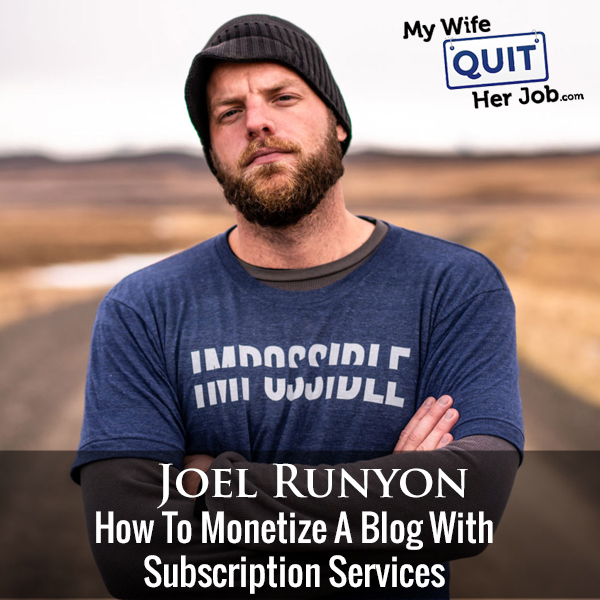
Building a brand around a mission means the mission has to filter people rather than attract everyone. Joel Runyon’s Impossible sells a message that most people will reject, and the 30-day cold shower challenge exists specifically to separate the people ready to act from the people who only want to read about acting.
Joel founded Impossible after graduating in 2009 and being rejected by Starbucks and Target. He later became the youngest person to run seven ultramarathons on seven continents, raising nearly $200,000 for Pencils of Promise and building seven schools.
This episode covers how the blog found its voice, why challenges work as an audience filter, and how a single word in a course spawned an entire second business.
Get My Free Mini Course On How To Start A Successful Ecommerce Store
If you are interested in starting an ecommerce business, I put together a comprehensive package of resources that will help you launch your own online store from complete scratch. Be sure to grab it before you leave!
Table of Contents
Key takeaways
- A personal journal is not a business. The blog worked once posts became useful to other people.
- Challenges filter your audience rather than attracting the maximum number of people.
- The cold shower challenge started as a PayPal button and a 30-day email sequence.
- Motivational emails timed to the low point are what carry people through day 14.
- His Paleo business began accidentally, from an FAQ page written to stop answering the same email.
- Relationships outperform SEO early, because that traffic arrives pre-qualified.
- Meeting people in person beats online interaction by a wide margin.
- Getting too technical slows the business down. Selling a 12-week program beats building a membership platform.
How Impossible started
Joel graduated in 2009 having done everything correctly: good grades, a second language, a semester abroad, sports.
There were no jobs. Starbucks and Target were not calling him back either.
He eventually got six weeks of seasonal work delivering UPS packages through a Chicago winter, then was laid off after Christmas.
Sitting in his parents’ basement, he wrote down everything he wanted to do and found every item felt impossible. Travelling required money he did not have, and starting a business required skills he did not have.
The one item with no available excuse was running a triathlon.
He signed up for what he calls the wimpiest triathlon in the world, a one-hour indoor event at a gym, chosen indoors specifically so he could not drown in an open water swim.
He trained for six weeks, finished it, and drew the conclusion that became the brand. He had spent months telling himself something was impossible that turned out not to be.
Why the early blog did not work
Joel’s early posts are still online, including the genuinely bad ones from 2009 and 2010.
They read as a personal journal. Some amount to announcing a race and hoping not to die during it.
His assessment is that your mother will tune in for the stories, and everyone else needs something usable.
The turning point was shifting from documenting what he was doing to extracting concepts and frameworks other people could apply.
That is when the blog moved from something he wrote to something with an audience.
How he built traffic before SEO
The early tactics were commenting genuinely on blogs he actually read, and reaching out directly to people.
He landed guest posts, including one on Get Rich Slowly about rehabbing a garage sale bike for a triathlon, which was his first attempt at making the material useful rather than personal.
His caveat is honest. He cannot imagine that working the same way now.
What replaced it was SEO, which he taught himself while working an entry-level job at a marketing company. He used that job to learn PPC, SEO, and email marketing while still blogging on the side.
Why relationships still beat search traffic
Joel’s current view is that search is good for top-of-funnel volume, and relationships produce better-fitting people.
His analogy is that a strategic partner functions like a pseudo custom audience. Those people have already been vetted by a site with similar values.
The practical difference is qualification. SEO traffic requires far more filtering before it becomes useful, unless you are selling a straightforward widget.
For a blog specifically, finding people covering the same subject from a different angle sends less traffic that converts considerably better.
Why challenges work better than content alone
The response Joel gets most reliably is to challenges, whether 30 days, one week, or a few times a week.
His observation is that 30 days is often too long for people’s attention span.
The reason challenges suit the brand is alignment. The tagline is pushing your limits to do something impossible, so a physical challenge is the message made testable.
The design principle is accessibility without ease. Hard but not impossible, easy to do alongside other people, and easy to challenge someone else into.
How the cold shower challenge works
The premise addresses a real gap. Everyone repeats that growth begins at the end of your comfort zone, and nobody actually wants to be uncomfortable.
Most people arriving from Instagram or Google are not ready to run an ultramarathon, and everyone can take a cold shower.
The minimum viable version was a PayPal button at $29 leading to a 30-day email sequence. That was the entire product.
The emails are timed to the low point. Around day 14, when people conclude this is stupid and they hate Joel, an email arrives saying exactly that and dismantling their excuses.
It is now an app with a free email series, and some participants have taken over 2,000 consecutive cold showers, with informal competition over streaks.
Joel is clear that it does not make significant money. What it does is get people practicing the mindset daily.
Why financial penalties beat motivation
The newer format runs seven days through an app called Spar.
You sign up for a challenge with a metric to hit, then check in by video or photo.
Missing your required check-ins charges you money.
Joel’s motivation for this is specific. The thing that drives him to distraction is people who buy information and then do nothing with it, and removing excuses is the underlying purpose of the brand.
Not every challenge will carry the monetary penalty, and the goal is running them consistently so people who fall off can rejoin.
Why a filtering brand beats a broad one
Joel’s position is that Impossible calls people to be more than they currently are, which requires a particular readiness.
Cold showers filter out people who want to stay comfortable.
His framing of the target market is unusual. Rather than defining it demographically, he defines it as people who have a switch flipped and are committed to doing hard things.
That is deliberately not something marketing can create. You can reach more people with the message, and the switch either flips or it does not.
The result is that the actual audience is nothing like the assumed one. It includes grandmothers, and a 65-year-old diabetic man in England who lost 120 pounds following the abs course while explicitly not wanting abs.
How the first product came from reader questions
One item on Joel’s impossible list was getting a six-pack, which he describes as slightly ridiculous.
He did it, got down to around 5% body fat, and wrote about it.
The questions that followed were all the same: how did you do that.
The product was a fitness program answering exactly that. Several more followed, covering intermittent fasting, eating protocols, and bodyweight training.
His forward plan uses the audience’s own data. Several thousand people have built impossible lists on the site, so the roadmap is identifying the most common goals on those lists and building programs for them.
Why the Paleo business happened by accident
In the second abs program, Joel mentioned the word paleo in passing without explaining it.
The customer service inquiries about that single word became genuinely annoying.
He built a one-page FAQ site purely so he could reply with a link instead of writing 1,500-word emails.
That was immediately before paleo became widely popular, and the site started accumulating traffic on its own.
The progression was reluctant. Put up ads to cover hosting, then realize it had become a business.
Why he built a mobility app
Joel got badly injured during the first race of the seven-continent ultramarathon project and needed six months of physical therapy.
His honest description of the problem is that he does the work when paying someone $60 to $100 an hour in person, then goes home and does not foam roll.
MoveWell was built as a personal mobility coach, partly for other people and substantially for himself.
The principle it encodes is the counterweight to the whole brand. You can do far more than you think, and you have to recover more than you think as well.
Why simpler products ship faster
Joel’s programs are a mix of PDFs, courses, and video, and he would like to consolidate them into a membership site.
His constraint is self-imposed and worth noting. Getting too fancy technically slows down the actual business.
Selling a 12-week program is simply easier than building the platform he has in mind.
The result is that the high-in-the-sky version stays on the roadmap while shipping continues.
How Joel Runyon builds relationships with bigger names
At the beginning he showed up at meetups in person, including for Chris Guillebeau’s book tours.
Before that, those people knew him from his avatar in their blog comments, where he was genuinely engaged rather than flattering, since he was reading them while living in his parents’ basement.
He also emailed people directly and out of the blue, including Sean Ogle and Steve Kamb, many of whom were relatively new themselves.
The principle that still applies is specific appreciation. A message naming exactly which piece of work helped and how gets noticed even by people receiving enormous volumes of email.
Then take it offline. In-person relationships from a meetup or conference go considerably further than tweets, retweets, or Instagram tags.
His summary is to treat people like a friend you are trying to make rather than a contact you are trying to acquire.
How the podcast fits the brand
The podcast started as an excuse to interview people Joel considered more impressive than himself, particularly athletes and Navy SEALs based in San Diego.
The guests make the point the brand exists to make. Kyle Maynard is a congenital amputee who bear crawls up mountains and is a Nike athlete. Rob Jones ran 50 marathons in 50 states on prosthetics after losing both legs to an IED.
The effect is confronting your own excuses. Not wanting to go to the gym because you are tired does not survive contact with those stories.
Joel considers the blog more impactful overall, mainly because his podcast publishing has been intermittent, and thinks the podcast has more reach potential when he is consistent with it.
Frequently asked questions
How do you build a brand around a mission?
Make the mission something people can act on rather than only read about. Joel Runyon uses physical challenges so the brand’s message becomes testable rather than aspirational.
Should a blog attract as many people as possible?
Not necessarily. Impossible deliberately filters, using challenges like 30 days of cold showers to separate people ready to act from people who only consume content.
What is the simplest way to launch a challenge?
A payment button and an email sequence. Joel Runyon’s cold shower challenge began as a $29 PayPal button leading to 30 daily motivational emails, with no app or community.
How do you keep people going through a challenge?
Time your messaging to the low point. Around day 14, participants conclude it is pointless, which is exactly when an email addressing that specific feeling arrives.
Do financial penalties improve completion rates?
Joel Runyon believes so, which is why newer challenges charge people for missed check-ins. His stated frustration is people who buy information and never act on it.
Is SEO or relationship building better for a new blog?
Relationships early. That traffic arrives pre-qualified by a site with similar values, while search traffic requires considerably more filtering before it converts.
How do you build relationships with people ahead of you?
Engage genuinely with their work, send specific appreciation naming what helped and how, then meet them in person at a meetup or conference rather than staying online.
Should you build a membership platform for your courses?
Not before it is necessary. Joel Runyon notes that getting technically fancy slows the business down, and selling 12-week programs is often simply easier.